Fluffy Powder Skiing at Mount Hood Ski Bowl Oregon!

10 03 2014

ImageRecently, a cold storm blew through the Mt. Hood Oregon region, dumping 80″ of powder in three days. We don’t usually receive Colorado-dry powder – it happens once or twice each winter. This 2013 – 2014 season has been particularly cruel. A warm, dry December and January left Mount Hood Ski Bowl closed, and Mount Hood Meadows only partially open.

Then a blockbuster storm moved in, with non stop snow for days on end. Mount Hood Ski Bowl is known amongst ski aficionados as having the best terrain on Mount Hood, but unfortunately it lies at a lower elevation, meaning snow conditions are generally not as good as at higher elevation Timberline or Mount Hood Meadows.

I was able to hit Mount Hood Ski Bowl on opening on one of these days. It was so pretty. When I arrived in the base area, there was plenty of snow. Fill in your tracks snow.

I was able to get the first chair up that day. I think it may be the first time in my life I was the first person at a ski area. It was worth it! Run after run of untracked snow all to myself!

On this day, it was perfect for anyone wanting to ski powder snow for the first time.

ImageThe Mount Hood Ski Bowl staff had groomed everything to perfection for powder ski students! So, you are nervous about the steep and deep? Well, they had everything for you. They had a cat track groomed. They had runs groomed with 4″ new on top. They had groomed runs with 8″ new on top. And there were other runs with 14″ untracked, fluffy snow!

ImageThis is not Cascade Concrete. We are talking about the kind of snow that if you pick a handful up, you can blow it right off your palm.

So, you ask, how does one ski in the deep? Let’s say you are proficient on packed snow. There, you put more pressure on your downhill ski when turning. And you pick up momentum even when traversing. In powder, if you ski with uneven balance, one ski will dive to the bottom and the other stay on top! And if you traverse too much you will slow down and can’t turn. New powder skiers can be seen frustrated, in the snow, goggles all fogged up.

But the reality is that powder skiing is actually easier than hard packed snow skiing! But you need to understand how to do it. So, think about it. If the snow is deeper than your boot tops, it’s going to slow you down, right? Well, the slower you go, the harder it is to turn. So you have to do something to counteract this. My suggestion is point your skis straight down the slope to get momentum. Secondly, you don’t want one ski to submarine while the other is on top. So now you have to try skiing with both skis relatively evenly balanced, kind of like a platform to “surf” the deep snow. You do not need to lean back. How to turn? This is the secret. Have you seen porpoises in the ocean? Notice how they surface and turn on the surface? That is what you want to do! Think of the deep snow as a spring. When you go across the snow, you are on the surface, and when you slow down you sink. You turn your skis when you are on the surface, and traverse when they are deeper. So, this is how you ski deep powder.

Point your skis down hill. As you gain momentum, tip your feet up. When your skis are on the top of the snow, turn left! Then you will sink. You will cross the slope again, rise, and when you are on the surface, turn again, right! And sink. And so forth. This is called porpoising. Once you learn how to use the deep snow to slow your momentum, and turn on the surface, you will be golden!

Image

And you can leave tracks like these! Have fun, and remember, it takes a few times to get it right. But you will succeed! You will get it! Believe me, power, deep snow, is easier than hard pack!


Opal Creek Oregon – Explore Ancient Forests

9 03 2014
Image

Here I am at the entrance to Jawbone Flats. A few hardy souls make this their year-round home.

We recently spent a weekend at the cabins at Opal Creek Oregon! Opal Creek Ancient Forest Center and its Jawbone Flats Cabins sit inside the Opal Creek Wilderness, the largest old-growth wilderness in Oregon.

It’s about a two hour drive from Portland. The village houses the Opal Creek Ancient Forest Center, plus cabins in which visitors may lodge. All around lies the incredible ancient wilderness with its myriad trails, crystal pure creeks, and countless examples of edible plants such as mushrooms.

Image

The village is a museum of early 20th Century mining equipment. The irony that is Opal Creek Wilderness is that an extractive industry saved the old growth forest, while rampaging logging was going all around it. It was privately owned mining operation and never logged. Later, a political movement launched a campaign to preserve the area and in 1996 Congress established the Opal Creek Wilderness. The village is “off the grid,” meaning all electricity is locally produced by a small hydroelectric generator harnessing the creek’s power.

To get to Jawbone Flats, you must hike two miles from a parking area. You need to bring in everything you need to eat. Kinda. There is a twice daily shuttle that can bring up your stuff from the parking area. It’s a really pretty hike by Opal Creek. Along the way you pass by some dilapidated mining equipment.

Image

We reached Jawbone Flats and found our cabin. It’s really nice! You can probably house 10 people in the cabin. Very comfy, and the rear of the cabin has a deck overlooking the creek. Then we settled into our rooms.

Next, we headed out onto some trails! Opal Creek Wilderness is truly a jewel! The old growth evergreens are unmatched, and the creek is so pristine.

ImageIt’s such a beautiful area. I highly recommend it. If you go in the summer, the Opal Creek Ancient Forest Center has a menu of classes and trips to choose from, each guided by highly knowledgeable staff intimately familiar with the area.

Image

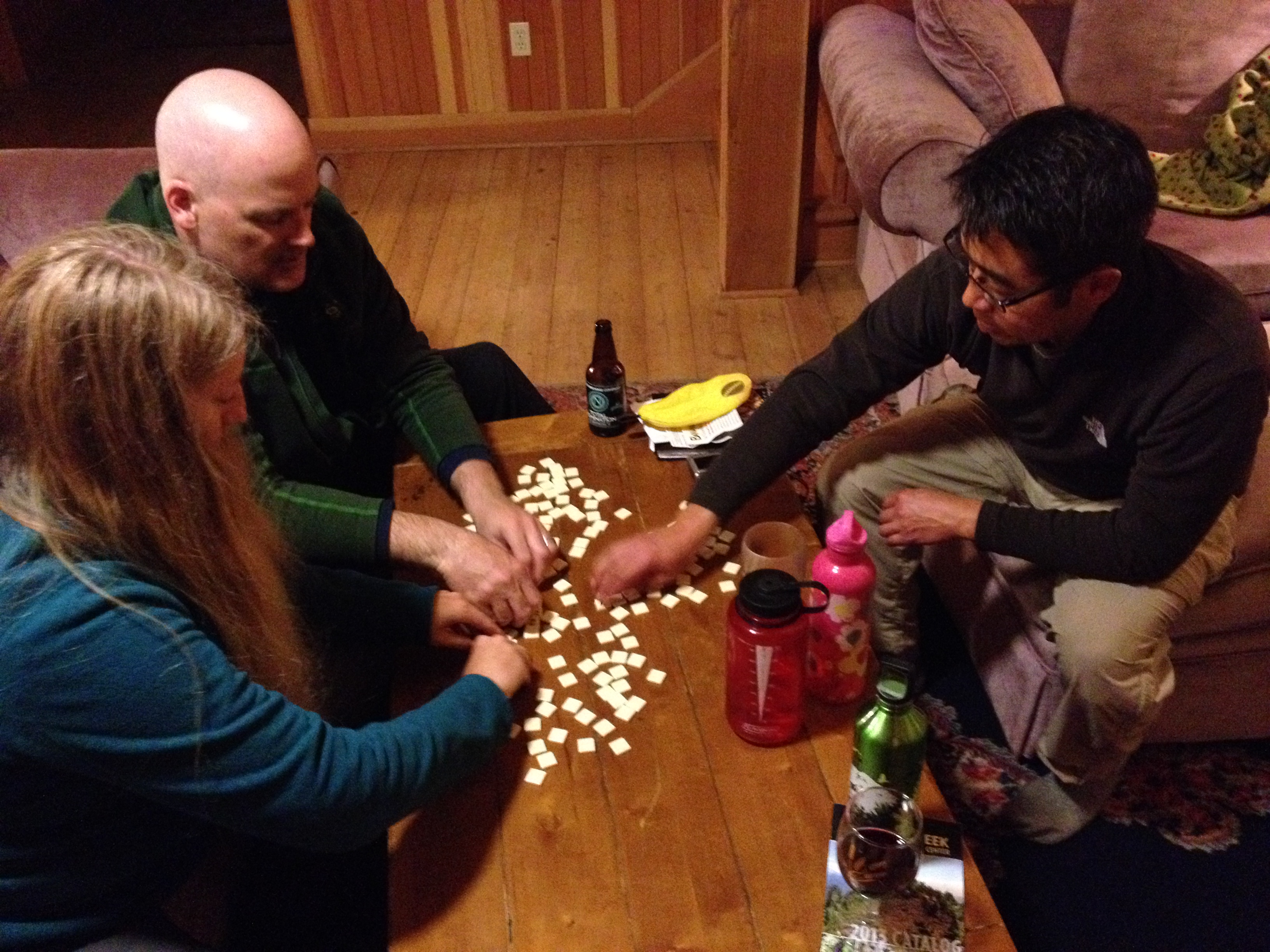
After our hike, we headed back to the cabin for happy hour, a wok cooking session, and playing board games! Lots of time spent chop chopping ingredients for the wok, and then delicious productions coming off the stove!

ImageImage

After dinner, it’s board game time! If you want a quiet getaway not far from Portland, and want to witness a forest ecosystem unchanged since ancient times, Opal Creek is worth a visit.


I’m Back – From a Back Injury, that is…

8 03 2014

You may have noticed I have not posted to my blog in months. If you’ve read my blogs, you know I’m a very active individual. My hearts desire is to be outside, breathing the air, being active. Whether hiking, trekking the Himalayas, paddling surf, or skiing the Wasatch, I live for outside activities. Travelling overseas is especially rewarding to me, whether soaking up cultural experiences or adventuring rivers or mountains.

My lifestyle is also my work. I have taken kayaking/paddlesports and wrapped into a way to earn my keep. I’ve been a brand manager for Feelfree Kayaks, a company that imports New Zealand-designed, Bangkok manufactured kayaks into the American market. And I’ve converted countless couch potatoes into outdoor enthusiasts as kayak guide / instructor for Alder Creek Kayak and Canoe. I never tire of getting great gear into a customer’s hands and then hearing their stories of their adventures using it. To put it mildly, I am a tireless evangelist for outdoor recreation.

But my passion does involve risk. It can’t be avoided. It can be managed, and minimized, but not entirely eliminated. When it comes to kayak instruction or guiding, lifting boats is part of the work. I carry boats to the dock for renters. I set up lakeside trade show affairs involving dozens of kayak models. When guiding, I sometimes have a trailer of kayaks and have to lift then on/off of the trailer. I’ve done it thousands of times. I’m in my early 50’s.

So, the reason I have not posted to this site in months is a mistake I made loading a kayak onto my car. One day, in August 2013, I was in a rush to get extra boats to a kayak class and purposely grabbed a boat and heaved it onto my car. Not the right way. I have paid dearly for it. I strained the illiolumbar ligament in my back. It connects the 5th vertebrae to the hip. When it’s strained, it “refers” pain down the hip. For months, I had pain when sleeping in my back and hip. I could not get going in the morning without 20 minutes loosening my leg. I could not sit in a movie without writhing in pain.

I have been on workman’s comp since August. I still work, but on “limited duty.” I have cancelled a September trip to Yellowstone National Park, and a trip kayaking down the Mekong River from Vietnam through Laos and into Vietnam. Plus a two week ski trip to Jackson Hole Wyoming and Park City Utah. It has been depressing. Yet I have never skipped one single physical therapy routine.

If you’ve had back problems, you know my plight! But I am a fighter. I have been with a chiropractor and massage therapist. I have been with a physical therapist. I have been with a osteopathic doctor. And now, Pilates. Thousands of hours of work later, I am much improved. Slow, steady progress. So, I continue my daily two hours of physical therapy work. Yes. Two hours.

I have content for a few things I have done, some hiking trips and ski trips. Stay tuned, they are upcoming! And in just a few weeks I am snorkeling/camping/camping on the barrier reef in Belize!

I’m blogging again because I am proof positive HARD WORK PAYS OFF! I can engage in activities again. There will be new content very soon! You may see some content about working with physical limitations! I will never give up.

See you soon!

Rod


Timothy Lake, Oregon – Leading A Horse to Water!

13 09 2013

IMG_0711  This is a quick blog post about a trip to Timothy Lake, Oregon, which I took before my Eastern Oregon byways trip (see last blog). Timothy Lake is 13 miles south of Mount Hood. It’s an easy 1:20 drive from my home. So, if I want to get outside but don’t have a big window of time, sometimes I head up there. If you read my last blog post, you know that I suffered a back injury a couple of weeks prior to this week. Well, it turned out that on this trip, sleeping on hard ground was great. I slept like a baby. I actually slept better than in my own bed. But a week later, at Anthony Lake, everything changed.

IMG_0714

Trees in Oregon grow really tall…!

This post is about happier times. With only a couple of days in the middle of the week free, I hurriedly packed my car and headed up to Timothy Lake. With my back trouble, I left the kayak at home. I found a west facing camping spot – with nice trees above.

I set up camp and then hiked down the lake two campgrounds distant. It was such a pretty day, and my body enjoyed the easy exercise.

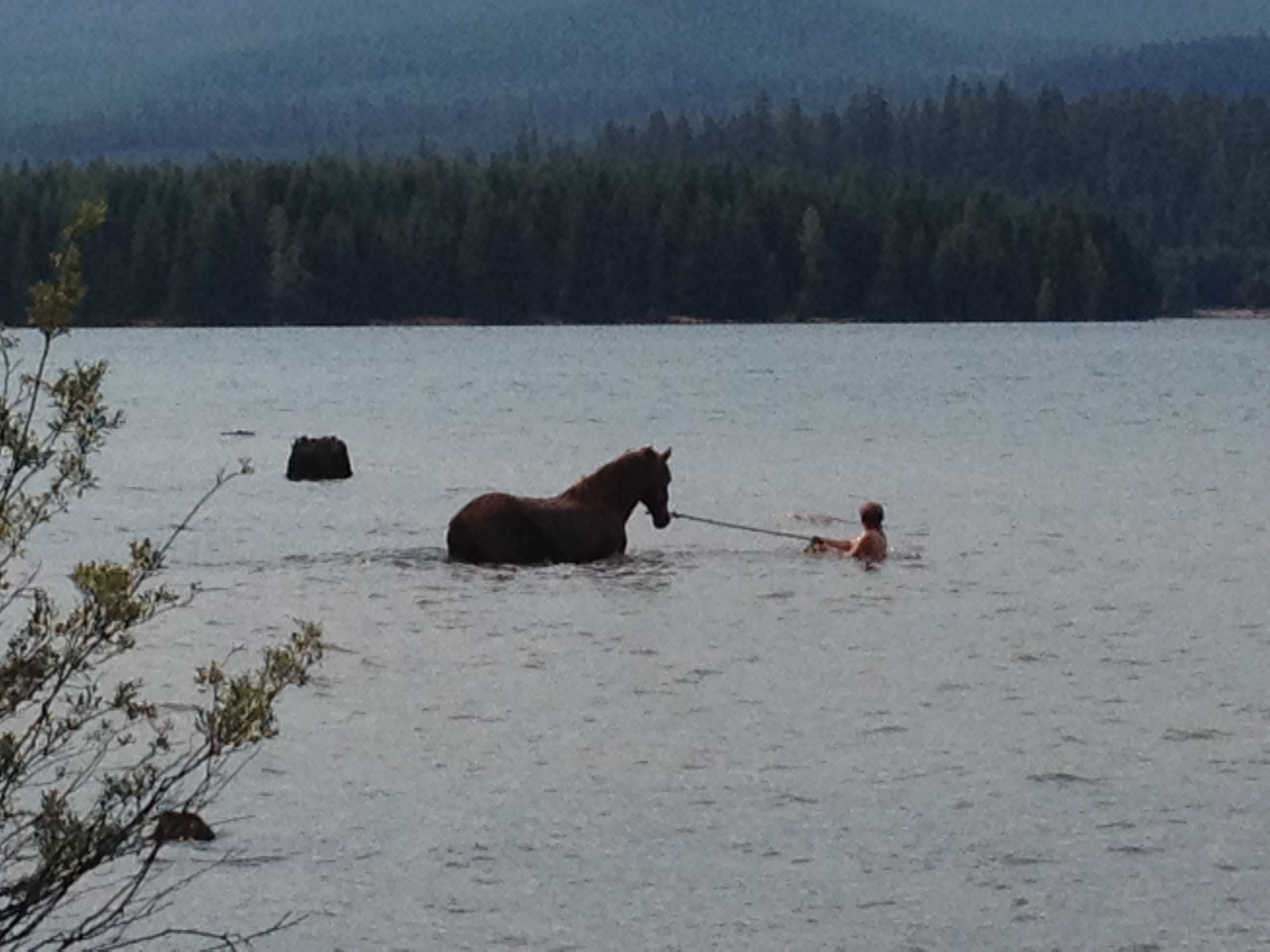
Along the way I encountered a family with horses. They did something completely unexpected. They started leading the horses into the water!

IMG_0707

Mom, daughter and horses. All somehow cooperating!

IMG_0710

Daughter learns you can lead a horse to water, but…you can’t…


It was so endearing. These big animals, who could cause harm, totally cooperated with the human tenders…even kids. The adults rode them into the lake, and the kids guided them out.

Horses are so gentle. It was something to see! I was sure the horses weren’t comfortable out there in the lake. Yet, they trusted their owners – enough so that they even went beyond standing – even swimming!

I thought that was pretty cool. Then I returned to my campsite. It was a quick walk down to the water, and I enjoyed the sunset with a magazine and a pint of beer.

Then it was time to make a fire, and I had a lot of wood.

IMG_0713I made a “log cabin” style fire, which went up big. Very nice. Following, it was time for dinner. I brought up some freshly made tortellinis, which were easy and delicious. Plus a nice green salad.

Then crawling into my tent, I managed to have a super restful sleep. I had no idea one week later camping would turn out to be so painful.

Till next time!

It is September. This month is usually the best month for enjoying the outdoors. No bugs. Good weather. Crowds – gone after Labor Day. But sadly, my ability to get outdoors is hindered by my back and hip injuries. I am confined to the city, and I am following docs orders and trying to get out before the weather turns!

Wish me luck.


The Blue Mountain Oregon Scenic Byway – Ought to be Renamed “Skyway”

10 09 2013

Blue Mtn BywayToday I took my time and ate a leisurely breakfast at Anthony Lakes. I’d check out Oregon Route 52, the Blue Mountain Oregon Scenic Byway – on my way to the Columbia River! I’d planned to spend more time out here, but a previous injury cut my trip short. I had to head back home.

I confess to starting the trip with a mending back and leg strain problem – I typically like to hike when camping, but I knew I’d just have to spend a lot of time driving. Last week, I camped, and had no problem with my mending back. But the night at Anthony Lakes was horrific. I had lots of leg pain, and getting up caused stabbing pain. These would ease with walking a bit, but remaining still, including driving for hours, or sleeping, worsened a strain in my leg. With no access to ice out here, I made up my mind to head home right away and get some attention.

The injury was caused at work lifting a heavy kayak. It caused a lower right back strain. The back strain was mending well, but somehow favoring it caused a strain in my right leg. What I learned was that inactivity like driving and then arriving at camp, just having a fire and sleeping (more inactivity) was a recipe for disaster. I decided to cut the trip short so that I could spend the night at home icing my injury in Portland.

Nevertheless, I’d travel the scenic routes on the way back to the Columbia River. Oregon Route 52 meanders along the top of Oregon’s Blue Mountains, before reaching Ukiah, Oregon, and following Oregon Route 53 along agricultural valleys and past vast wind turbine farms before connecting with the Columbia River. I decided I would have to stop every so often and walk 20 minutes to keep my leg loose.

After packing up, I headed up and over the Elkhorn Mountains, once again climbing to about 7,300ft. Once I reached the North Fork John Day River Campground, I would be at the intersection withe Route 52. There was an information kiosk. I noticed right behind some walk-in campsites and checked them out. Oh Man….! For easy walk in sites these were to die for. With the North Fork John Day River burbling right behind, and even with pre built tent staking sites. And NOBODY around. Gorgeous.

Oh well. Next time! On to the Blue Mountains. Today I was to discover something something totally unexpected. Unlike other scenic byways, most in valleys or with big mountains above, this one goes right along the tops of high altitude meandering meadows. Not only that – there are gates all along the byway where you can literally just go out and drive out there and camp. ANYWHERE.

Blue Mtn Meadow

Wow! Just go and camp anywhere.

I couldn’t resist. With my new higher ground clearance car, no problem. These went from horizon to horizon! There were islands of evergreens amongst the meadow, a couple with people camping there. But no established campgrounds.

I am an avid star gazer. With no city lights around, and dry, and such horizon to horizon views, I had to come back to check out the stars out here! OMG. AND, best part: There is absolutely NO ONE out here. Seems everyone is in the Wallowas, or down by the Three Sisters?

If it weren’t for my back / thigh strain, I would definitely spend the night out here.

But I must push on.

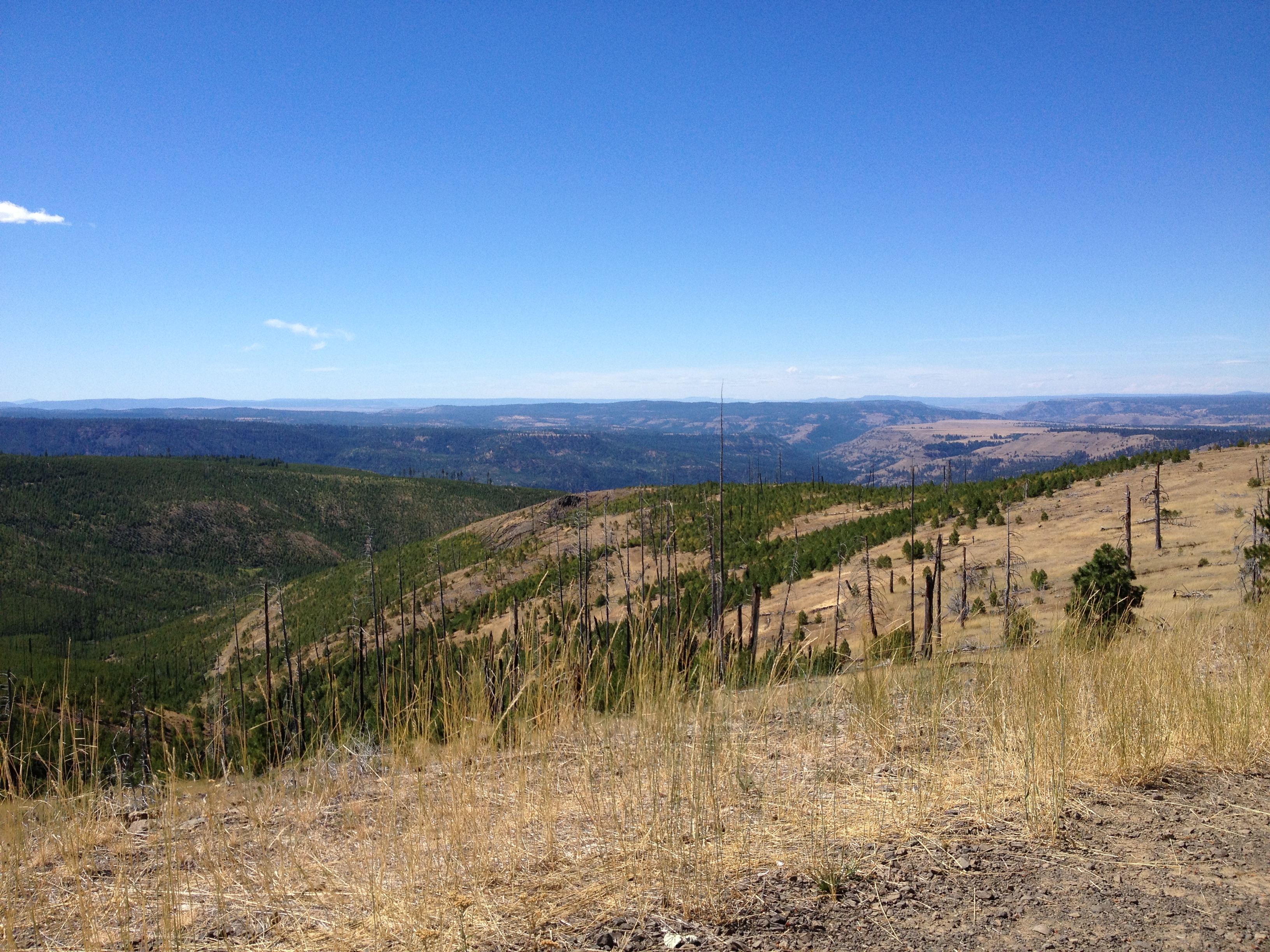
The scenic byway has many points with views west, or northwest. With nothing obstruting all the way to the horizon. The North Fork John Day River cuts through this area. Its valley seems to dominate the area.

Blue Mtns ViewSometimes I felt like I could see all the way to the Pacific. I stopped at a wildlife preserve with a short interpretive hike – a great place for lunch.

The hike was only a quarter mile to a shady island with two picnic tables and limitless view. All along the way I saw coyote, elk, and deer scat. It must be busy!

When done, I descended to Ukiah.

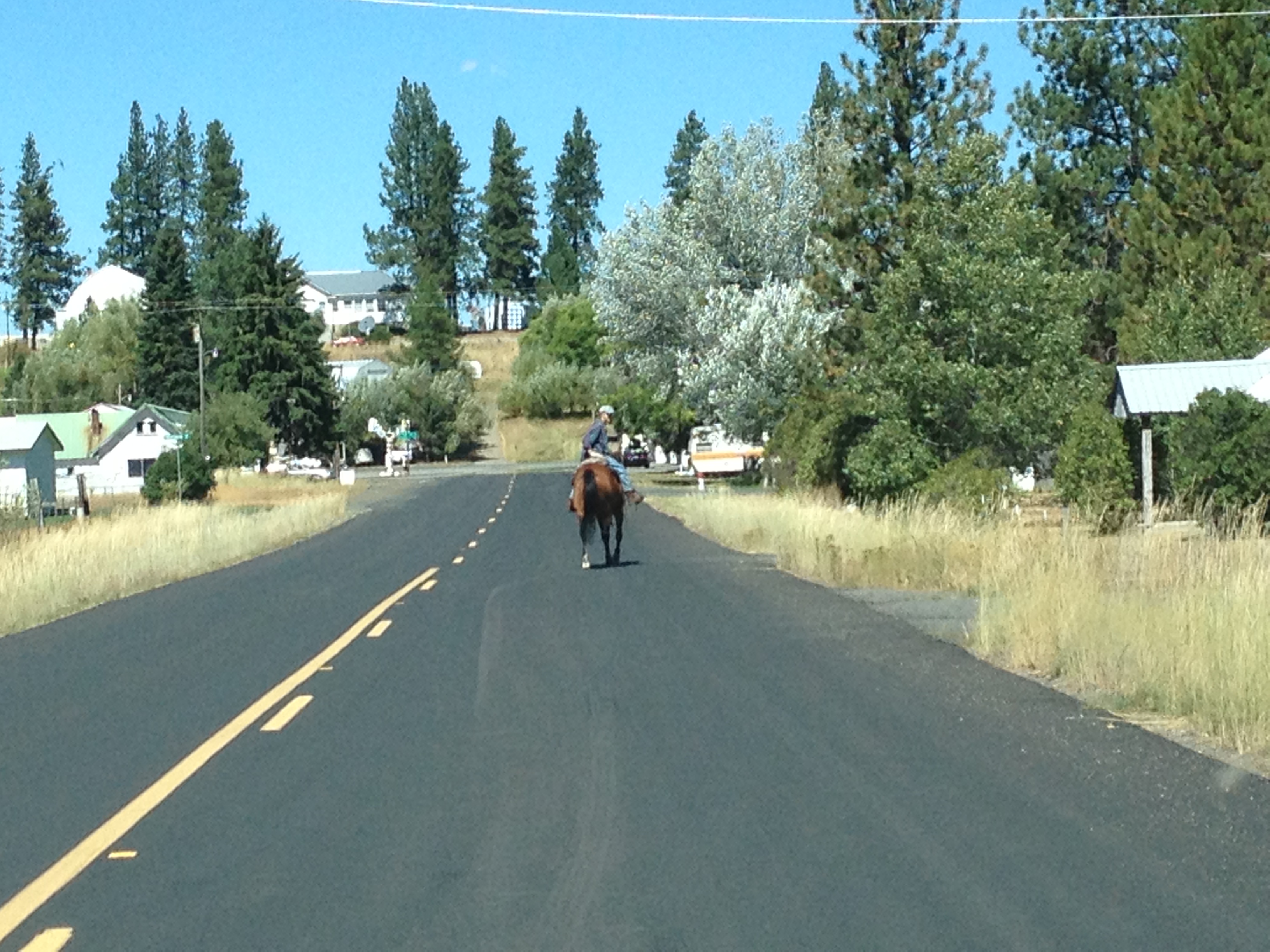
Ukiah is another Eastern Oregon town – crazy small, with its own vibe. Clearly expressed by the welcoming committee!

Ukiah Horse

Twice on the outskirts I had to navigate folks on horseback…but that is the way things are done in Ukiah!

Continuing on, through forest / ranch lands…and river valleys, and past vast horizon-to-horizon wind farms, I found the Columbia Gorge.

Wind Farm PanoramaIt seems from these vantage points, green energy is going limitless!

Only I can hope. Till next time!


xxx


Oregon’s Gold Rush Region! Sumpter, Oregon and Granite, Oregon

6 09 2013

Route MapMy interest on this trip was focused on the areas around the North Fork John Day River Wilderness Area. I’d be driving Oregon’s Route 7, Route 73, Route 20 and Route 52. Today, I’d pass through Prairie City – on state highway 26, on my way to Sumpter, Oregon. This is 100% marked as scenic on the maps!

I’d be camping at Anthony Lake, though I didn’t know it when I began. I will tell you the drive along Oregon’s Highway 26, the Journey Thru Time Oregon Scenic Byway, is serene and calming. It wends its way through ranches and farms and small towns like Mitchell and Dayville, with less than 250 population. Absolutely nobody is in a rush here.

A few dozen miles east lies Prairie City. They’re making an effort to refresh main street here, and it looks pretty. I fill the tank with gas, and here they still clean your windshield! Then Oregon Route 7 intersects, and I’m on my way up to the Elkhorn Mountains, climbing all the way.

This is GOLD RUSH territory! In 1883 Sumpter was founded. By 1897 a railway reached the area, and the population grew to 2,000 as gold mines and claims proliferated. There were 12 miles of underground tunnels. Even today, I saw staked out gold mining claims!

Fort SumpterThese days Sumpter is preserved as a tourist attraction of Gold Rush history. Much of it has been restored to look as it was. I even saw a fort. I wondered if that fort was supposed to look like the Civil War Fort Sumpter? To me, it looked like it was right out of the 1960s TV series “F-Troop.”

Two of Sumpter’s main attractions are the Sumpter Valley Railway and Sumpter Valley Dredge. The railway, opening in 1890, was built to haul lumber 22 miles to Baker City. Within two years it was hauling passengers and freight. Today, it is a 6-mile narrow gauge tourist ride.

The Sumpter Valley Dredge is a monument to capitalism and 19th century technology. These 4-stories-tall dredges floated in ponds, and as they dug, the ponds moved with them. They consisted of conveyor belt of buckets to dig earth and carry inside for processing, the internal processing machinery, and another conveyor out back to dump out the waste. There were three of them in the valley. Ironically even though they only employed three workers each, they ended their machine-lives $100,000 in debt. Sumpter Dredge

Climbing out of Sumpter, the road switchbacks ever higher. I drive along a high altitude creek lined with mining claims, and with piles of rocks which could only have been left by days-gone-by gold prospectors.

Then I reach Granite, elevation 4,695. Granite’s population is 38. It looks bigger than that. It’s got a “Welcome to Granite” sign over the road. It’s got a fuel depot and a hotel. Still, it has a look and feel of a genuine frontier town. Founded in the 1880’s, granite boasted a population of 86 gold miners by 1940, but in WWII, the government ordered gold mining shut down to make miners dig for “esseFire Crew Signntial war effort” materials. Granite collapsed, and never recovered.

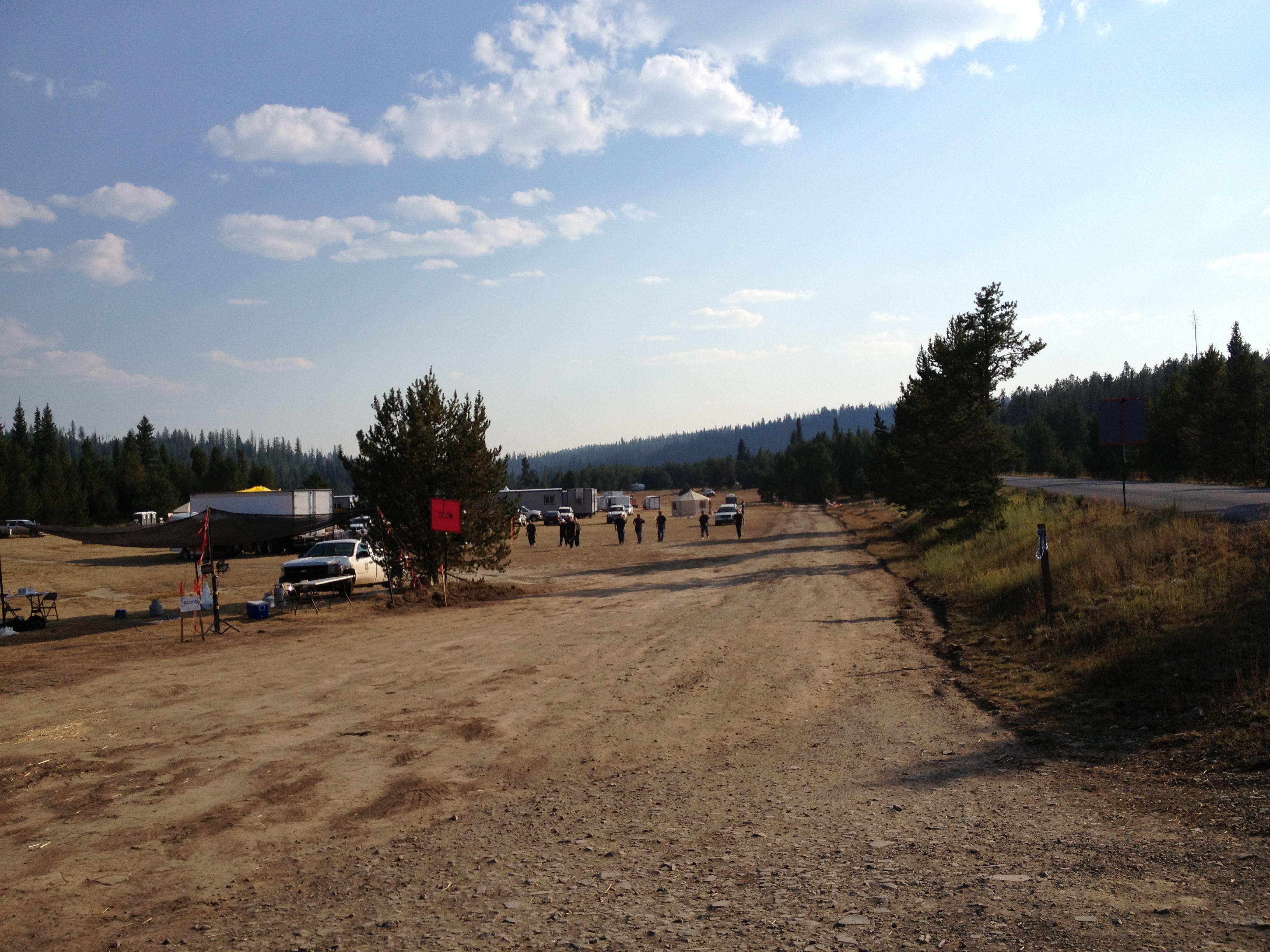
Past Granite, I made up my mind that I would camp at Anthony Lake, some 40 miles distant. I’d be cruising the Elkhorn Oregon Scenic Byway. On my way to that byway I ran across something unsettling – a Forest Fire Camp. During this trip there was a giant fire threatening Yosemite National Park, so forest fires were in the news.

Yet I didn’t know that the Forest Service established camps supporting hundreds of firefighters even before a fire started. Wow. That is serious.

Fire Crew StationThe camp I saw was several acres, high in the mountains, in a big meadow. And as big as it was it was clear that there was room for probably a thousand men up there.


Fire Crew2That made me much more aware of the gravity of the situation.

Beyond the Fire Camp, I ran into something I came out here for. It is the trailhead for the backpacking trail on the North Fork of the John Day River. I had heard about this many years before and now I was here. Too bad I am injured now, and can’t do it. But I will be back.

NF John Day SignIt’s very very pretty up here, and there are just not a lot of people to bother you. That is the beauty!

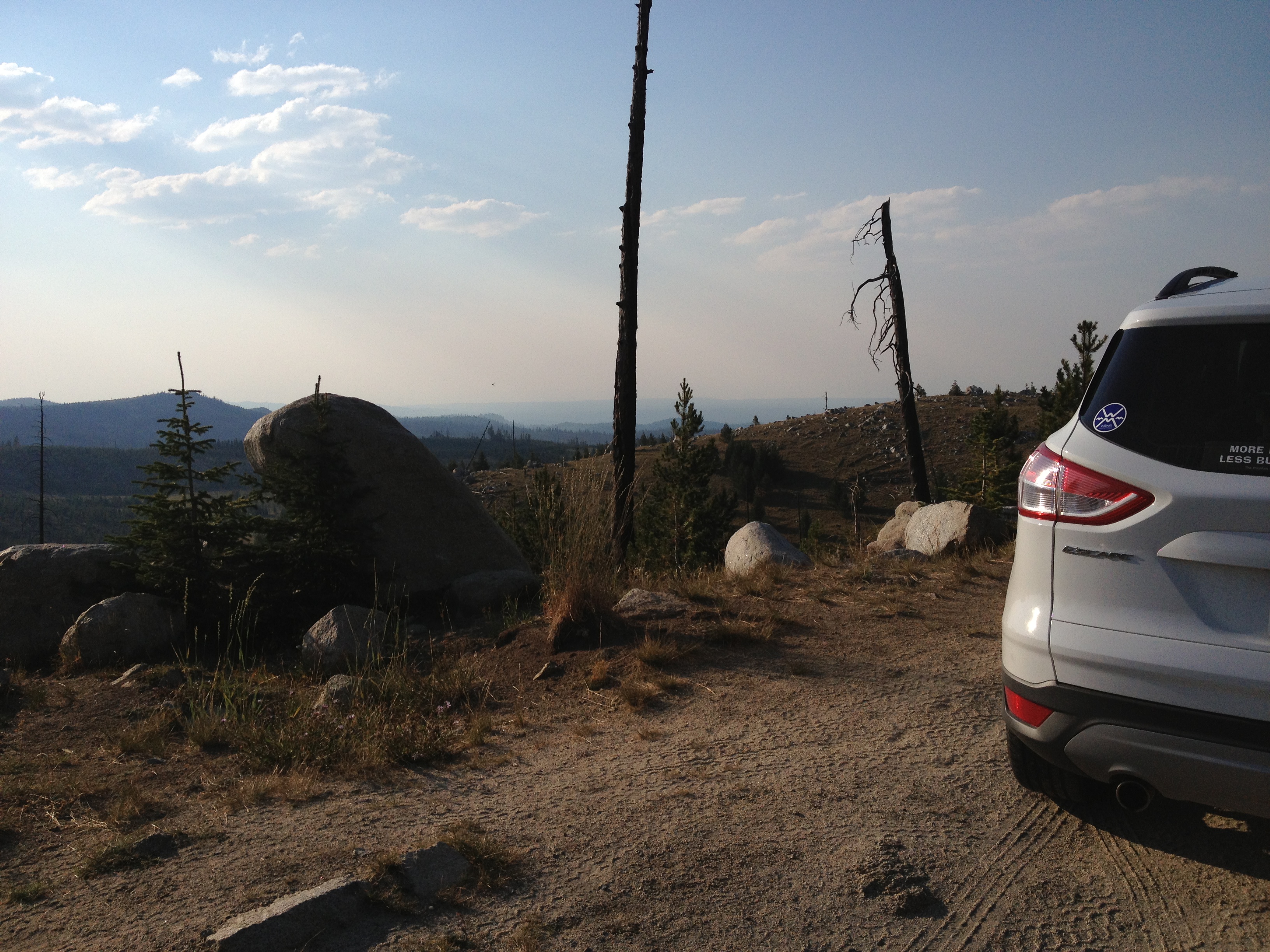
I decide to push east and camp at Anthony Lake. I have been there to ski in the winter, but never seen it without snow. I just have to check it out. On the way I reach a high point in the Elkhorn Moountains, about 7,250ft.Elkhorns 7250

The view goes on forever. It seems a high plateau goes on from here and one could backpack quite a ways.

Then I descend down into the Anthony Lakes area.

The lake is much smaller than I remembered, as I had cross country skied around it two times in the past.

Anthony Lake PanoramaI had imagined it would have campsites on it. But nope. The campground is to one side, and it has day use areas on the other. There are walk-in sites to another side.

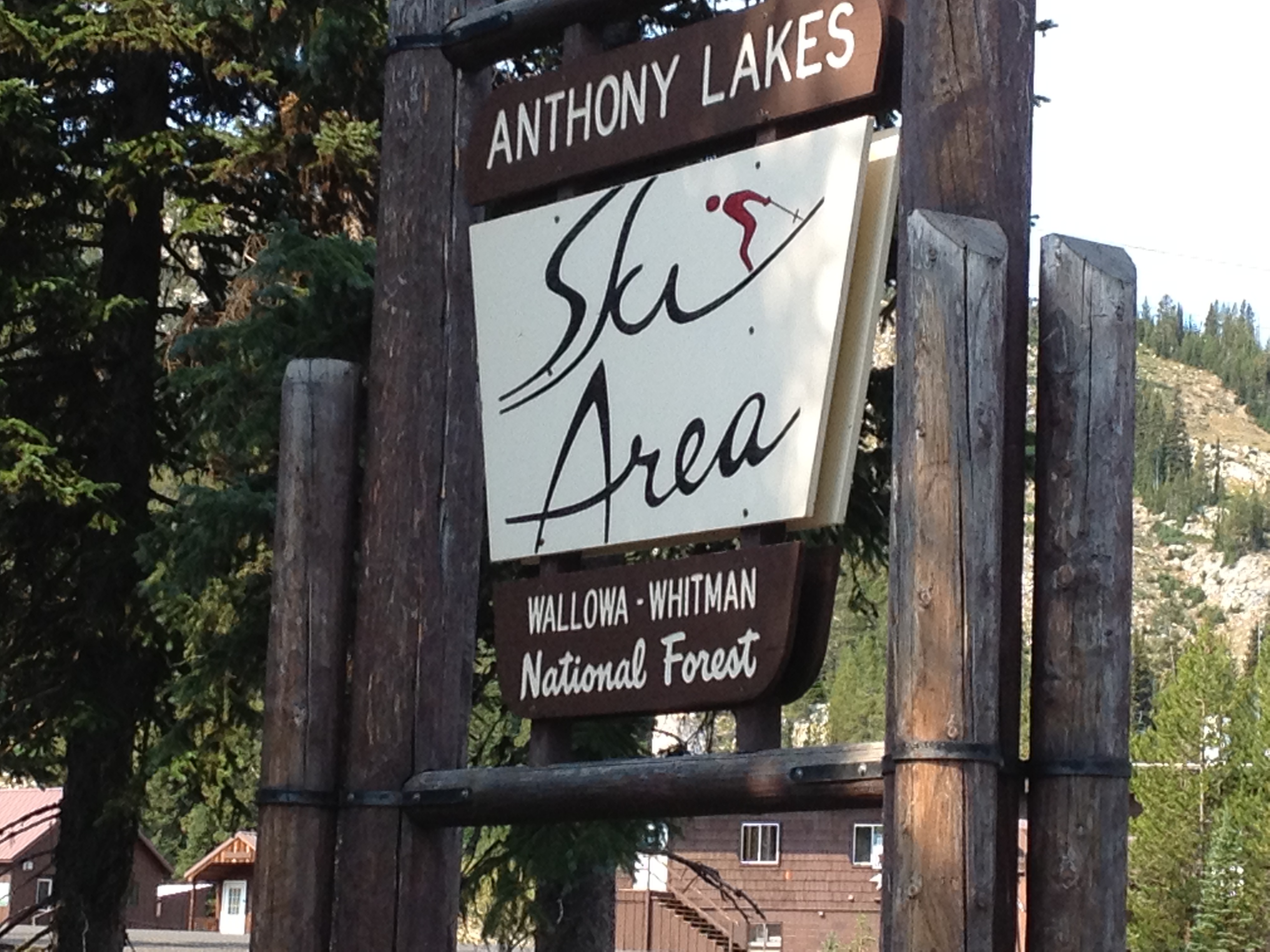
I also paid a visit to Anthony Lakes Ski Area.Anthony Lakes Sign


Without snow, it looks so different. I quickly realized I could actually drive around the lodge and onto some of the lower slopes I had skied!

This was pure devilish fun! Well, with that bucket list item checked off, I returned to the campground and made my meal. I grilled a pork chop, made mashed potatoes, had an awesome campfire, and salad. Then, off to sleep.

I had hoped to see a million stars – but that was not to be. The smoke from the Yosemite fire partially obscured a picture perfect view. Next time I guess!


xx