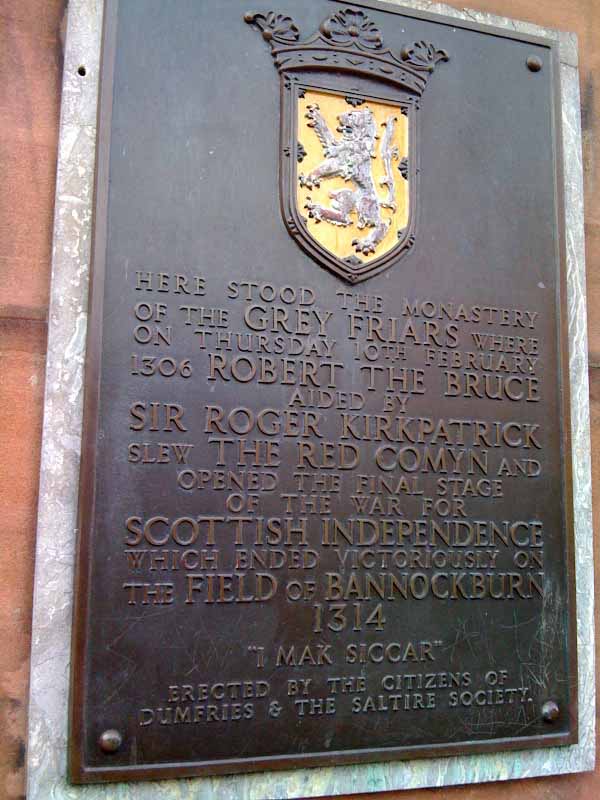
In June 2026 I made a pilgrimage to Closeburn, Scotland to visit the ancestral home of my Kirkpatrick family. On my mother’s side, I am a Kirkpatrick. The Kirkpatrick family lived in the area from at least the 13th Century onward. The Clan was close to Robert The Bruce and William Wallace was a relative. Later, in the latter part of the 19th Century, Empress Eugenie of France was also a Kirkpatrick. The Kirkpatricks were central to Robert The Bruce becoming King of Scotland by helping slay his rival The Red Comyn. Their motto, “I Mak Siccar,” or “I Make Sure,” is from Sir Roger Kirkpatrick making sure the Red Comyn was slain.
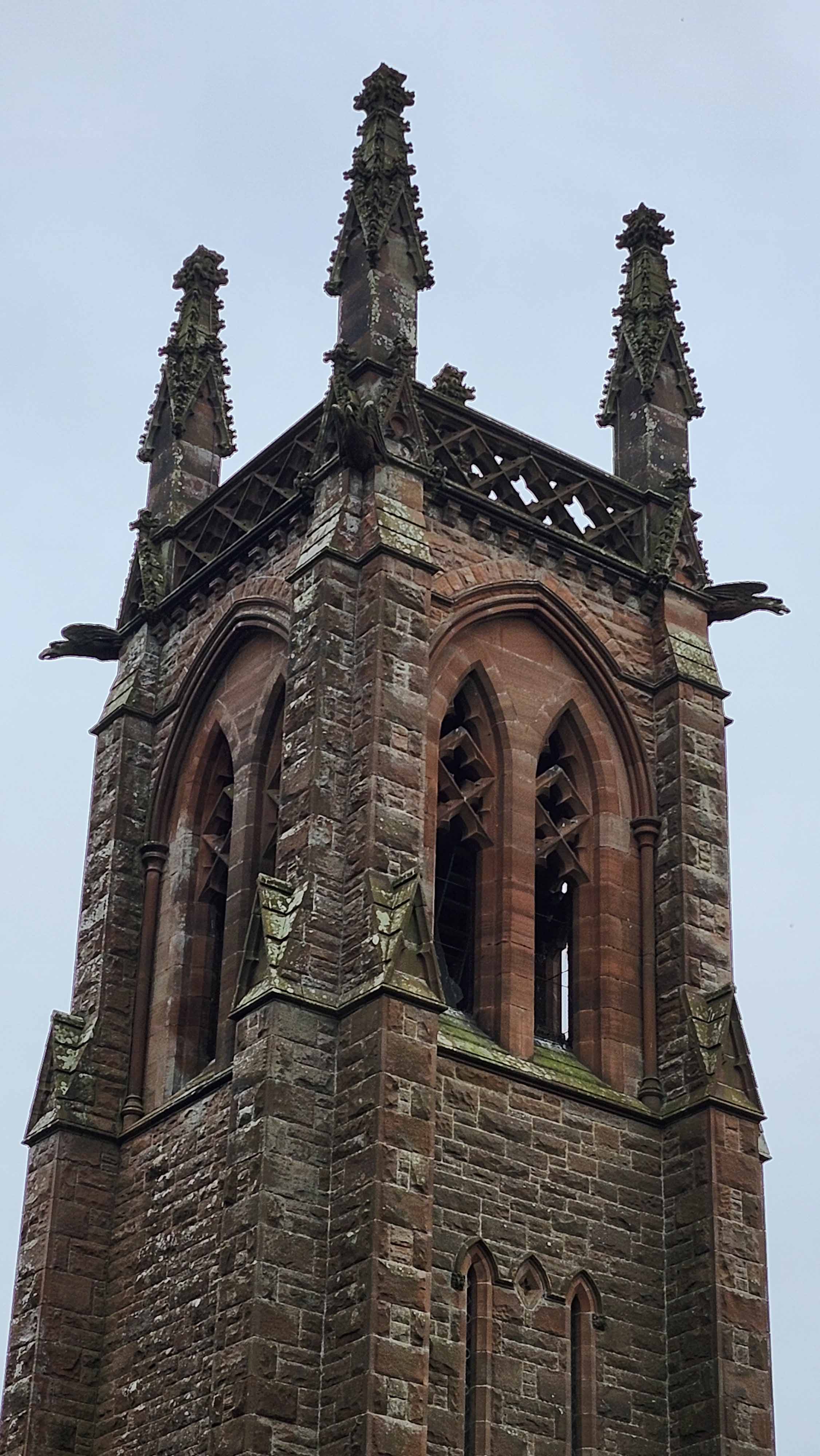
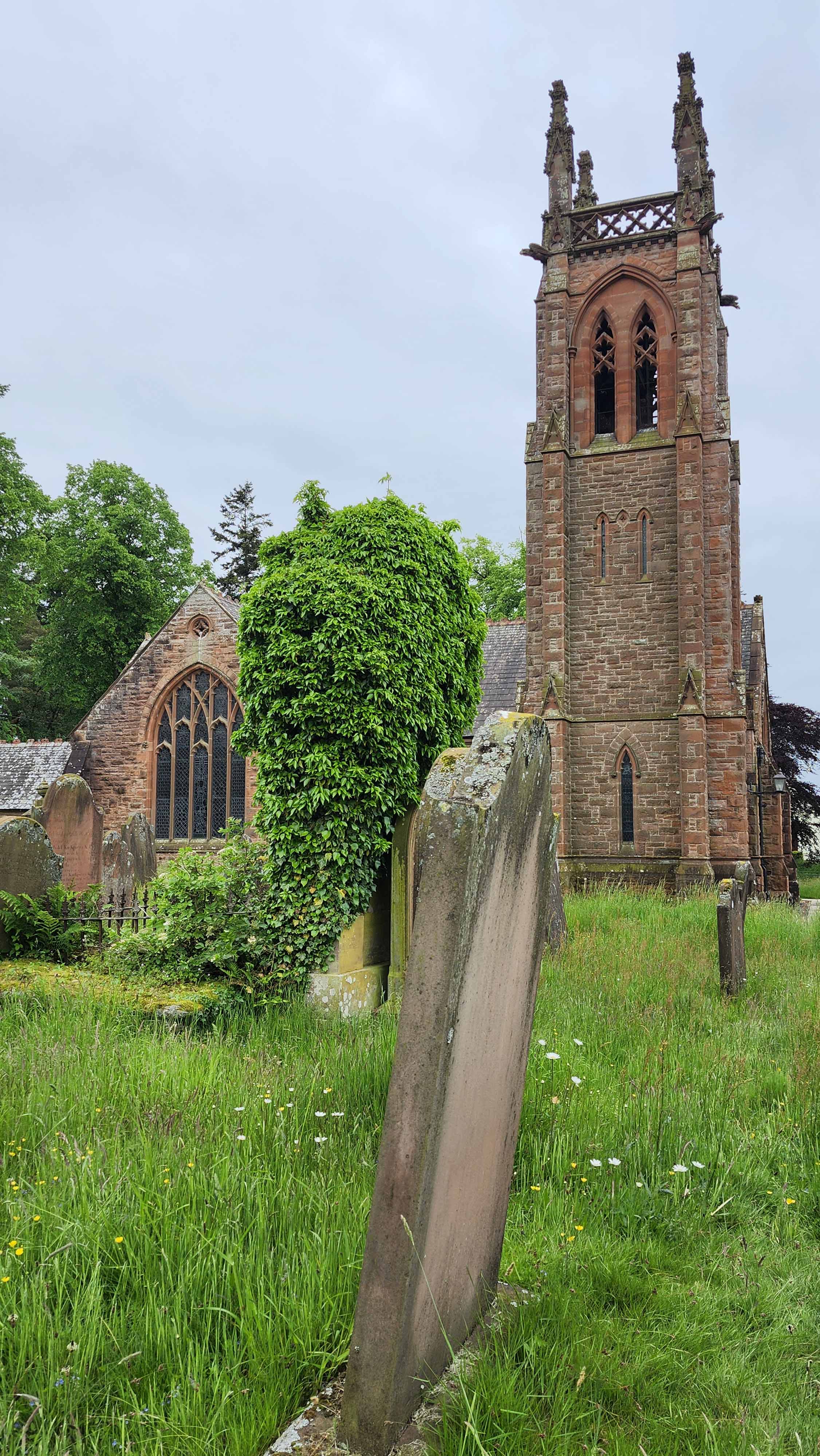
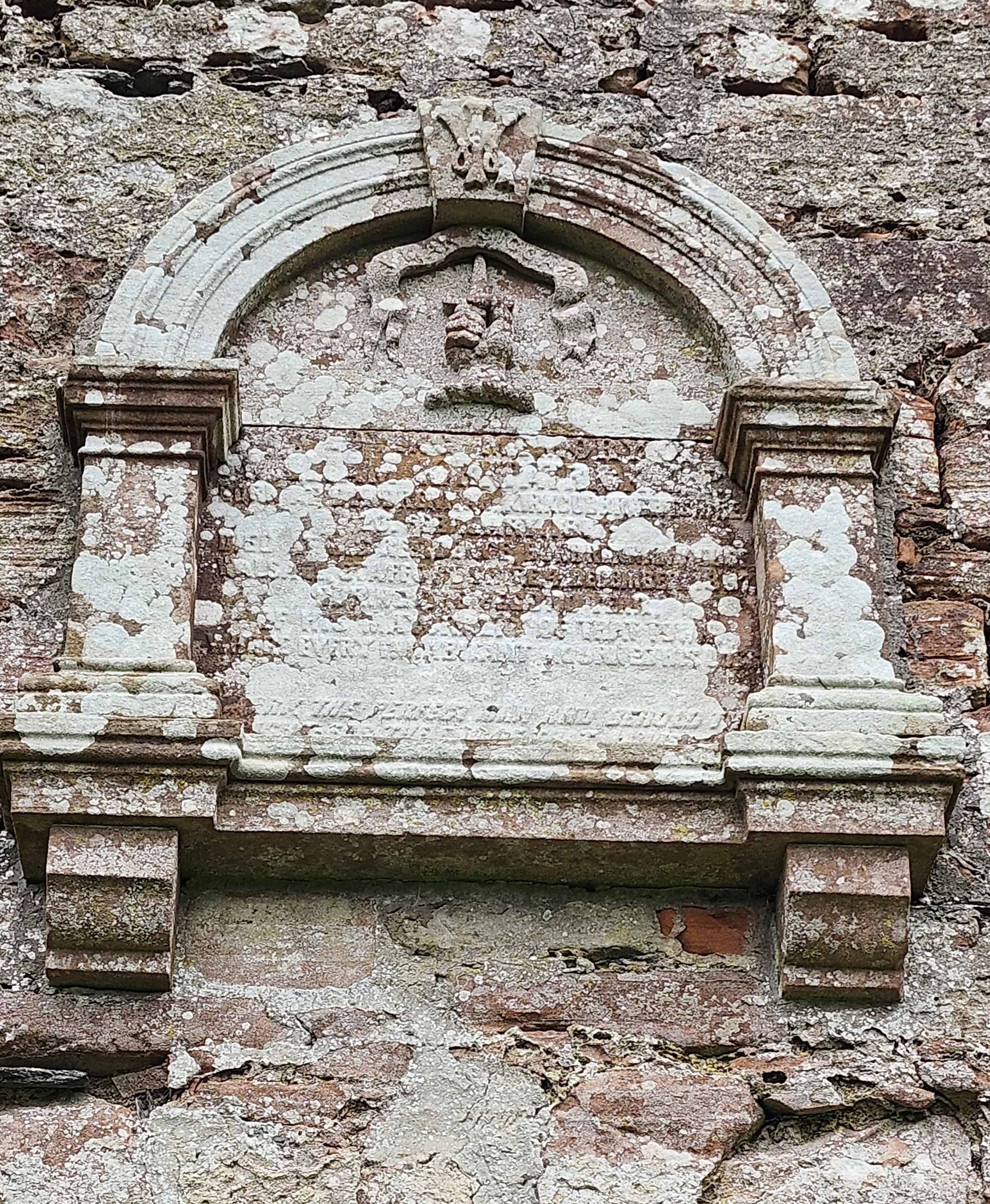
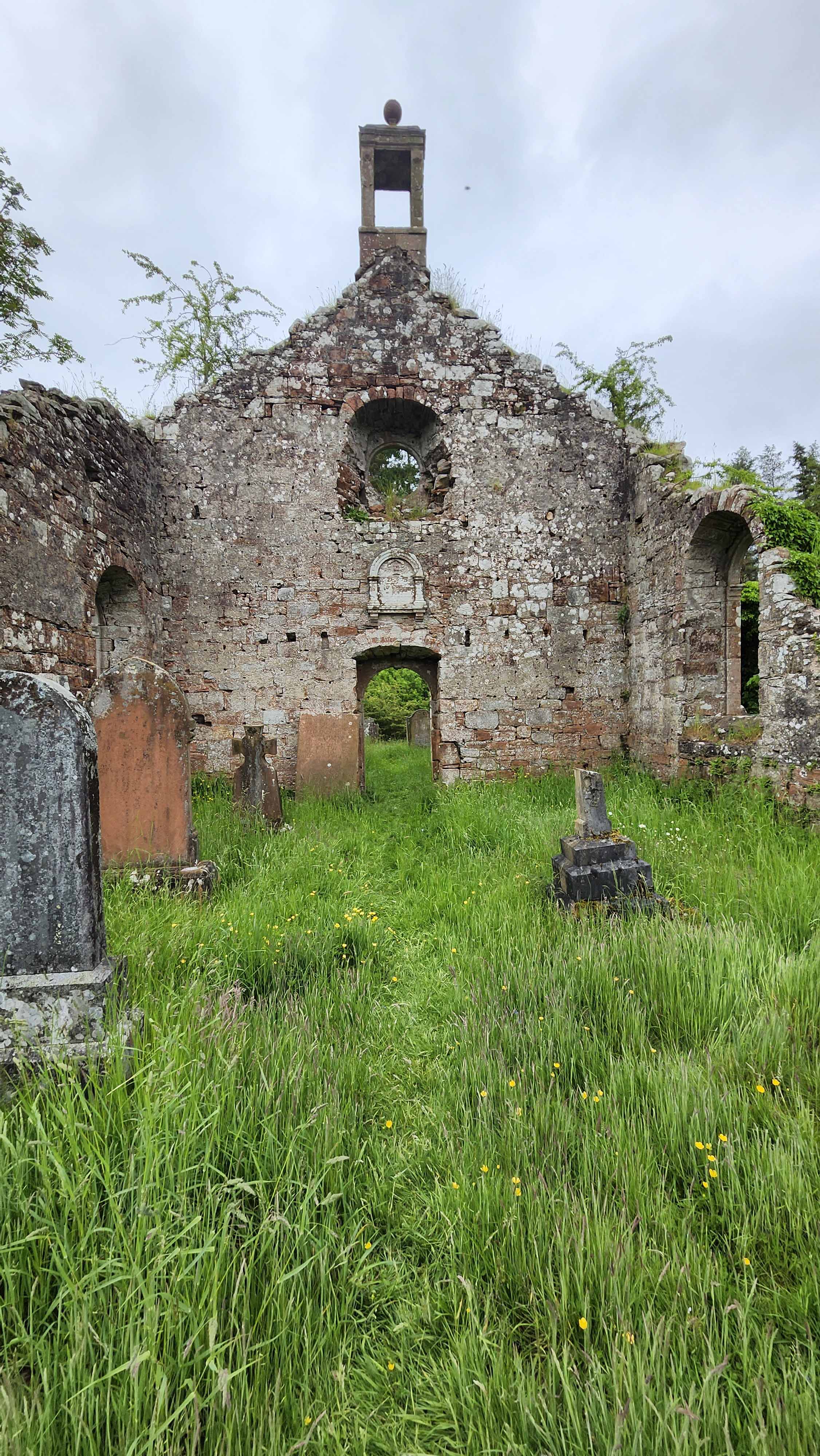
Closeburn lies in lowland Scotland, not 30 miles from the English border. So there were plenty of cross border clashes. There are several other castles in the area including Lag Tower and Castle Morton. One of my first places to visit was the cemetery around Closeburn Parish Church – because there are Kirkpatricks buried there – and an I Mak Siccar Clan Badge in Stone.
The church is quite lovely and the surrounding cemetery modestly maintained. And nearby I found the Kirkpatrick family mausoleum. It seems to have once been a small building and long since collapsed. But the I Mak Siccar badge is still there under the roof peak!
It’s hard to describe the feelings I experienced walking around the cemetery. The history, the lives lived. How some of the clan changed the course of human history. Empress Eugenie and her husband Napoleon III created the Paris we know today. She opened the Suez Canal and got Luis Vuitton his start. A Kirkpatrick was critical to Robert the Bruce becoming king. This event is marked on the side of a building in Dumfries, which is about 12 miles south of Closeburn. A plaque marks the spot.
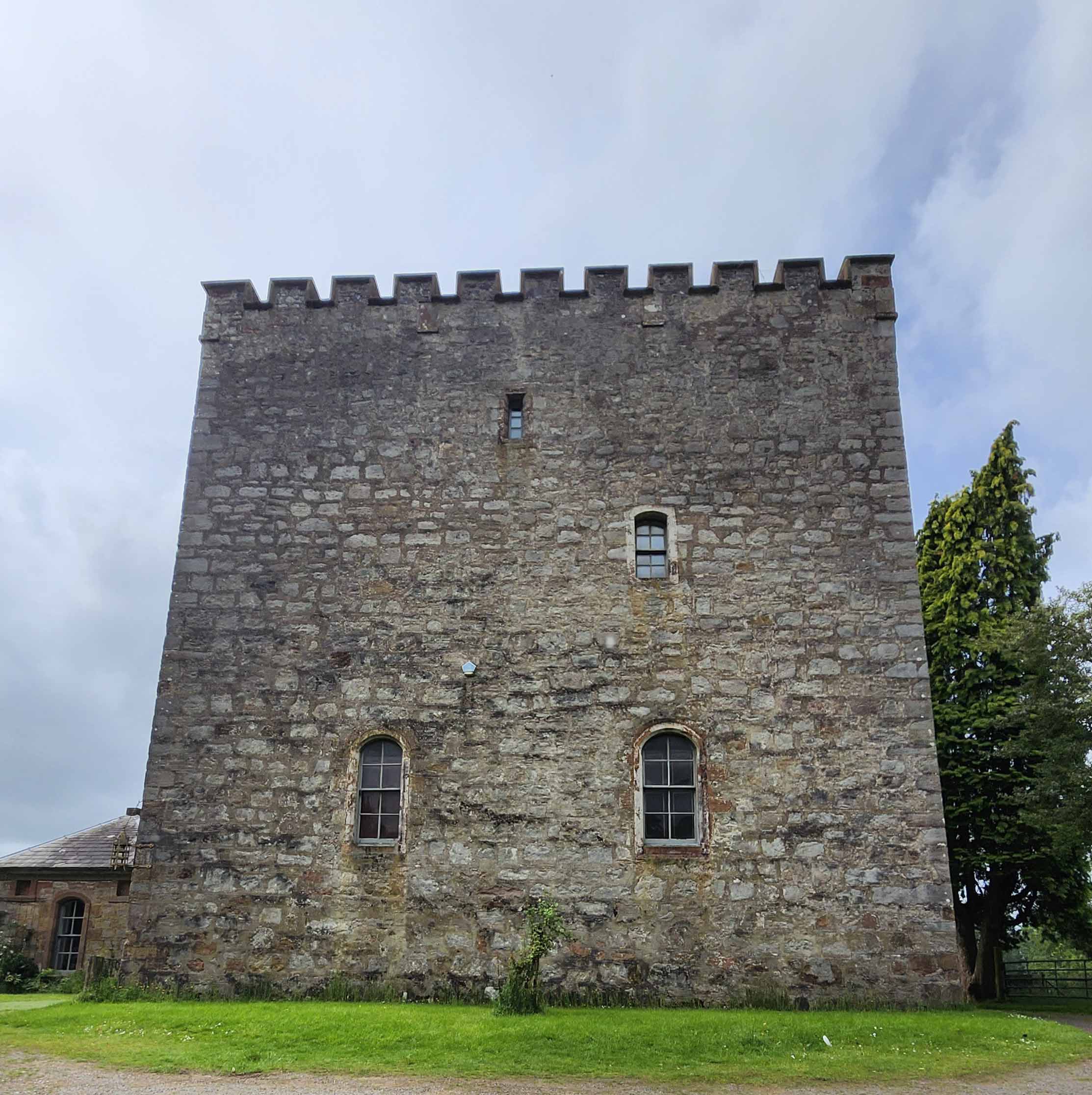
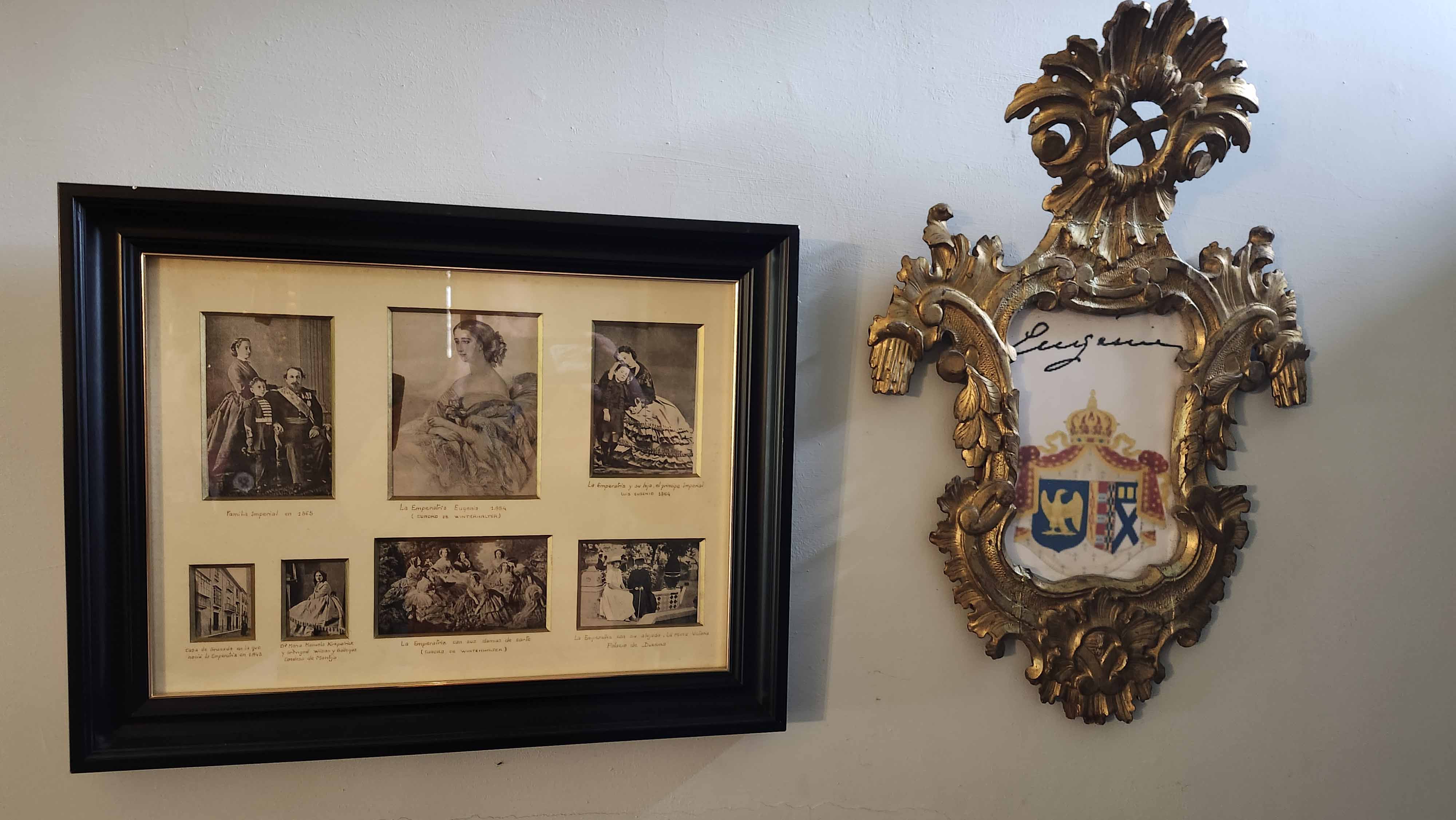
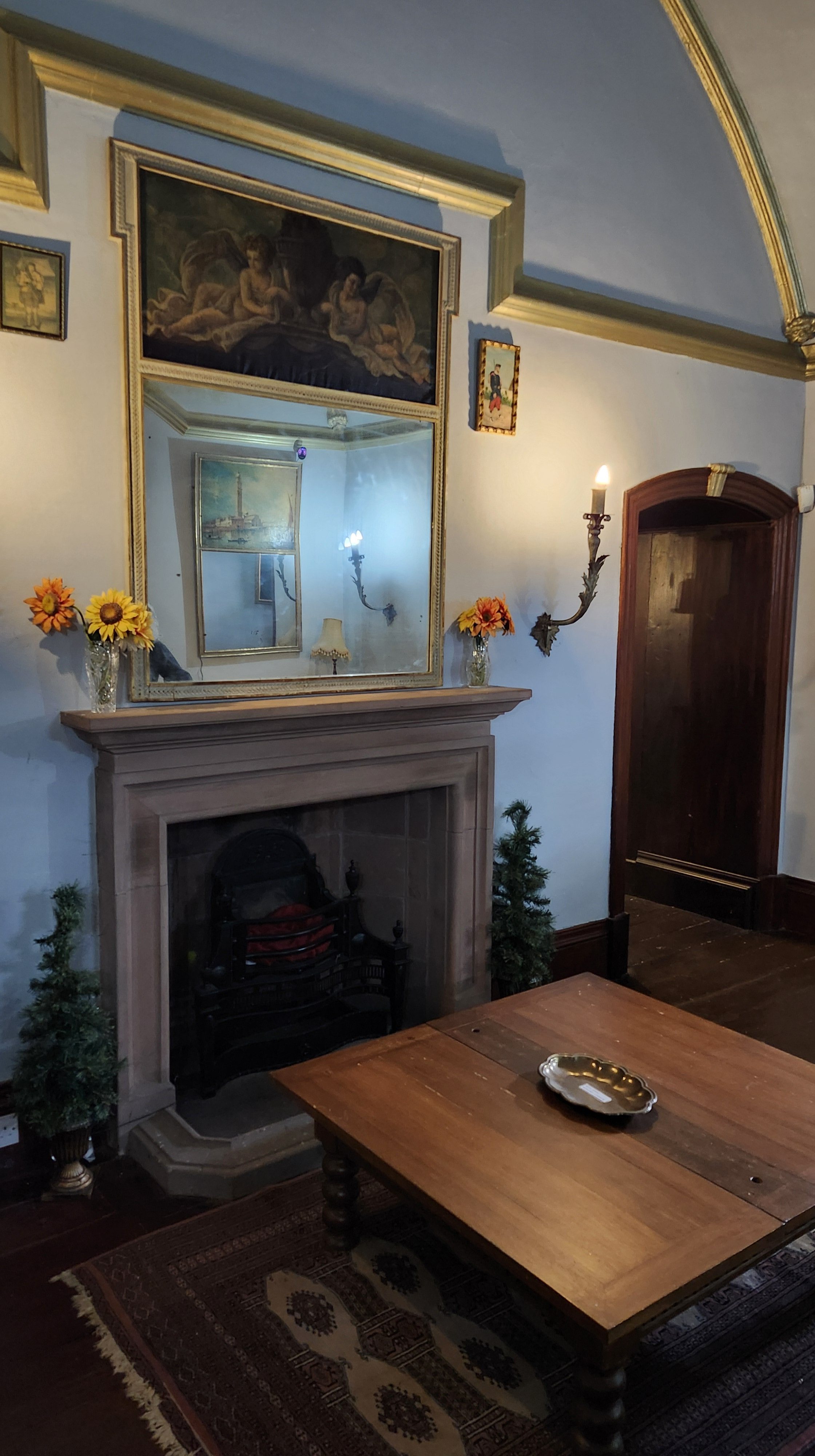
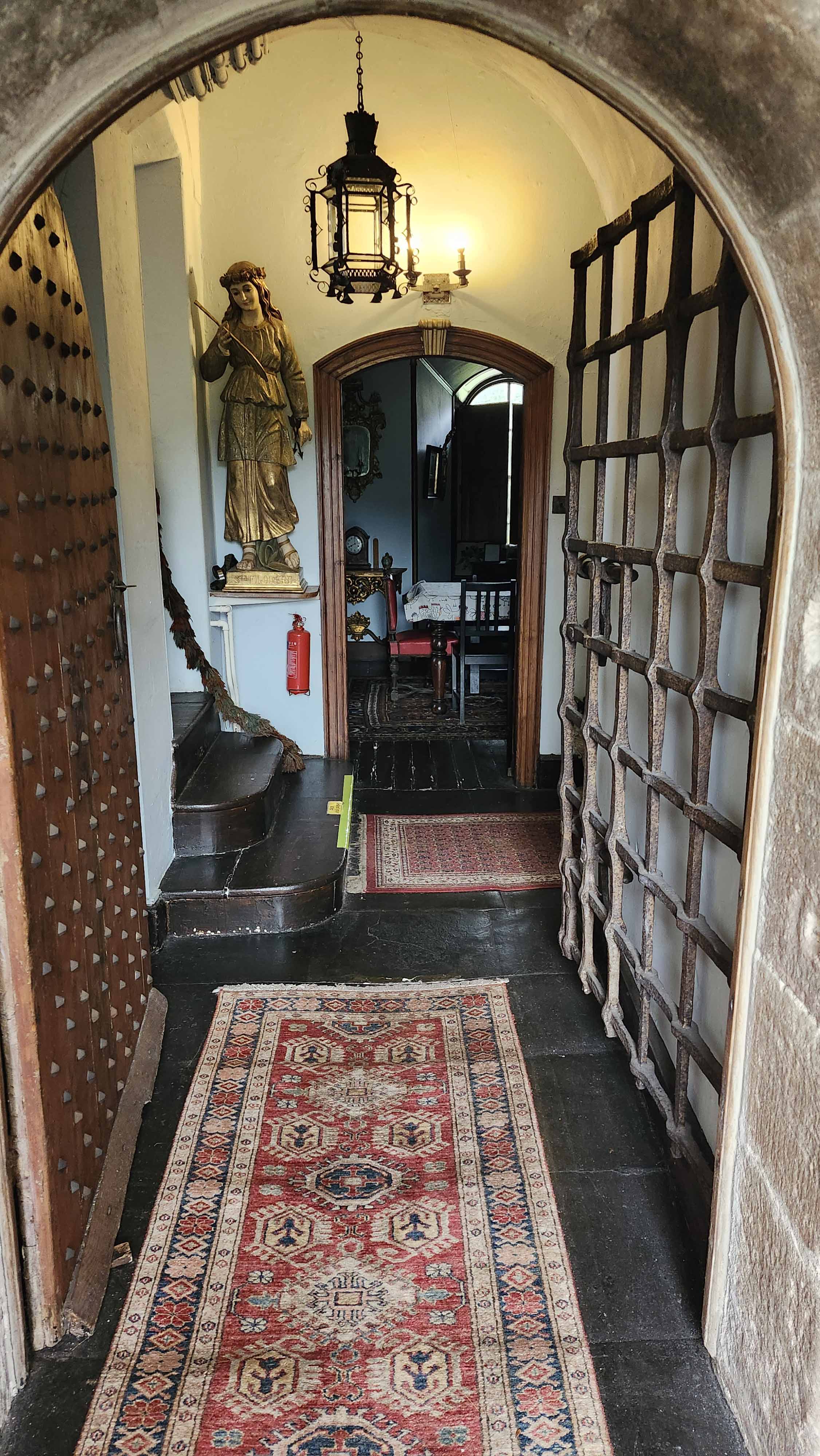
The following day I paid a visit to Closeburn Castle. It is the longest continuously inhabited castle in Scotland. It was built likely in 1180. It was deeded to the Kirkpatricks by King Alexander II in 1232. Maria, the owner, showed me around. It has a dungeon. In many places the walls are 9 feet thick. The castle walls were taken down at one point and used as building materials for a manor in the 17th Century. It has photos of important events in the life of Empress Eugenie – even a photo of her with Queen Victoria.
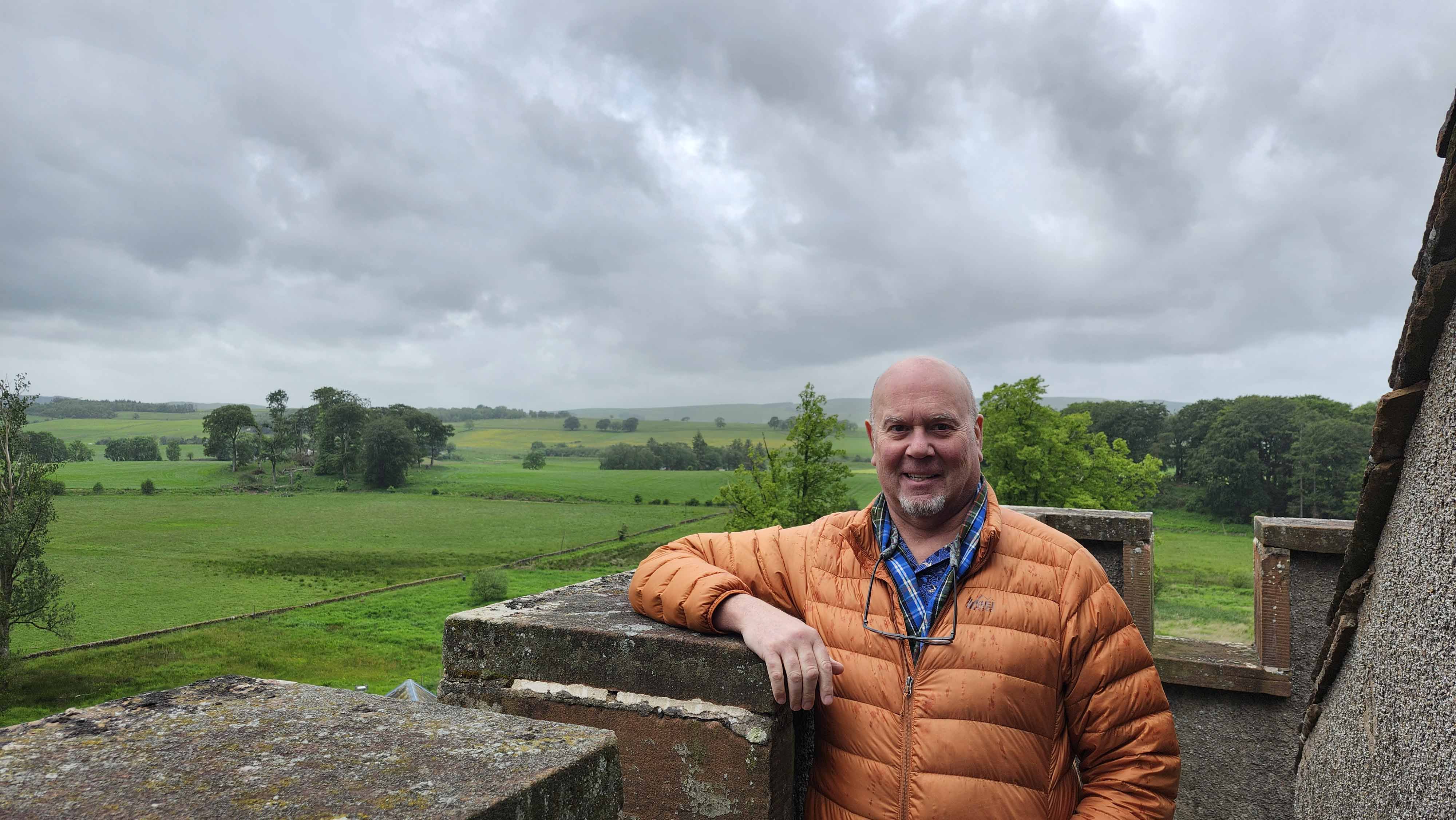
The final part of the visit took me up to the top of the castle. Wow it’s got quite a view!
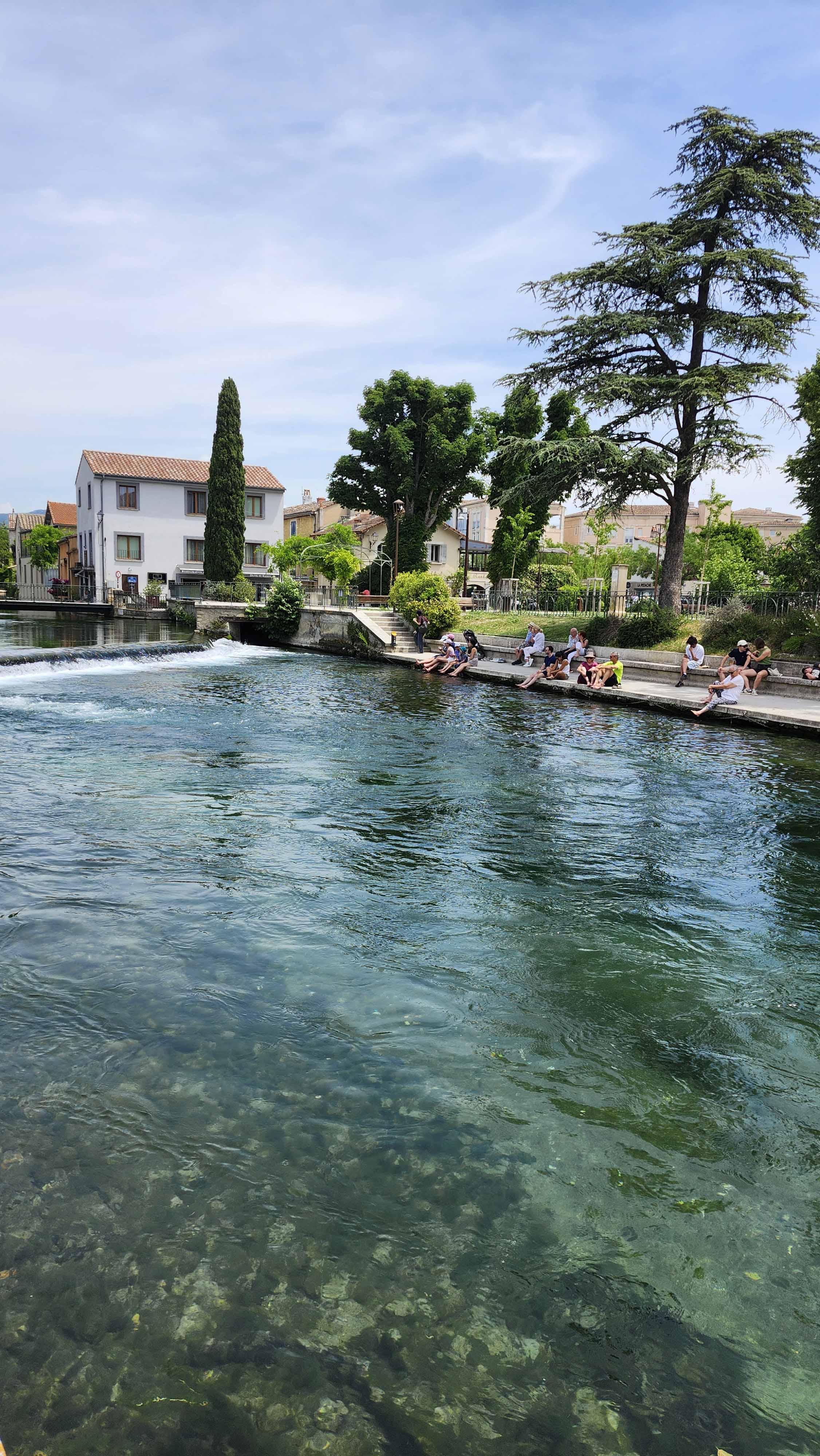
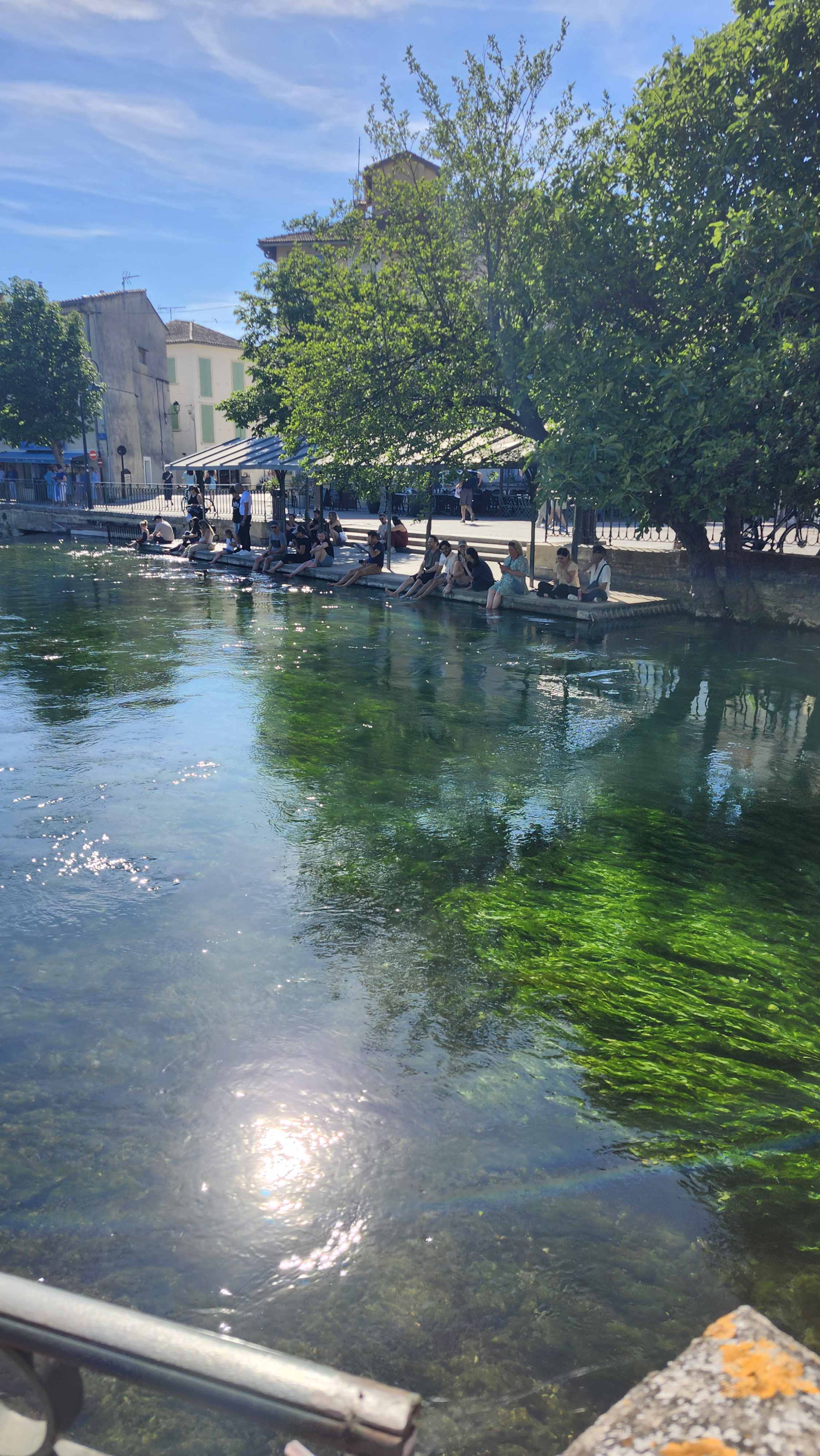
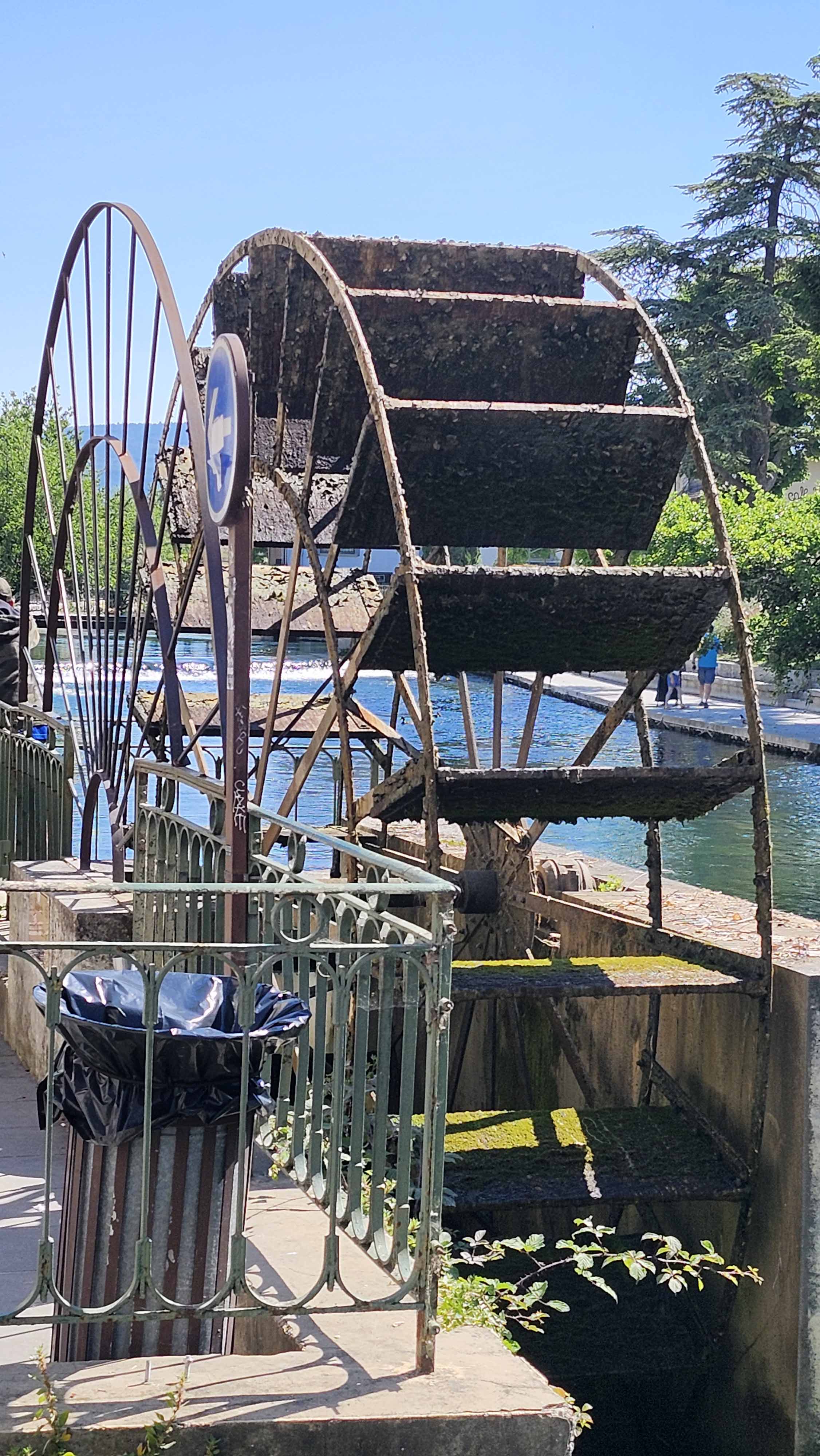
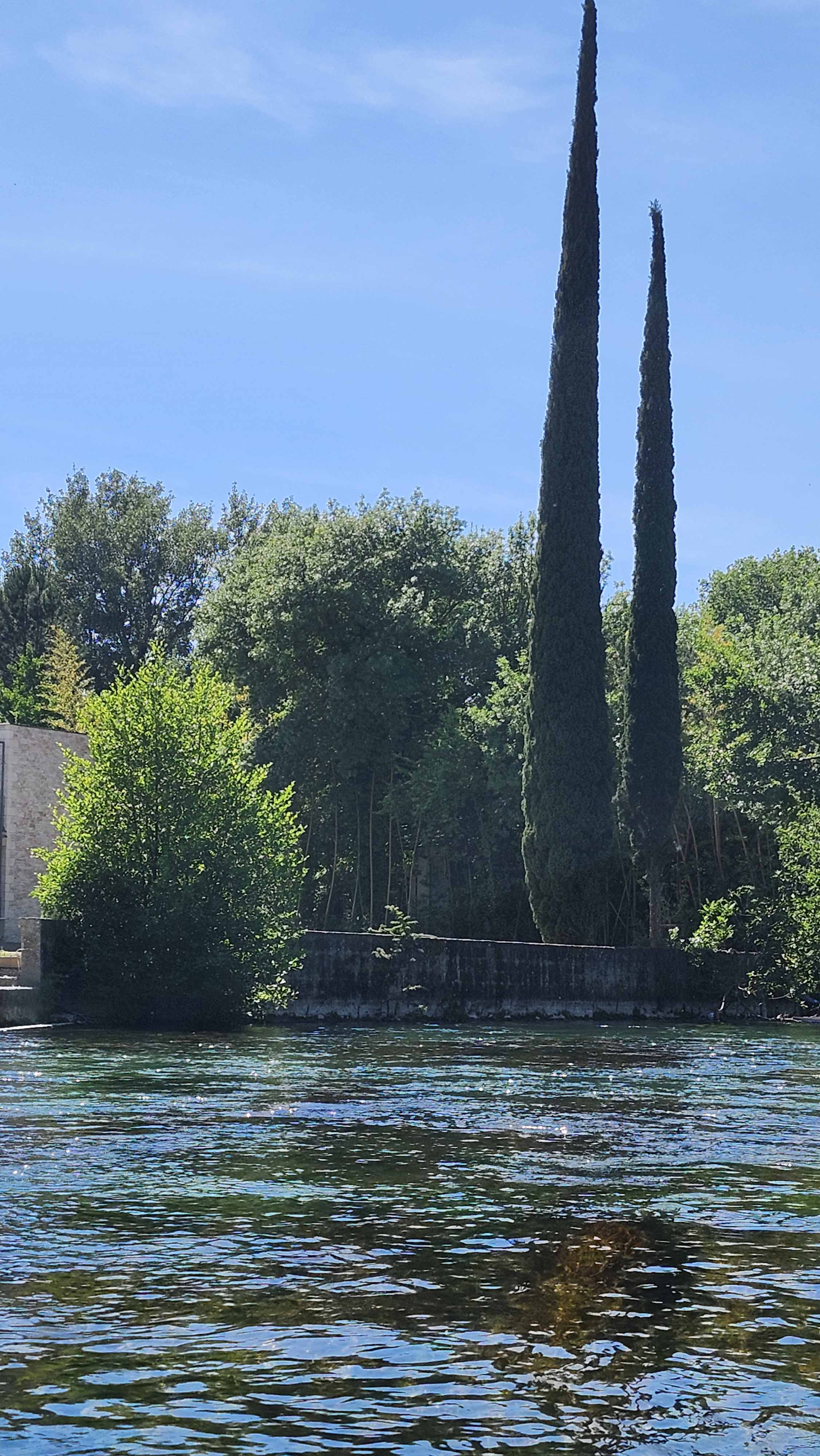
In May 2026 I spent a week in Provence. This is a village along the Sorgue River – where the river splits and goes around an island and rejoins at the other end. This magical village is a lovely place to spend a few days strolling the riverside walkways, checking out museums and shops, and sipping a beverage just staring at the water pass by. It even has waterwheels. It’s completely relaxed – people just sitting along the waters edge dipping their toes.
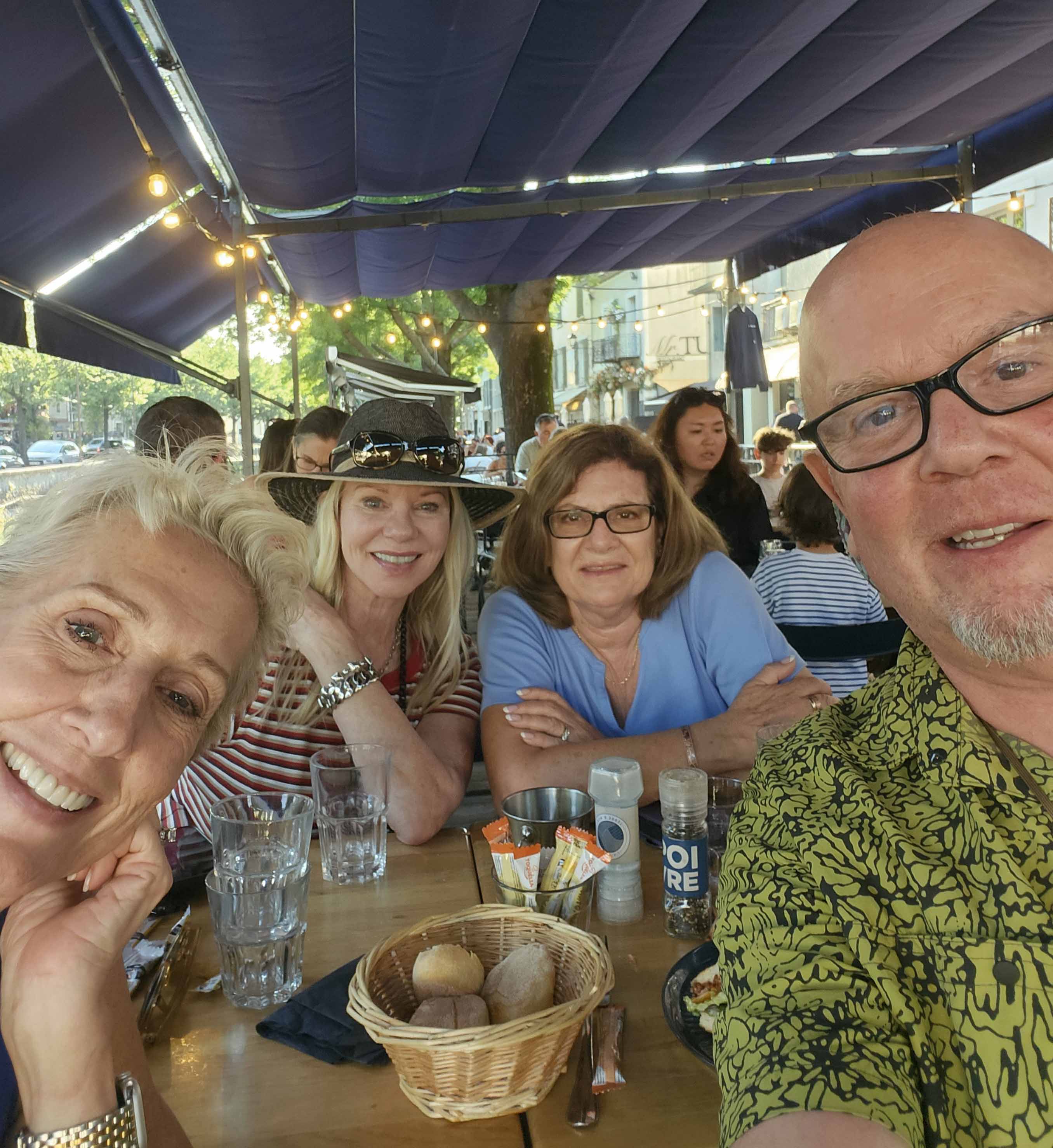
I joined a group attending a workshop for photography. Here are Jamie, Trish, and Diana.
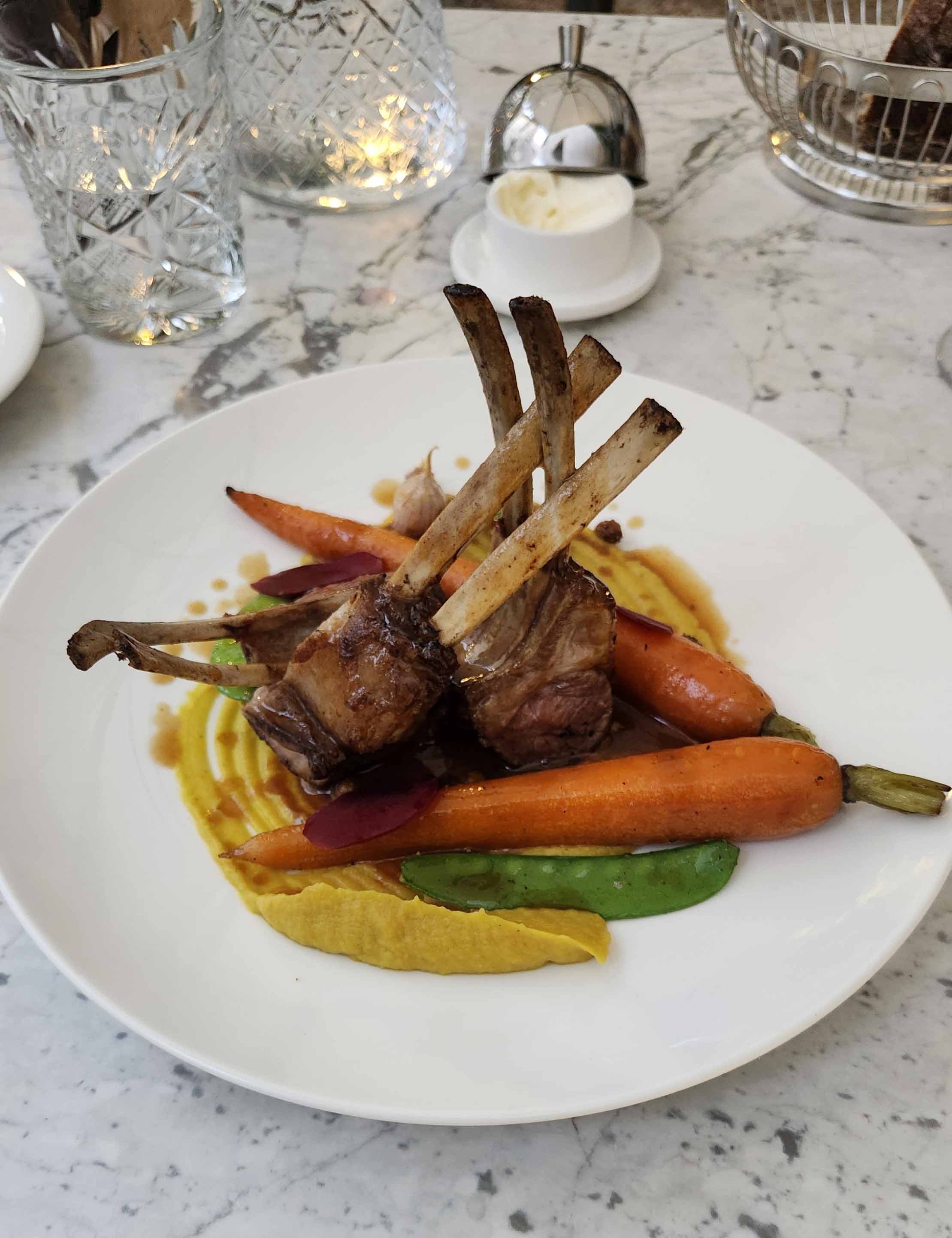
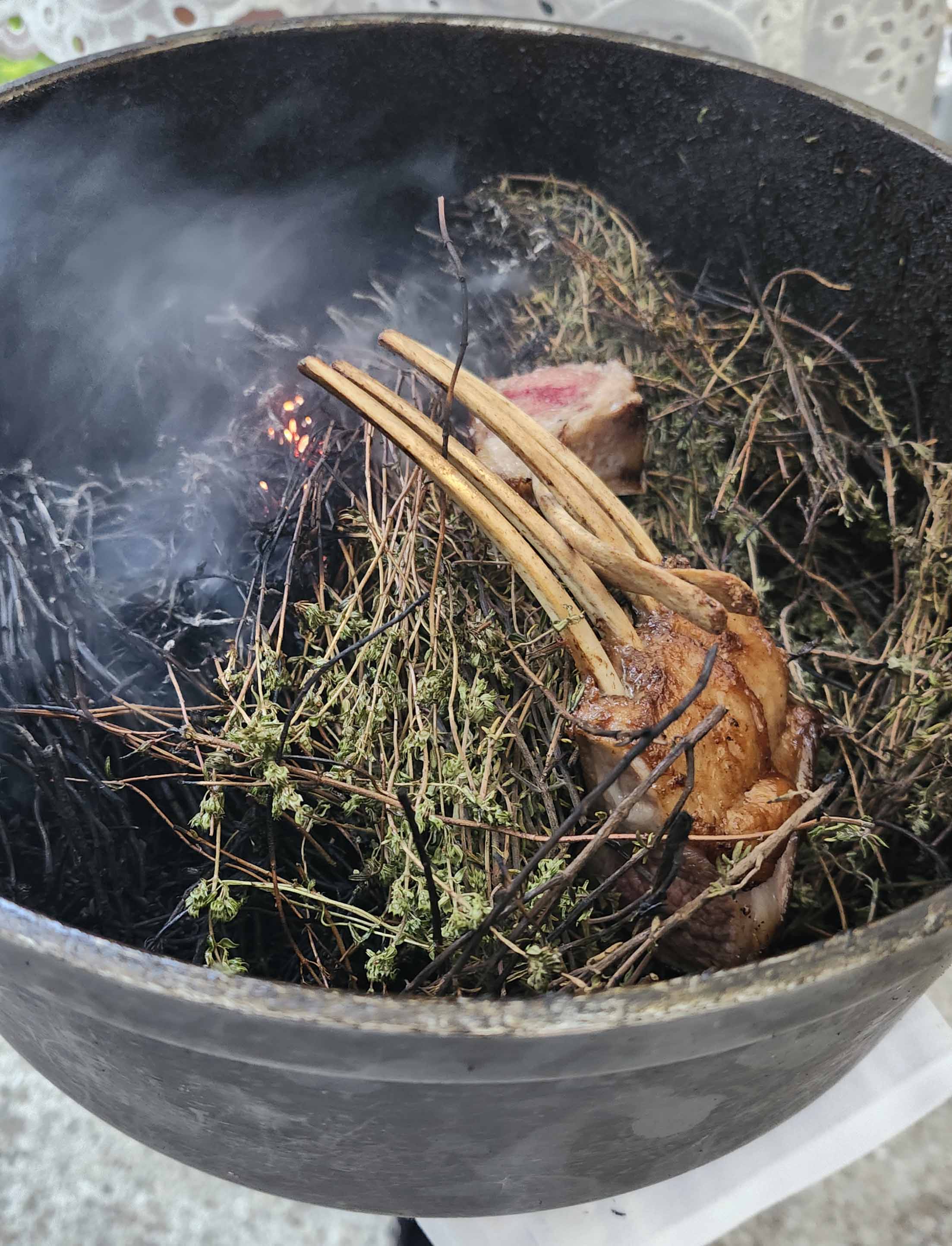
My hotel was the Grand Hotel Henri. Not much to look at from the outside. But inside it’s wonderful. The rooms are splendid – my 2nd stay my room was furnished with completely original matching 19th Century antiques including a roll top desk! The staff is super friendly. The weather was perfect for outside dining. I splurged and ordered the hotel specialty – smoked rack of lamb. WOW. They bring a pot with the smoking herbs to your table so that you can see and smell the progress.
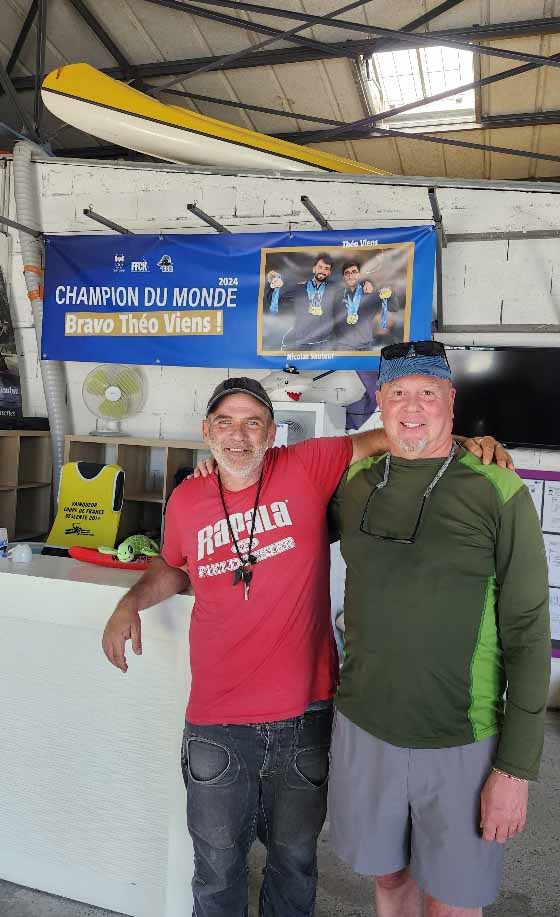
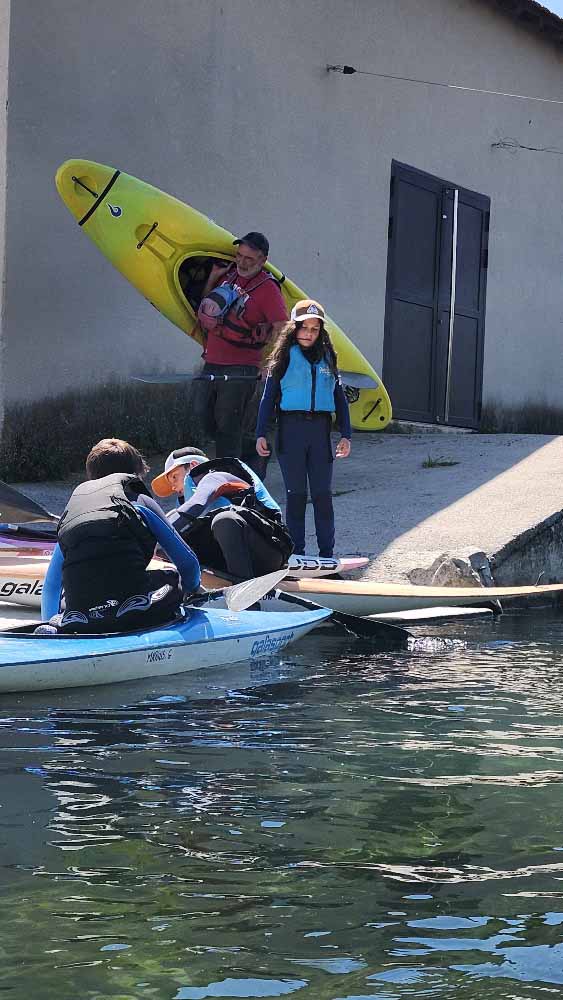
Next day, I took a stroll around the village. At one point I crossed the river and saw kids paddling kayaks on a slalom course! Then I saw their kayaking coach. I am an American kayaking coach. So I practiced up my French and went over and introduced myself. The coach said that it was great I came over! He said, come on back at 3:00 and we will do something! I came back in my kayaking outfit and was surrounded by children curious about kayaking in America. Fun! Priceless! The coach, Ben, shared an espresso with me, and then I went out onto the river and helped teach a kayaking class!
With that, you can dismiss all you have heard about French snobbiness. It just doesn’t exist. You just need to be polite, humble, and try your best to make a connection and of course try a little French!
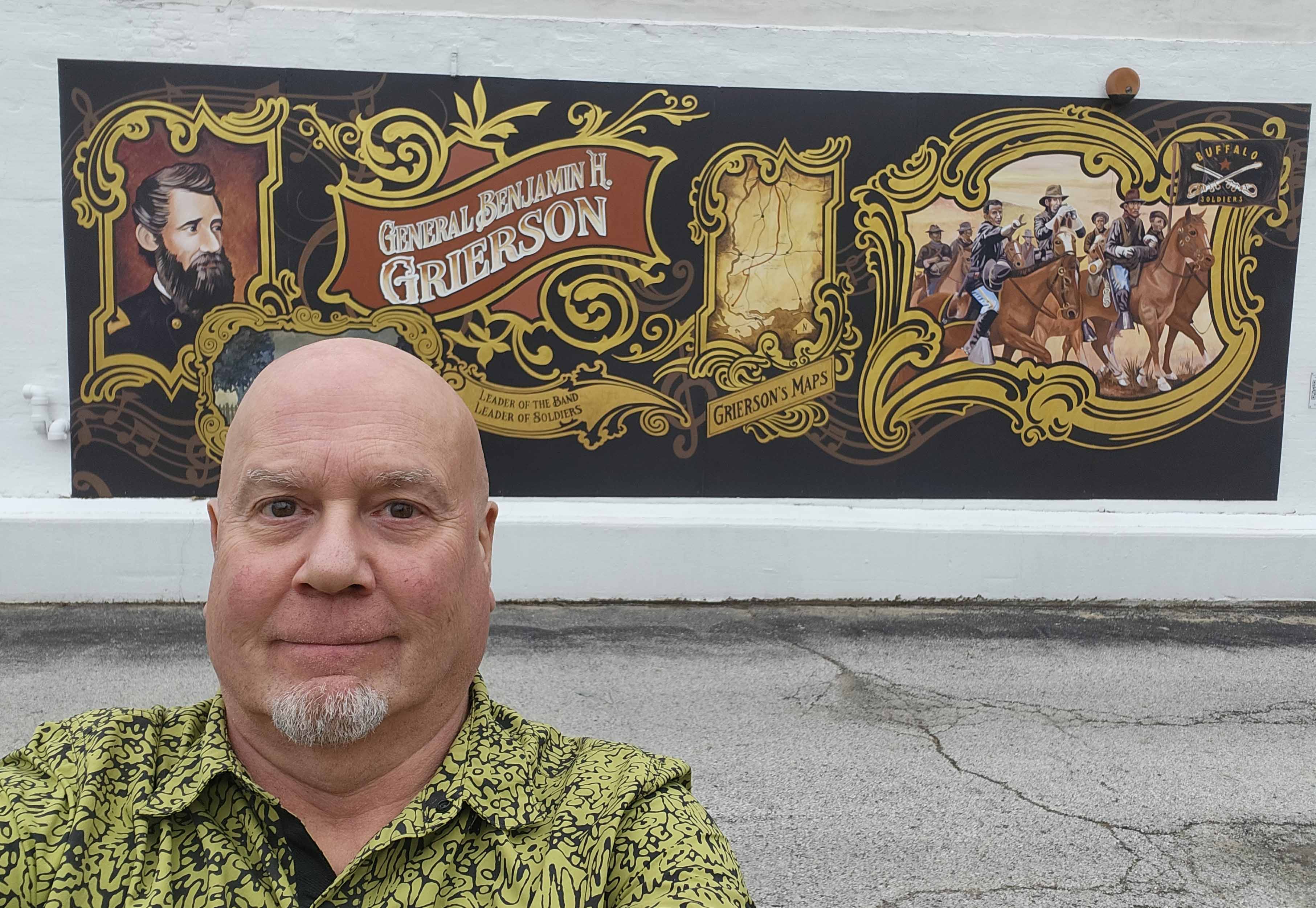
The Jacksonville mural honoring my Great Great Great Uncle Ben Grierson
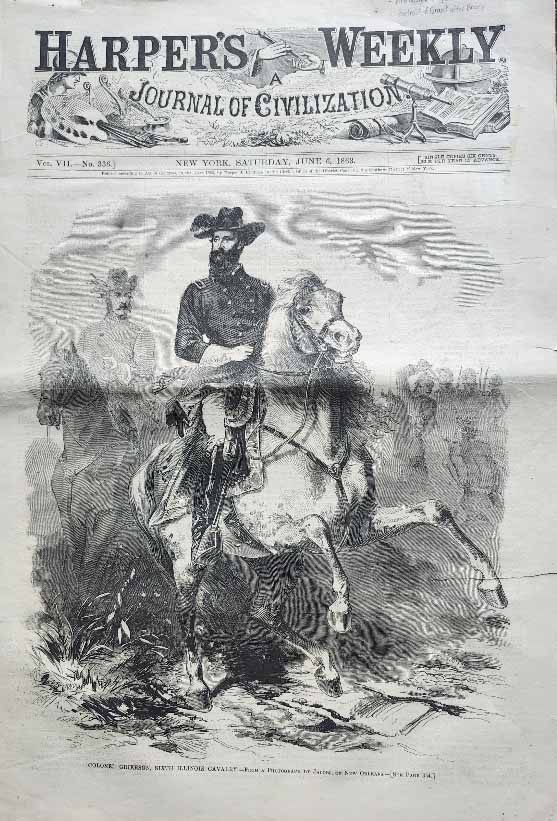
Over the last few years, I’ve done some digging into my heritage on my Mother’s side. When I was a teen, she gave me a couple of books and said they were about her family living in Illinois. One book is “Unlikely Warriors,” and the other “The Colonel’s Lady on the Western Frontier,” by Shirley Leckie. With me more interested in socializing with friends, the books gathered dust. And I’ve had a family album with some photos from the 19th Century but wasn’t real familiar with who those people were – just that they lived in Illinois. It was a couple of years ago when I put both together and learned those books were about the people in my family album! They lived in Jacksonville, Illinois. The most prominent were Civil War General Benjamin Henry Grierson and his wife Alice Kirk (formerly Kirkpatrick). I learned that Ben Grierson commanded a famously successful mission called Grierson’s Raid. Later, he was stationed in Texas, Arizona and New Mexico, where he commanded the Buffalo Soldiers – the first African American US Army regiment. My books were by Shirley Leckie, who researched and wrote detailed accounts of Ben and Alice’s life and families. All I could think was OH WOW. Benjamin Grierson’s raid was a diversionary 600-mile push into Confederate territory, destroying Confederate property as he went. The Union Army had been unsuccessful at capturing Vicksburg, an important post on the Mississippi River. General Ulysses S. Grant came up with the idea that a diversionary raid comprising three Cavalry regiments led by Grierson would cause the Confederates to chase him and empty the fort. It worked, the Union captured Vicksburg, and the whole episode made national headlines!
I’ve spent my whole life ignorant of the amazing accomplishments of this part of my family! The Kirks even had an Underground Railroad station in Jacksonville – sometimes hosting/hiding as many as 30 escaped slaves on their way to freedom in Canada. And the Fullers can be traced right back to Plymouth, MA, in the 1620s.
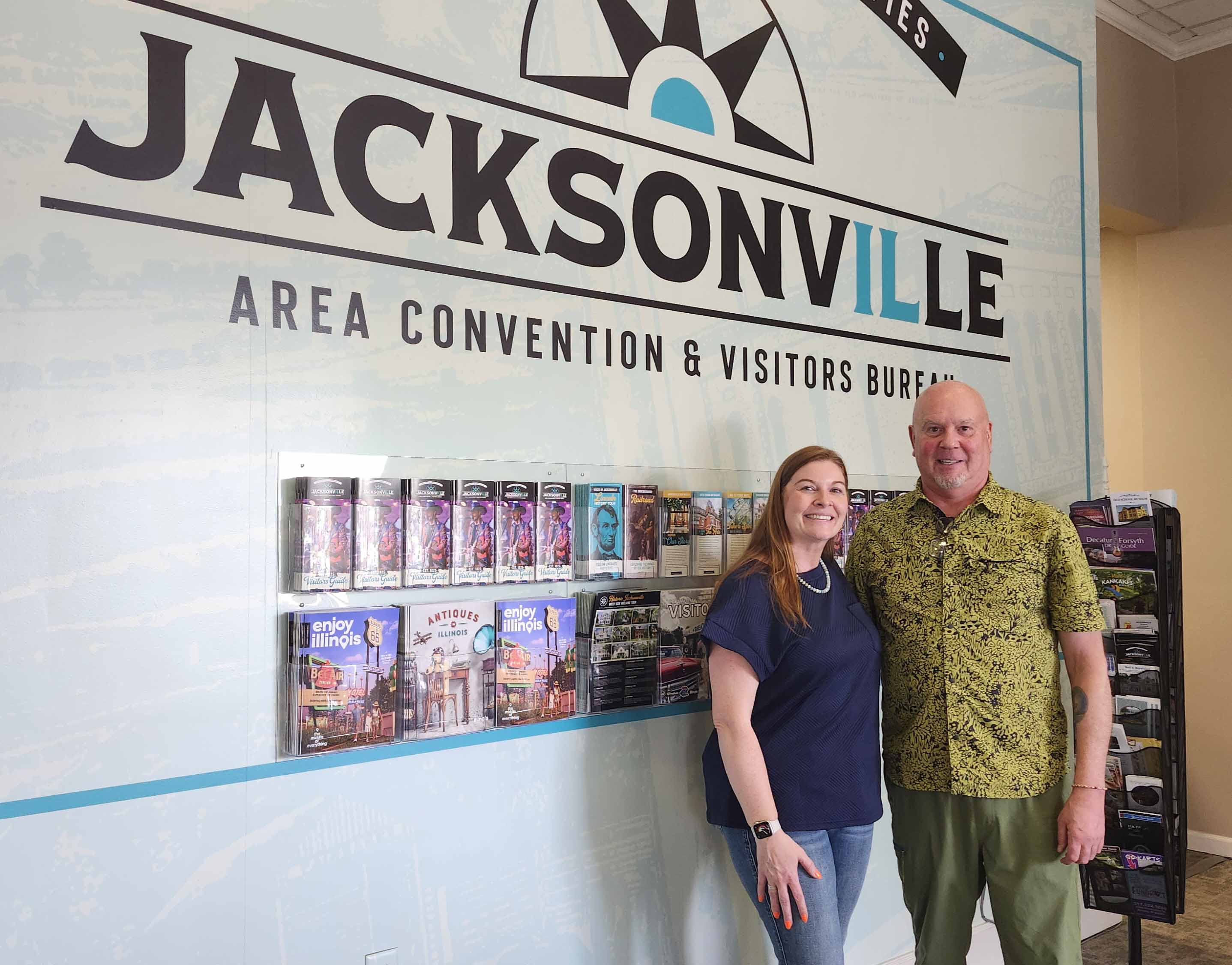
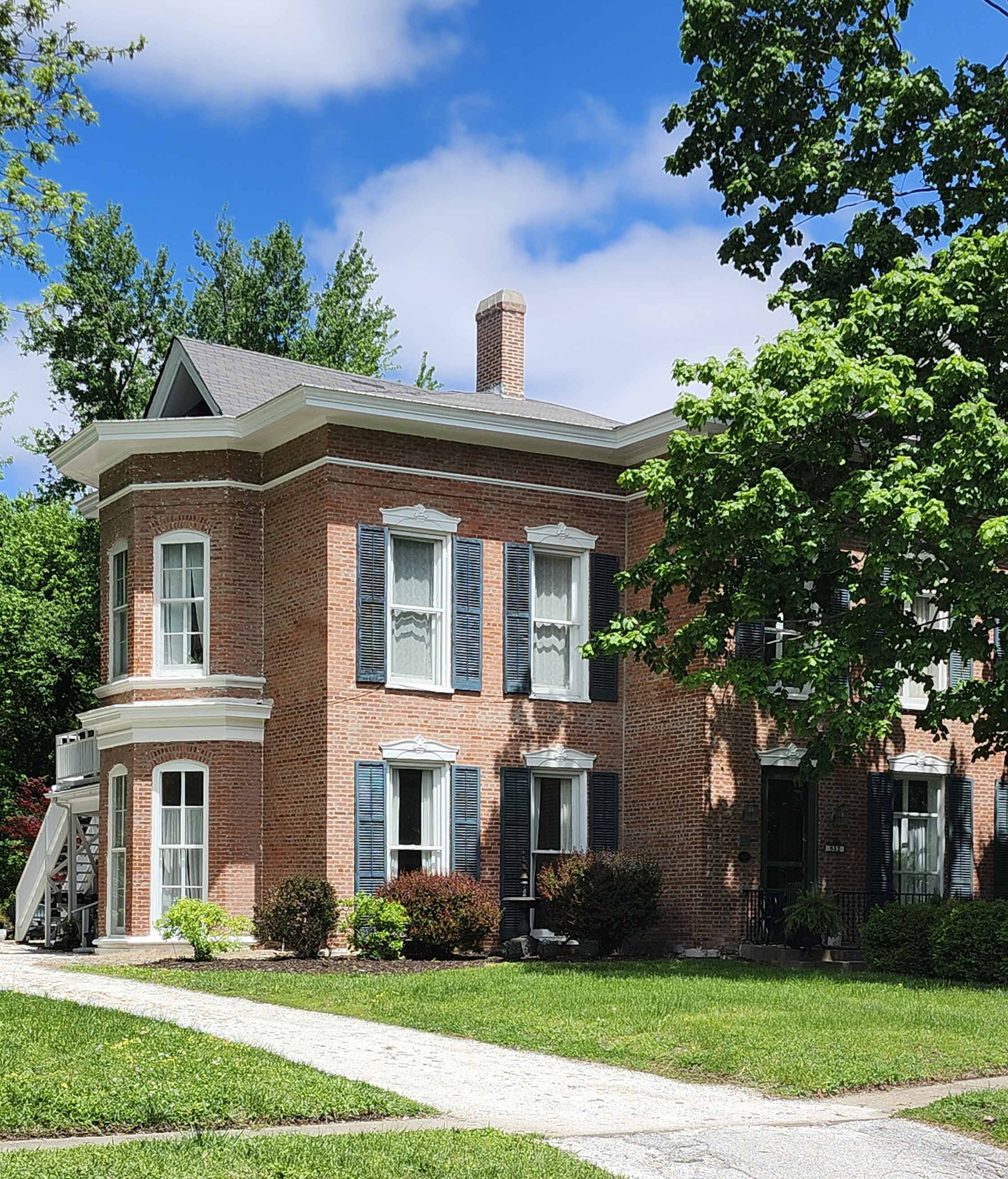
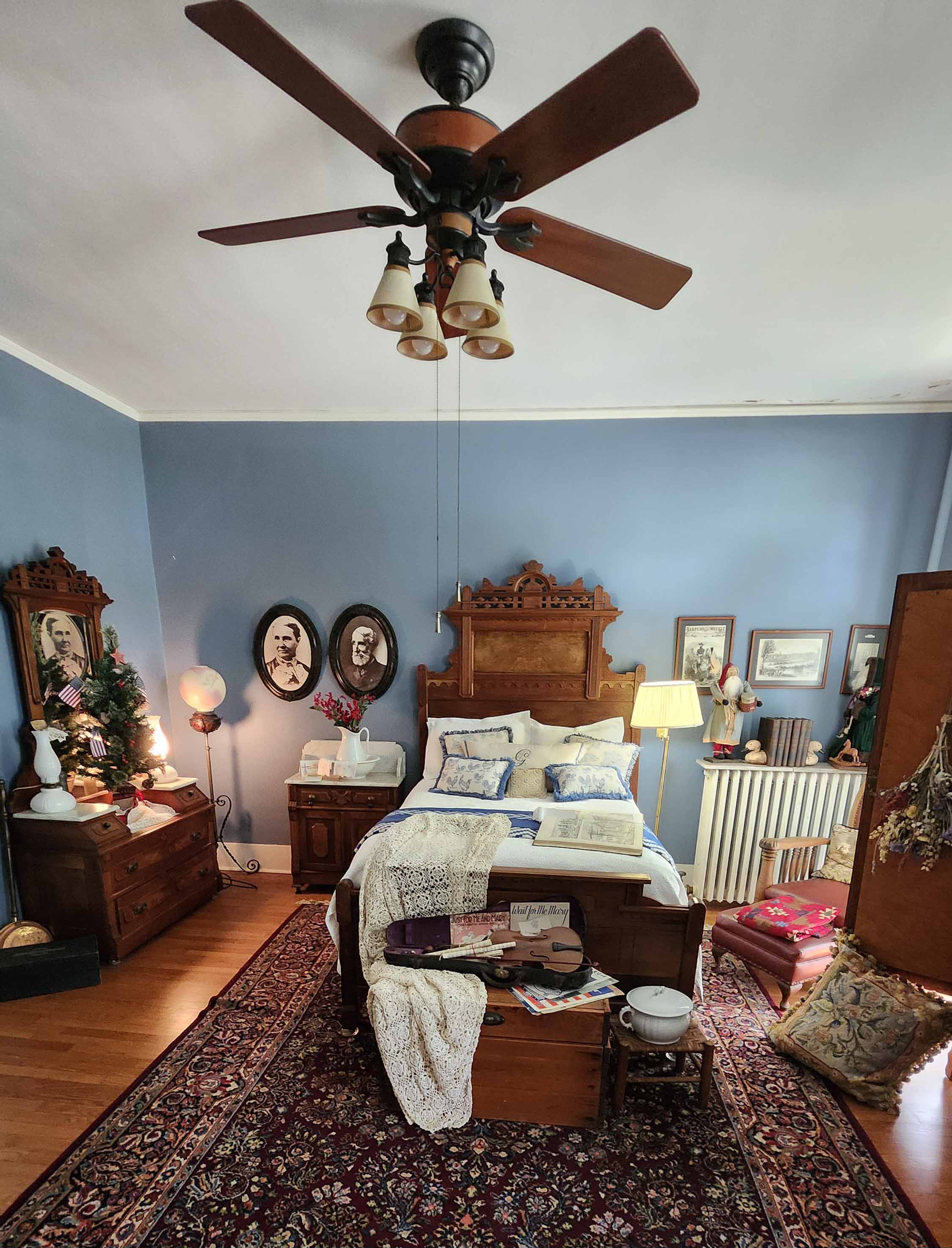
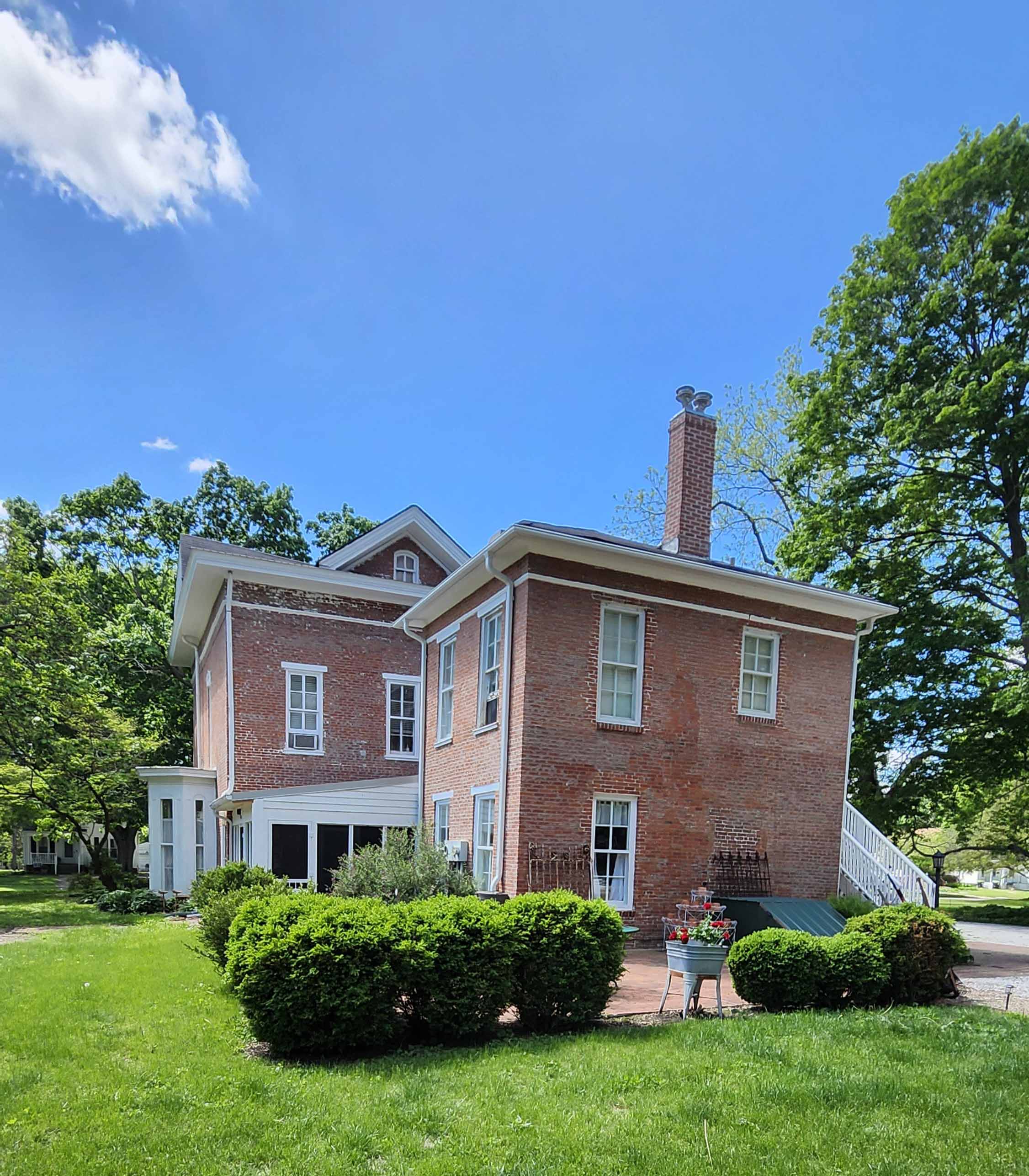
I am related to all these Griersons and Kirks and the Fullers. According to these books, these Jacksonville families lived near each other and were very close. They had parties and cookouts. The kids knew each other. Quite a few got married. The families babysat for each other. Two Fuller daughters went with the Griersons out West. I did some resarch and uncovered where Ben and Alice’s house is today in Jacksonville. I contacted Brittany Henry at the Jacksonville Area Convention & Visitor’s Center, and learned Mary Gray owns the house. With this information I made up my mind to visit Jacksonville and experience the town! I contacted Mary, and she invited me to come see. She said there is a dedicated bedroom with photos of Ben and Alice, amongst other Civil War artifacts! Wow! So, we agreed to meet at her house, known as the Grierson Mansion, at 10:30 on a Wednesday.
I arrived in town the day before and went to the Visitor’s Center. Brittany came out and recognized me right away. This was the beginning of my being treated like family during my visit! That’s because my ancestors mean so much to Jacksonville. Brittany gave me some historical guidebooks of town, a couple of which prominently feature Ben Grierson! Jacksonville also hosted Abraham Lincoln and General Grant. It was an important Underground Railway stop for freedom seeking slaves on their way to Canada. I showed some of my 19th Century photos. Then I went to visit Woodlawn Farm, the most famous Underground Railroad station in town. Barbara, the curator, opened it just for me to take a tour. It has many important artifacts like some flowers from Abraham Lincoln’s funeral procession, and a first edition copy of Uncle Tom’s Cabin. Barack Obama paid a visit a few years back.
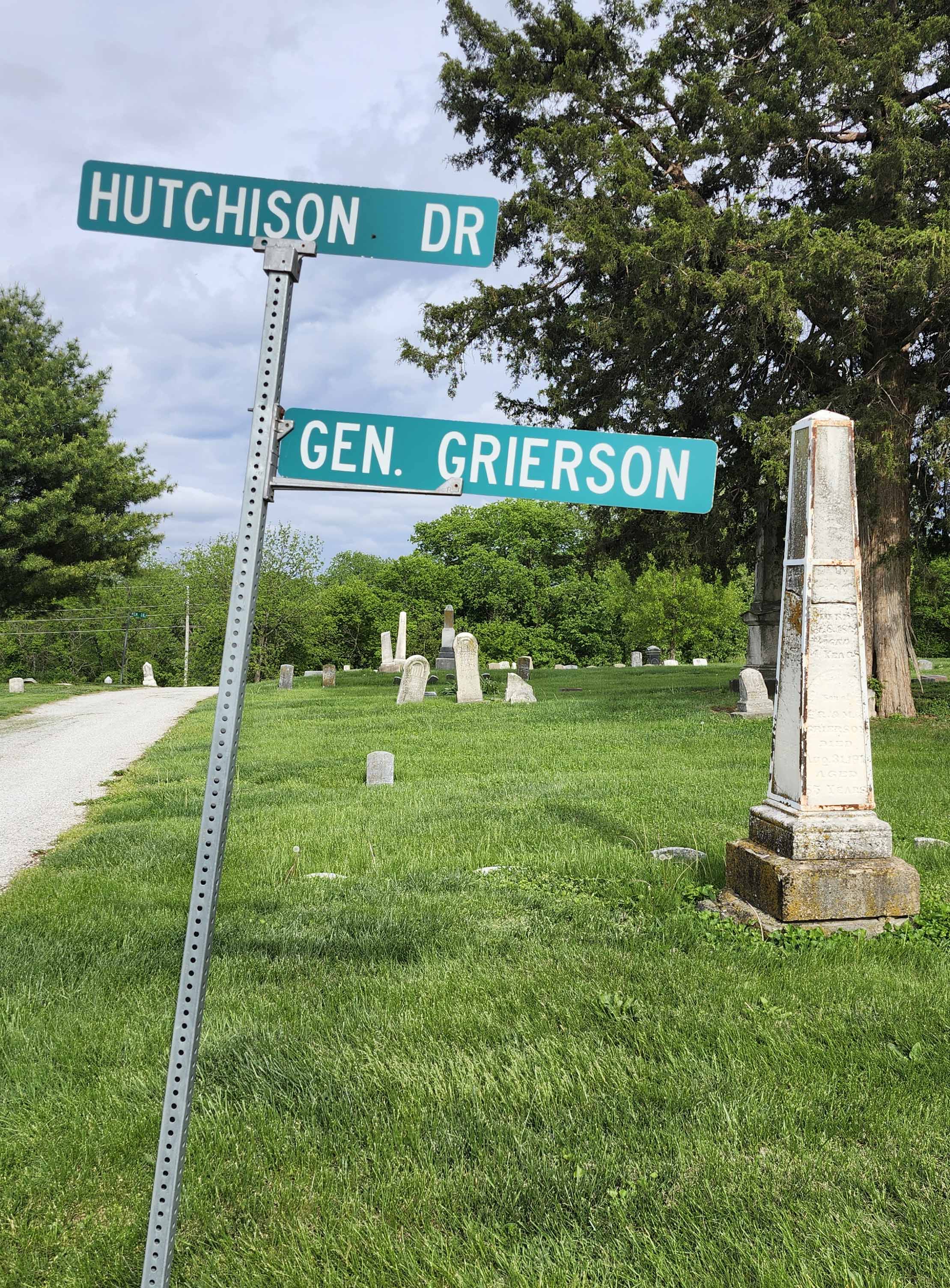
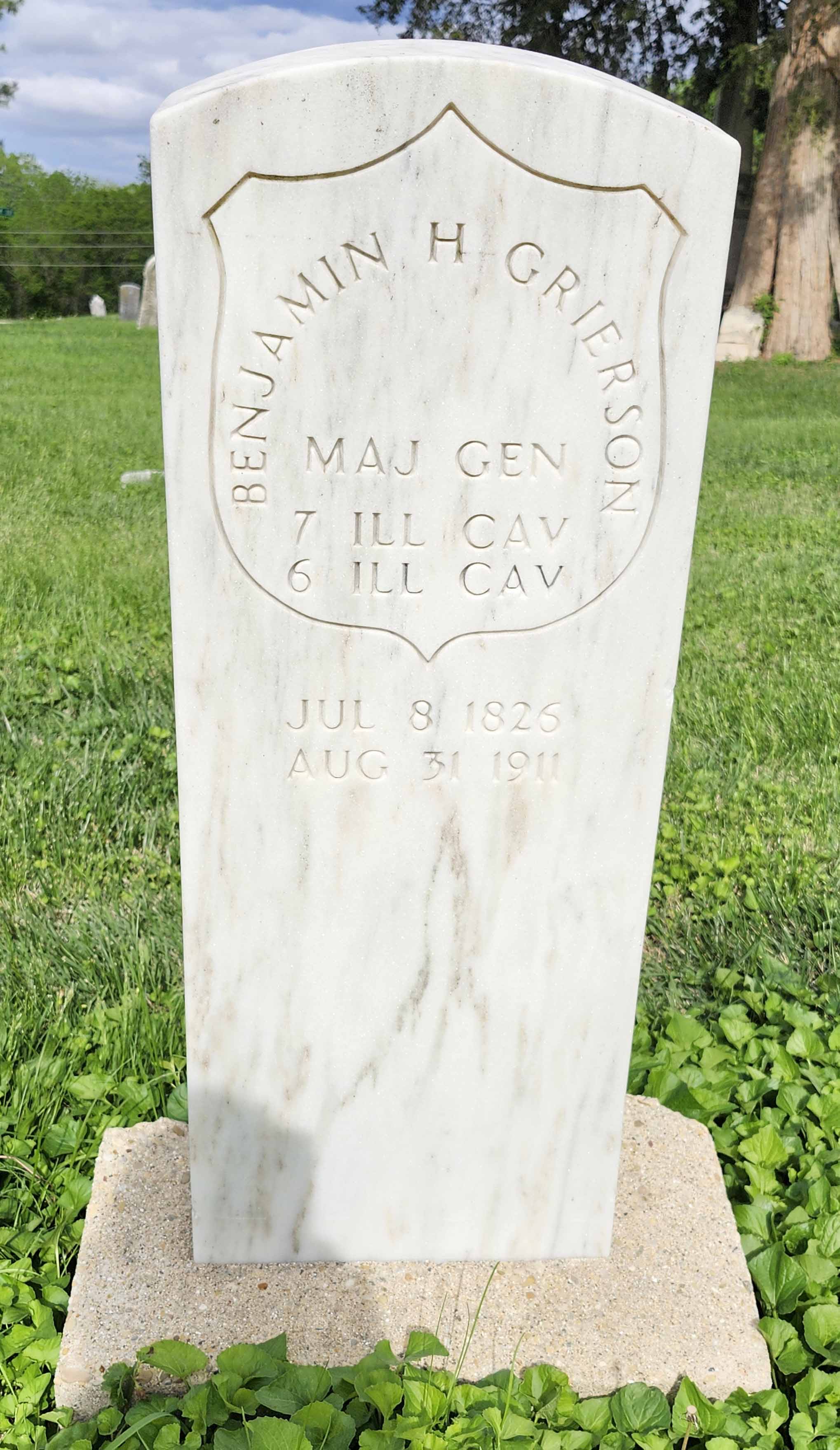
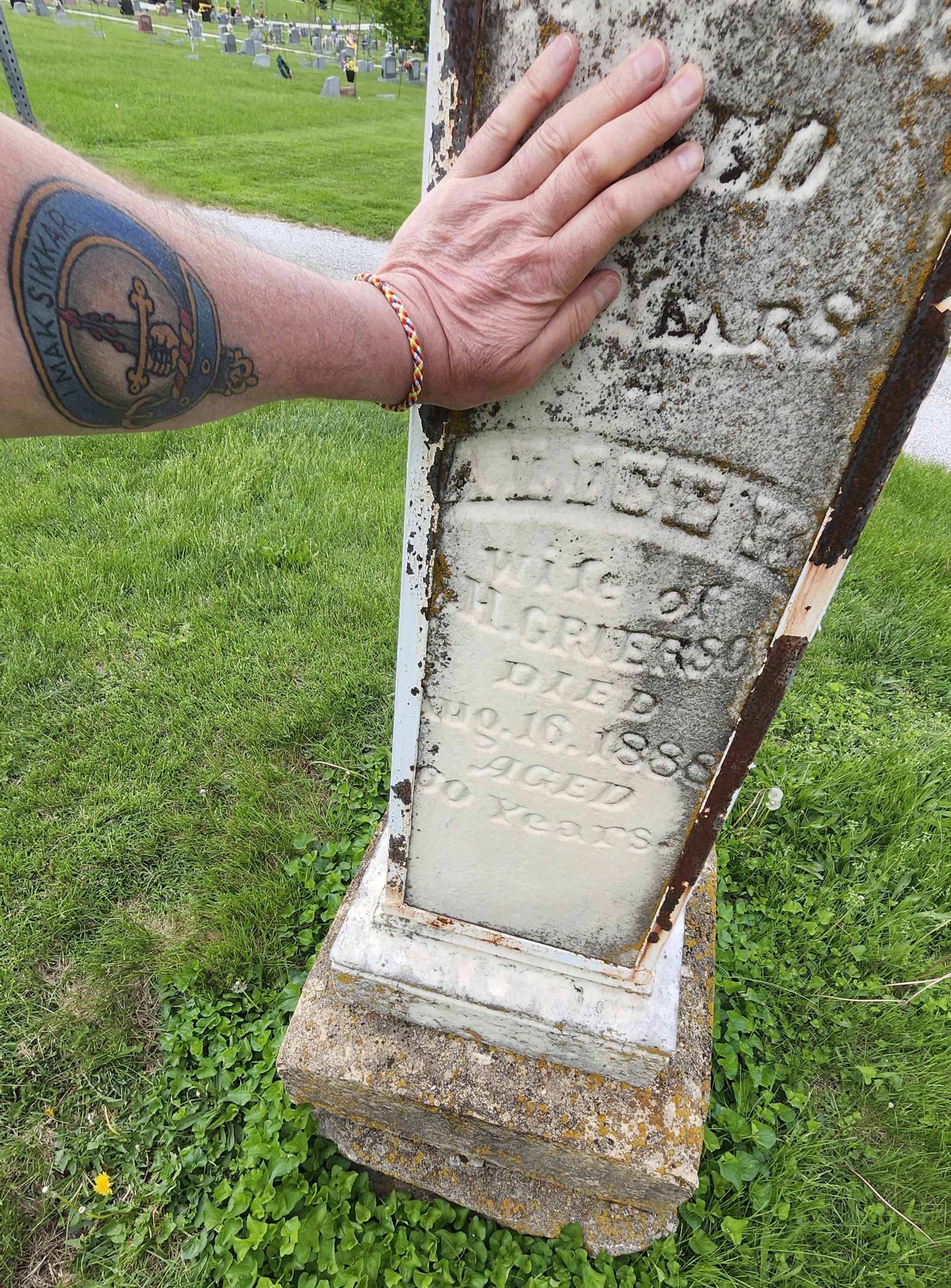
Then I visited the East Cemetery, where General Grierson, his parents, and his children and Alice Kirk Grierson are buried. It wasn’t hard to find where they were! A street was named for them.
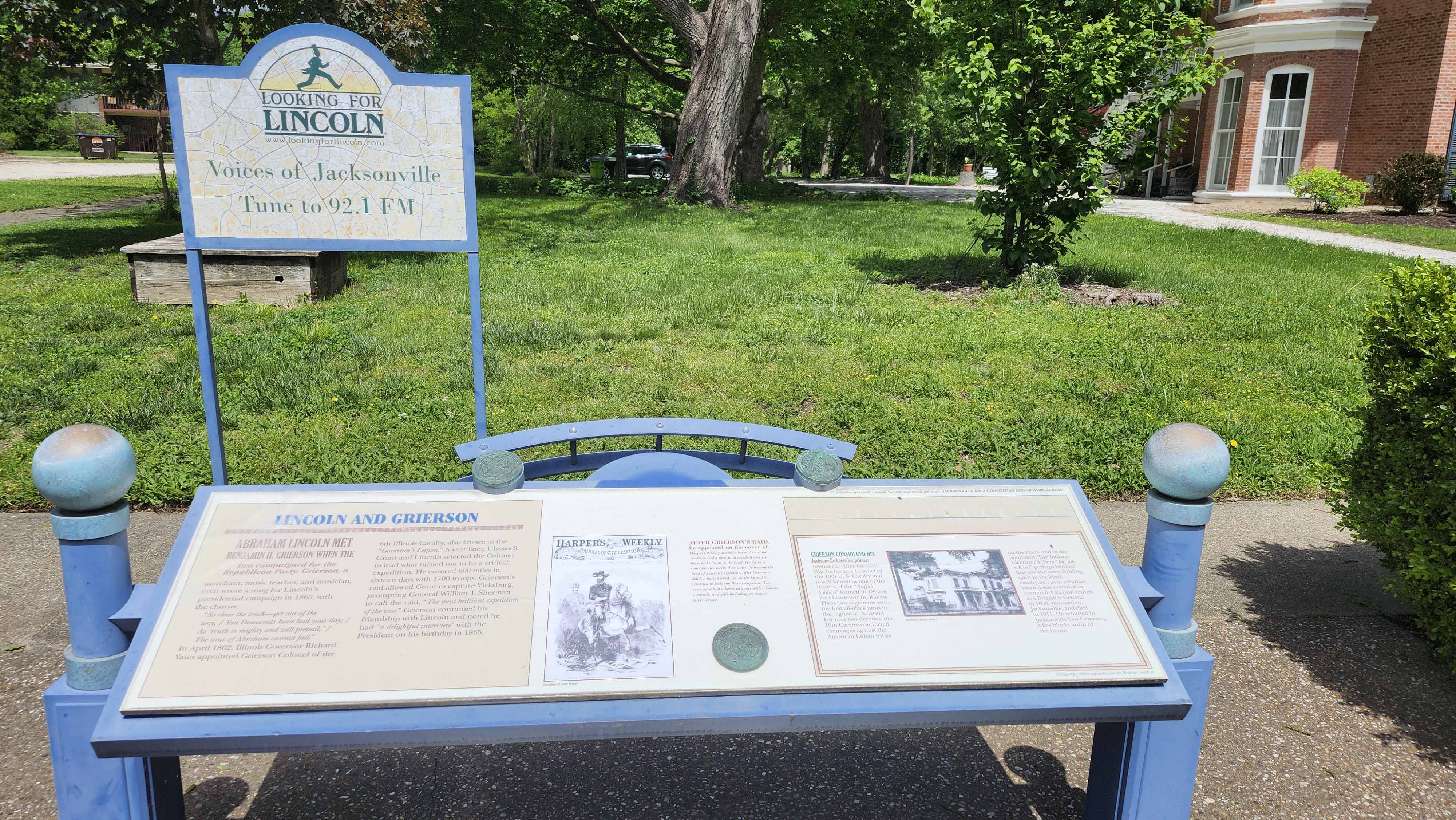
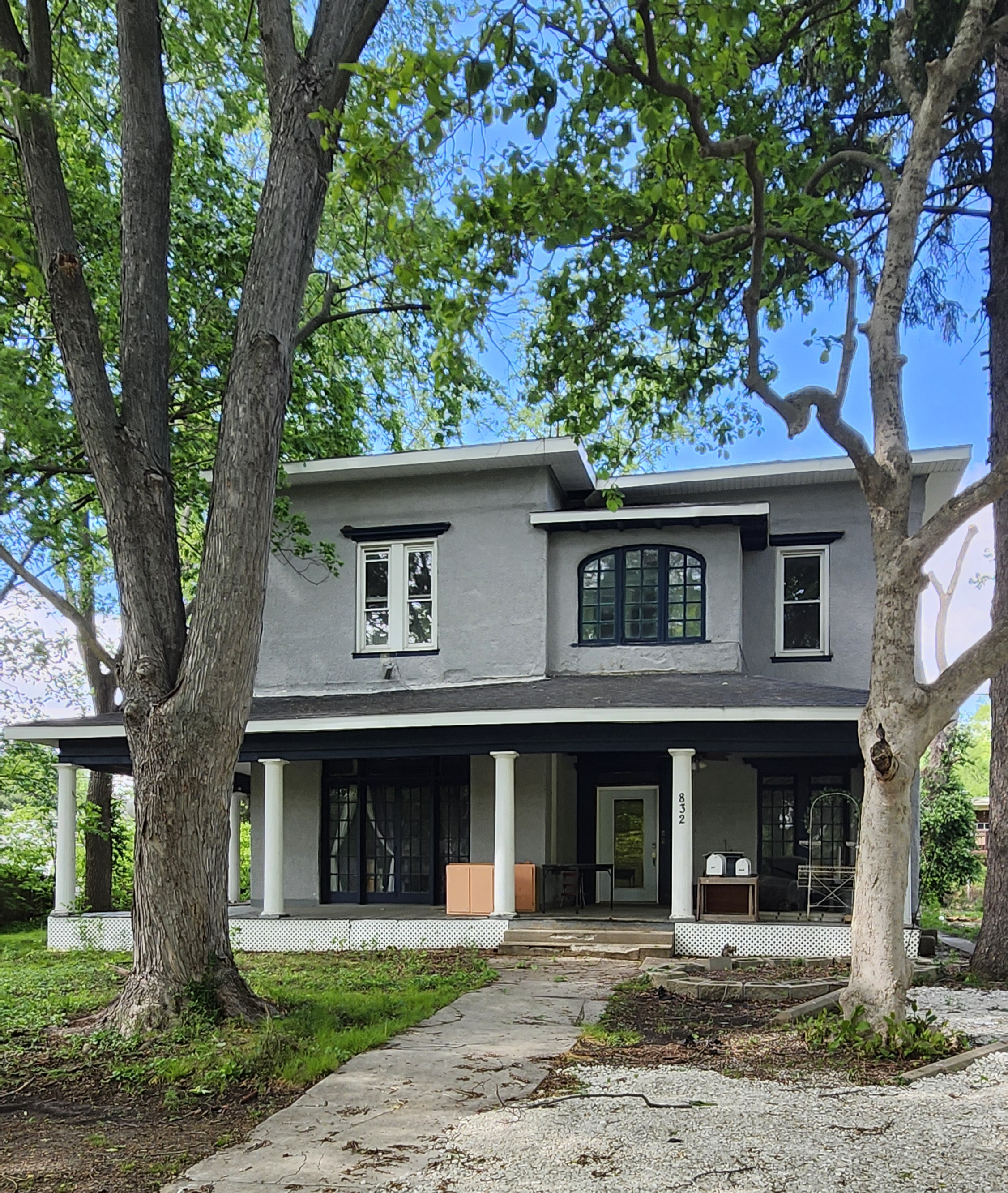
Wednesday morning I went to meet Mary Gray at the Grierson House! Of course I had to take some street photos. There is a story about Lincoln and Grierson, and some of his history on a plaque out front.
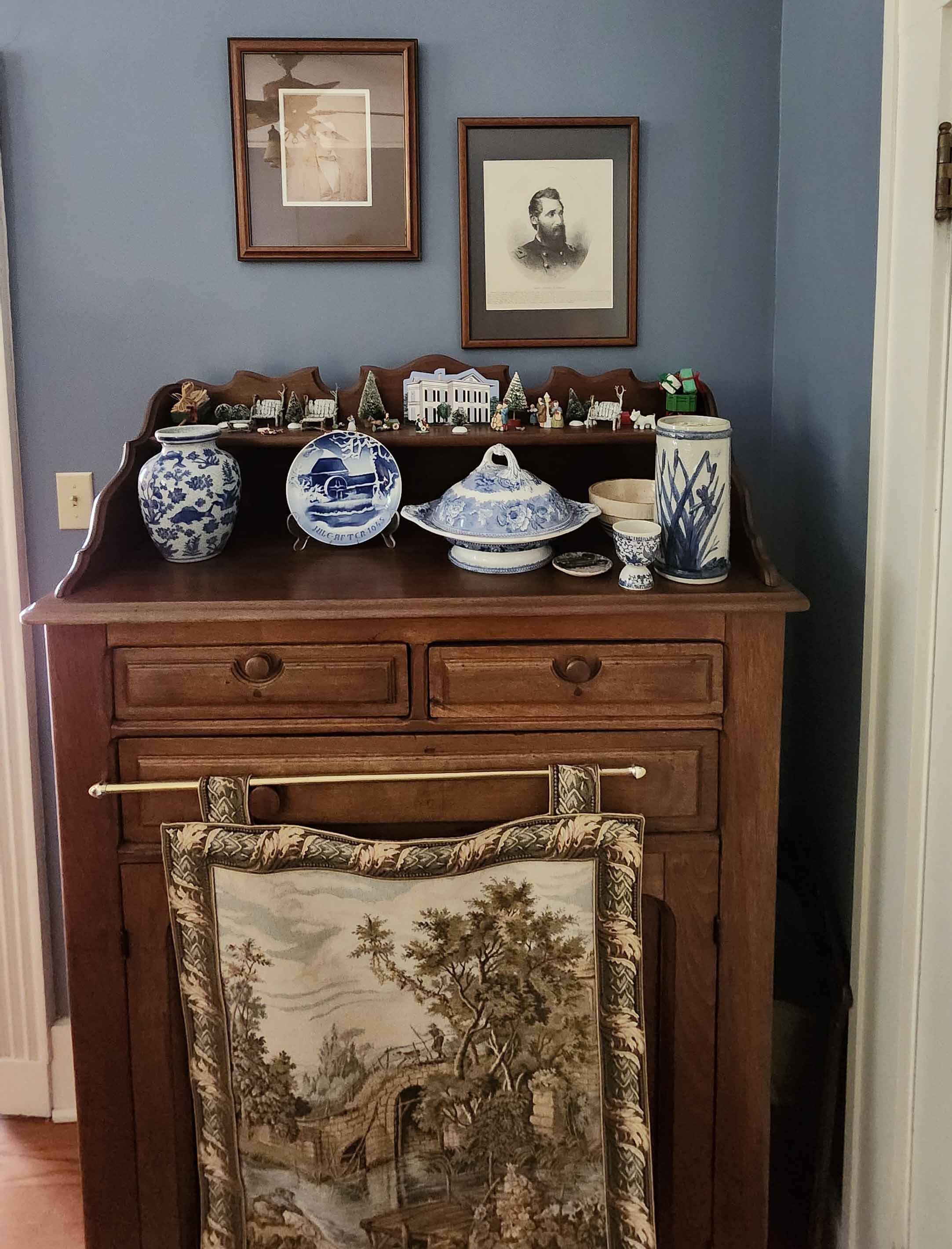
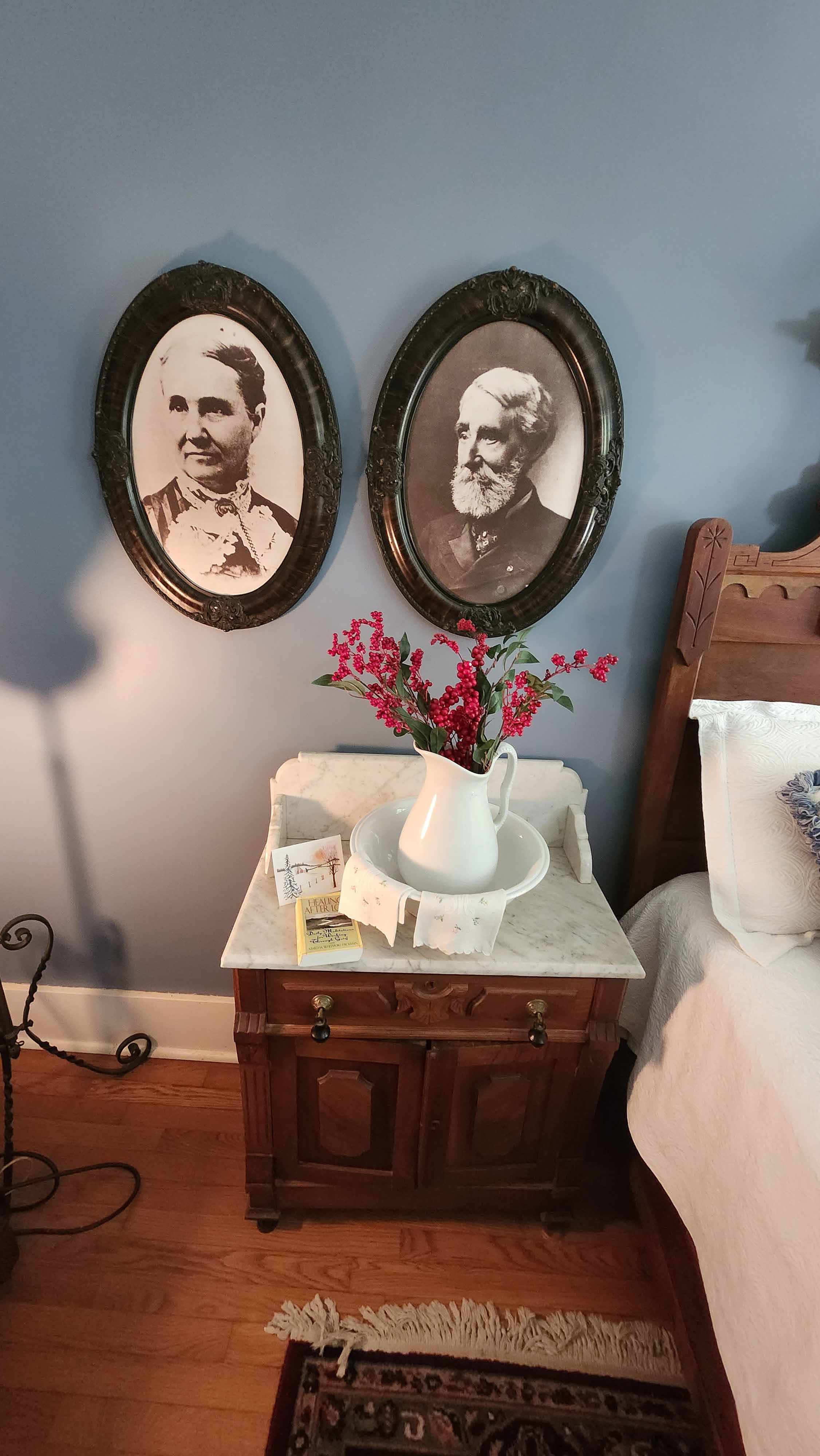
Mary was ready to meet me at 10:30. We were excited to meet each other! She gave me a tour of the house, which is a beautifully updated 19th Century house with preserved Civil War memorabilia. I took in the Grierson bedroom, which has the same photos as my family album, plus the original furniture that Ben Grierson and Alice Kirk used! It was a terrific honor to see my ancestors’ artifacts so displayed. I have to say I was just overwhelmed about all of this and very proud.
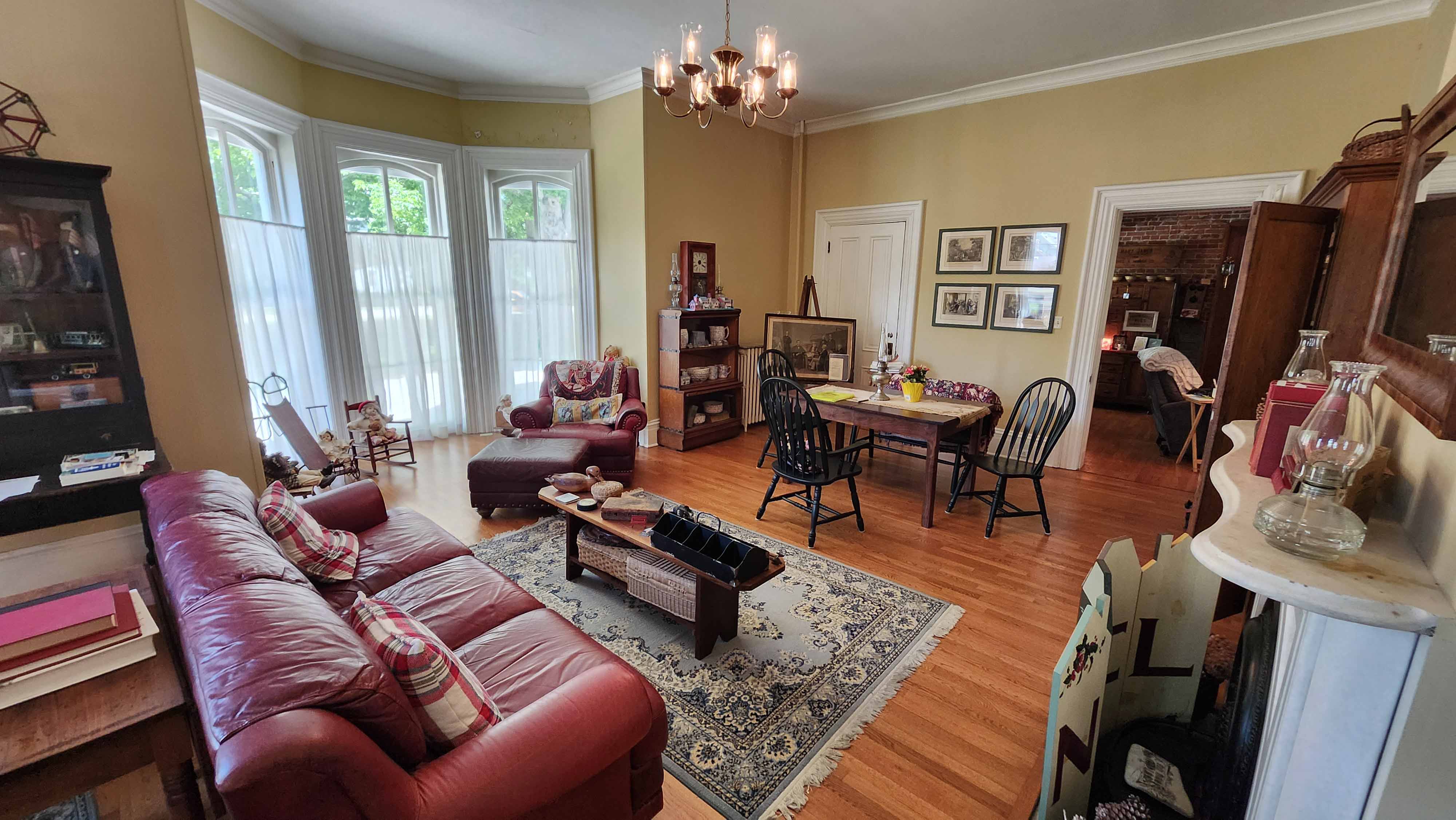
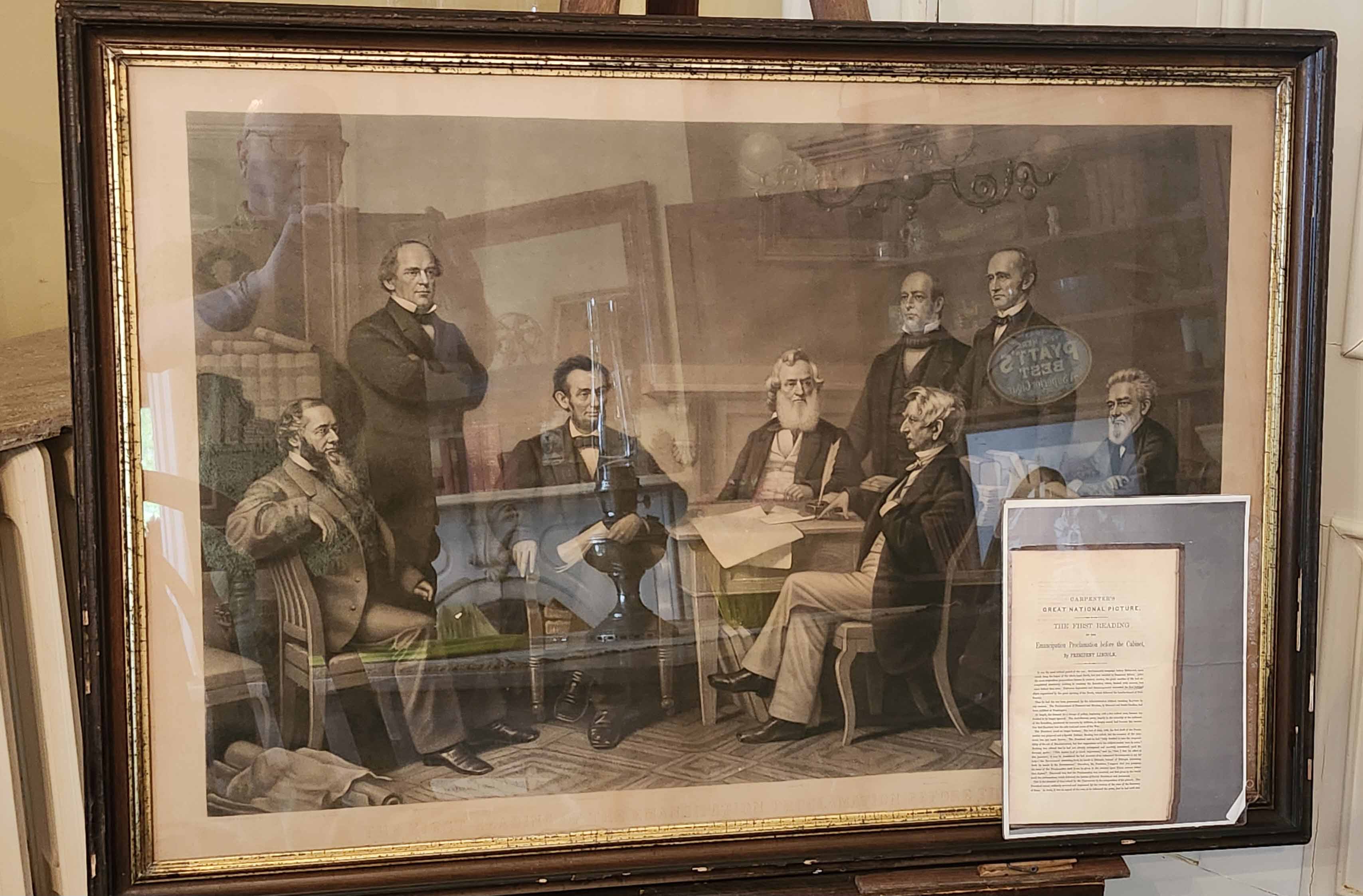
The living room is very comfortable and has a picture of the signing of the Emancipation Proclamation prominently displayed.
We took a stroll out back, where I learned the house next door was owned by John Kirk, the father of Alice Kirk Grierson! No wonder the families were so close.
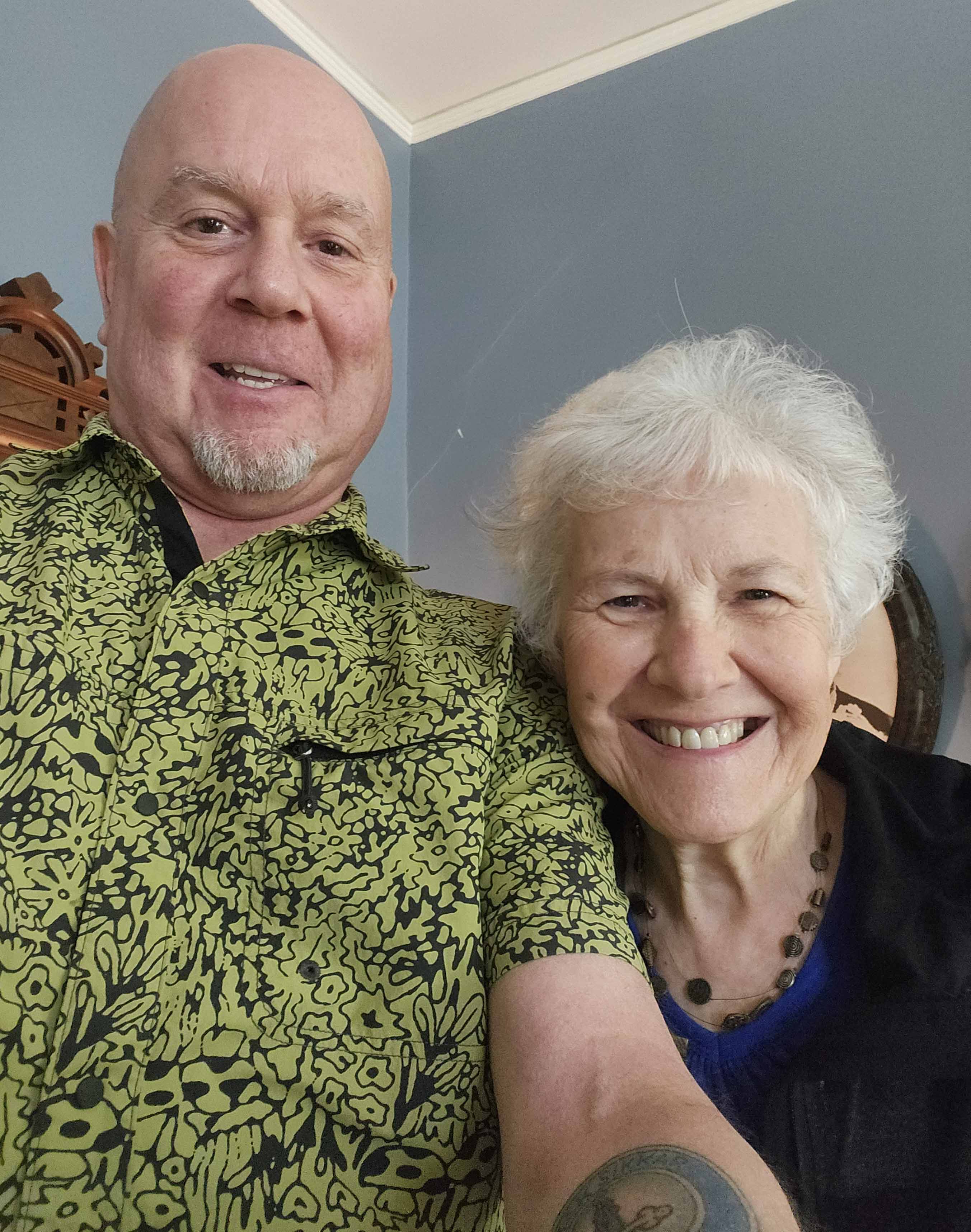
Then Mary asked me to lunch! Wow, what a nice gesture! Here I am with Mary. She looks great!
Mary also gave me a couple of souvenirs. The most amazing was a Harper’s 1863 newspaper featuring General Benjamin H Grierson’s raid on the cover!
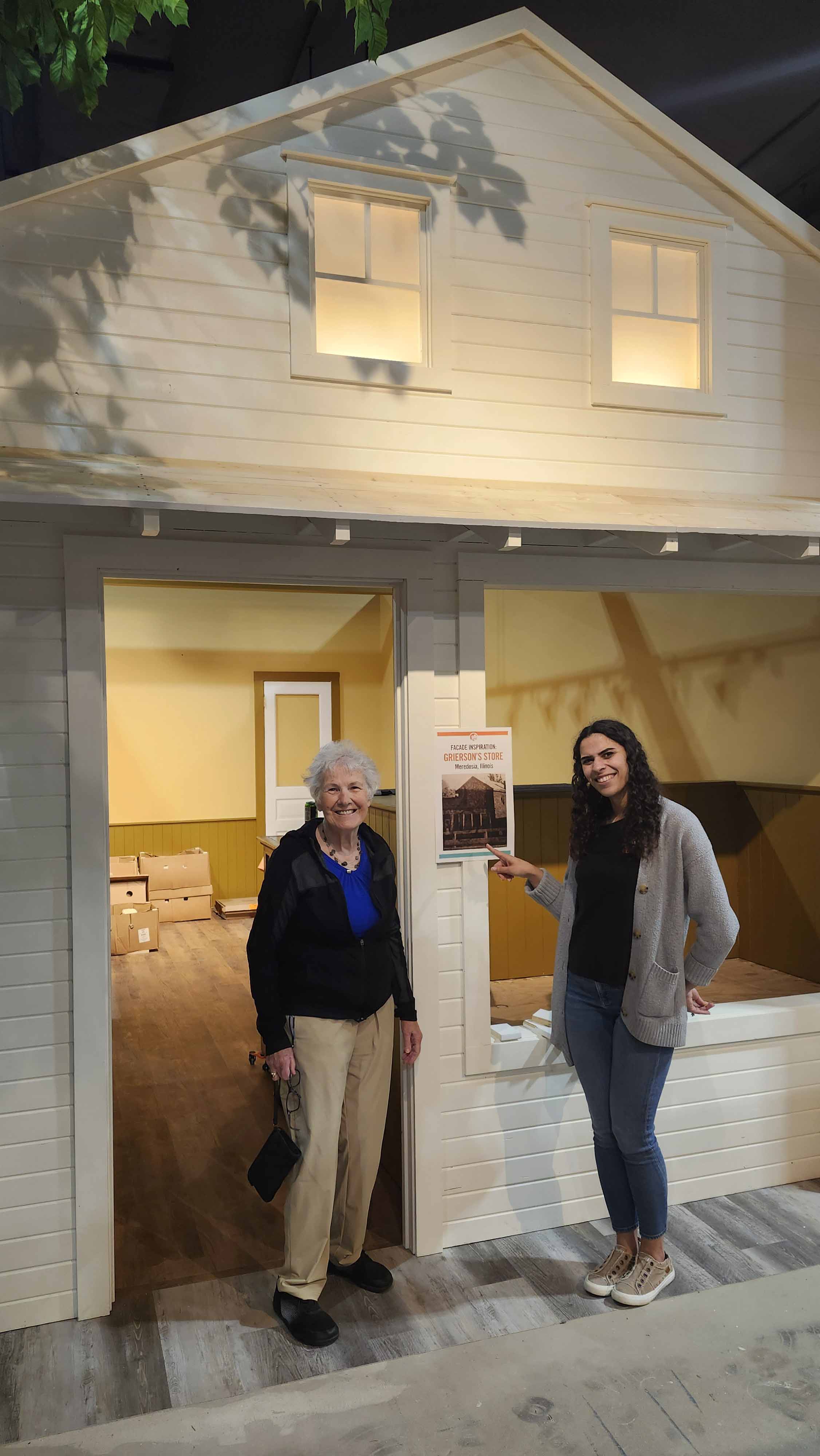
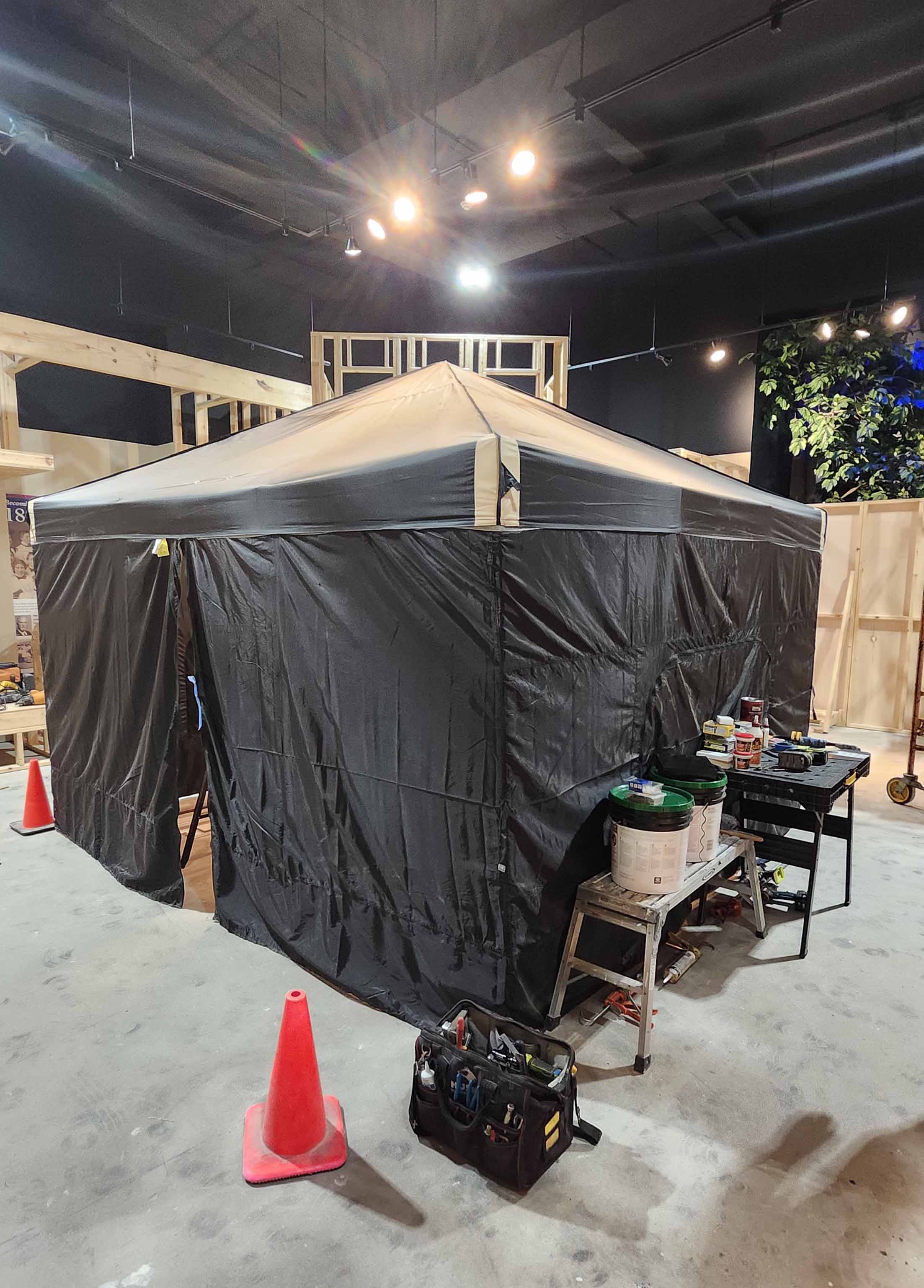
After a very relaxed lunch of pizza and salad, Mary took me on a tour of prominent Jacksonville houses. Then we stopped by the Jacksonville Area Museum. We didn’t have an appointment. But when we showed up, Tori Ohl, Executive Director recognized Mary. And when I said what I was doing and who I was, there was a lot of joy and excitement all around! I showed Tori some of my family photos from the 1800s and she scanned some of them. Then she had a big surprise for me. They are building a new exhibit and there is a section on my GGG Uncle Benjamin Grierson! Wow, this really took my visit to a new level. The exhibit is a town square with various replica store fronts. One of them is a store which Benjamin owned prior to being in the military. The fact was, he was not a good businessman! The store didn’t work out. But a replica is being built anyway. After all, it’s part of the history.
Mary and Tori
It was a brilliant day all around! And I really can’t put into words how amazing it felt to have rediscovered all this on my own without my dear Mom telling me long ago. I think it’s more exciting this way! Tori invited me back for the opening of the exhibit. I’d like to attend – though I don’t know when it’s scheduled. Thank you to everyone in Jacksonville!
One of the reasons I chose the Rick Steves Paris and the Heart of France tour was that the island monastery-fortress of Mont-St-Michel was on the itinerary! Ever since I learned of its purpose, history, and legendary status in French language classes, it’s been high up on my bucket list. This tour included a night’s stay on the island, complete with a multi course seafood supper.
This is just the appetizer!
Its is legendary in that at at high tide it is an island, but at low tide it can be accessed via mud flats. Since its first construction in the 9th Century, it has been a magnet for religious pilgrims, armies, and tourists. Twice it was a prison. Today, it’s positively crawling with tourists daytime. But after dusk, when the causeway closes, it returns to its cloistered-like state and you can be all alone with its mysteries. Its permanent population is less than 100.
The island is surrounded by a castle-like wall, within which is a village and up top an incredible Catholic abbey inhabited by monks. The sea breeze is most welcome and smells sweet. Centuries-old cobblestone streets lead to restaurants, shops, cemeteries, a couple of lodges, and finally the abbey – and several times daily the abbey bells ring out. The 45-ft tide coming and going was said to be as fast as a galloping horse – swallowing entire armies trying to take the island. The English tried and failed in 1423 and 1434. Over the ensuing centuries it became a prison, was used by Germans as a lookout and for 300,000+ German tourists during WWII. Today Catholic monks still worship in the monastery.
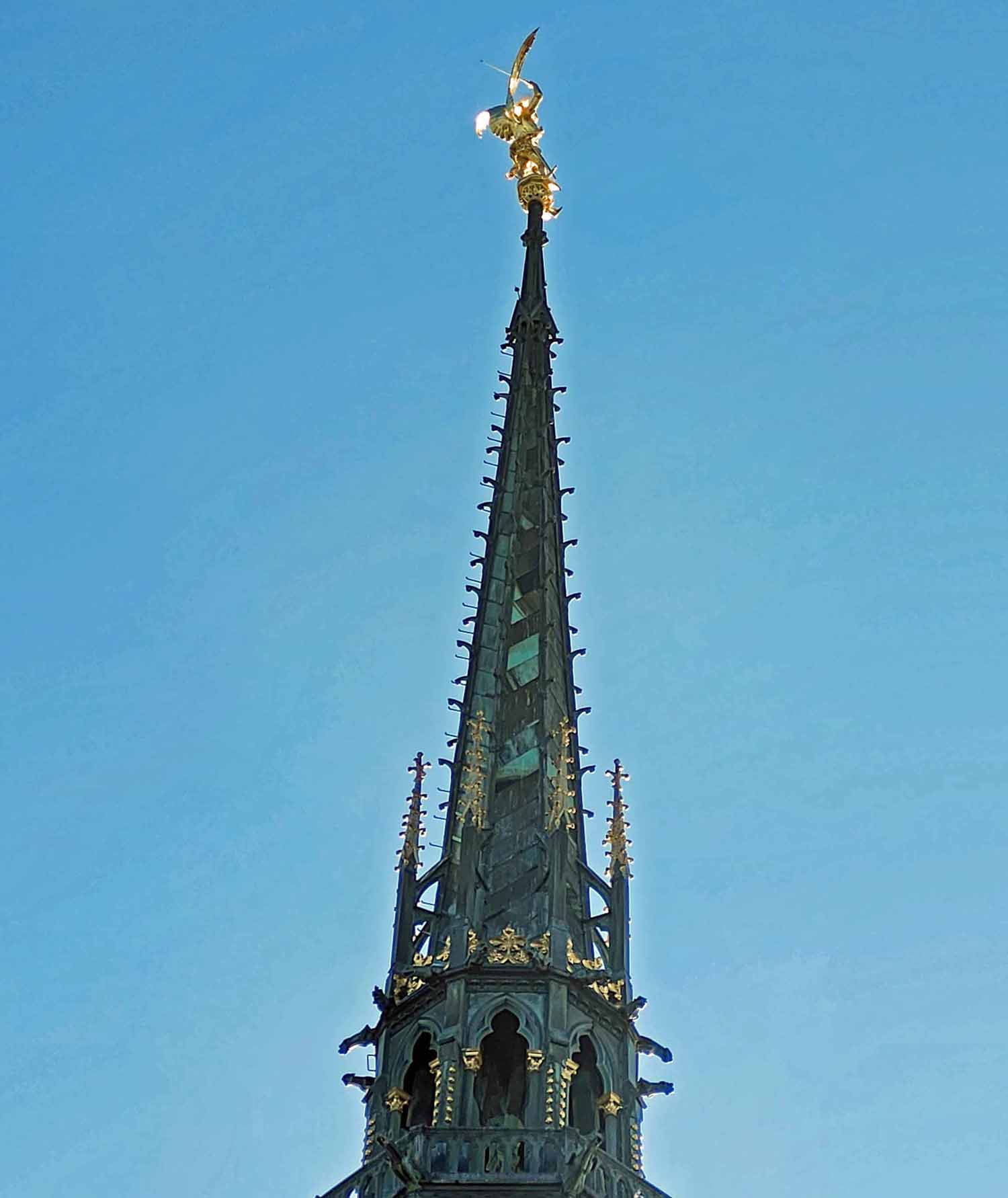
Views of the surrounding area abound. You can watch the incredibly fast-moving tide. One thing that really struck me is the golden image of Saint Michael topping the abbey. The sun lights it up like a flare. And it is visible for miles along the adjacent coastline like a flaming beacon.
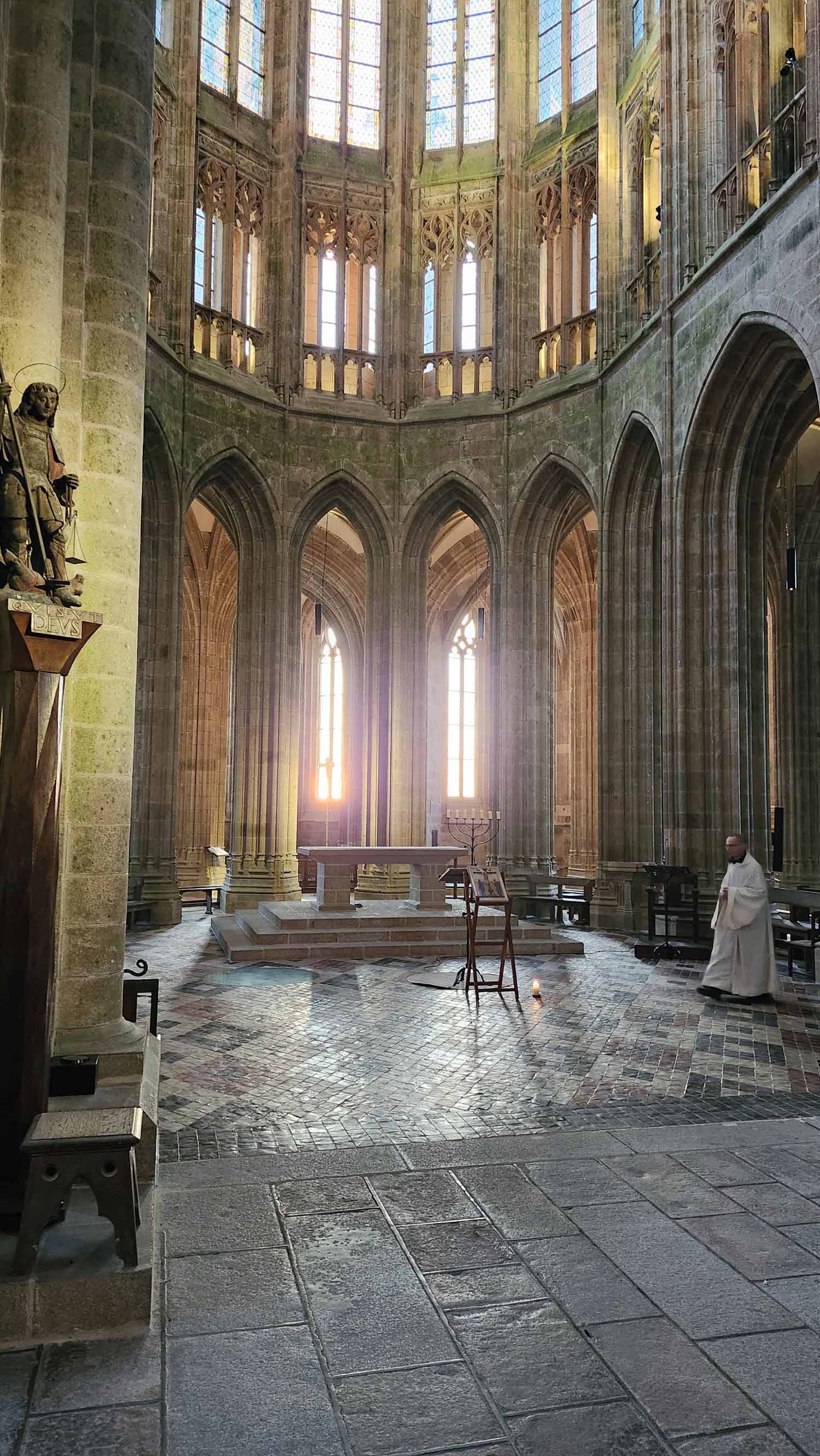
On this visit I learned it was possible to experience a once-in-my-life moment: Attending a dawn service in the abbey given by the monks! This experience requires ascending dark, pre-dawn steps to a lonely door, arriving at 5:45 a.m. This I HAD TO DO! Carefully, I hiked up those steps – and was joined by 15 others. Then, at 5:45, we heard skeleton keys jingling on the other side of the door and then – a hooded monk cloaked to the feet opened it up and let us pass – locking behind. We entered a chapel, and inside there were monks on the floor covered in their robes – facing the alter.
The service began. They arose. And chanted. Then sang. The sound was acoustically ethereal to experience. We joined in – there was a pamphlet. Though in French – hard to follow for me.
The sun arose behind the stain-glass windows, and the expression on their faces was pure love. Indescribably pure. Unforgettable to behold.
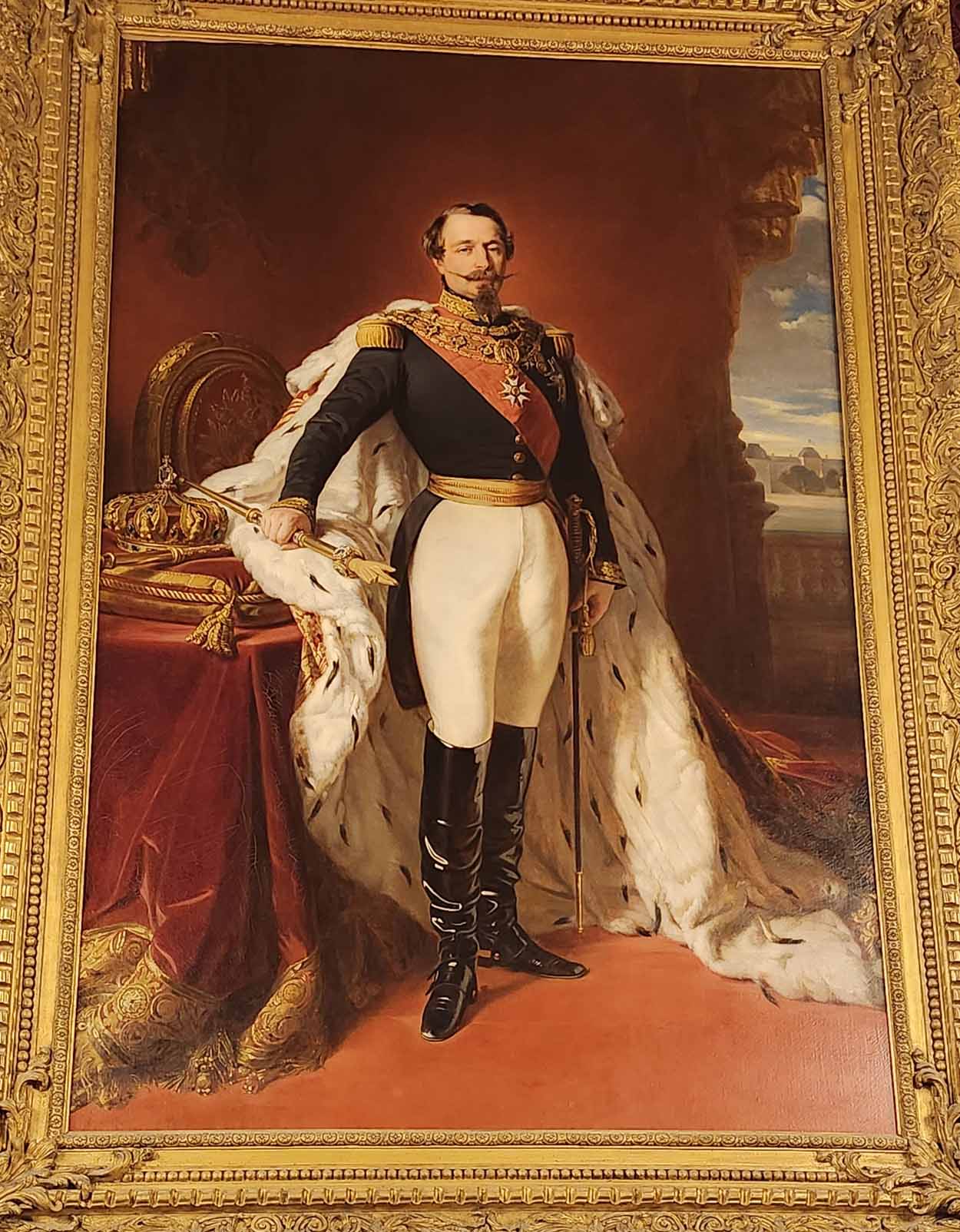
On Day Four of my Rick Steves Heart of France tour, we were to visit The Louvre – the museum housing the largest collection of art and historical artifacts on Earth. I’d been there before, and yes, I’d seen the Mona Lisa, which was underwhelming. This time, unlike the rest of my group, I was on a mission to see one exhibit only – one which I had learned held a painting of a famous distant cousin – a member of my Clan Kirkpatrick – the Famous Empress Eugenie de Montijo – born as María Eugenia Ignacia Agustina de Palafox y Kirkpatrick.
Prior to my visit to France, I’d been in touch with several guides. When I told them I was doing family research on the Kirkpatricks, they all said I must go to the Louvre because there is a painting of a Kirkpatrick clan member there! I couldn’t imagine. But that was when they told me about the Empress. She was wife to Napoleon III in the mid-19th Century, and was instrumental in French politics as well as fashion, art, and the re-shaping of the Paris landscape into what we see today. I had NO idea! They insisted I go to the Louvre and visit the Napoleon III Apartments. These apartments were built to house foreign diplomats when visiting Paris.
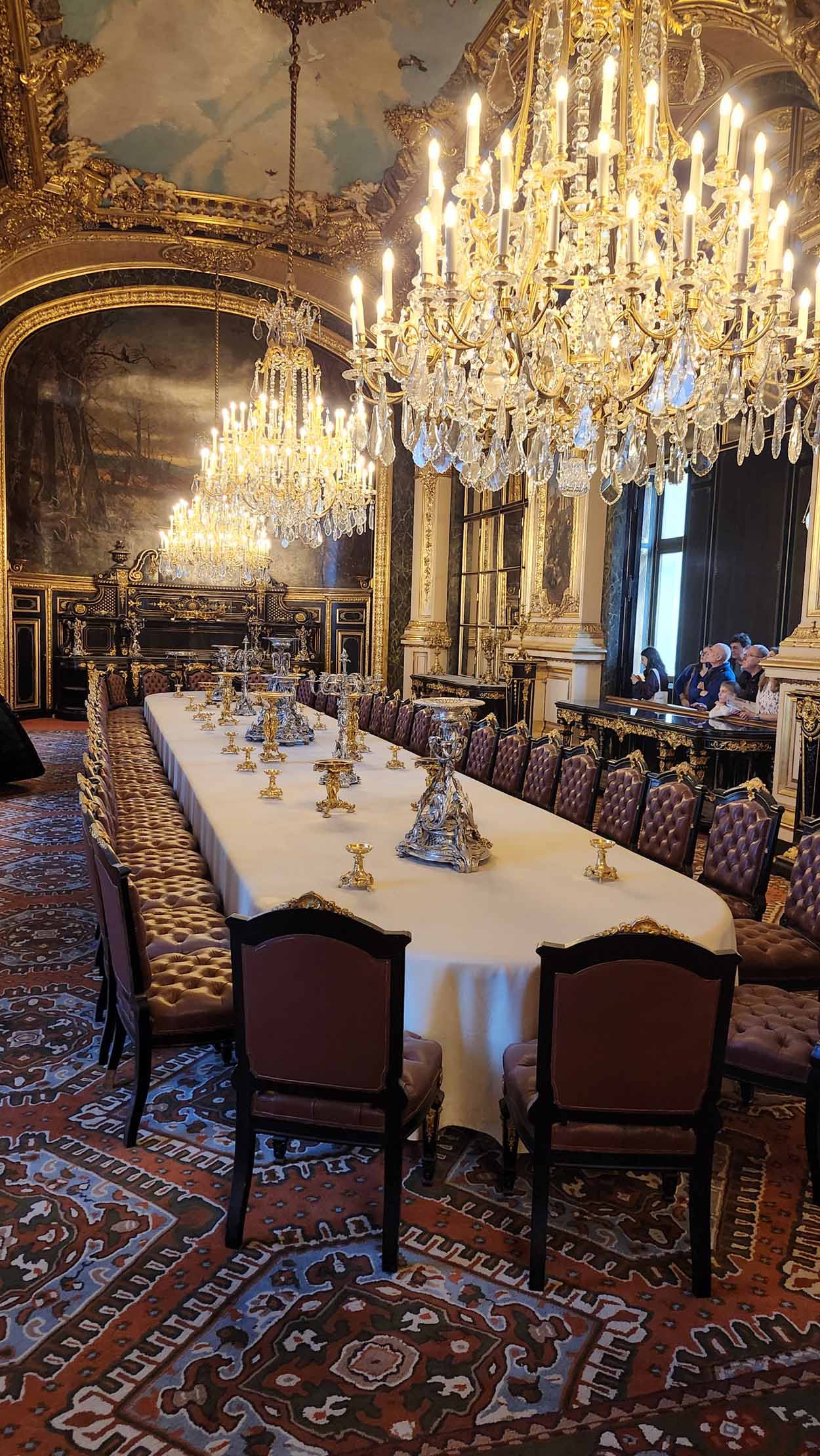
We met our local guide, Sylvie, who took us on a walk on the neighborhood near The Louvre, and then we wound up there. When I told her I was a Kirkpatrick she knew exactly what I was looking for. Then, once inside the museum, I asked some staff for directions. When I told them I was a Kirkpatrick I got a reaction I will never forget as long as I live. It was like a combination of respect, awe and wonder. It was as if I was in America and I was a relative of George Washington! They kind of snapped to. Before I could mention Napoleon II Apartments they knew exactly what I wanted to see and took me up there! Who, me? It was from this point on Paris was a different kind of place, for outside, on the streets, I knew the sights I saw were built by her and Napoleon III and their architect Haussmann. Holy cow. OK, these are images from the Napoleon III Apartments!
They even had some of her over-the-top royal gowns!
Here are pictures of the Grand Salon for the diplomats, and the official table at which they ate official meals!
I was pretty overwhelmed. Not just looking at these things, it was the times and the history! After the Louvre mission, I was done for my day. I headed back to my hotel in Montmartre and the nearby cafe. I called it a day!
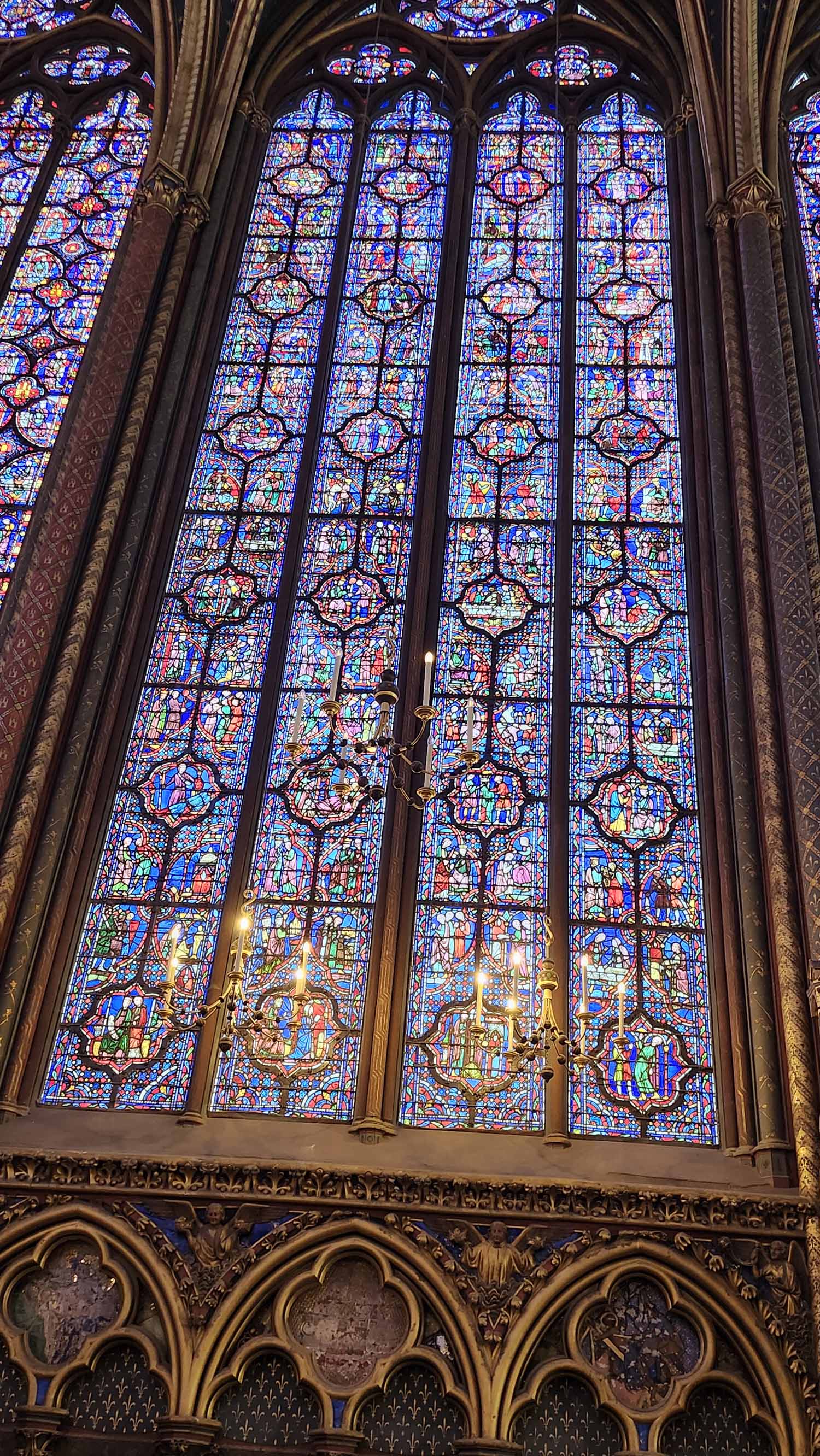
This morning, I joined my Rick Steves Europe group visiting Notre Dame Cathedral and nearby Sainte-Chapelle. Notre Dame has re-opened after its reconstruction following the 2019 fire. We did not go inside, for the crowds were huge. Still, the exterior is very impressive! Then we visited Sainte-Chapelle, with its famous windows. As with most French Catholic cathedrals, there are reliefs of what happens to those who follow the 10 Commandments, and those who don’t.
Sainte-Chapelle WindowsLong wait at Notre DameEternal torture for sinners!
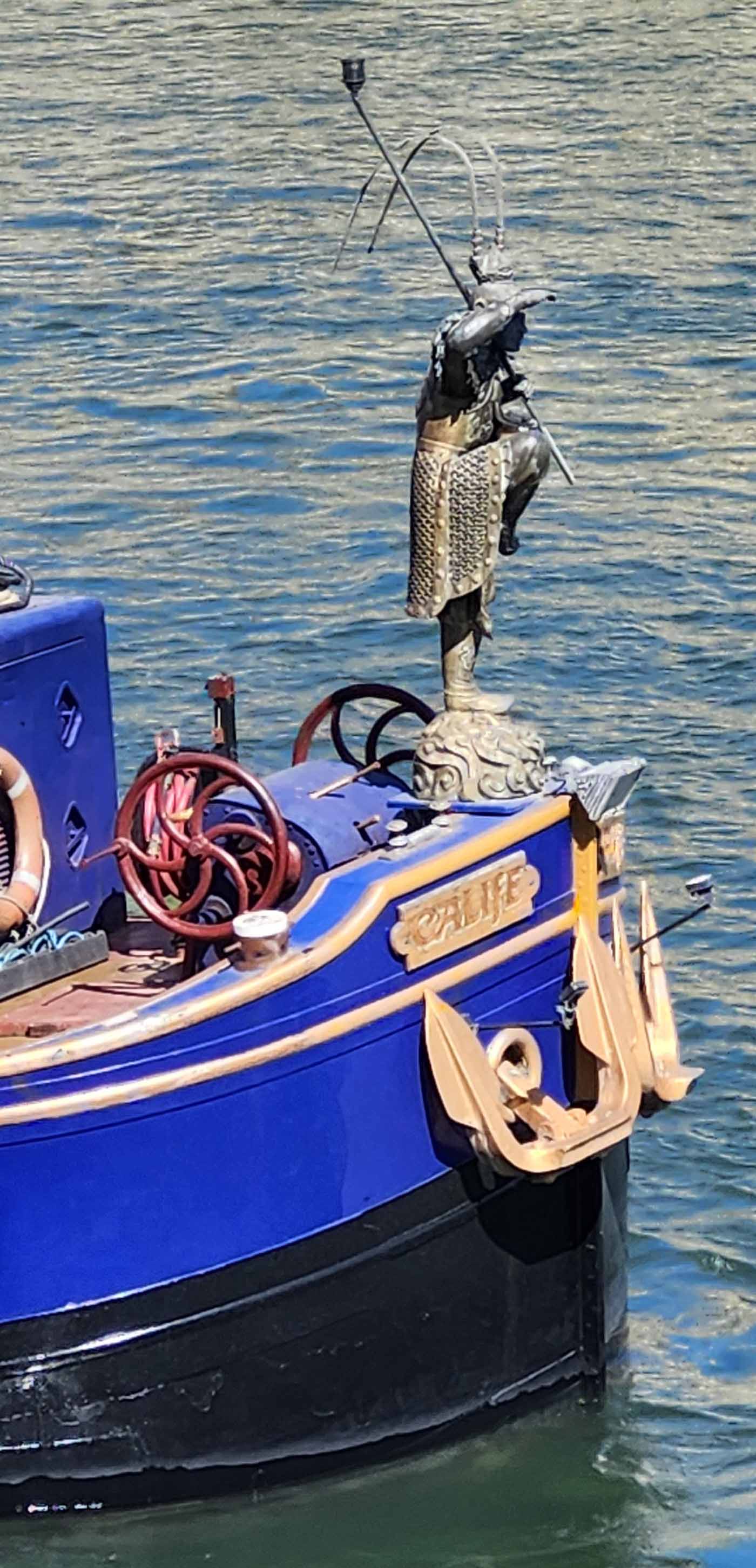
This day I had tickets for the D’Orsay Museum, housing the largest collection of Impressionist paintings. So I departed the group and walked up the Rive Gauche towards the museum. The Rive Gauche is famous for its being a beehive of artistic creativity. Artists such as Pablo Picasso and Henri Matisse held lively conversations with writers like Gertrude Stein, Ernest Hemingway and Jean-Paul Sartre. Once past the Notre Dame throng, this walk became a stroll, allowing for people watching and taking in the scenery. One of the most ornate dinner cruise barges chugged by. Adorned end-to-end with art deco. On its bow, a feather-headed woman stood on one foot peering ahead. Its fancy anchor.
For several blocks, the sidewalk is lined with stalls selling all sorts of things, including questionably “authentic” old magazines and cliche Paris images. All for the fun I say!
Like my previous walks, I glimpsed the relaxed bicycle pace. The live-aboard barges plying the Seine. Cafe after cafe with Parisians at their sidewalk tables enjoying casual conversation. It was getting towards mid-day, and I had just enough time for lunch. So, I picked out a cafe table and ordered a Croque Monsieur. I indicated to the server that instead of a leisurely lunch, I needed it quickly so I could make my 1:00 D’Orsay Museum time. He wondered if I wouldn’t enjoy my meal? I just said no, I had to eat and dash. Typical American, no?
I wasn’t too enamored with my meal, in fact! Just not for me.
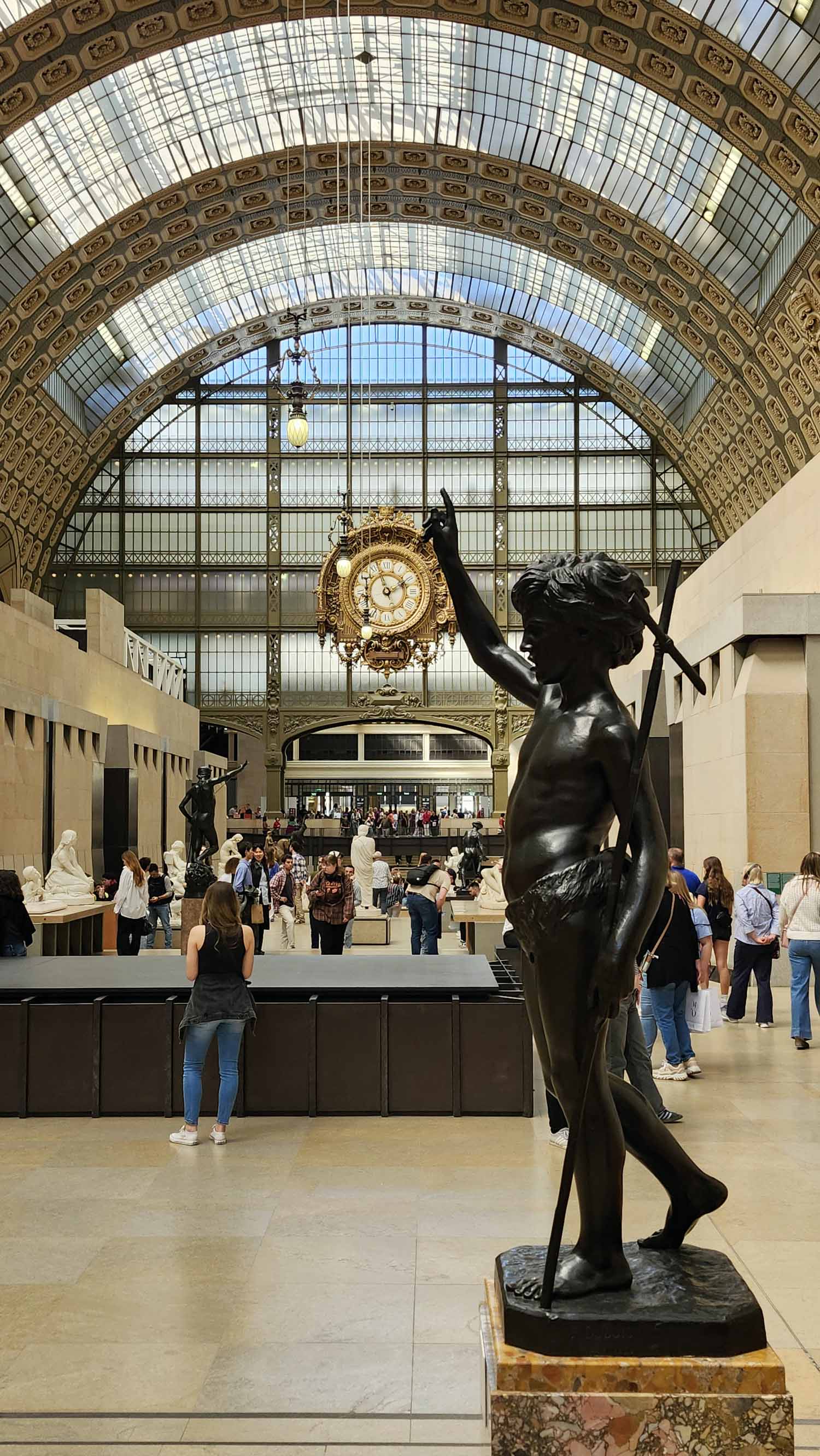
Topped up, I headed up to the museum. The D’Orsay Museum is a repurposed railroad station. So, on the inside, it is very open and airy. I think it is just fabulous. It has collections from various artistic genres. Passing through, I admired some before entering the Impressionist collection at the far end.
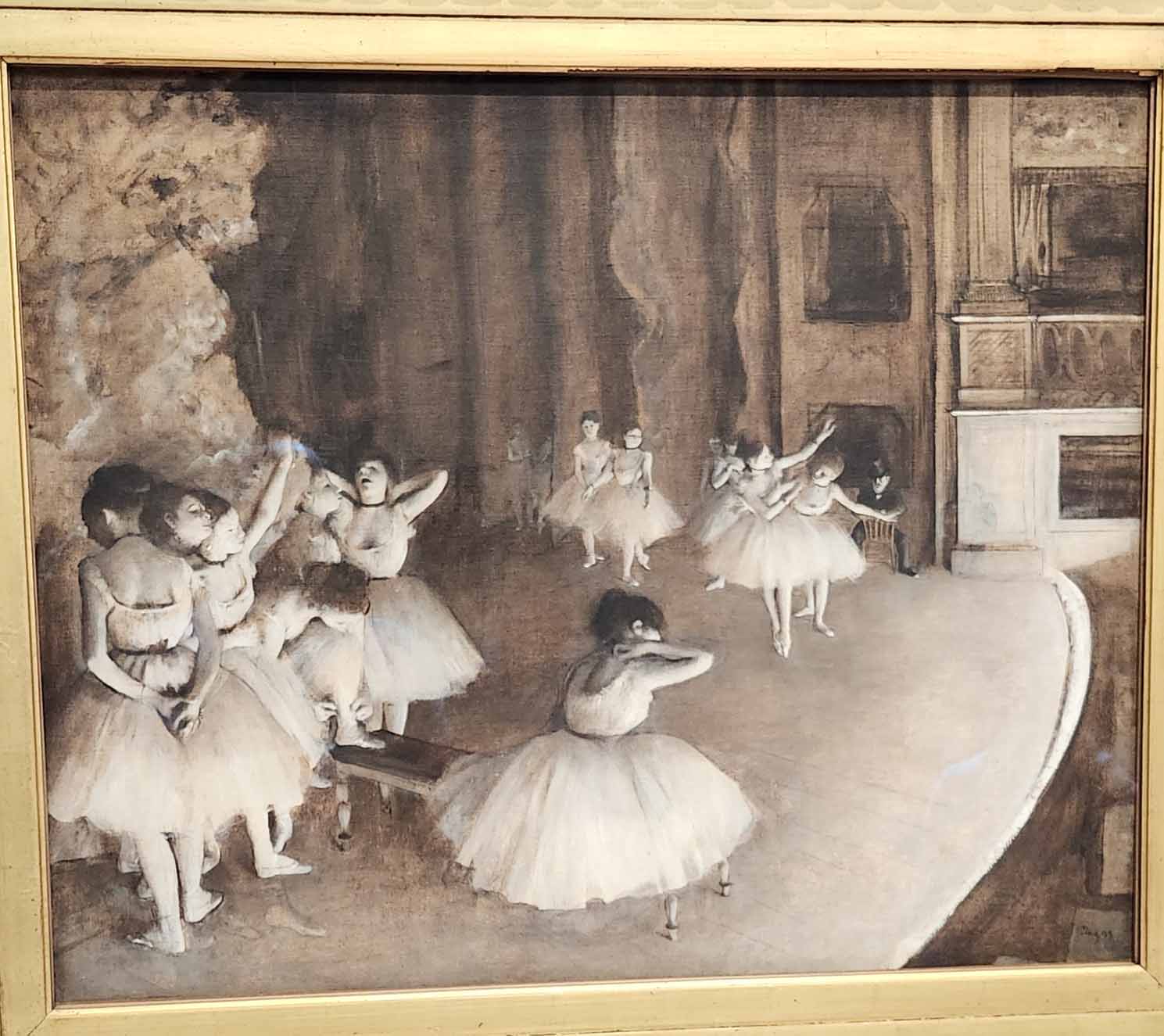
I was introduced to Impressionism by one of my French Language teachers. From there, I checked out some library books on Impressionism. I’d seen a number of original works in New York, Boston, Washington D.C., and London. I have prints of two of Pierre Auguste Renoir’s paintings in my office. So with this, combined with the fact that I’d just been to the Opera Garnier two days prior, held me in rapt anticipation. I did not realize, until I saw some of these paintings, how important it was I’d seen the Opera Garnier first. For some of these very masterpieces depicted events at the Opera!
Entering the collection, I immediately recognized paintings I’d studied. What I was unprepared for was that there were SO many! And I could walk right up and examine every brush stroke. I was so overwhelmed I teared up several times, as one masterpiece after the other revealed themselves. The thing about Impressionism that is so meaningful to me is that these are illustrations of ordinary life in a specific time period in a specific country. They capture the style, the joy, the intimate details of the lives of French in the late 19th Century. Everything from picnics, to dancing, to walking a field, to sunset on a cathedral, to collecting flowers in a field. Some of the paintings are so iconic that they could be said to represent the entire genre all by themselves. These three depict life at the Palais Garnier.
Degas – The Orchestra at the Opera Degas – The Dance Class (at Opera Garnier)Henri Gervex – Le Bal de L’Opera
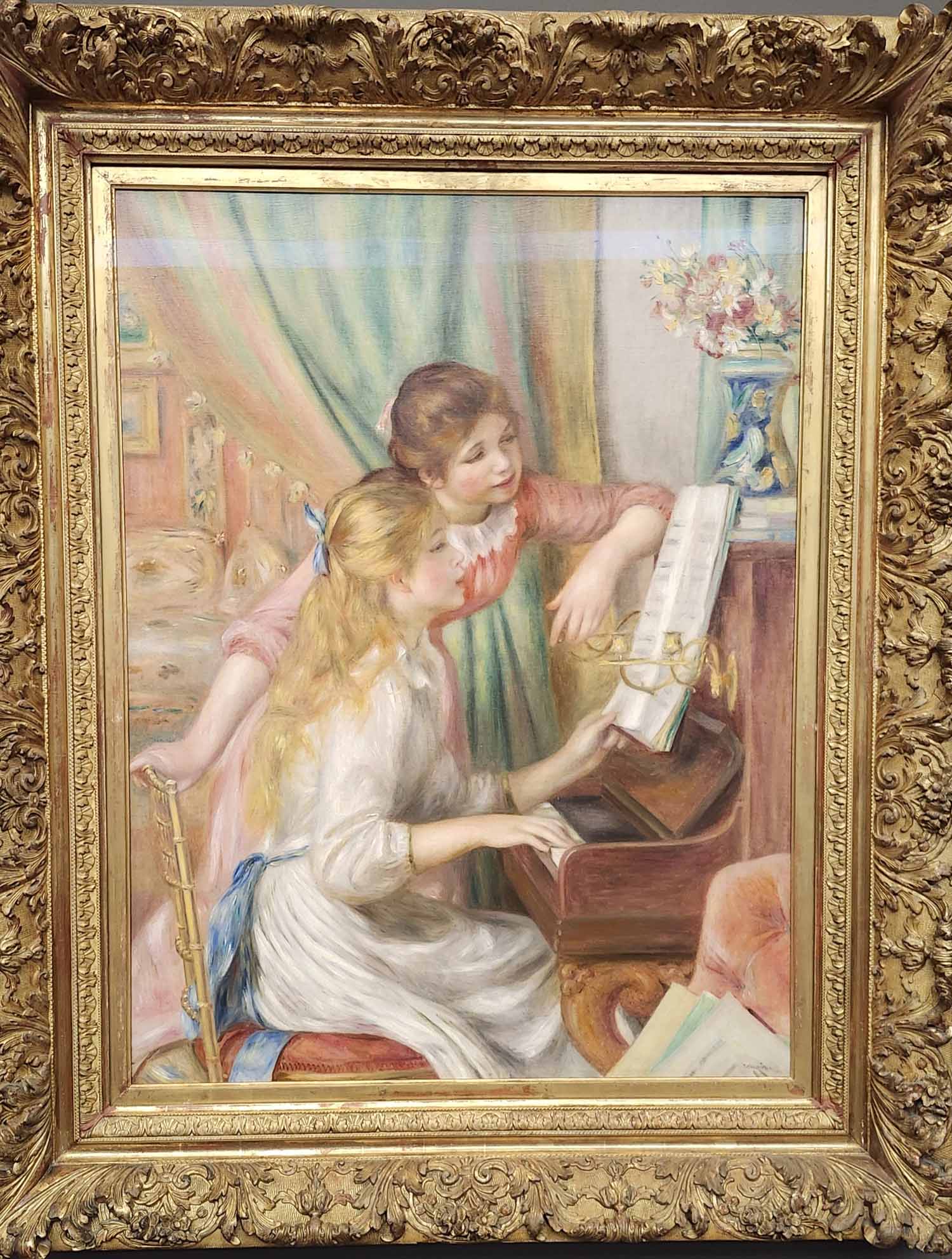
Works by Pierre Auguste Renoir were prominently shown. I love Renoir, because his efforts candidly display Parisians enjoying life. Dancing, socializing, or simply learning to play a musical instrument.
Renoir – Dance at BougivalRenoir – Bal du Moulin de la GaletteRenoir – Young Girls at the Piano
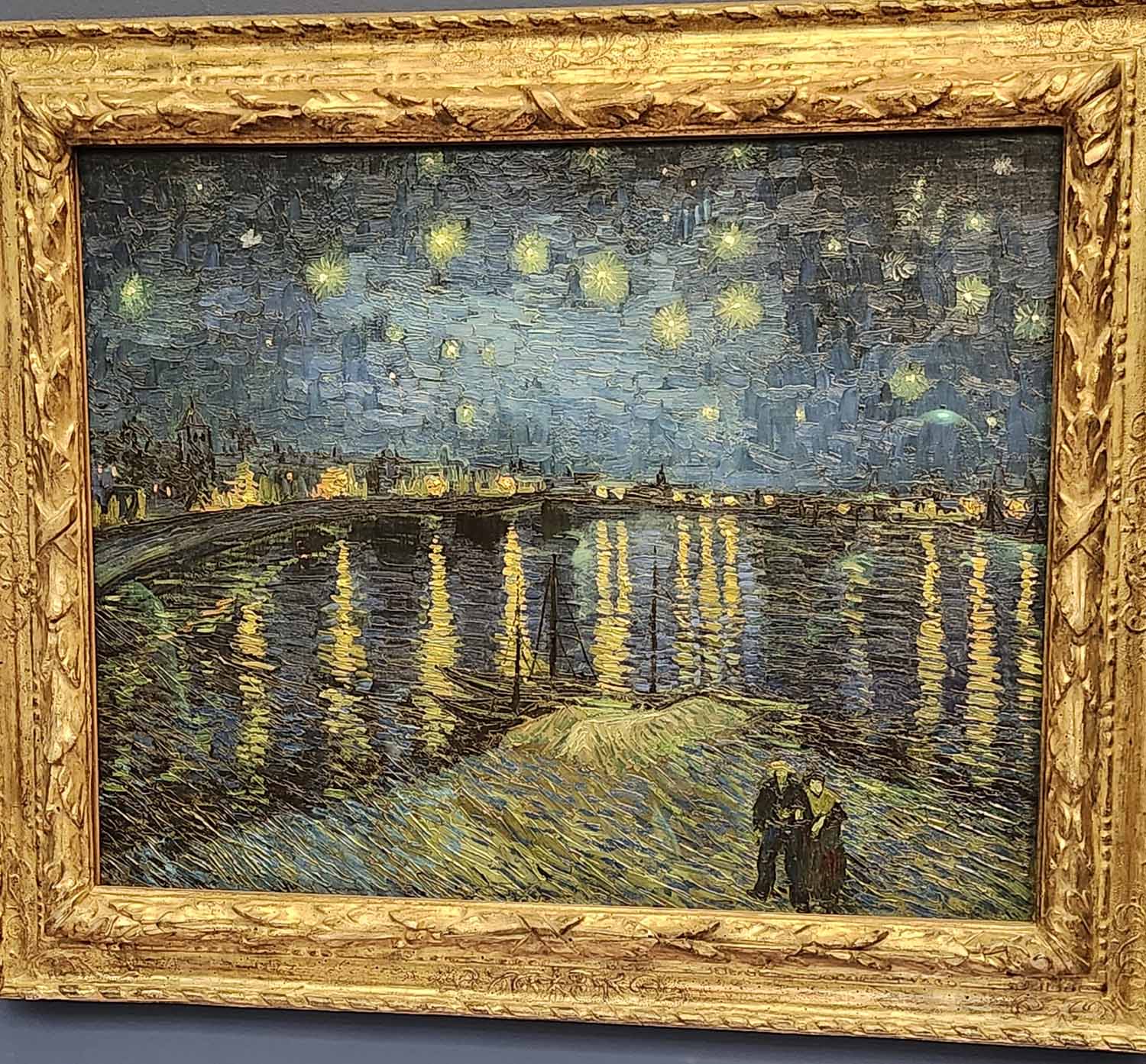
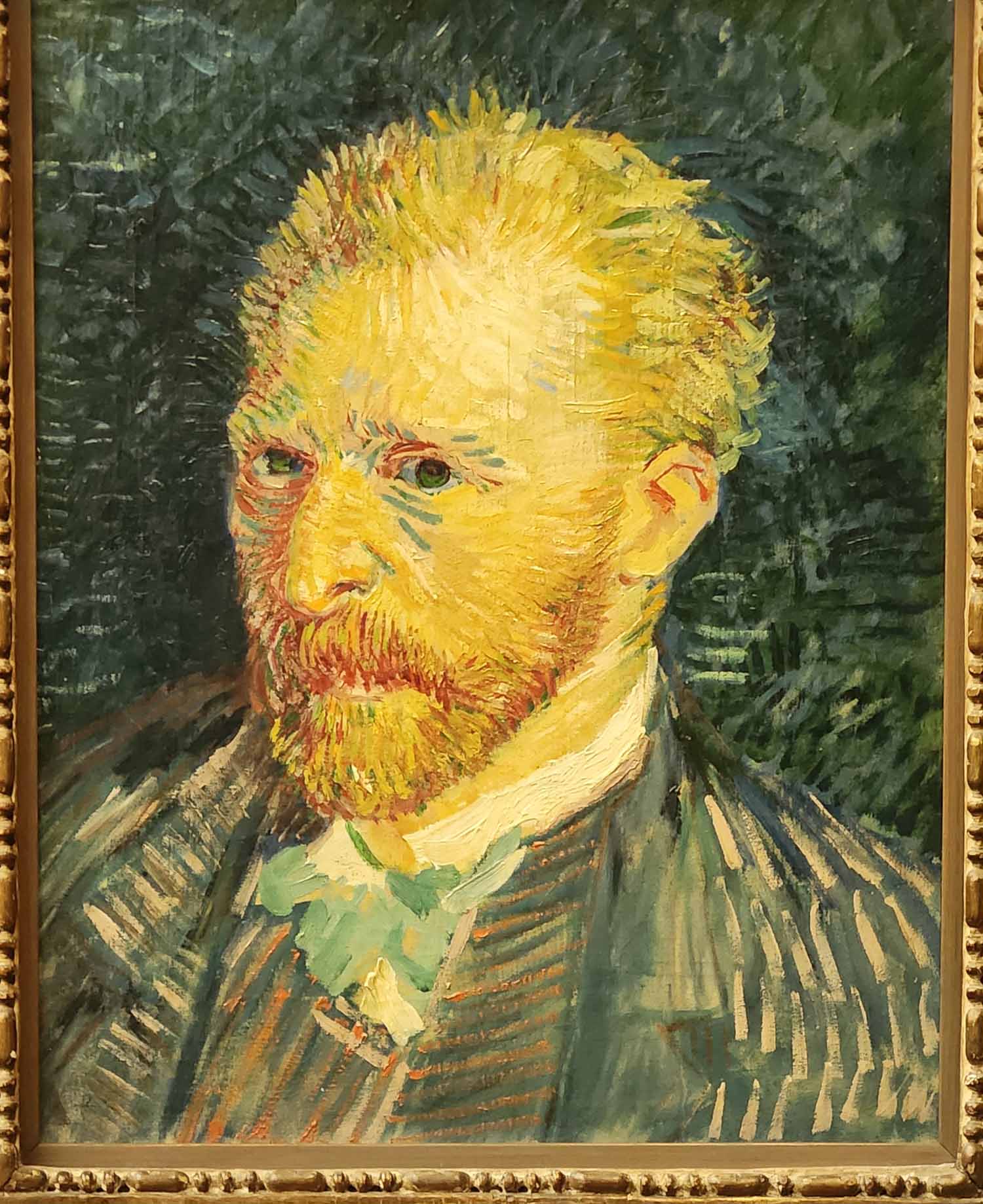
The museum has thoughfully prepared a background for Bal du Moulin de La Galette. And who does not love Vincent Van Gogh! No introduction needed. Just look at these!
Van Gogh – Starry Night Over the RhoneSelf Portrait
More information on “Starry Night” by the Museum. It’s really interesting!
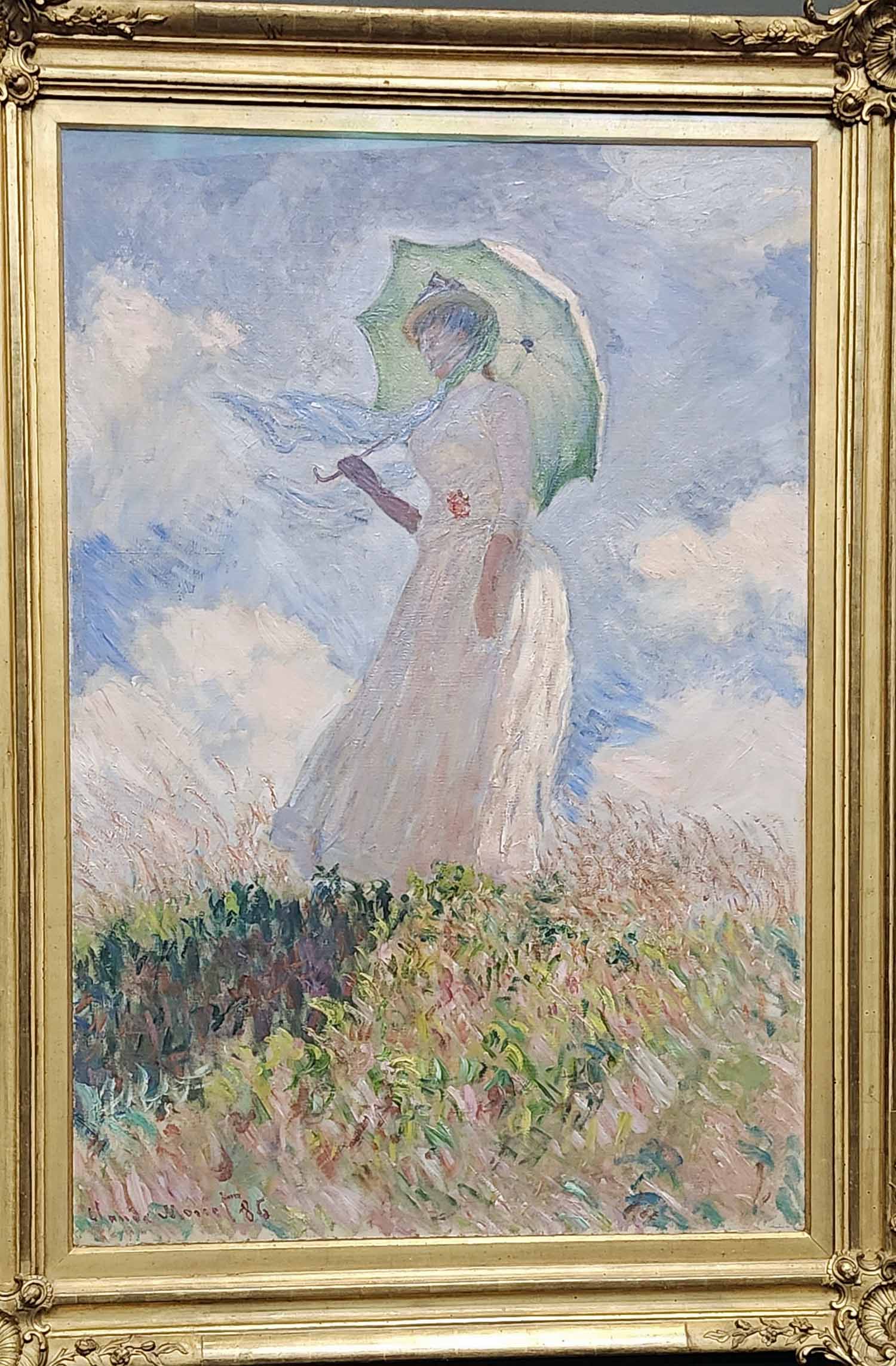
And do you think I’m done here? Oh no. Now here comes Monet. With I think, for me, the absolute most iconic Impressionist paining of all. The humbly titled “Woman with a Parasol Left Side.”
What sets this image apart is not only the beautiful day and the style, but the perspective. It is from the ground up. Making this woman, with the sun shining through her parasol and the breeze blowing her dress and scarf, stand so high in the way it shows off the times in which it was painted.
I had to take a selfie with it!
Lastly one of my favorite painters who was of the “pointilists” wing of the Impressionists.
I’ve always enjoyed the works by Georges Seurat.
In the D’Orsay Museum, they have one of his iconic paintings, “Circus Side Show.” The Pointilists were known for how they rendered images. They used single “points” of paint, thousands of them, like pixels on a video screen, to make an image. Up close you see just dots. Stand back and the image comes to life.
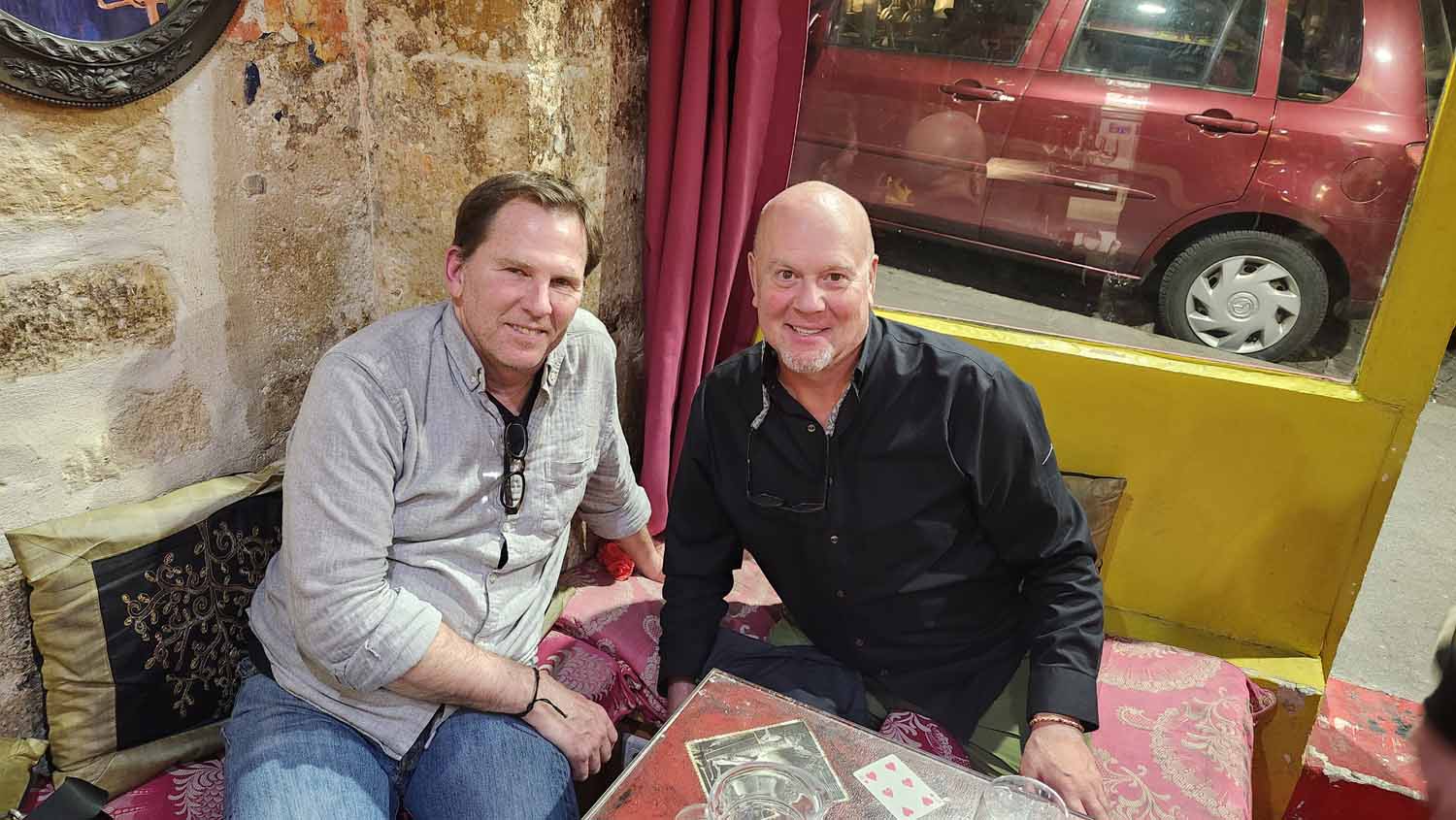
After viewing all this I was pretty taken aback. Wow. I returned to the hotel to take a nap, for my day was far from done. I had dinner with a friend from college, Jeff Russell! We had not seen each other in decades. So much to cover! It could have taken three such dinners! It was great to see him!