SE Asia: Before You Go

24 12 2016

I have been to Southeast Asia eight times – to Bali, Cambodia, Laos, Singapore, Thailand and Vietnam. I’ve visited Bangkok, Chiang Mai, Denpasar, Hanoi, Pakse, Phnom Penh, Saigon, and even Hong Kong. And, well, from all those experiences, there are some common things everyone should know before they go.

People Are Warm

img_1263-123

In every country, every city I’ve been to, I’ve found the people warm and hospitable. Whenever I need help, or ask for directions, someone is able to guide me to the right place. People will go out of their way to ensure I am taken care of – and this is something that keeps me returning time after time. Even people in uniform one might be anxious asking – army personnel, police or security are usually willing to help. Sometimes, I’ve found folks seem to take an active interest in ensuring I’m on the right path. Examples of compassion and hospitality from my experience – In Bhutan, we got robbed on the trail. The King learned of it, and went out of his way to have us cared for and compensated. In Cambodia, when I was part of a volunteer crew building WCs for a village out in the rice paddies, the elders met and had all of us to the communal kitchen for dinner as thanks. In Bangkok, I had dropped my passport on a taxi seat. The driver chased me down to return it! And recently, in Vietnam, my friend Laura was sick. She found her hosts had made her special soup so she felt better.

English Is Spoken

If traveling in SE Asia, don’t be too concerned that nobody will understand your English. I’ve found pretty much everywhere I can find someone with some understanding of my language. If you can pick up a few phrases of the local language, you get bonus points! But locals won’t get upset if you cannot speak their tongue, for they understand their tonal languages are very challenging for outsiders! I’ve been to English classes for grade school kids on the River Kwai in Thailand, and outside Siem Reap, Cambodia. I’ve been approached by children just dying to try out their English on me!

Try To Save Face

Status and appearances are important. So if you discover your meal is not what you ordered, your hotel room isn’t quite right, or the Website you’re working on with someone in SE Asia isn’t in correct English, try to approach the situation diplomatically. Don’t berate a subordinate in front of their boss. Try not to raise your voice when pointing out something is wrong. Instead, gently approach the topic from their side, and use a win-win strategy. Raising voices and pumping fists won’t get you anywhere.

Transportation Is Adventurous – You’ll Need Understanding and Flexibility

Whether walking, taking a bus, a ferry, taxi, tuk tuk or motorbike, Westerners will find getting around an adventure! Traffic congestion can reach biblical proportions, road manners seem chaotic to Westerners, safety standards appear non-existant, and keeping a tight schedule might seem confounding. You’ve got to take it all in stride. At times, getting around seems like a scene from “Mad Max!”


The motorbike is the most ubiquitous mode by far. Especially in Vietnam and Cambodia, they swarm like locusts seemingly navigating in unison like schools of fish. They will often filter through cars and trucks to the front at a stop light. In Saigon at rush hour, they spill over onto the sidewalks. Got an appointment at 11:00 sharp? Your late arrival won’t be an insult; rather, an expected part of everyday life.

Pedestrian Strategies – How to cross the street in this seeming madness? The idea is to make up your mind where you want to cross, and cross slowly and deliberately. Believe it or not, the fish will swarm right around you. Even on the sidewalk. Keep going in one direction. Hesitation or quick changes in direction invite disaster.

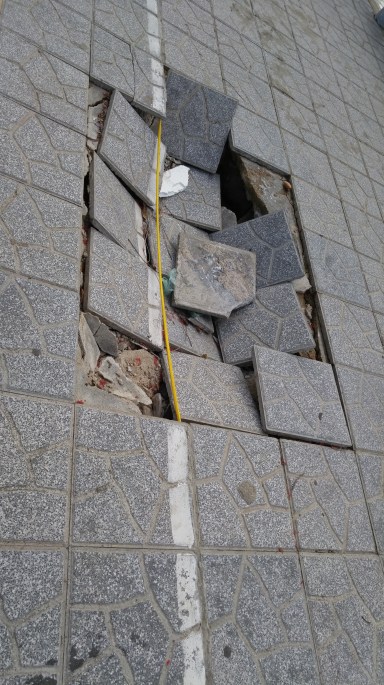
For us Westerners, visiting SE Asia is fascinating. There is a lot of eye candy – everything from street food vendors, 4 people on bikes, to monks passing by. It is easy to get caught up in all the activity, watching. But when on the sidewalk, mind what’s immediately in front of you, because it might be a hole. This condition pretty much applies everywhere. And I also advise shoes with toe protection just in case.
20161115_091709

Just be careful!

Boats

If your destination lies on a river, hiring a long-tail boat is one fun way to get there. But don’t expect the standards of safety you’re accustomed to at home! You will likely inhale some diesel fumes, get splashed by river water, and feel lucky if the boat has life preservers. And some captains are more interested in haste than simply arriving in one piece. Here, we’re heading from Cambodia into Laos when the Mekong was flooding. Helmet schmelmet.

Renting a motorbike – this is a fun way to get around. Or foolish, depending. Keep in mind that if you get in an accident, you may be required to pay the full cost for damage immediately. Better to try your luck in a rural setting than getting into the melee in a big city!

Pollution and Garbage

Air quality standards seem non existent. In the big, smoky, humid cities, exhaust and smoke can get stifling. Some can be seen wearing dust masks as an everyday affair. It’s part of life over there.

Garbage is another matter altogether. Unfortunately, the thin, black plastic bag is seen blowing around, clinging to whatever it can catch. Then, there are those whose idea of emptying the garbage is just dump the can over the nearest wall. Somehow, this needs to be changed. In Bali, setting out “disposable” offerings several times daily leads to epic “offering piles” of refuse.

In Bhutan, not part of SE Asia, the King has stepped in to circumvent the garbage plague. There, plastic bags are banned entirely. Instead, reusable bags have been used for years.

20161222_132313_resized

The Authorities Might Be Out for Themselves

Cops, customs officers and immigration officials are paid paltry wages, and often make up for this at your expense. Literally. So don’t be surprised if you wind up being asked to pay for something you KNOW you shouldn’t have to. I was in a friend’s car in Bangkok when we encountered a traffic stop run by cops. When asked for his license, my friend couldn’t produce. The cop asked, “You can pay me now and I’ll let you go, or we’ll have to deal with this at the police station.” My friend paid on the spot. After when I asked about it, he said simply, “Oh that happens all the time.” In Cambodia I watched as a cop was trying to ticket an Australian on a rented motorbike with a Cambodian girl on the back. She got into this argument with the cop, and in the end, she convinced him to let them go for a price. And in Bali, where we were traveling on a 30-day visa, we were leaving on day 29. The customs officer says to my friend, eye brows raised, “Your visa is expired. It costs $20 to renew.” My friend began arguing, to no avail. She simply paid up. And on the Cambodia – Laos border, I was in this village where there was only one fisherman authorized to stamp my passport, and there was no fee required, according to the Laotian Website. I already had a government issued visa. But oh no. I had to pay him the extra $15 to get my “stamp.” So don’t be surprised if you need to shell out some extra to keep your trip going smoothly once in a while.

Things Might Not Be As They Appear

Fancy looking hotels, new developments, and sparkling restaurants are often not as they appear at first glance. Construction doesn’t seem to be on par with Western standards. A quick look at window casings even on late model buildings often reveals cracks or caulking to band-aid mistaken construction. A look out back behind the restaurant might reveal standards uncomfortable for the Western visitor. It all needs to be taken in stride. Highways may have less-than-smooth surfaces, necessitating slower travel speeds over bumpy pavement.

Have Fun! Miracles Happen, Magic Awaits, Things Work Out

For all the differences, a visit to SE Asia is worth the effort. Even when difficulties do arise, something magical always seems to happen to make up for it. And those unforseen challenges and successes make memories that last a lifetime.


Bangkok – First Stop On Our SE Asia Odyssey

9 12 2016

20161107_160746

In November 2016, two friends from Portland and I began a junket to Southeast Asia that would take us to Thailand and Vietnam. Cindy, Kristi and I were to spend a couple of days in Bangkok to visit my friends Sakun and Yim, friends from the outdoor industry, then spend two weeks traveling in Vietnam.

This was my 8th visit to Thailand. I love Thailand – the people, the culture, the cuisine, the varied environments. From tropical paradises in the south, to the go-go capital Bangkok, the spirituality of Sukhothai, to the mountains north of Chiang Mai. It’s always had a special place in my heart.

For me, the primary reason for this trip was to see Vietnam. I’ve also been to Cambodia, Laos, Indonesia, Hong Kong, Singapore and Bhutan – and it was high time I experience Vietnam. But I couldn’t just go to Vietnam without visiting my Thai friends! I’d been in a business arrangement with them distributing kayaks and gear in the USA under the brand Feelfree. Sakun and his wife Yim are fine examples of the generosity, tolerance and hospitality Thais are famous for. I also have hosted them on their visits to my home town Portland, Oregon. And I was anxious to give Cindy and Kristi the experience of meeting them.

We arrived at Suvarnabhumi Airport just before noon, seriously jet lagged but determined to stay awake the the entire rest of the day. We were very fortunate to be in good hands! Sakun and Yim had sent a van to pick us up! Once loaded we got to experience a Bangkok traffic nightmare first hand. The traffic crawled to a snails pace, but we eventually, through some crazy maneuvering, got to our hotel.

Checked in, it was time to get out and experience! First up, grab a long-tail boat to see, smell and just be amazed by a first-hand on-the water drama of life on a bustling SE Asian river and then check out Bangkok’s klongs (canals). Hopefully check out Wat Pho and get a massage after. To do that, we had to cross Sanam Luang. It is a park adjacent to the Royal Palace grounds, in between our hotel and the river. But three weeks before our arrival, the reigning King of Thailand, King Bhumibol Adulyadej, on the throne 70 years and revered by every single citizen, died. The country was in a national state of mourning, with 10,000 people a day using Sanam Luang as a staging point to go pay respects to the King at the Royal Palace. Respectful attire was mandatory – black top and bottom, no flip flops, no baseball caps, no t-shirts. We all had learned about this before the visit so we came as prepared as possible.

20161107_145456

Mourners arriving at Sanam Luang

The streets surrounding Sanam Luang were closed to traffic and the area fenced off, with security checkpoints at entries. The guards were perfectly friendly to us. Inside, there was an unusual to us, but 100% Thai, phenomenon going on. While people were mourning the king, others were gladly volunteering themselves – time, goods and services – to comfort those mourning – some who’d traveled hundreds of miles. All wearing black mourning ribbons on sleeves.

20161108_102816

This adorable volunteer completely epitomizes the Thai friendly nature!

Food service companies donated food. Massage therapists tended to the weary. And cooks prepared food – all day – as volunteers – for those who’d made the trek. What an awe inspiring sight! We were offered food as well, but we felt very awkward about accepting it, considering the circumstances.

20161108_103257

Even the military and police from around the nation came and paid respects.

20161107_153630

Having crossed Sanam Luang, it was only a couple of blocks further to the river and a pier, where a long tail boat could be arranged. There was so much going on at once Cindy and Kristi were snapping tons of photos. The crazy motorbike traffic. The Buddhist monks.

20161108_103651

Motorbikes are one of the primary land transportation modes!

20161107_154608

20161108_155711

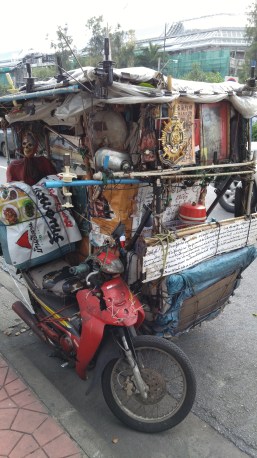
Customizing your motorbike is serious business!

Upon reaching the pier, I was able to grab a long-tail boat for what would about to about a 90-minute trip across the river and through the canals. The Chao Phraya River, which runs through Bangkok, is practically as busy and seemingly chaotic as the streets. We loved it.

Back in the canals, known as klongs, it’s a mish mash of rich and poor, expensive homes with gazebos over the water, temples, riverside parks, and families who make their living right there, eeking out a living day by day. It’s not Amsterdam by any means. Standards of cleanliness and pollution are, well, perhaps ignored altogether. Still, it is an interesting place to visit. Many homes have spirit houses perched outside.


Once back on shore, we meandered toward Wat Pho. Wat Pho is famous because it contains the largest sleeping Buddha in the world. It lies east of the south wall of the Grand Palace. All along the way we pass hordes of mourners dressed in black. When we finally arrive at the gate, Wat Pho is closed for the day. And right at that moment, our luck turned bright. An entrepreneurial Tuk Tuk driver struck up a conversation with us, and we told him we were hoping to find a seafood restaurant for dinner. He says, “Jump In – I’ll take you to one.” Not knowing much of anything about Bangkok’s neighborhoods, we went along – it turned out to be a riverside restaurant on the edge of Chinatown. Of course, the tuk-tuk ride is always fun, especially for the uninitiated! A tuk tuk ride is a must for anyone visiting Bangkok.

After a hot, humid afternoon, a riverside restaurant, with its cooling breezes, was welcome. As was the views of boats going back and forth!

20161107_190803

Cindy Kristi and Rod end a successful day 1!

20161107_190613

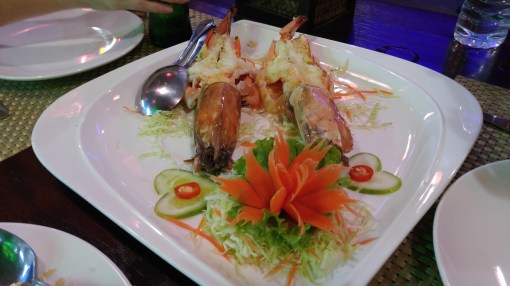
Dig in!

Hunger satisfied and tired after a very full day we head back to our hotel. Tomorrow we’d view some more Buddhist temples and then grab a massage – followed by dinner with Sakun and Yim!


Trinidad, CA – A Slice of Coastal Heaven

13 10 2016

My visit with Jason Self and Shay Bickley in Trinidad, California, was more than hikes among Redwood giants and herds of Rossevelt Elk. The region sports some of North America’s most spectacular coastlines!

20160912_182048

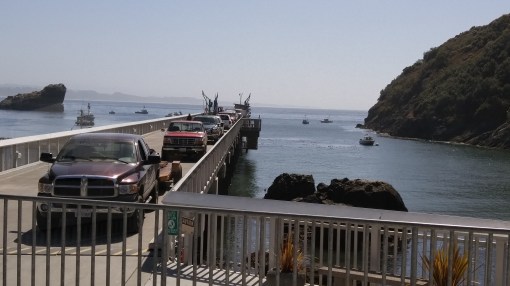
Near Crescent City

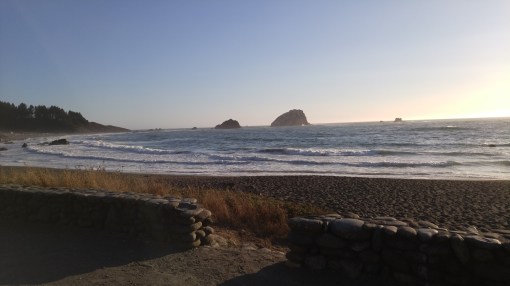
Foggy and rugged, thickly forested, and impacted by frequent Pacific storms, this coast shows off when the sun pops out. Highway 101 passes through this region, tracing its line along surf beaches, through dark redwood forest, climbing to 800-ft above the sea before opening up to spectacular unlimited vistas dotted with sea stacks.

We spent a sunset hiking along the beach, and another afternoon walking to a point high above the waves. No matter what route you pick, rewards are rich.

20160913_182054

Man’s Best Friend waits for his family to come in.

One evening we took a pre-dinner stroll along the shore near the Moonstone Grill, a terrific restaurant with an unmatched Pacific View. It was surreal. No wind and calm seas. So beautiful!

20160913_173753

20160913_182204

The incoming tide was mesmerizing. I could look down on the wavy sand, and see, with each passing wave, how the water was navigating its way further and further ashore. We found a few stranded sea creatures and set them back into the ocean, much to Shay’s delight.

The following day was to be our paddle on the bay. Days here often dawn in a pea soup fog, but most of the time, that fog loses out the the sun by mid day.

On paddle day, there was barely any fog at sun up.

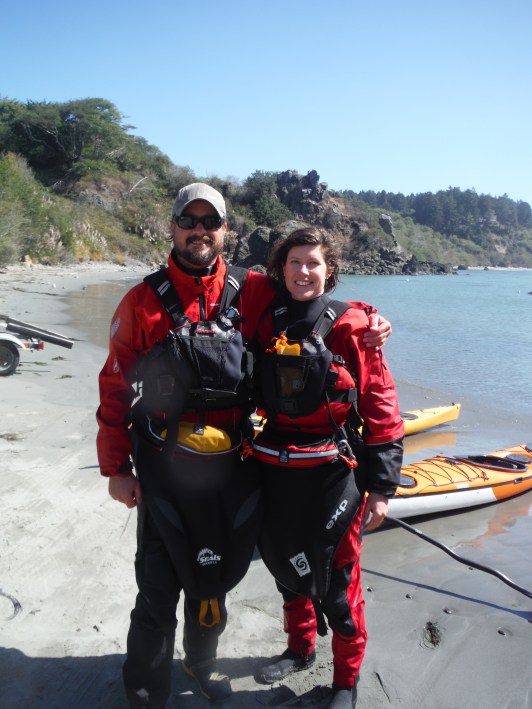
We breakfasted, loaded the boats on the cars, and partially donned out dry suits. Then it was time to head to the bay.

The town of Trinidad leads to a peninsula – with beaches on the NW and SW sides. On this day the swell was coming in from the NW.

20160913_131956

The sea laid down for us!

dscf1903

Shay readies the P&H Delphin.

dscf1912

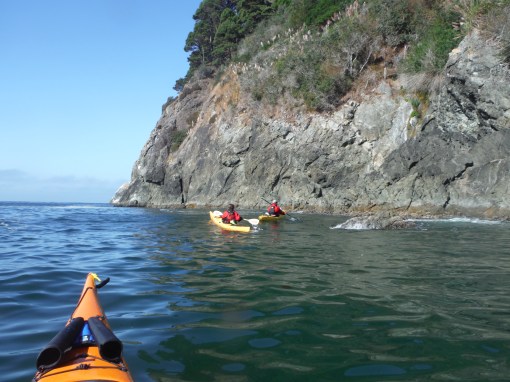
We launched on the protected SW side – which, I’ve got to say, had become an undulating lake! We got maybe a mile or one and a half miles down the shore, paddling amongst sea stacks and harbor seals, before the swells were bigger, and I could see waves crashing against rocks. Even with the small seas, they were quartering from behind, and I got a weird feeling like the sea was a magnet, and I wanted to fall in. Jason said it was a touch of vertigo. I have had vertigo sensations before, but never at sea, and I’ve never been sea sick. Turning around, facing the swell, completely reversed that feeling.

dscf1907

A bay of kelp and harbor seals. And, as Jason says, sharks.

dscf1908

We checked out the sea stacks, rocks, and took a “stroll” along a cliff face. There, we found murrelets, more seals, and a couple of otters! One otter came out of a little cave. Another had caught a fish, and was hurriedly eating, as if it were concerned a rival might try to steal its catch.

20160913_101856

And Jason LOVES his recently acquired P&H Hammer, but not having his photo taken! It was a memorable day on the big P. I hope to visit again!


Kayaking in the Footsteps of Lewis & Clark

6 09 2016

I have lived in Portland, OR for years, but I’d never visited Fort Clatsop, where Lewis and Clark spent the winter of 1805-1806 following their Voyage of Discovery across the American continent. This summer I made plans to see the place. A little research revealed that besides the fort, there is also a free historical kayak tour. So my friend Jessie Bader and I made plans to make a trip out there.

Fort Clatsop lies on the Oregon Coast, near the mouth of the Columbia River and Astoria, Oregon. We decided to overnight at Fort Stevens State Park Campground. Our first day, we arrived in mid afternoon. So we set up camp and, with plenty of time, headed to Astoria to check out the waterfront. Our kayak tour was the following day at 1:00.

First up was ice cream. Cones in hand, we headed down to the riverwalk along the Columbia River. The Columbia River Maritime Museum, with exhibits like a full sized Columbia River Pilot Boat beckoned. We debated and didn’t enter. But behind lay the Columbia Bar Lightship and the Coast Guard Cutter Alert.

20160803_155710

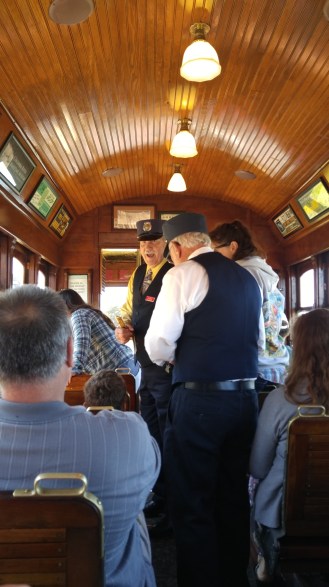
Just a few dozen yards inland we discovered the Astoria Riverfront Trolley. It is super cheap $1 a ride. It glides along the waterfront running to the end of the line east. Then it reverses and goes to the western end of the line, in town. The seats are benches, with a twist – literally. When the train needs to head the other way, passengers get up, move the seat back the opposite way, and sit down facing the new direction.

20160803_143222

The streetcar showed me some new things about the waterfront. It gets much closer to the docks than the road. There are a number of piers with restaurants and recently opened breweries on the piers.

20160803_143022


We got off and took a stroll down the waterfront.

It was a really beautiful August afternoon. A sea breeze blowing. On such a pretty day, it was easy to forget that Astoria spends most of the year in gray stormy conditions.

But on that day, all is forgiven.

Not so for the Lewis and Clark crew in 1805. For they arrived in the winter season. The expedition spent 106 days at Fort Clatsop, it rained every day but 12 and they saw the sun a total of six times. It’s no wonder they gave names like “Dismal Nitch” to landmarks in the area.

Today, Fort Clatsop is administered by the National Park Service. It’s got a museum, gift shop, and dedicated guides to share information on the place.

One of the most popular attractions is the daily loading and shooting of a musket. At 10:00 a.m. a guide gives a talk on the uses of fire arms back in those days, and the way people loaded and fire them.

20160804_103600

After the musket presentation was finished we took advantage of a half mile guided nature walk. And then, it was time for lunch. We found a thoughtfully constructed picnic spot nor far away. On this day it was Euro style, cheese, hard sausage, crackers, fruit, nuts, etc.

20160804_123207

Then we met the tour down at the put in on the Lewis and Clark River. The group would be a family, a couple of individuals, plus Jessie and I. We had two guides, Pat and Cadence.

20160804_134733

A bit of paddling 101 instruction by Cadence got the group started.

The river here is completely tidal. At low tide, much of the area is mud flats. So, the time the tours take place vary all summer, to coincide with high tide. Reservations are required. Our tour was full. We had some lively children, and Pat wasted no time in gaining the upper hand. If they even so much as yawned or stared away, she snapped “A-tten-sion!!!”

On the water, Pat immediately dropped her VHF radio and it was gone, stuck on the bottom. “Well, that’s my second dropped. They’ll fire me!”

With everybody launched we made a three-mile paddle.

20160804_151459

At various points we gathered for a little talk about conservation, or the challenges Lewis and Clark faced.

20160804_142954

The Park Service has purchased additional land adjoining the original site, and has done a good job restoring its property to the way it looked back in 1805. Wildlife has taken note. Many species of birds have returned. Elk and deer are more common.

If you are in Astoria, or camping at Fort Lewis, a stop at Fort Clatsop is definitely worth your time!


Granite, OR – An “Almost” Ghost Town

31 08 2016

Granite town sign

On our North Fork John Day River trip, we’d made up our mind to head east to Anthony Lakes, OR. The route passes straight through Oregon’s forgotten past – its 19th Century Gold Rush region. The spotlight was thrown on this region on Independence Day July 4th, 1862, when A.G. Tabor struck gold on Granite Creek. Today, there are still active mines and claims being worked!

Mining Posted

Just like a Clint Eastwood film!

Word of Tabor’s strike spread like lightning, and within 10 years as many as 5,000 hardy fortune seekers and their families had descended on Granite. More towns emerged, with names like Sumpter, Greenhorn, and Susanville. Folks from back east, European immigrants and Chinese all came. The area was a cultural hot spot until the early 1900’s. Dance halls, bars, pharmacies, general stores, churches and more served the families, with more than 80% involved in mining.

Fortune seekers worked the land in any number of ways. Some worked in “placer mines,” which is essentially mining a river bed. It might involve hydraulics blasting jets of water to excavate. Or, simple panning for gold. By 1914, placer mining had found over $2,000,000 of gold in the North Fork John Day River and Granite Creek. In other places mines were dug into hillsides in search of veins of gold. Some of these can be seen today.

Granite Mine

I don’t suggest exploring this old mine!

It was a tough life. Work was dog tired hard. And dangerous. Winters brutal. It was remote. Granite’s telephone and electrical service were cut off after WWII. Well, the telephone returned in 2000. These days, there is a single wireless router that operates intermittently from the telephone switch box.

Granite Bell Tower

Granite Town Hall.

By 1960, Granite almost joined sister towns of Greenhorn and Susanville as ghost towns – its population had dwindled to 2. But by the 2010 Census, Granite’s population swelled to 38!

Today, there are two businesses in Granite. The Outback, and The Lodge. The Outback Gas and Supply Store was our only resource out here. It has a closed down cafe in the rear. Out front it’s got limited supplies of fishing and camping gear, plus non perishible foods, toiletries and some ice cream. As we were car camping in Anthony Lakes, I was seeking something for the barbeque. When asked, the response from the owner was, “Well, you know, we haven’t got much. This IS Granite after all.” She dug out a package of hot dogs, but they were past the expiration date. However, she was resourceful, and managed to dig out some hockey puck hamburgers from the freezer. Well, with that my only option, I went ahead and bought them along with some gas, and a few supplies. Total bill was $36.

Outside, Laura found something familiar in Portland! A Little Free Library!

Little Free Library Granite

Granite General Store

This was the old Mercantile Store.

Despite the remote living and challenges of survival, people kept going. Families had kids – but the mortality rate was very high. The palpable evidence of hardship was illustrated by our walk of the Granite Cemetery. Way back when, folks often listed cause of death on tombstones.

“Suicide.” “Mining accident.” “Bear attack.” Plus diseases. Not all the headstones had a name. For us, the most heart rending was a section for infants and still births. There were so many who died at birth. Or in the first week. Clearly, life was tough.

Headstone

Laura and I walked what is left of Granite. Many homes in a state of near collapse. But others showed signs of care – many in a state of “project” status. So, Granite still is home to about three dozen souls! It escaped true Ghost Town status!


Journey thru Time at El Morro, New Mexico!

18 10 2015

DSCF1824Experiencing New Mexico’s historical heritage would not be complete without checking out El Morro! Simply put, El Morro is a gem. It’s not big, yet it’s packed with mind bending history, sweet hiking, views, and to top it off, it’s even got an 800-room Ancient Pueblo great house!

DSCF1826

What is El Morro? Well, it’s a bluff with a watering hole. In fact, for over a thousand years, this watering hole was the only known fresh water source for dozens of miles. That made El Morro a camping spot for travelers ranging from Ancient Pueblos to 17th Century Spanish Conquistadors to 19th Century settlers seeking a new life in America’s West.

el morro

Each of these peoples left their mark. The El Morro trail leaves the visitor center, leading to a watering hole at the base of the mesa. From there, the trail winds closely along the base of the mesa. This is where my mind began to get a bit blown away.

el morro

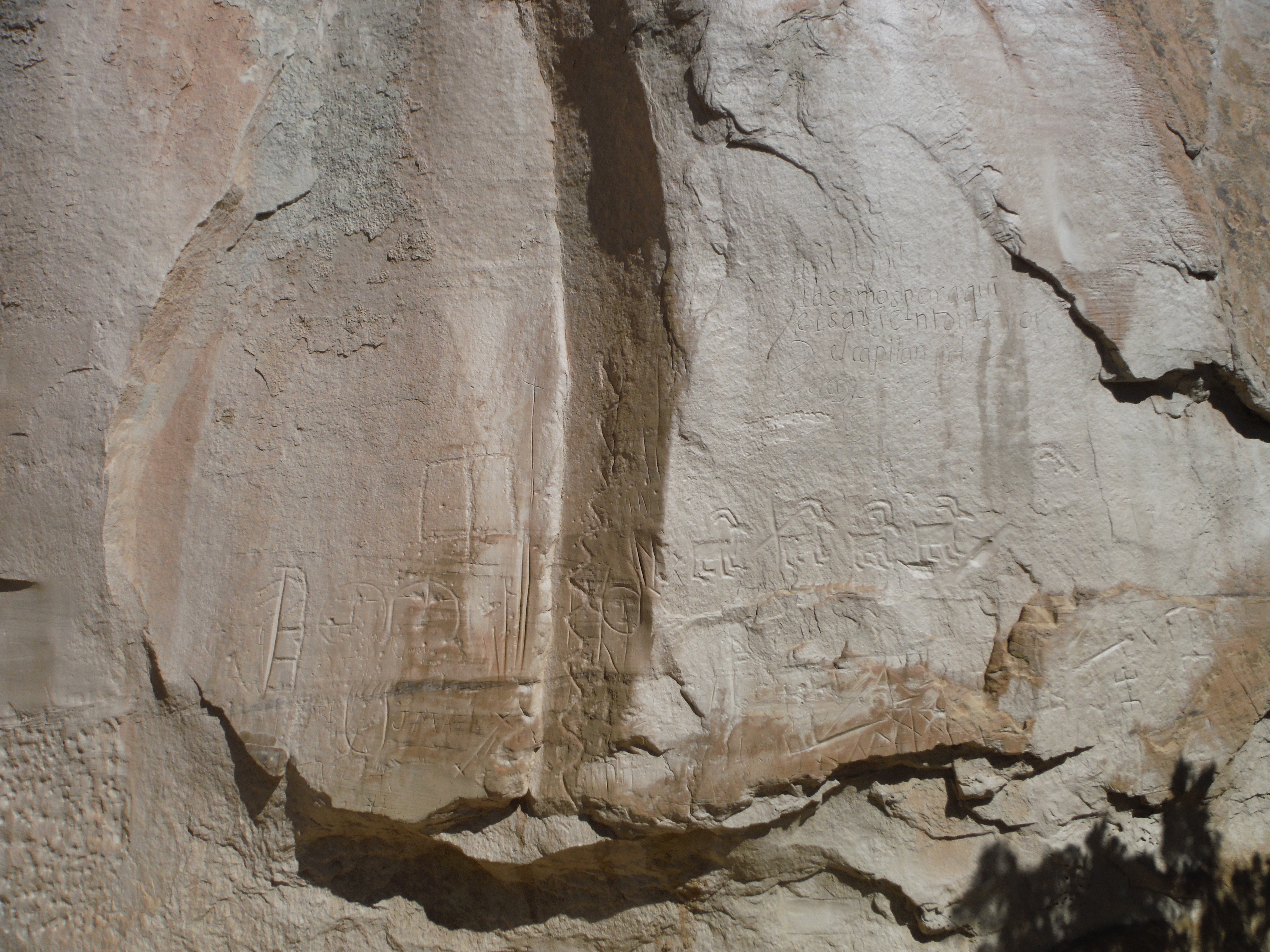
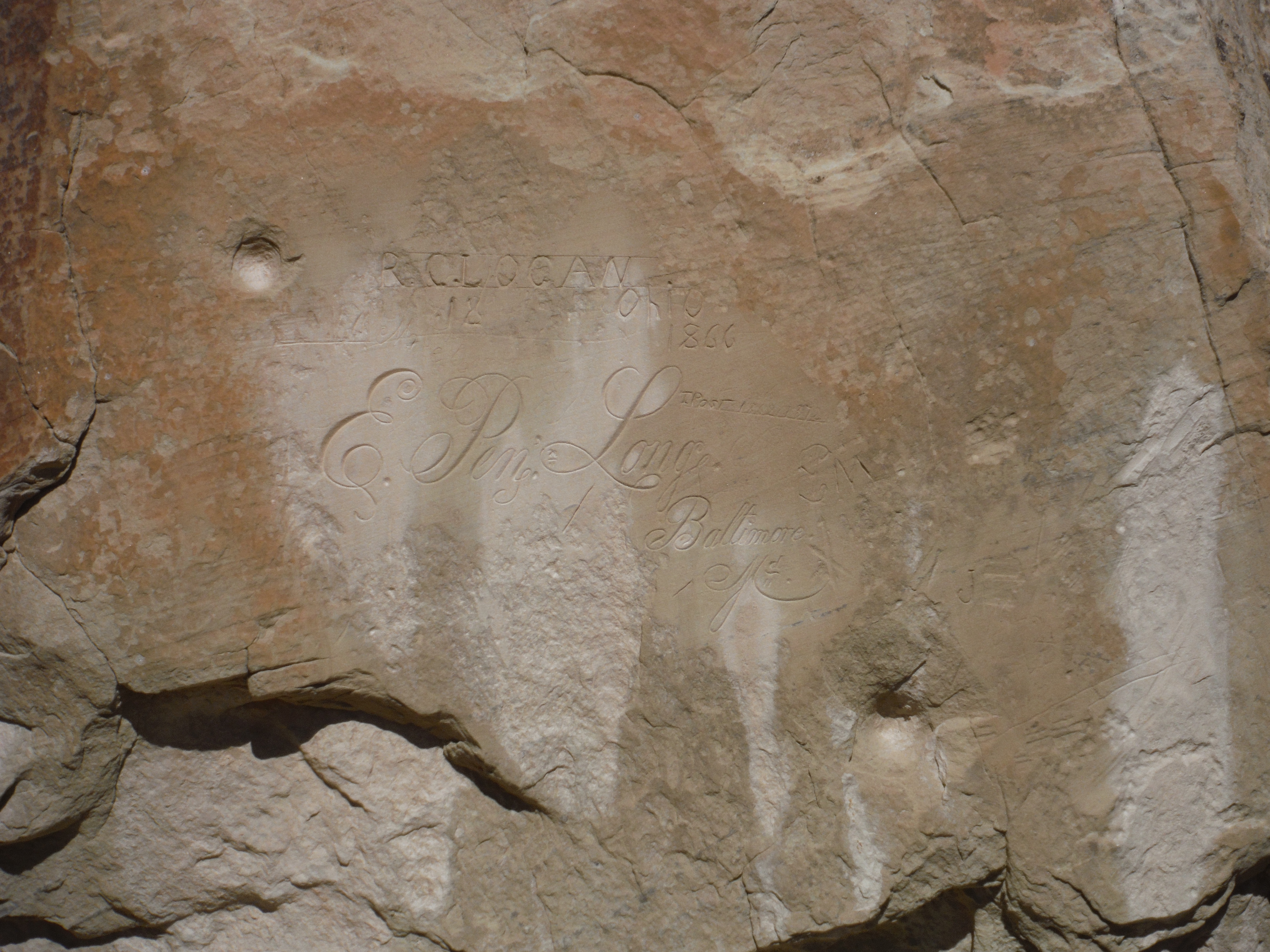
Starting with the Inscription Trail, all along the base of the 250-ft tall mesa I witnessed people’s autographs spanning a thousand years. The oldest scribblings are petroglyphs. There are over 2,000 of them! Some were by now familiar such as the snake. But there were new images – bighorn sheep, along with mythological creatures.

el morro

DSCF1841

Then I saw dozens of 19th Century inscriptions by settlers and army officers. But more amazing were Spanish inscriptions – the earliest I saw was 1609. Wow! That beats the founding of Plymouth Massachusetts by 11 years! Most of the names were men. But there was one woman who was in a battle with the Indians, was shot with an arrow, survived, and kept going.

The trail winds around the back of the mesa, connecting to the Headlands Trail, then climbs up to the top – gaining some 250 feet. From there, the view of the valley is unparalleled. Up on top one can see the effects of rain on the geology. There were a few pools of water from recent rain, each one filled with mosquito larvae.

el morro, astinna

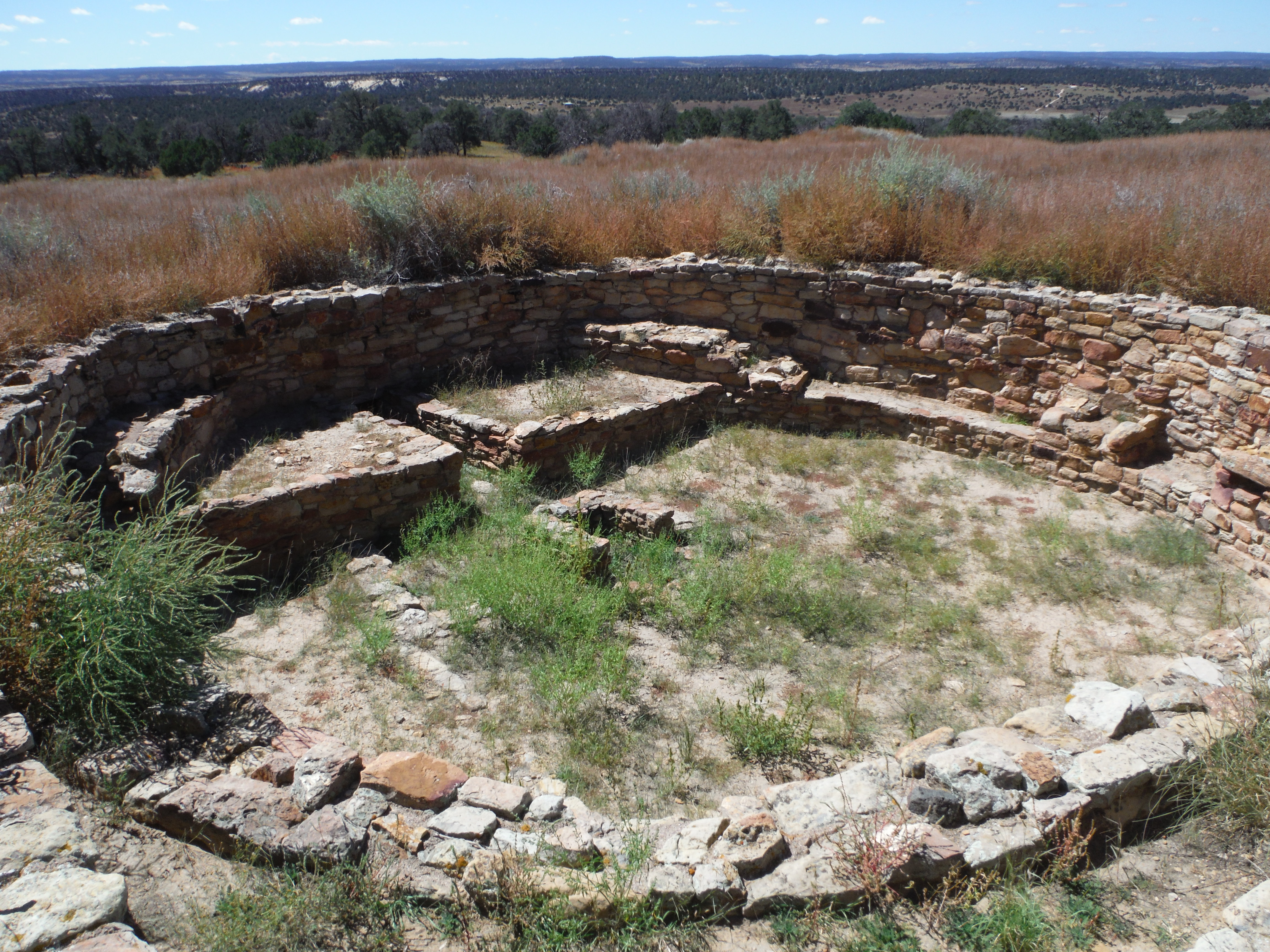
Eventually the summit trail leads to Astinna, an Ancient Pueblo great house with hundreds of rooms. Incredible! Even up here, hundreds lived out there lives. Astinna had 875 rooms and was home to 1,500 people! The town peaked about AD 1300.

In total, the hike is probably no more than three and a half miles, and totally worth it!