Oregon’s Gold Rush Region! Sumpter, Oregon and Granite, Oregon

6 09 2013

Route MapMy interest on this trip was focused on the areas around the North Fork John Day River Wilderness Area. I’d be driving Oregon’s Route 7, Route 73, Route 20 and Route 52. Today, I’d pass through Prairie City – on state highway 26, on my way to Sumpter, Oregon. This is 100% marked as scenic on the maps!

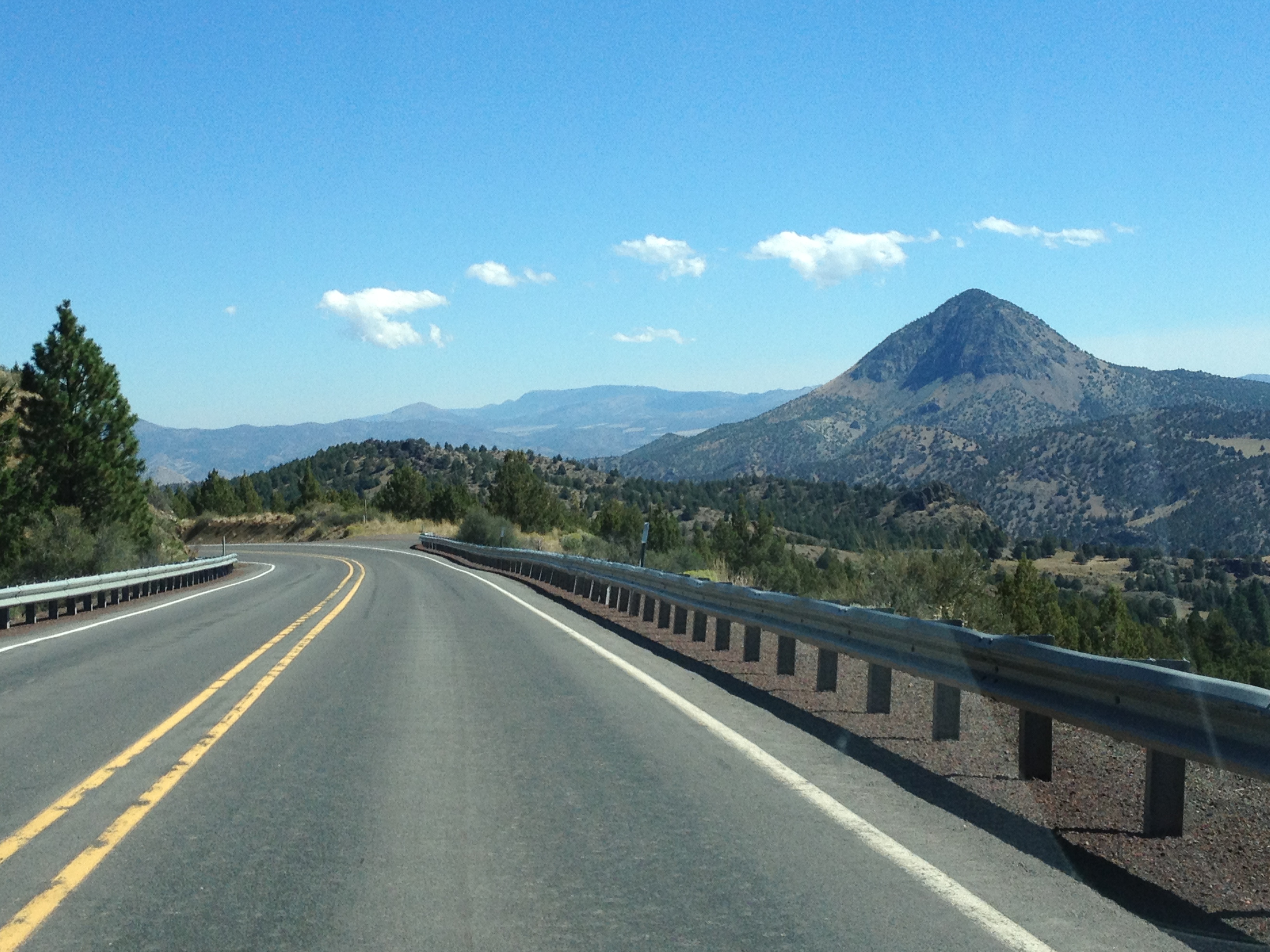
I’d be camping at Anthony Lake, though I didn’t know it when I began. I will tell you the drive along Oregon’s Highway 26, the Journey Thru Time Oregon Scenic Byway, is serene and calming. It wends its way through ranches and farms and small towns like Mitchell and Dayville, with less than 250 population. Absolutely nobody is in a rush here.

A few dozen miles east lies Prairie City. They’re making an effort to refresh main street here, and it looks pretty. I fill the tank with gas, and here they still clean your windshield! Then Oregon Route 7 intersects, and I’m on my way up to the Elkhorn Mountains, climbing all the way.

This is GOLD RUSH territory! In 1883 Sumpter was founded. By 1897 a railway reached the area, and the population grew to 2,000 as gold mines and claims proliferated. There were 12 miles of underground tunnels. Even today, I saw staked out gold mining claims!

Fort SumpterThese days Sumpter is preserved as a tourist attraction of Gold Rush history. Much of it has been restored to look as it was. I even saw a fort. I wondered if that fort was supposed to look like the Civil War Fort Sumpter? To me, it looked like it was right out of the 1960s TV series “F-Troop.”

Two of Sumpter’s main attractions are the Sumpter Valley Railway and Sumpter Valley Dredge. The railway, opening in 1890, was built to haul lumber 22 miles to Baker City. Within two years it was hauling passengers and freight. Today, it is a 6-mile narrow gauge tourist ride.

The Sumpter Valley Dredge is a monument to capitalism and 19th century technology. These 4-stories-tall dredges floated in ponds, and as they dug, the ponds moved with them. They consisted of conveyor belt of buckets to dig earth and carry inside for processing, the internal processing machinery, and another conveyor out back to dump out the waste. There were three of them in the valley. Ironically even though they only employed three workers each, they ended their machine-lives $100,000 in debt. Sumpter Dredge

Climbing out of Sumpter, the road switchbacks ever higher. I drive along a high altitude creek lined with mining claims, and with piles of rocks which could only have been left by days-gone-by gold prospectors.

Then I reach Granite, elevation 4,695. Granite’s population is 38. It looks bigger than that. It’s got a “Welcome to Granite” sign over the road. It’s got a fuel depot and a hotel. Still, it has a look and feel of a genuine frontier town. Founded in the 1880’s, granite boasted a population of 86 gold miners by 1940, but in WWII, the government ordered gold mining shut down to make miners dig for “esseFire Crew Signntial war effort” materials. Granite collapsed, and never recovered.

Past Granite, I made up my mind that I would camp at Anthony Lake, some 40 miles distant. I’d be cruising the Elkhorn Oregon Scenic Byway. On my way to that byway I ran across something unsettling – a Forest Fire Camp. During this trip there was a giant fire threatening Yosemite National Park, so forest fires were in the news.

Yet I didn’t know that the Forest Service established camps supporting hundreds of firefighters even before a fire started. Wow. That is serious.

Fire Crew StationThe camp I saw was several acres, high in the mountains, in a big meadow. And as big as it was it was clear that there was room for probably a thousand men up there.
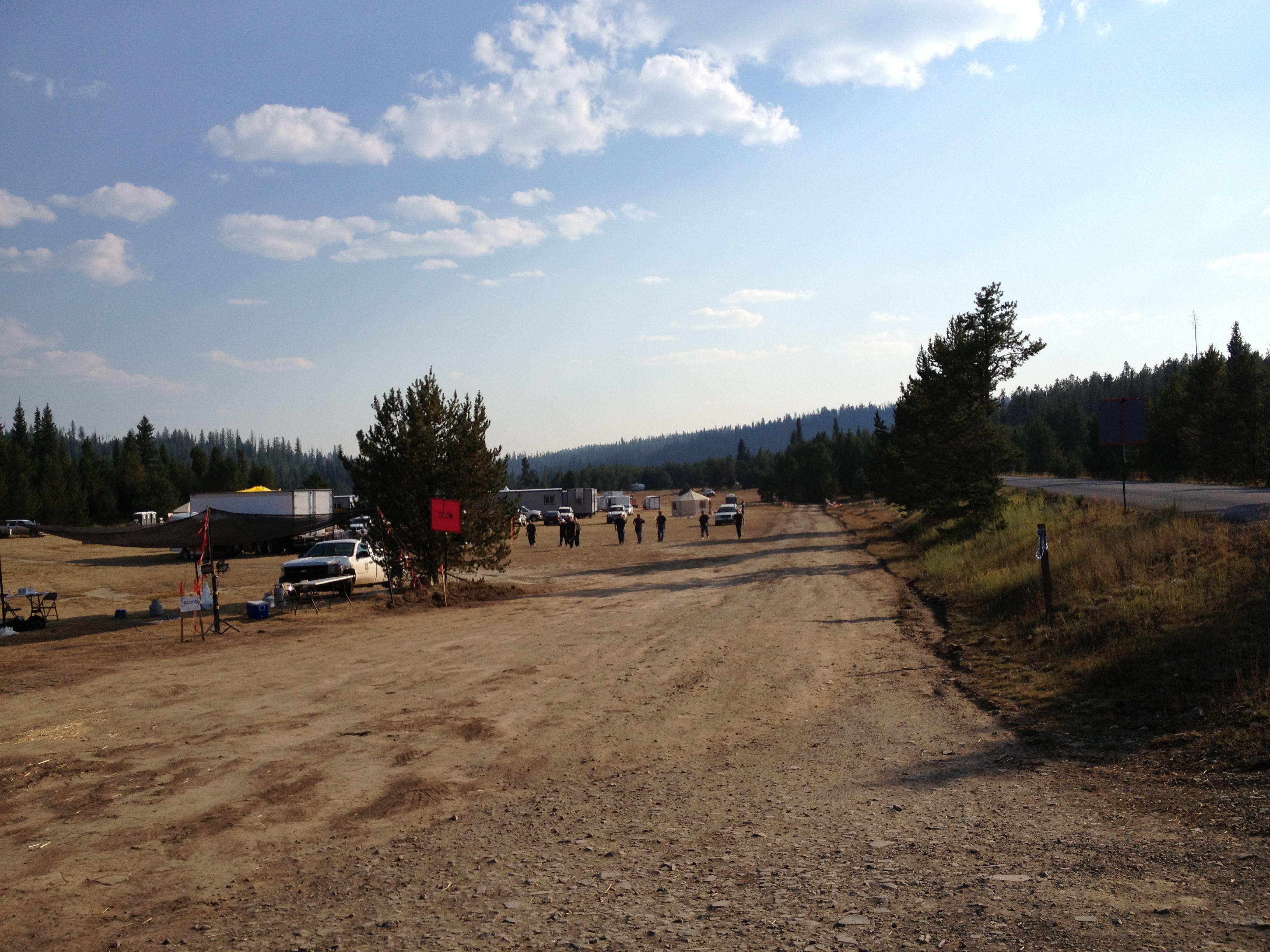
 

Fire Crew2That made me much more aware of the gravity of the situation.

Beyond the Fire Camp, I ran into something I came out here for. It is the trailhead for the backpacking trail on the North Fork of the John Day River. I had heard about this many years before and now I was here. Too bad I am injured now, and can’t do it. But I will be back.

NF John Day SignIt’s very very pretty up here, and there are just not a lot of people to bother you. That is the beauty!

I decide to push east and camp at Anthony Lake. I have been there to ski in the winter, but never seen it without snow. I just have to check it out. On the way I reach a high point in the Elkhorn Moountains, about 7,250ft.Elkhorns 7250
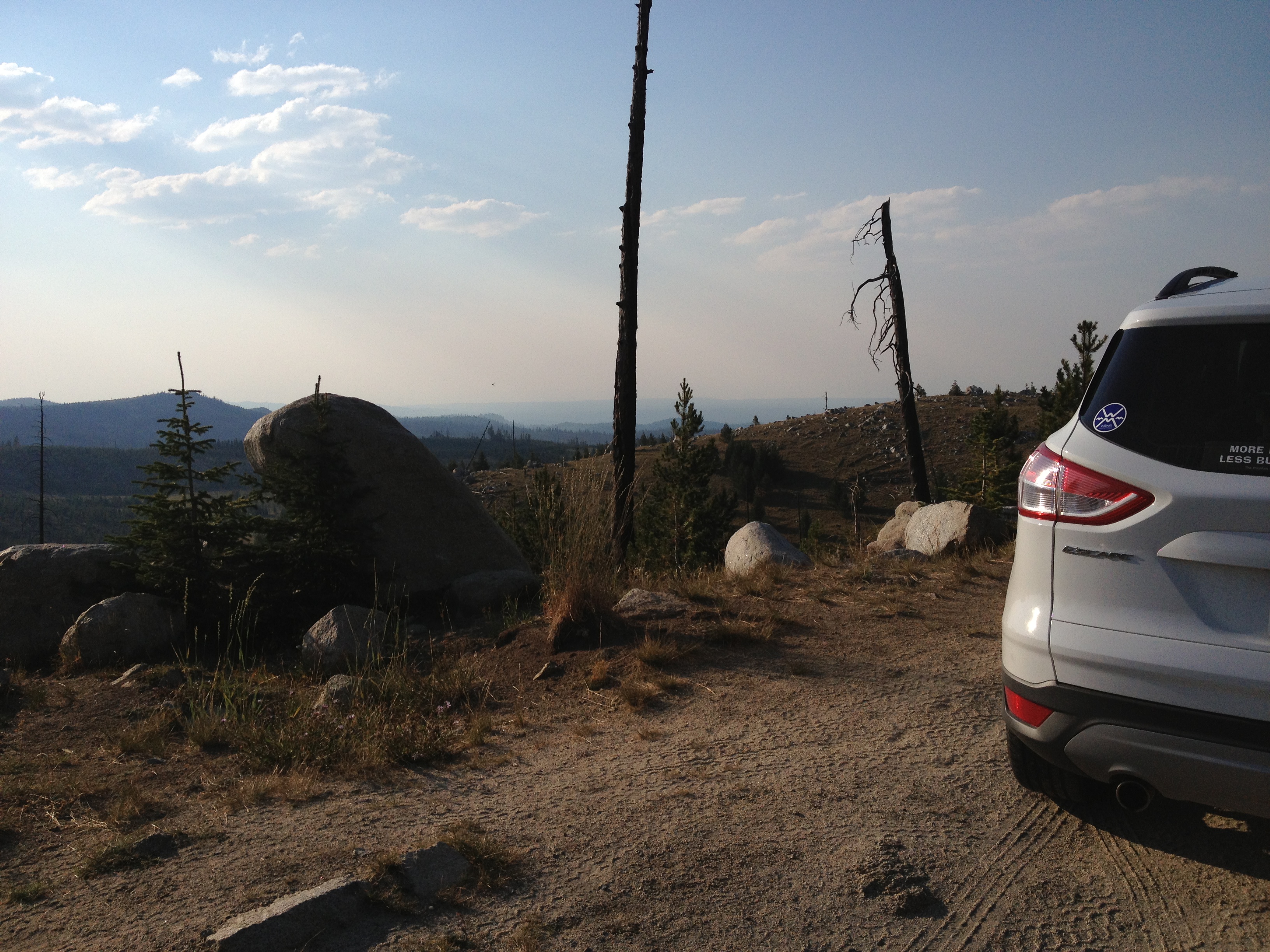
The view goes on forever. It seems a high plateau goes on from here and one could backpack quite a ways.

Then I descend down into the Anthony Lakes area.

The lake is much smaller than I remembered, as I had cross country skied around it two times in the past.

Anthony Lake PanoramaI had imagined it would have campsites on it. But nope. The campground is to one side, and it has day use areas on the other. There are walk-in sites to another side.

I also paid a visit to Anthony Lakes Ski Area.Anthony Lakes Sign
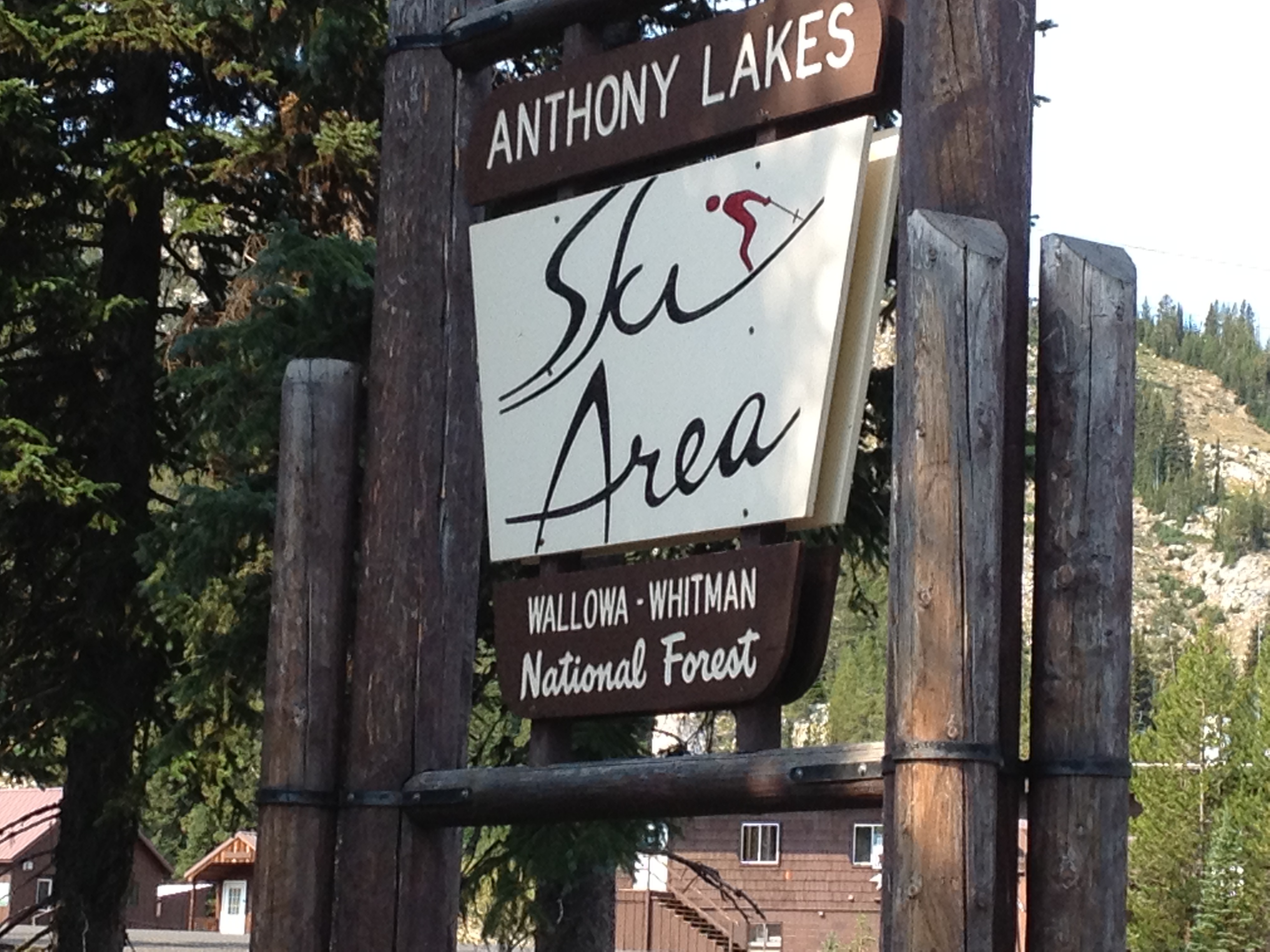
 

Without snow, it looks so different. I quickly realized I could actually drive around the lodge and onto some of the lower slopes I had skied!

This was pure devilish fun! Well, with that bucket list item checked off, I returned to the campground and made my meal. I grilled a pork chop, made mashed potatoes, had an awesome campfire, and salad. Then, off to sleep.

I had hoped to see a million stars – but that was not to be. The smoke from the Yosemite fire partially obscured a picture perfect view. Next time I guess!


xx


Oregon’s Ochoco Mountains and John Day River Picture Gorge: Journey Thru Time Oregon Scenic Byway

30 08 2013
Journey Thru Time Car

Uh Oh! Am I going back in time?

Planning my trip was a bit of an effort. The route I wanted to see in inner NE Oregon wasn’t all that clear – I had no less than four maps and guides. Some showed route numbers, and some just gray lines on the map. Others showed possible ghost towns, like “Greenhorn,” “Granite,” “Sumpter,” or “Susanville.”  And others still showed tent icons where one might camp along the way. So, I pieced together a route from all these sources. Looking at it in total, I decided the most rewarding way to head out there was to use Oregon’s highway 26. That would take me past Mount Hood, into Central Oregon, through Prineville, and up and into the Ochoco Mountains.

From there, the road would meander along the John Day River and the Journey Thru Time Oregon Scenic Byway. What better way to get to inner NE Oregon? The other way would take me via I-84 which I have seen so many times. Highway 26 meanders through farms, ranches, and small towns such as Mitchell, Dayville and Prairie City, all the way to its connection with the Elkhorn Oregon Scenic Byway.

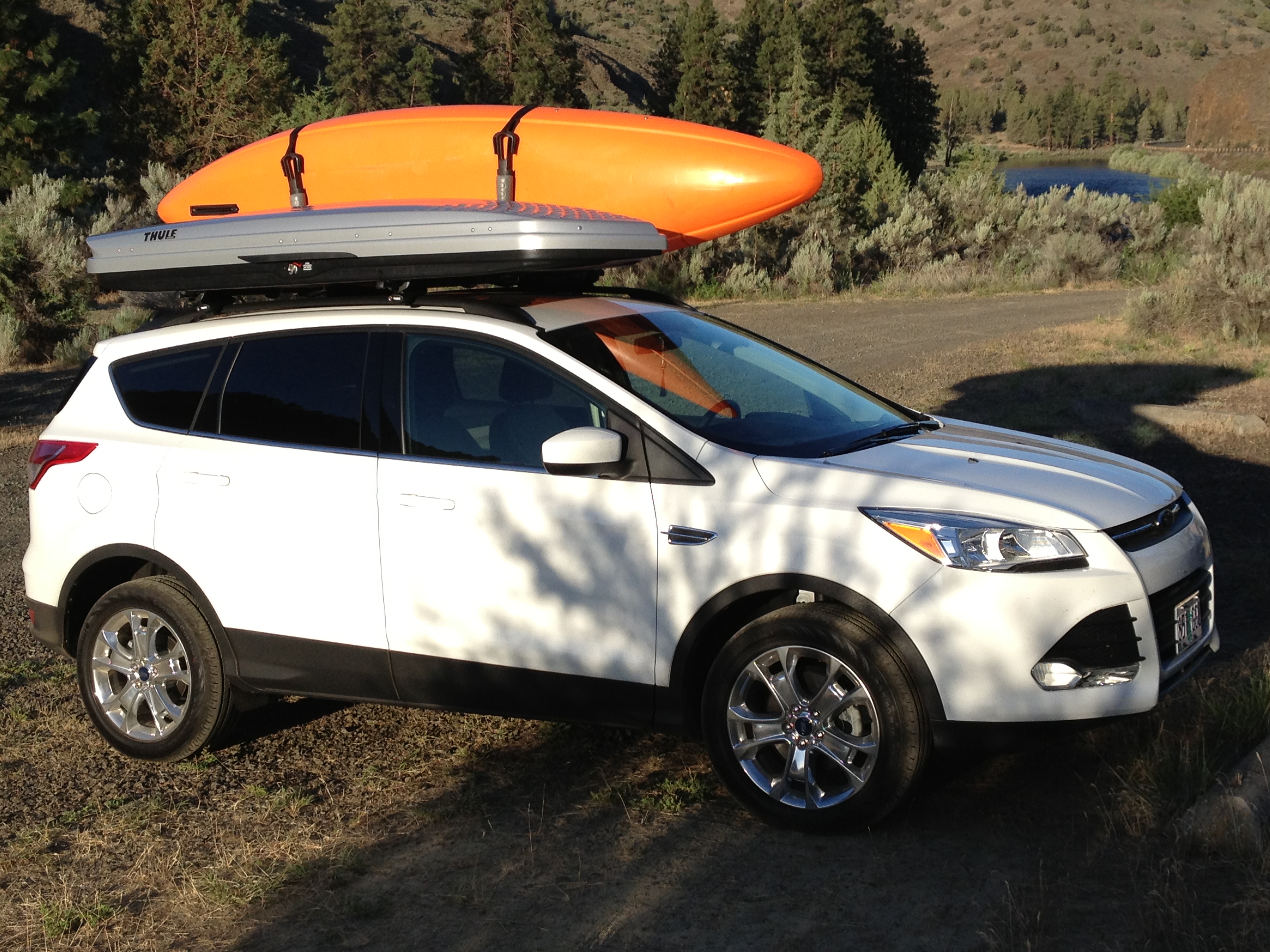
I’d need to get an early start. So the night before, I packed the 2013 Ford Escape SE. The weather forecast looked great. I would be on the road by 8:00 a.m. And what a day it was. Sunny and bright. I’d just had the car’s first oil change, so it was ready. Packed up, iPhone 4S plugged in with 1,840 songs, ready to go!  No kayaking this trip so I removed the roof rack to get max mileage. I’ll have grilled pork chops tonight with mashed potatoes and salad. But I dunno where I’ll be camping. Just figure it out. See how it goes.

On my way. Up and over the Oregon Cascades, through Blue Box Pass, about 4,400ft. Then into the Central Oregon Plateau past Madras. From here, I can see Mount Bachelor (9,068 ft), the Three Sisters (10,358 ft),  Broken Top, Mount Washington (7,800 ft) Three Fingered Jack, Mount Jefferson (10,450 ft) Olallie Butte, Mount Hood (11,241 ft) and even Mount Adams (12,280 ft)!

I climb the Ochocos. These are high dry mountains. It’s pretty up here. Ponderosa pines are everywhere.

OchocoDescending toward the John Day River Valley, the view is unlimited, the sky crystal clear.

The road eventually drops into a crack in the earth – the Picture Gorge. In the Picture Gorge, the John Day River has followed a fault line for millions of years. That is right.

And it has flowed here for so long that it is older than the mountains themselves. When the flood basalts erupted and flowed all over eastern Oregon millions of years ago, the John Day River kept on cutting through on its way to the Columbia. Thousands of feet of basalt layer caked one upon another but the John Day continued cutting.

Today, the John Day river flows north right through the ascending basalt layers, even as the highway descends in the opposite direction. There are few places on Planet Earth where a river seems to flow INTO a mountain, rather than out of it. This is one such place. I saw another in New Zealand, when I was there in January 2013.

Not long after the Picture Gorge, highway 26 opens up into a beautiful valley filled with farms and ranches.

It is here one finds the entrance to the John Day Fossil Beds National Monument and Oregon’s Painted Hills. I’m not here to see these treasures, my quarry lies beyond.

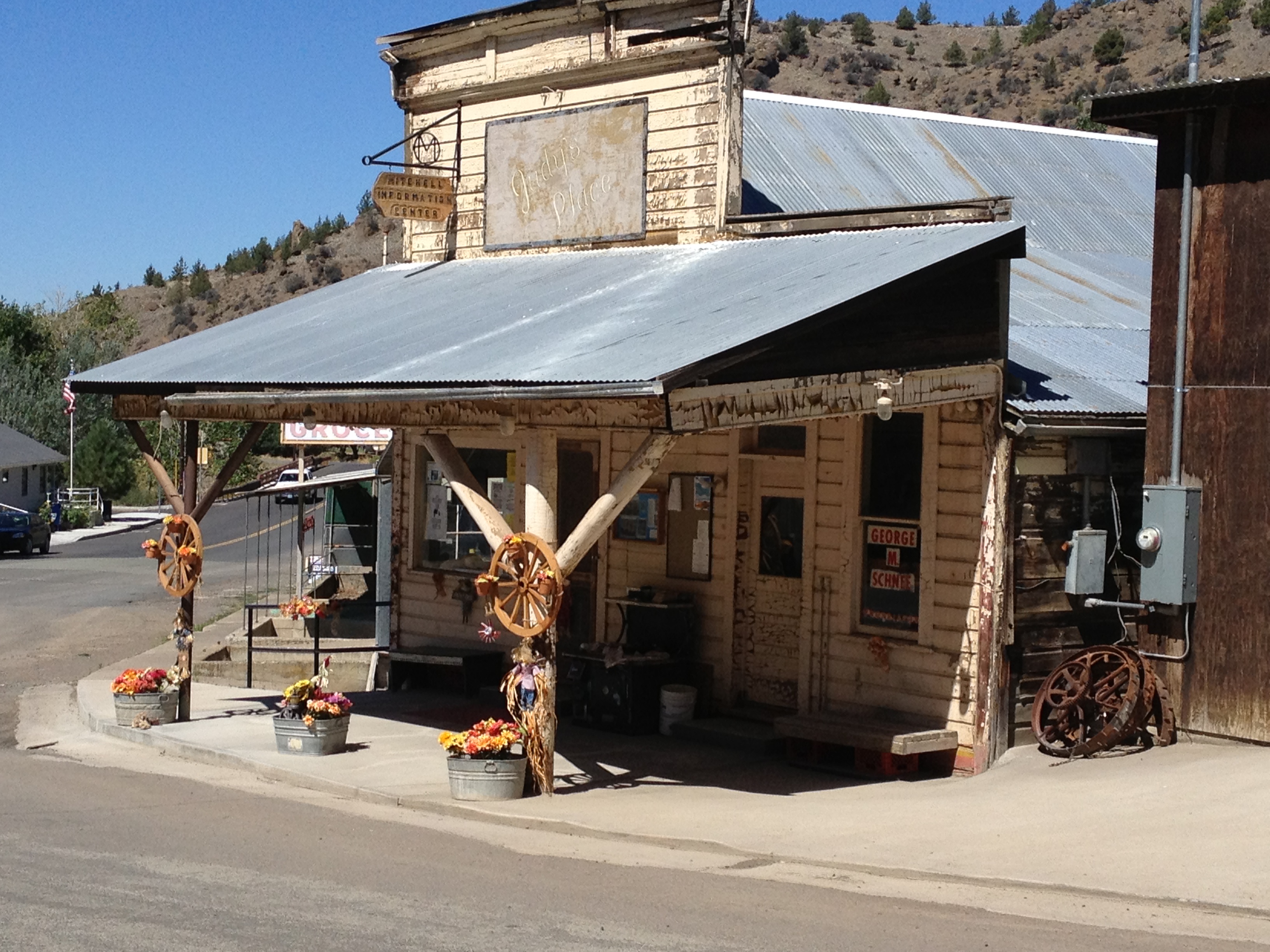
But I am enjoying the view, and by noon getting hungry. The town of Mitchell comes within striking distance, so I decide to Stop in Mitchell, Oregon and grab a bite for lunch. Mitchell1

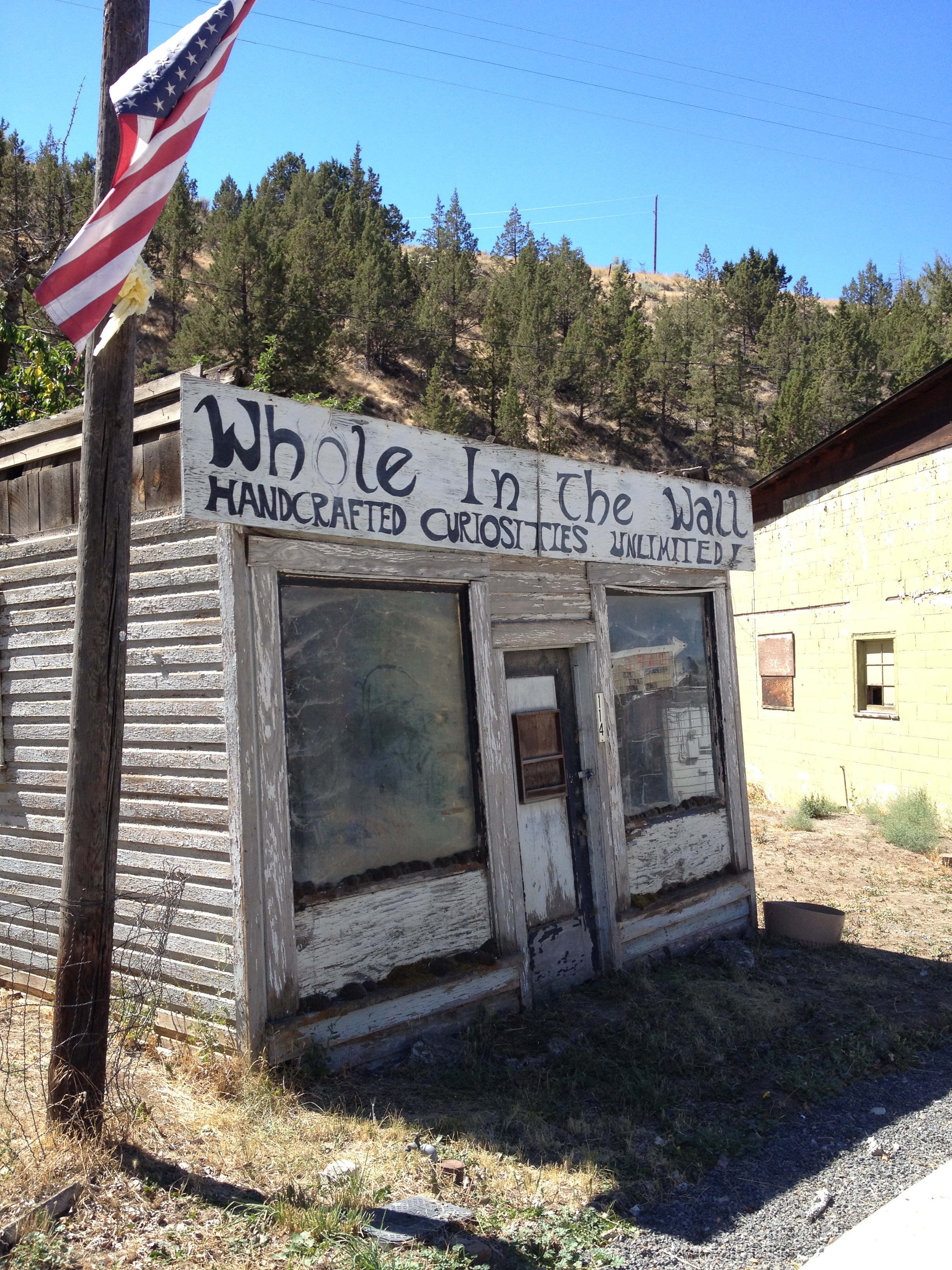
Like a lot of eastern Oregon towns, Mitchell has seen better days. Yet, it has enough character to hold up all its own. Townsfolk lazily walk the street, stopping to seek shelter and converse under a shady porch or tree.

Mitchell2Nobody is in a hurry in Mitchell!

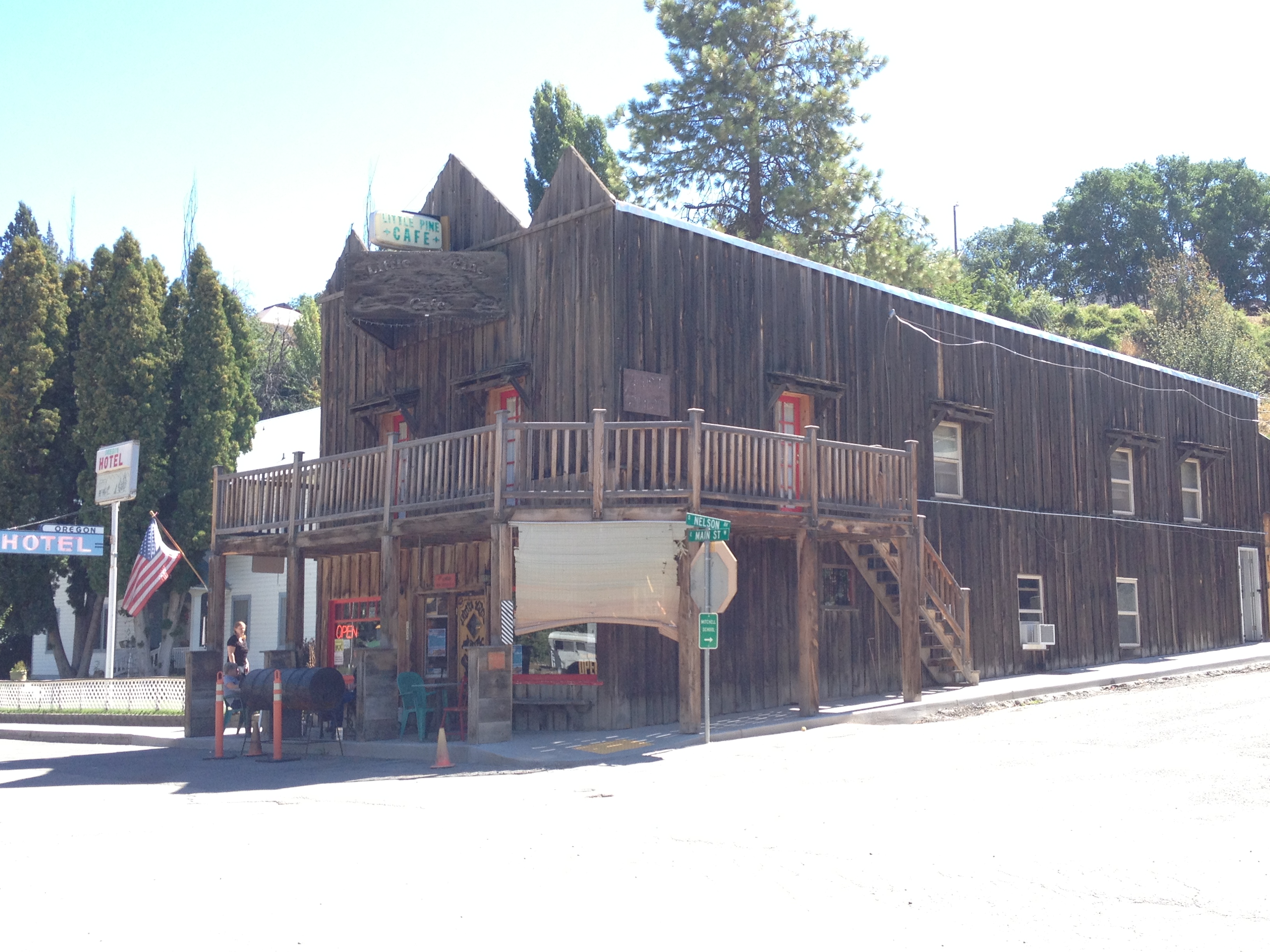
My lunch spot today is to be the Little Pine Cafe, right on main street.

Its customers this lunch are myself, a family from Portland, and a mother with toddler. Mom and toddler regularly go behind the counter to pick up condiments or change the station playing on cable TV.Mitchell3

I pick the Mushroom Swiss burger and a side of macaroni & cheese. Turns out to be fine and dandy!

Adorning the walls are pictures of John Wayne, Clint Eastwood, Gene Autry, plus locals over the years. There are a lot of dollar bills with various scribbles thumb-tacked to the walls. One says, “Brought my boyfriend from CA up here. He says, this explains a lot!”

I can only imagine. I depart feeling satisfied, planning to return on my next pass through.

Today’s drive will take me through the towns of John Day, Prairie City, and into the Elkhorns, into Sumpter and Granite.

Check back on the next blog post for Elkhorn Mountain trip journal entries!


A Scenic Road Trip through NE Oregon – Journey Thru Time Oregon Scenic Byway, Elkhorn Oregon Scenic Byway, and Blue Mountain Oregon Scenic Byway

30 08 2013

Journey Thru Time BywayFor years, inner NE Oregon has been on my bucket list! I have seen the areas around it, but never been in the thick of it. I have been to Halfway, Oregon. I have been to Hells Canyon. I have hiked the Wallowa Mountains. I have backpacked the Strawberry Mountain Wilderness. Three of Oregon’s Scenic Byways lie there: Journey Thru Time Oregon Scenic Byway, Elkhorn Oregon Scenic Byway, and Blue Mountain Oregon Scenic Byway.

I have always been curious about the less renowned Blue Mountains, and the Elkhorn Mountains. The Central Cascades and Wallowas get all the attention. In the Blue Mountains and Elkhorn Mountains lie the headwaters of the John Day River – the North Fork and Middle Fork.

Elkhorn Byway

And 19th Century history lies here. Gold Rush ghost towns, abandoned mines, mine tailings left behind by Chinese prospectors.


Blue Mtn Byway

The John Day River cuts through a swath this region – made famous by the John Day Fossil Beds, where huge discoveries of Ice Age fossils were made. It meanders lazily in the valley underneath the Strawberry Mountains, where cowboys tend cattle and farmers raise grain. In the Elkhorn Mountains, the road passes gold mines before climbing to over 7,300 ft. then descending to the jewel of Anthony Lake.

Oregon’s Blue Mountains are high altitude rolling hills and vast meadows with limitless views of the Columbia Plateau and John Day River. There, one can simply camp on a horizon-to-horizon meadow, with not a care about neighbors whatsoever

This area is full of beauty and history. But not crowds. By comparison, Central Oregon seems downright urban! It has its own beauty, which is not overwhelmed with volcanoes dominating the view. My next few blogs will cover this beautiful, often overlooked, region.


Sparks Lake and Hosmer Lake, Oregon

1 08 2013

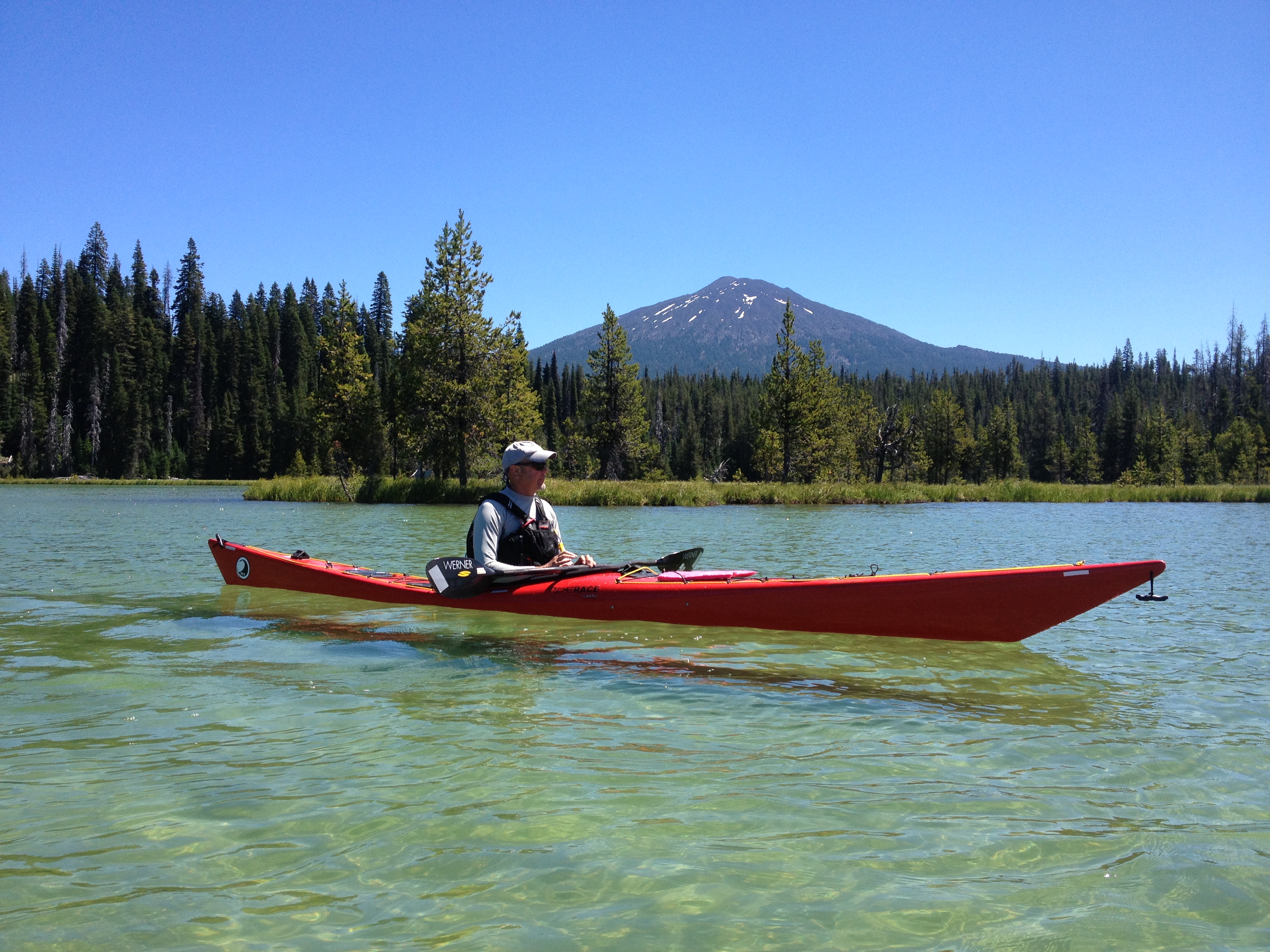
IMG_0659Just returned from a kayak camping trip to Sparks Lake and Hosmer Lake, Oregon with my friends Jessie and Laura! These two lakes are located right on the Cascade Lakes Scenic Byway in Bend, Oregon. Wow! These are two of the most scenic lakes in the Pacific NW.

Bathed in fantastic clear blue skies and looked upon by 10,450 ft South Sister, Broken Top and Mount Bachelor, these crown jewels are worth paddling. Everyone visiting Oregon ought to come and ply these waters.

On the water you’ve got a 200-degree view of glaciated peaks above. The lakes are easy to explore, their waters typically calm and not too deep.

Sparks Lake and Hosmer Lake have different personalities. Sparks Lake is dominated by flows of a’a lava flows, so sharp they pierced one of my dry bags. These flows make for isolated channels and difficult boat landings. Yet, we found a beautiful camping site with a jaw-dropping view of South Sister!

Breakfast!

Breakfast!

Out on the lake I’m overwhelmed with the views before me. In every direction there is an otherworldly view – each one magnificent all in of itself, yet here there are THREE!

IMG_0640I feel justifiably spoiled.

We have perfect weather, impeccable views, and I have two women with me.

For dinner, we have fresh shrimp and veggie skewers, plus rice. After a laborious preparation involving ginger, garlic etc. the meal perks my taste buds!

IMG_0633

Mount Bachelor provides a backdrop…

Evening is quiet. I have to disclose Sparks Lake is a tourist hot spot. During the day kayaks, canoes, inflatable rafts, everything is out enjoying the view. But we put out on the lake with our camping gear and found a quiet spot, so once dusk came all became quiet. One bright light in the SW sky we determined was Saturn.

After dawn and a breakfast of oats, nuts and fruit, washed down with Sumatran coffee, we packed up the kayaks on the 2013 Ford Escape and headed 20 minutes down the Cascades Lakes Scenic Byway to Hosmer Lake.

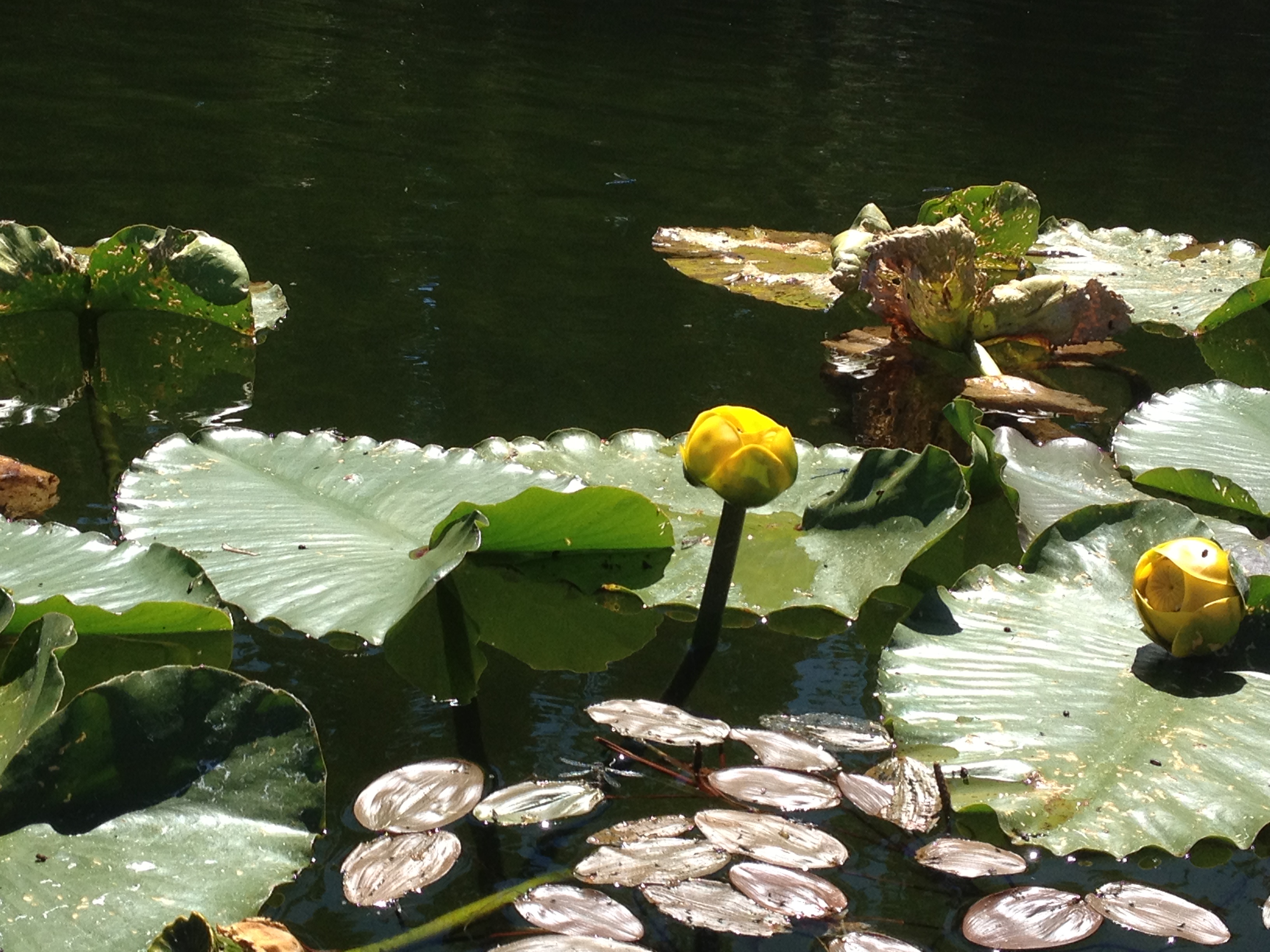
Hosmer Lake is characterized by lakelets connected by lillypad clusters, rushes, and channels filled with rainbow and brook trout that would make a fly fisherman blush. It’s a different vibe than Sparks Lake. It’s just as busy though. So, on the channels connecting the lakelets, you have a parade of stand-up paddleboards, kayaks, canoes, etc., and oar powered fishing boats. Everyone is looking down at the fish! Although the whole time, you are surrounded by the mountains!

IMG_0646 It was another impeccable day, with different scenery as a backdrop.

IMG_0645With mountains above, lillies on the water’s surface, and beautiful trout below, it’s hard to beat Hosmer Lake.

IMG_0652Parts of the lake feature Caribbean Blue waters where your boat’s shadow can be seen underneath!

We follow a channel up one end of the lake in search of a waterfall everyone told us about. The water temperature drops precipitously, an indicator we’ve found the source. The width of paddle-able water narrows to two yards – in some places, two feet. Then we glimpse some beached kayaks.

Here, we haul out and make lunch. Just above, there is a to-die-for waterfall beautiful enough to make Laura cry!

That is enough for me. Such a perfect day. We head back to our camp at Sparks Lake for another fabulous meal. Tomorrow we head home, full of memories.


John Day River Oregon: A Day Running the River!

9 07 2013

IMG_0587Fraternity brother Tully Alford and I spend some “bro time” every summer camping. This year, for our first camp-out we returned to the John Day River. It’s in dry central north Oregon, an area way below the radar of many outdoor enthusiasts, yet if offers tremendous opportunities for those venturing there! Imagine floating down a canyon-walled river. With every turn, a new world unfolds. Not a house or road to be seen. Eagles and hawks float above, bass swim below. Yet only two and a half hours from Portland!

This year we decided to float the river – camping and the using a river shuttle service to pick us up and deliver us to our car at the end of the run. The John Day River is famous for long, flat stretches of running river with rapids connecting them. And for beautiful canyons with layered rocks overhead.

IMG_0579We packed up my new 2013 Ford Escape with Jackson Kayaks Rogue 9 and Rogue 10 kayaks. These kayaks are perfect for this trip, because they are good for the whitewater stretches, but also have a rear hatch – good for storing gear and food – and a skeg for the flat sections so they can be paddled straight.

IMG_0582

Tully getting ready at the put in!

As Tully had no experience in whitewater I gave him a tutorial on entering and exiting the main current into eddies. And, I explained that in rapids there are these things called “holes,” though I couldn’t really explain what they do. So you know, a hole is a backwash behind a boulder. If your boat gets stuck in one, it can be difficult to get out. Your boat gets “sucked in” by the hole.

Running the John Day River is characterized by long stretches of flat water separated by rapids. The plan was for me to run the rapid ahead and Tully follow me through. This worked great until the very end of the day.

I was very impressed! Tully made it through everything and found it fun!

IMG_0586

Tully chills out after a rapid…

Tully began the day in a wetsuit but as the temperature rose, he felt heat-distressed and at lunch took it off. The Jackson Rogue 9’s hatch took the wetsuit with lots of spare room. Lunch was sumptuous. We found a shaded peninsula and made sandwiches of mayonnaise, Dijon mustard, turkey, lettuce, cheddar cheese and tomato. Plus fresh oranges for dessert.IMG_0588

Back on the water. The river and canyons unfolded one after the other. We heard, but could not see, Bighorn Sheep in the hills above. We saw bald eagles. The occasional Smallmouth bass swam below.

The run was from Spray to Service Creek, about 17 river miles. We were told it would take all day. I never believed it, but it was true. We set off at 10:00 a.m. and took out at 4:00 and we were pretty tired. It was a great day. The John Day River took its prize in the last rapid, the hardest of the day. As we approached, I could only see the horizon line and nothing of the features below. We had agreed we did not want to bother scouting, because none of the other rapids were all that hard. As first paddler I went in. Immediately I noticed three holes and lined up my kayak to pass by each one. However, on the second hole, there turned out to be another right behind it, invisible from above. After scooting by the 2nd hole, I darted across and paddled hard past the surprise hole. Tully was not able to do that, and got stuck in that hole. I did not know this until I had made it completely past the rapid and into the pool beyond. Then I looked back and saw carnage! Tully holding on to his boat, but the paddle, spray skirt, his glasses, etc. were floating by and sinking. He looked pretty shaken up and I towed his boat to the shore and he grabbed on.

We kayaked the last stretch and hauled out. No matter, we had a GREAT day on the John Day River!

The evening meal was grilled salmon, salad and mashed potatoes. IMG_0581

IMG_0580IMG_0589


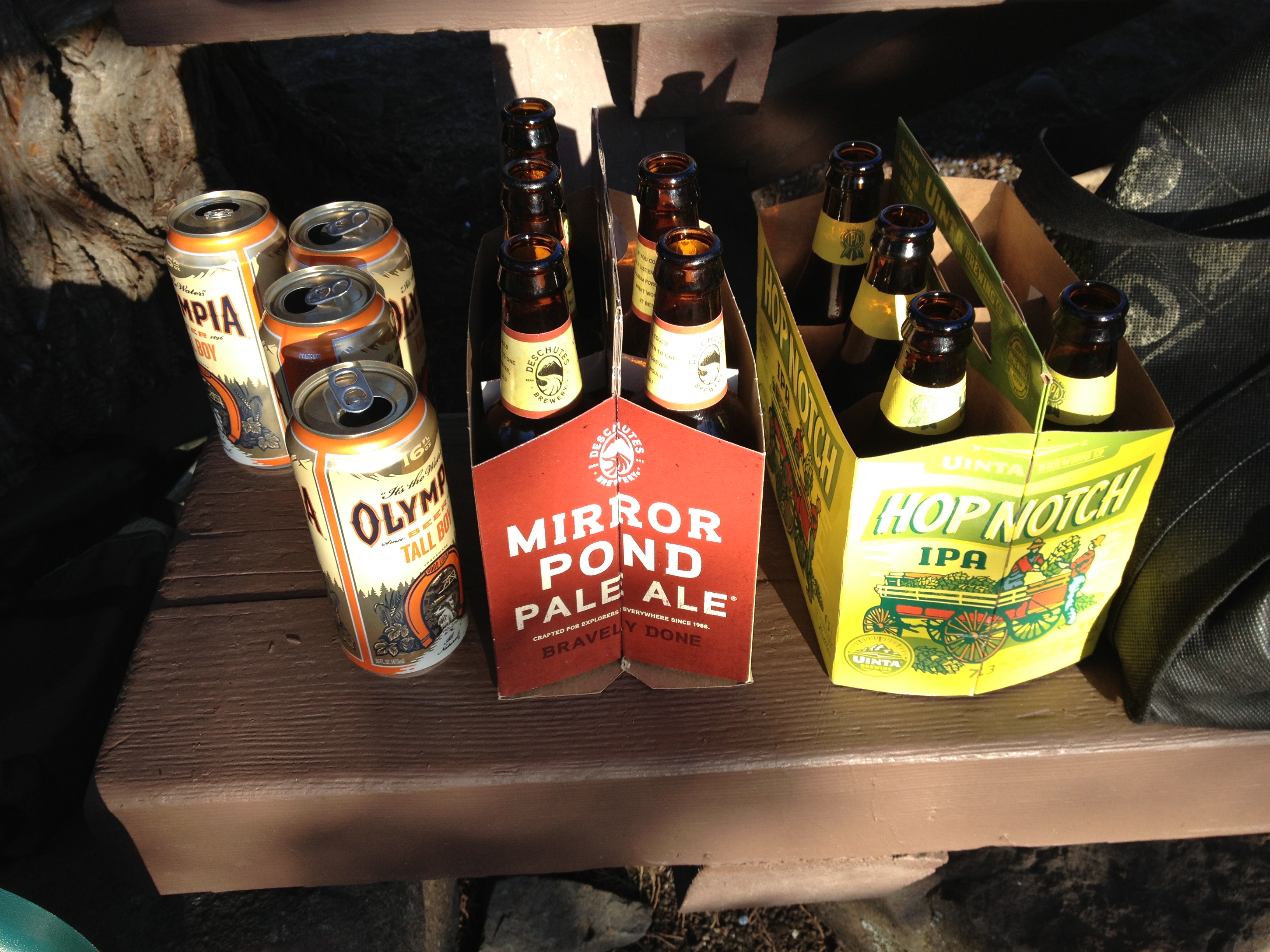
And lots and lots of beer! Tully caps it off with a rendition of The Grateful Dead’s “Ripple.” There’ll be some more campouts coming this summer!


Early Season Timothy Lake!

19 05 2010

Two weeks ago we had a group headed to camp at the magical Metolius River. Cars all packed up and ready to go. All week, the forecast had been sunny Saturday and Sunday. Friday morning? Wake up, check the forecast: Cloudy, temperature lowered to high of 50, with 15-20 mph winds gusting to 30! Collectively we said forget it! It was really disappointing.

This past weekend the opposite happened. Everything changed for the better. So good, in fact, that I took it upon myself to call the ranger station and inquire as to whether Road 42, the access road, was clear and if  Timothy Lake might be open.

Morning mist on Timothy Lake

The Zig Zag District Ranger said the road is definitely open, and there would be camping. Though opening day is May 21, they were going to try to open a week early if they could. Further, even if the campground is closed, camping would be allowed and free – you’d just have to walk in. With that, I was stoked, and scheduled a Meetup with PaddleNW, my paddling group.

I planned to head out Friday night but during packing disaster happened. a petroleum odor was coming from one of my gear boxes. Opening it, I saw to my horror that one of the tiki torch bottles for Metolius had leaked 1″ of kero all over! Some gear was ruined, and what wasn’t needed a thorough cleaning = heading out that night aborted!

With everything cleaned up, I took off Saturday morning. In Friday’s chaos, I canceled the meetup. But the weather was looking SWEEET. Arriving at Skyline Road, also known as Forest Road 42, there wasn’t much snow around. A few patches at best. All along the 9-mile road there was a bit of snow, but the road was 100% clear. Once at the Timothy Lake area, I passed closed Gone Creek and Oak Fork Campgrounds, and my heart sank a bit. But luck struck! Hoodview was open. And only 35% full. Lots of spots – I got one lakeside.

It was also an opportunity to use my REI Quarter Dome T3 tent for the first time.

New Tent – Big Space, Under 5-lb

It is very strange to set up. It has a system where, once you have them all connected and straight, all three poles are locked together by swivels – you cannot pull the poles out! There is only one right way to do it. Putting it up took twice as long as my other tent. But once done, it does have a lot of room inside, for a 3-person tent. It also weighs less than five pounds.

Fish on a string

Paddling was a treat. It was warm, over 70 degrees, and very slight wind.

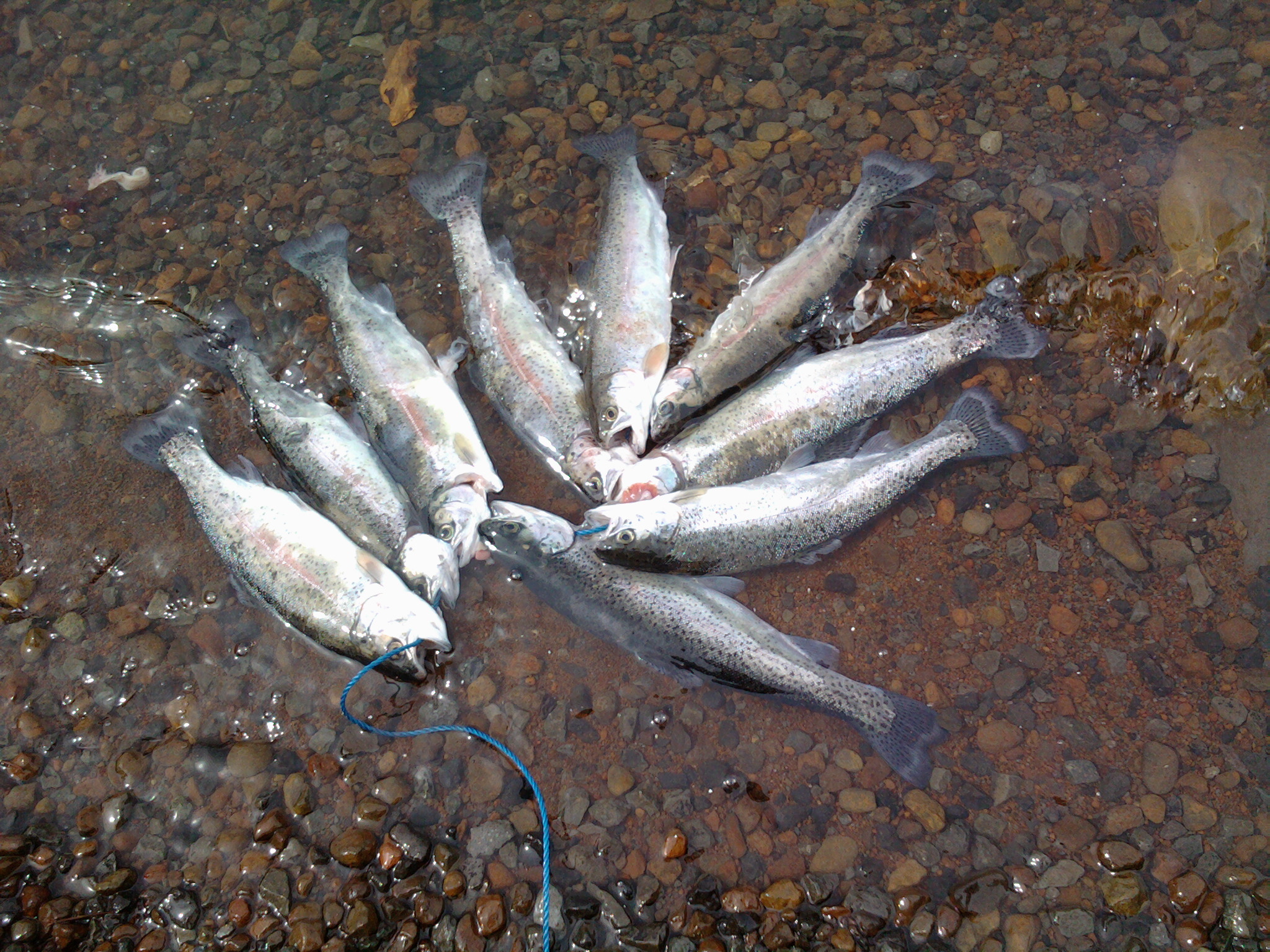
A few fishermen tried their luck. One had a whole string of hatchery trout already!

I decided to paddle across the lake to Meditation Point. Meditation Point is a primitive camping area. Access is by backpack or boat only. What’s cool is that these primitive sites have fire rings.

Looking across from Meditation Point

Way nice. I plan on bringing the Meetup group here later in the summer.

The evening brought plenty of bright stars. Very quiet – with the campground not busy.

Next day, it quickly turned sunny. Sooo pretty. I could see the ski areas on Mount Hood, some 13 miles distant. It was closing day at Mount Hood Meadows.

Warning!

I had to use one of summer’s dreaded haunts – the pit toilet. There was some new language in there, reminding me of what is to come. At this early stage, it was darn pleasent in there, though.

I undertook another paddle, to check out the closed campgrounds. I left in the sun, it was just gorgeous. But once arriving at Gone Creek, something weird happened. Rain! The one cloud in the area was arriving over the campground and I was right there. I could see it NOT raining back at Hoodview. So I sprinted as fast as I could to get out of that shower. And once there, I packed up my stuff as fast as I could – fearing another bomblet of rain would soak everything.

Well, all packed up, I bid farewell to the fishermen on shore and headed home. On the road there were places where it had rained a lot! I felt fortunate my spot stayed dry long enough to pack up. I’ll be back in a couple of weeks for Memorial Day!