Mount Rainier National Park

2 11 2012

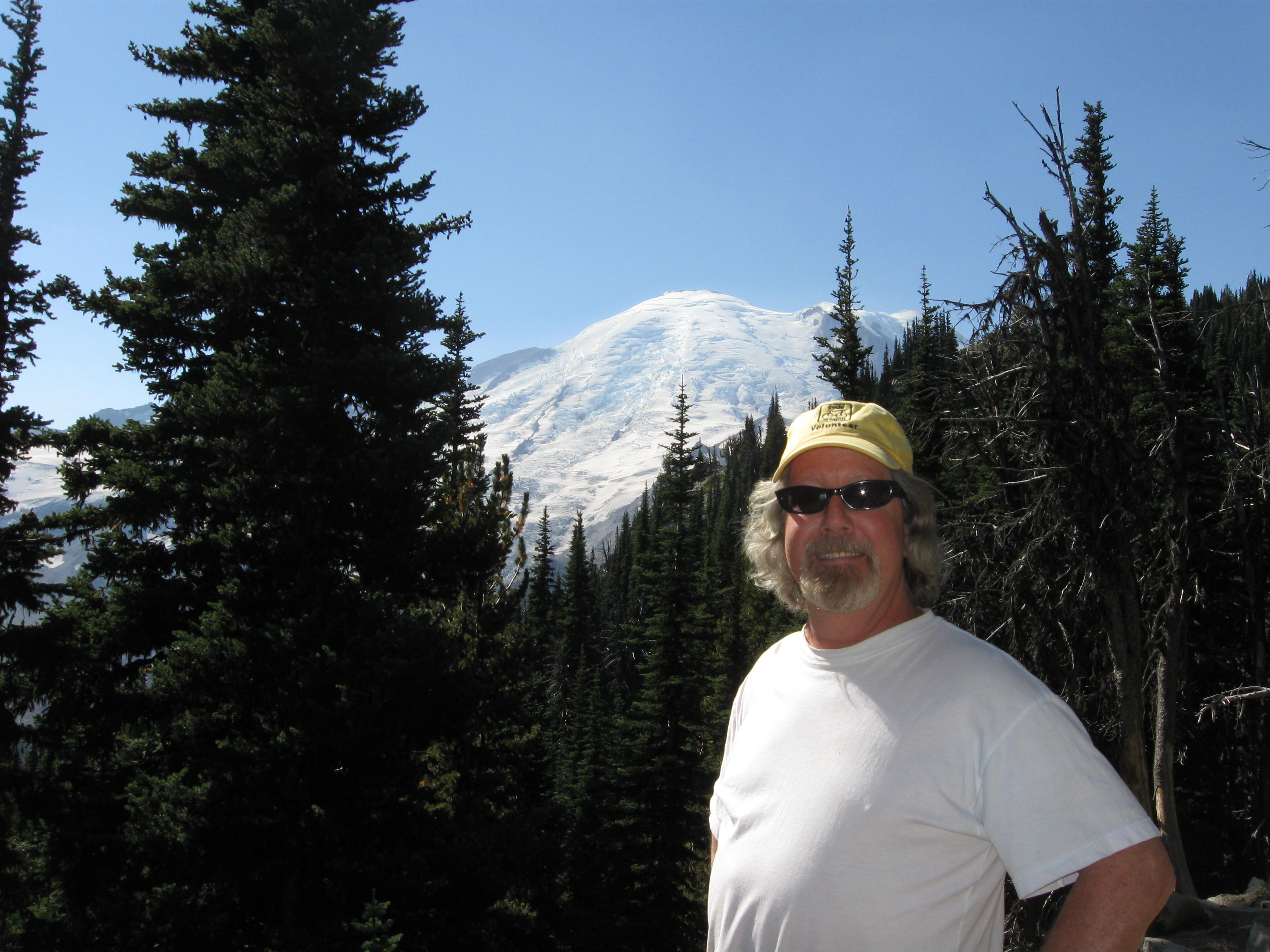
Mount Rainier from a meadow above Sunrise

Summer of 2012 featured a record 80+ days where it only rained one hour during that time! With the end in sight, and the inevitable rain switch about to be turned on, my friend Tully and I headed to Mount Rainier National Park for a last campout!

It was beautiful weather. There were wildfires nearby, and before we arrived, smoke obscured views of 14,410 ft Mount Rainier.

For us, the wind blew the smoke away. We were treated to crystal clear views.

We camped at the White River Campground. It’s on the eastern side of the park, higher elevation.


We figured we’d have the park to ourselves, since it was after Labor Day. But that was not the case and the campground had lots of guests in its not-so-spacious campsites. This was because the wildfires closed many nearby outdoor destinations, sending people here.

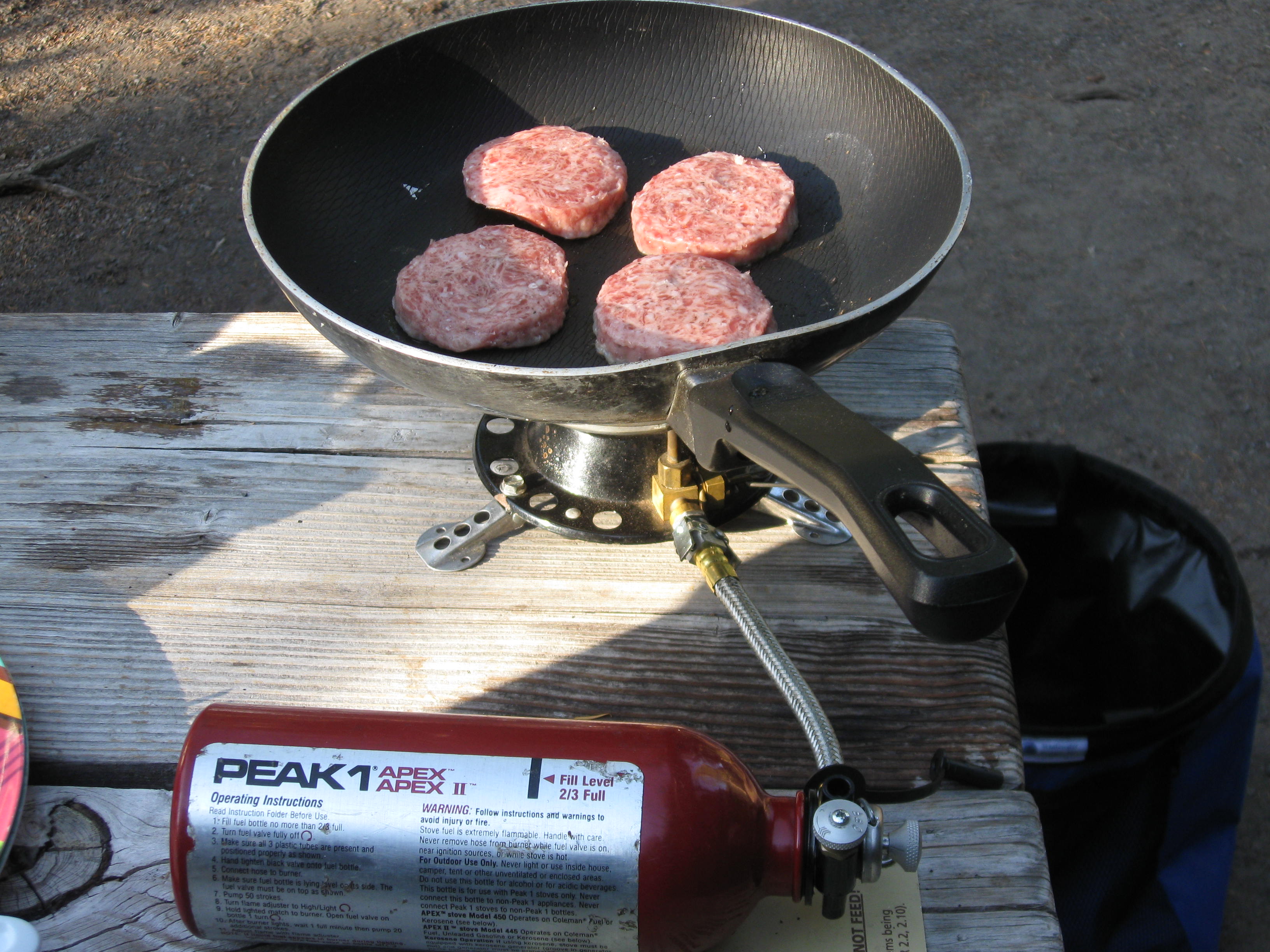
Sausages brown ‘n serve!

We planned to hike from the Sunrise area. This is a higher elevation staging area on the eastern side. It has a lot of trails. Some of the trails follow ridges with spectacular views in several directions! I could see Mount Adams to the south, and all the way to Mount Baker north. Looking all around I watch to see signs of big fauna – bear, elk, the elusive mountain goat – but see none. We catch sight of gray jays and ravens, as well as various unidentified raptors.

For dinner, we did a stir fry – which consisted of green pepper, carrot, nuts, pineapple, chicken, onion, broccolli, and baby carrots. Scrumptious! Another night we did a skewer meal over rice. Breakfast was pretty traditional – eggs, toast done on the grill, and this time instead of bacon – sausage patties. Sausage patties are a lot easier to clean up than bacon, because they don’t produce much grease! I’ll be cooking more of them in the future!


We also spent some time hiking the area around the Grove of the Patriarchs. It is in the Ohanapecosh area. While the grove’s hike is only 1.3 miles, it’s packed with incredible flora. 1,000 year old Western cedars, Western hemlock and old-growth Douglas fir! Quite a few of them! They’re simply huge compared those typically seen around the Northwest.

The Grove is located on an island in the Ohanapecosh River. It’s a place you can feel the history. These trees were already hundreds of years old when America became a country. They were 200 years old when Columbus landed in the New World!

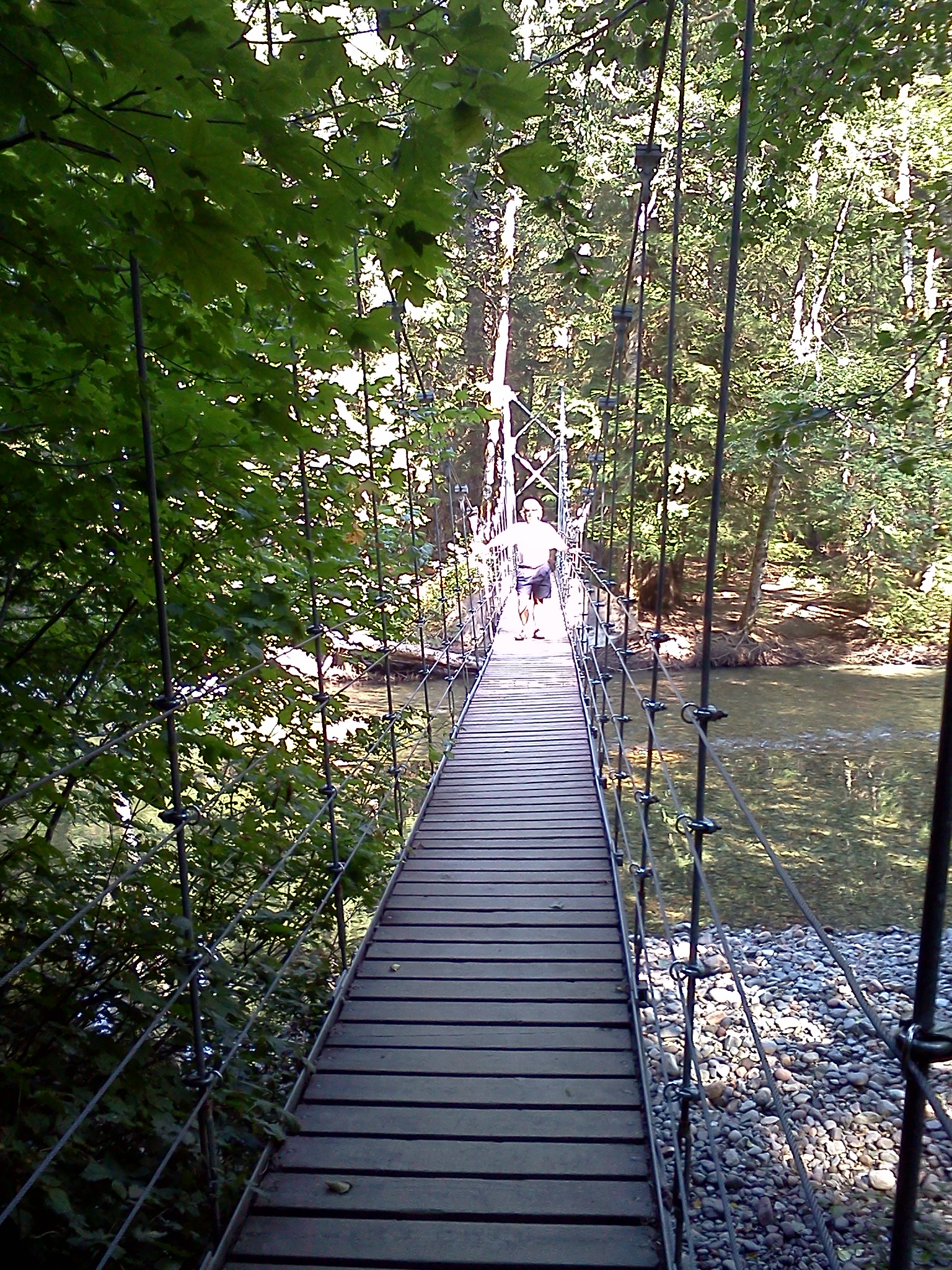
You walk across a suspension bridge to get there – one at a time.


1,000 year old cedar in the Grove of Patriarchs

By far the best time for experiencing the outdoors in the American Northwest is September – after Labor Day.

After Labor Day, the weather is still dry and warm – summer. But kids are in school and parents home. Hiking trails and camping are generally a lot less busy!

So, if you can, make plans to head into the outdoors in September!


Three Fingered Jack

21 10 2012

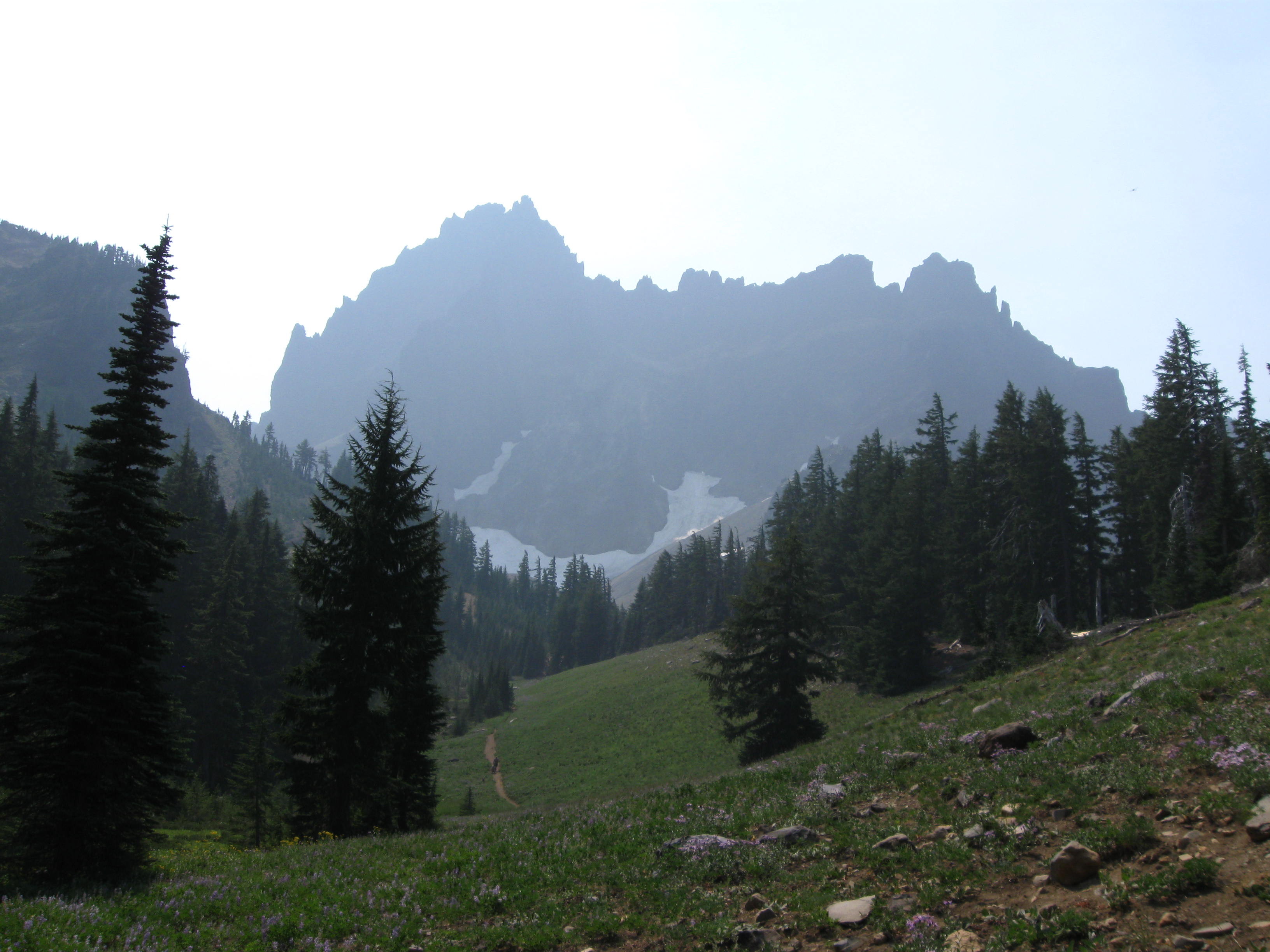
One of Central Oregon’s crown jewels is 7,844ft Three Fingered Jack. It is the core of an extinct volcano. Three Fingered Jack lies in between Mt Washington and Mt Jefferson and sits on the Pacific Crest Trail.

Jessie, Joel, Laura and I paid a visit there recently – camping at nearby Metolius River. We arrived mid afternoon Friday and got skunked at our favorite campsite on the peninsula at Allen Springs Campground. Figuring we had the luxury of time to search for a choice spot, we hunted around the local campgrounds. How naive we were! When we circled back one campground after another posted the “FULL” sign! We wound up with the very last site in the valley. No matter we made do and promised to try for a more choice spot that might get vacated in the morning!

Jessie, Joel and Laura by Canyon Creek

Though full the campground’s campers are gregarious but mellow. Nobody has trouble sleeping! Morning finds me fixing traditional bacon, eggs, and home made hash browns. All fueled up we head up to the trailhead at Jack Lake.

The three mile trail winds past a burned out area, then through shaded forest, then into wildflower-packed Canyon Creek Meadows and then into the basin underneath Three Fingered Jack. I’ve backpacked into the area and remember the view from the basin: You look straight up at the internal workings of a volcano! Spectacular.

And, this is not an ultimate challenge hike. It is a big payoff for easy effort hike! While we sweat on the trail, the climb is easy enough that we have no problem holding casual conversation on the way.

For the first three quarters of a mile of the trail passes through what was left after the B and B Complex fire, which burned 91,000 acres in 2003. It is a testimony to the catastrophic effects of climate change. Winters are warmer, allowing insects like the bark beetle to have longer reproductive cycles, leading to a population explosion. Normally lower temperature helps control the breeding season. With more beetles, the trees upon which they feed don’t stand a chance. The beetles feed on wood just below the bark – and when they complete a circle around the tree, the tree becomes “girdled,” and slowly dies. The only defense the tree has is to produce extra sap. In bark beetle-infested forests, mile upon mile of trees stand with the lower bark falling off to the ground, and the trees eventually dry out. They become the perfect fuel waiting for the moment of ignition = a forest fire in waiting.

Then it takes us through a section untouched by fire. It’s as it was. Mountain Douglas Firs and Cedars. Shady. A patch of snow here and there. A pond. No bugs. Then the it opens up into meadows carpeted with withering wildflowers, and the mountain dominates the view ahead.

Our goal is to reach the basin beneath the caldera, where we will take in the view and picnic.

We climb a forested moraine and descend into the basin. Wow! Above our heads lies exposed the plumbing of a volcano. Clearly visible are layers of lava but injected into the layers are volcanic dikes, which are like pipes through which lava flows to the top of a volcano. Cool!

I love this spot!

And all around us a sea of wildflowers.

Here, I glimpse a wildflower I’ve never noticed before, which is a kind of wild petunia. Beautiful!

We pause to drink in the view and warmth.

Laura makes the best picnic of all. Very European with fruit, cheese, and even some wine to accompany!

We love wildflowers. And there are plenty to see! But they won’t last forever.

It won’t be long before they fade and winter returns to these parts.

But for now we are happy to enjoy the moment!


Operation Bullwinkle: To Gibralter Island Camp

5 10 2012

This morning’s breakfast conversation focused on where to camp tonight. We kind of started chronologically backward. To get back to Portland by early evening and make the afternoon ferry on time, we’d have to leave Toquart Bay Campground by 7:00 a.m. the day of departure. So by default we’d have to spend the prior night there. But that day we could spend paddling mostly. So we picked a campsite farthest to the east – Gibralter Island.

We could take a long day paddling today and another long one from Gibralter back to Toquart. After eating we packed up our kayaks again…heavily laden of course. This time it was paddling east, to the head of Effingham, then north past a string of islands…Faber, Onion, Mullins, Keith, and then Jarvis and finally Jacques. There is supposed to be an interesting lagoon inside Jacques one can explore.

On the way we duck in behind some of these islands. Behind Mullens is the best underwater viewing I saw!

There was a quiet area with rocks and kelp. It was maybe 15 or 20 feet deep. More bat stars, sea stars, and even some 15-inch long fish. But the most amazing thing I saw here was the arm of a giant octopus. It was amongst a bed of seaweed atop a rock only two feet down. It was five inches in diameter! But just an arm. What chopped it off? Must have been something big. An orca?

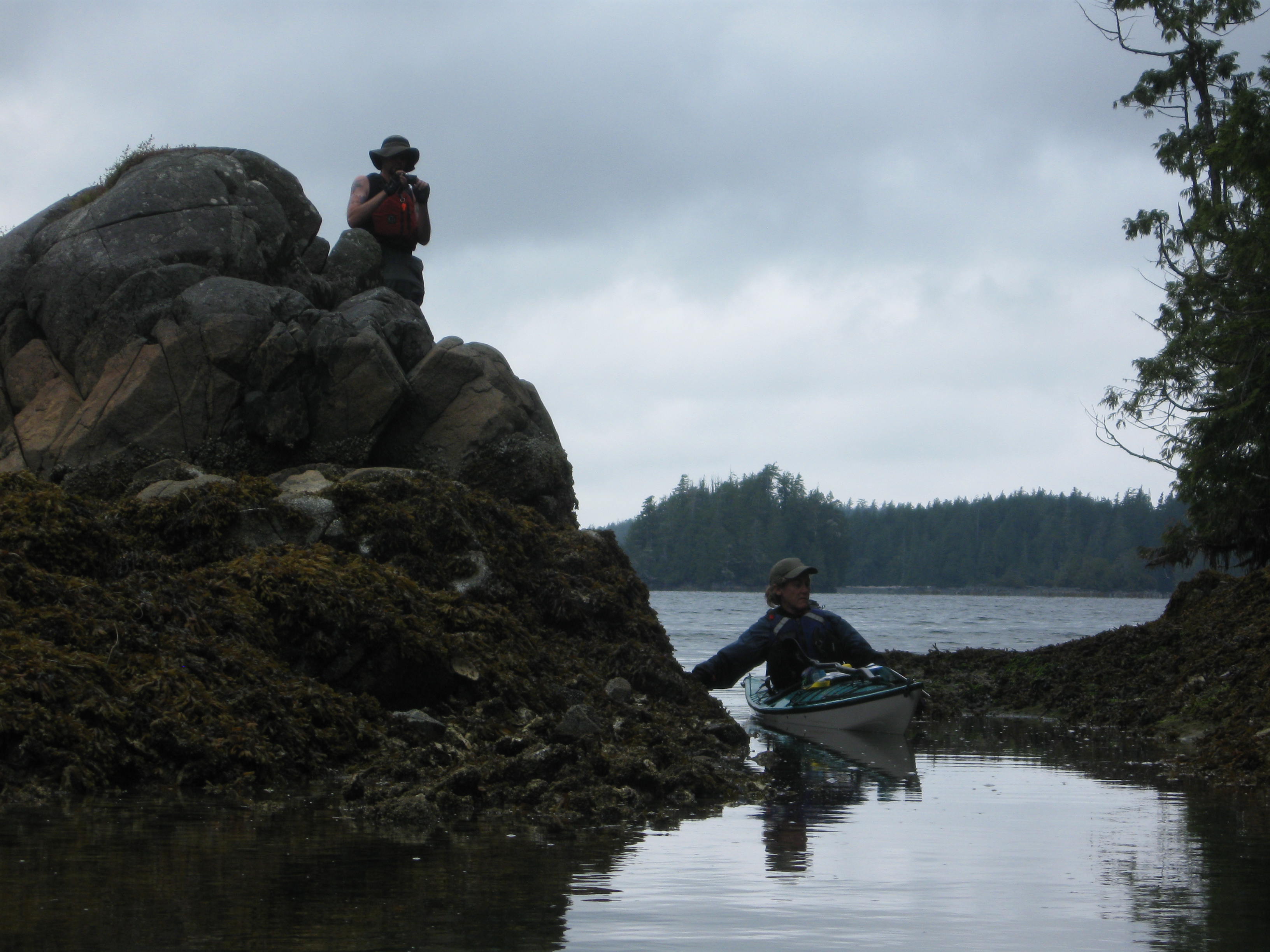
We reach a shortcut into the lagoon at Jacques Island. Because of the low tide the channel is exactly kayak-width wide right now. The tide’s coming in, so we wait. And wouldn’t you know it a group appears on the other side and squeezes through!

Bill knuckle-drags his boat through and so I give it a shot. I feel the dreaded scrape of oyster on kayak but it’s not drastic and I do have a plastic boat. Lisa’s is kevlar so she wants to wait a bit longer.

We explore the lagoon and all of us decide it’s actually NOT that interesting.

Exiting the lagoon we saw the Lady Rose, a little ferry that shuttles kayaks from the mainland out to Sechart Lodge.

The Lady Rose

Gibralter Camp is just fine – and we’re the only ones here – at first.

Then a group of kayakers shows up, led by a couple of guides. One of the guides is a friendly Canadian girl and sure enough her conversation is full of “ey” and stuff. They have salmon for dinner and have lots of leftovers to offer us.

Tonight we play in the phosphorescence at the shore. Anything stirring up the water causes a brilliant effect!

Tomorrow we’ll take our time and head back to Toquart.


Operation Bullwinkle: Exploring Barkley Sound’s Broken Group from Our Base at Clarke Island

2 10 2012

Bill & Lisa cooking it up!

Morning dawns dry and cloudy. The temperature’s pleasant. Wiping our eyes, we crank out and eagerly consume some morning nectar: French press coffee. Then it’s time to fix a hearty breakfast of eggs, bacon and hash browns!

Other campers are doing the same – nobody’s rushing today. There are some families with kids out here. Many are bringing their youngsters via tandem sea kayaks. Some will be heading out to the reef to try their luck fishing! I’m anxious to see what they catch.

We’re going to head across the Coaster Channel and check out Effingham Island. We pack up lunch – put our immersion gear on, and set off. We head around the back side of Clarke Island – paddling a channel between Clarke and Benson Islands. In the shallows close to shore, I can glimpse myriads of bat stars, starfish, crabs, kelp, sea cucumbers, sea urchins, and fish.

The channel is not very wide, and the islands lying to our right and left block our view. They focus our attention forward. When we reach the end, where it opens to the channel, we are treated to the most amazing sight of the whole adventure.

For right there, twenty yards in front of us, a gray whale surfaces! WOW! Its entirety reveals itself – from head to tail, for a moment. It is traveling right across from right to left in front of us!

Then it dives, its tail above the surface as it goes down. Completely amazed, we try to follow its path and be near when it surfaces. This turns out to be pretty challenging! It eventually surfaces at an island near the other side of Clarke – and attracts more paddlers. But that’s the last we see of it. Somehow it gave us the slip!

Having lost our gray whale we make our way across Coaster Channel to Camblain Island, then Cooper, behind Gilbert and finally Effingham Island. It’s only one nautical mile across Coaster Channel. Conditions are benign. A mild swell coming off the Pacific. Halfway across I hear a pfffuuuufff! And looking to my right I see a whale spout – and another! It’s two whales moving across the channel – now they’re over on the ocean side of Cooper and they’re moving inward. They are going to pass in front of us. We speed up but cannot catch them. Although they appear to be lumbering they are moving along fast. Judging from the tails I know these are Humpback Whales. It’s a mother and its calf! Like the gray whale, they move off until we can’t see where they are anymore.

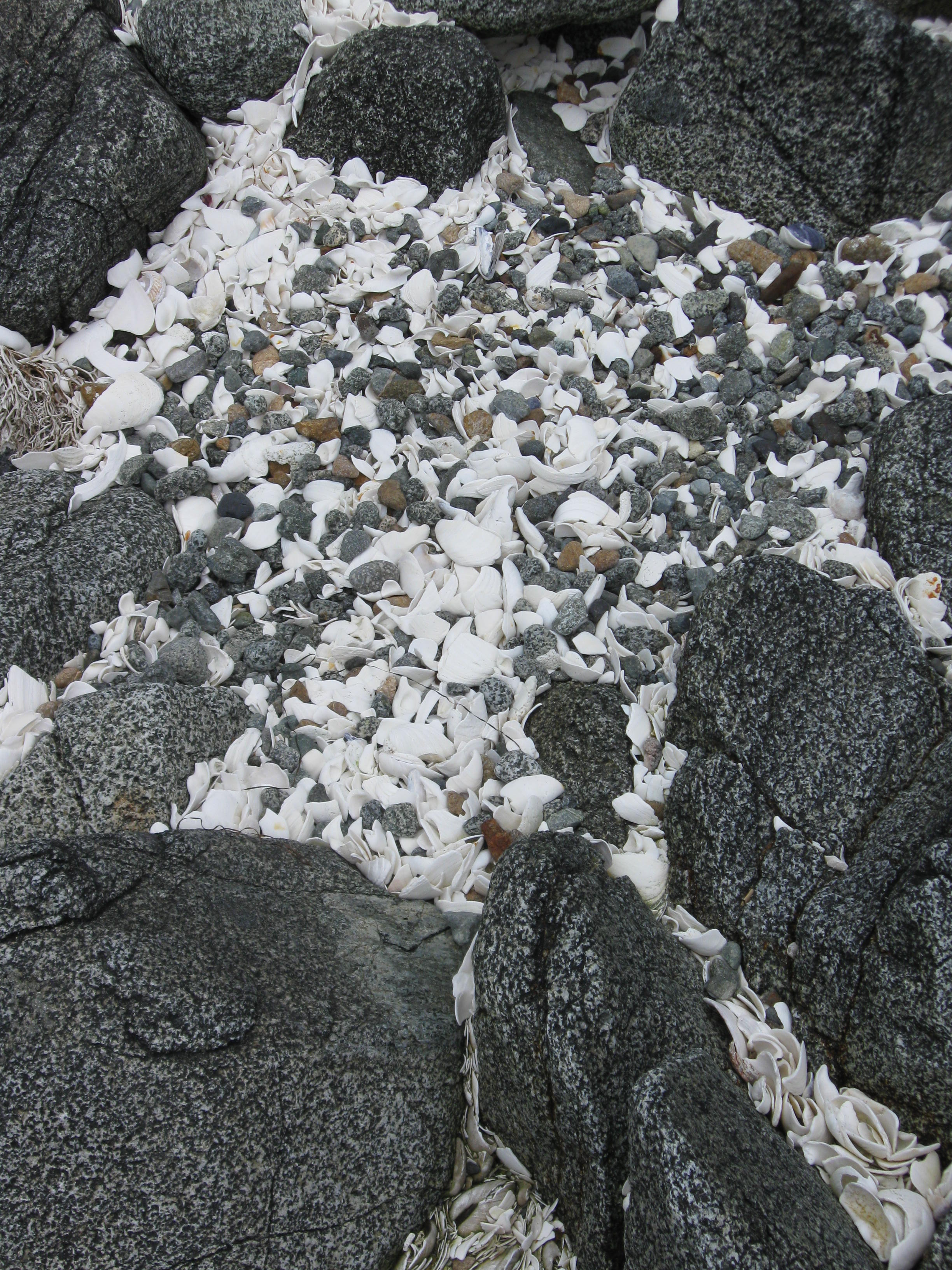
Once we reach Camblain and the channel in between it and Cooper, we want lunch! We spot a beach and head for it. This beach has mountains of shells. A few other kayakers land on the beach – they say they saw Orcas further out towards the Pacific! We’d love to see some killer whales!

After lunch we continue the explorations and then once we reach Effingham we turn back to Clarke.
I confess to being tired. I’m looking forward to cooking dinner, some wine, and being out of my dry suit!

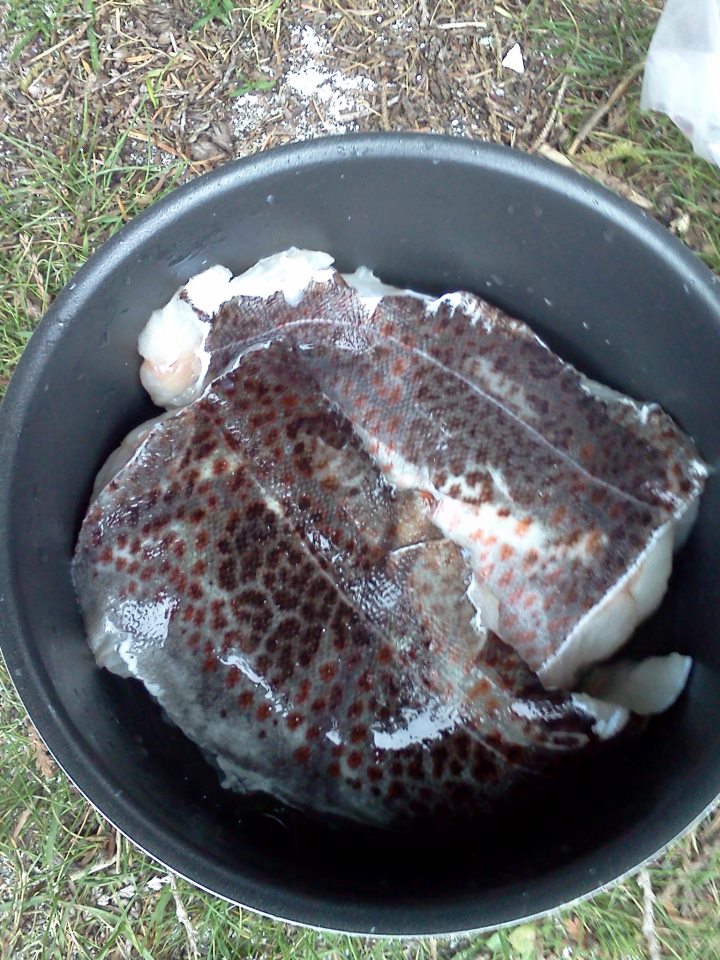
Nothing like fresh Lingcod!

Back at Clarke we go about the business of creating a meal and a fun atmosphere for dinner – and a beach fire! In the midst of dinner our neighbors pay us a visit. And they have something to share – they caught a good sized Ling Cod and cannot eat all of it! Would we like some? OH YEAH! You bet!

Bill cooked the fish up in butter and within just a few minutes it was done.

This was my first lingcod and it was delicious. The flesh is white and firm. Not flaky like sole, nor steaky like swordfish. Somewhere in between. To die for! I can’t even remember what we were supposed to have for dinner.

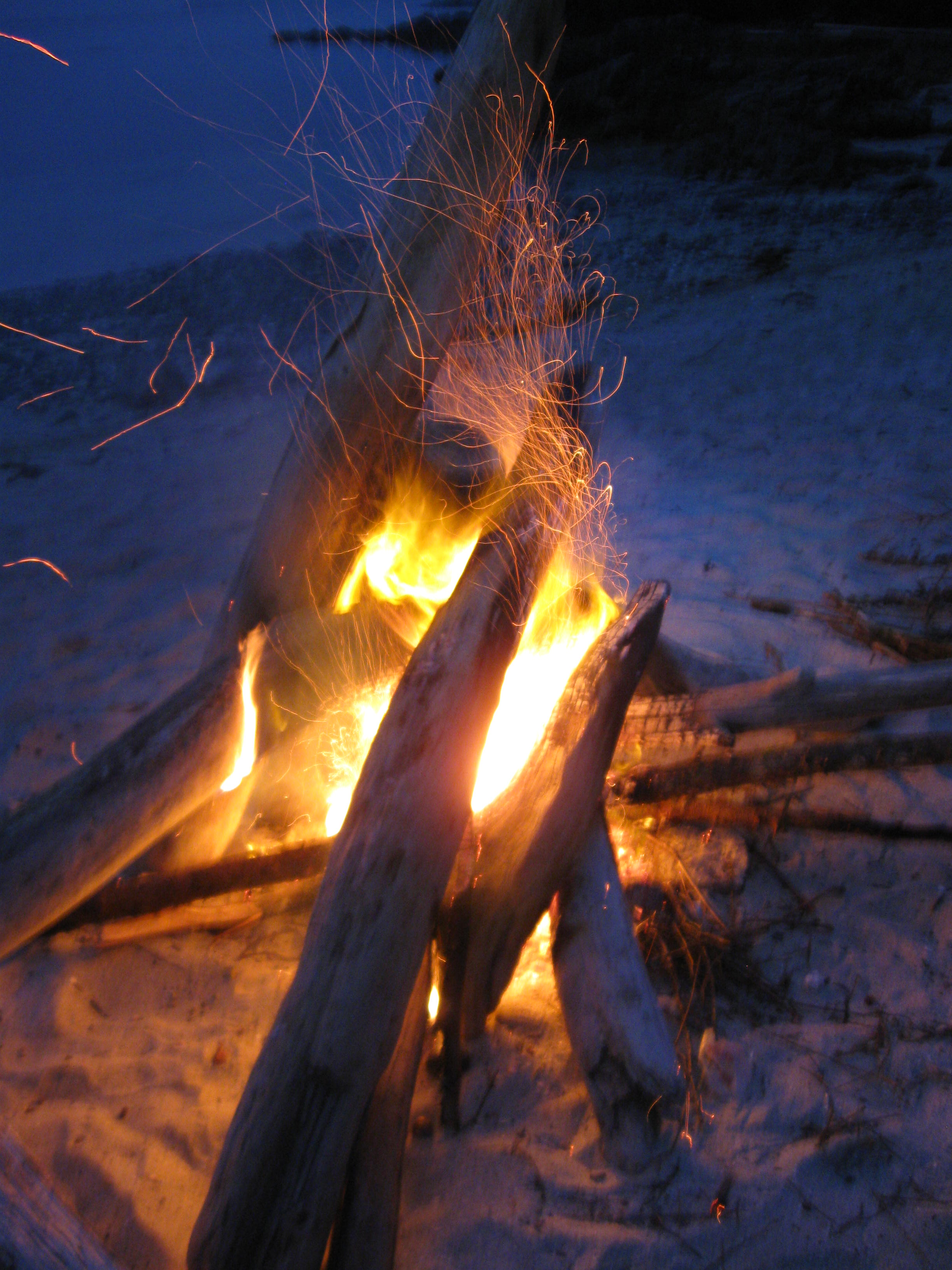
The sun went down and it was time for a beach bonfire! I had no idea the lengths to which bill was intent on going. It was man-sized!

Then it was time for freshly prepared dessert. Bill made something called Bananas Foster…with great fanfare!


Operation Bullwinkle: Broken Group Islands, BC Day 2

28 09 2012

I’m loving the sunrise today!

Today we are to pack up and launch!

It’s going to be a sunny day. Winds SW 10-12 knots. But early this morning fog drapes everything down low. This makes for a pensive, mysterious view of the water and the kayakers packing up near the shore.

Our plan calls for departing Toquart Bay Campground by 11:00 a.m. to ensure we don’t fight an incoming tide. We fix a hot breakfast and then must pack up tents and gear and then repack into the kayaks. It’s important to note that none of these islands have fresh water available – we’ve got to bring all of it.

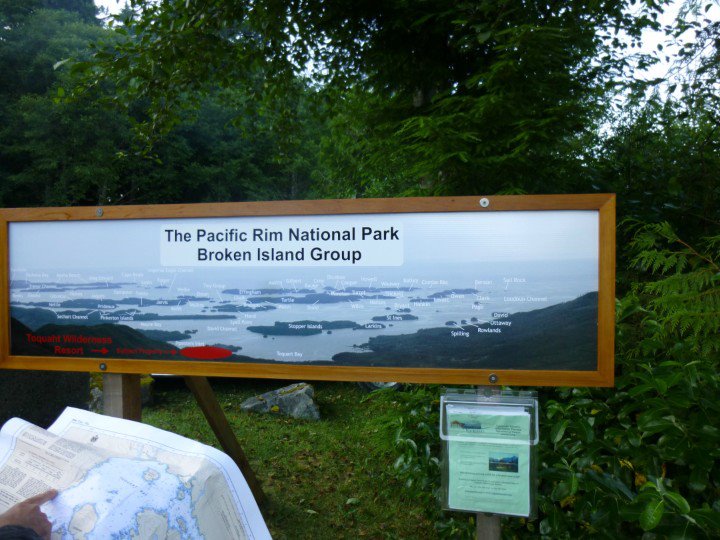
There are so many islands, many easily navigated by sight. But I’ve been advised August is called “Fogust” here. So prior to heading out, I’ve got compass headings between islands marked on my chart. This is kayaking – so remember, there are no chart tables here. Your chart is on the deck in front of you. We all have compasses. And back in Portland, I made reduced versions of sections of our big chart so we can see the sections we need when we are paddling those sections.

As always with these situations, getting gear to the water is a chore, to say the least. The kayaks must be brought out. The dry bags of gear. Then the various containers of food. Where will all of it fit? We see other groups getting so over loaded that it takes four people to move the kayak once loaded. How can it float?

The early morning fog lifts and we take off. The kayaks do float-fine actually.

We do not have a definite final destination in mind for today. There are several island campsites to choose from. Lisa says the furthest, at Clarke Island, is the nicest one. It’ll be about 12 miles of paddling to get there.

The initial leg of our paddling today heads about a mile southeast, threading through the Stopper Islands, and then crossing the David Channel and the mouth of Sechart Channel the open crossing is 4.5 miles.

These channels intersect at Loudon Channel, which is open all the way to the Pacific, so it might pose challenges if the wind aligns just right. Today, while the wind is coming straight out of the Pacific and making occasional whitecaps, the waves are less than two feet. While not dangerous, we begin to tire of the constant battering off the starboard bow.

After rounding Lyall Point, we stop and commune to decide where we’re going to stop for lunch. We can head to Hand Island, which has the nearest campground, or head further south, delaying lunch, and try Willis Island. Since Willis lies closer to the heart of the group – within reach of Clarke Island and Turret Island Campgrounds, we push for Willis.

As we paddle further toward the Pacific, fog begins obscuring the distant islands. It is making its way inland. We are now past the open crossing and waters calm. Willis Island’s beach is soft sand, the wavelets softly caressing. The water is warm and clear. A few campers are about. Every so often kayakers pass by. And it’s sunny. But we know the fog lies just west of here.

Where should we head next? Should we go to Clarke? Or, maybe stay at Turret Island? We decide to check out Turret Island Campground next.

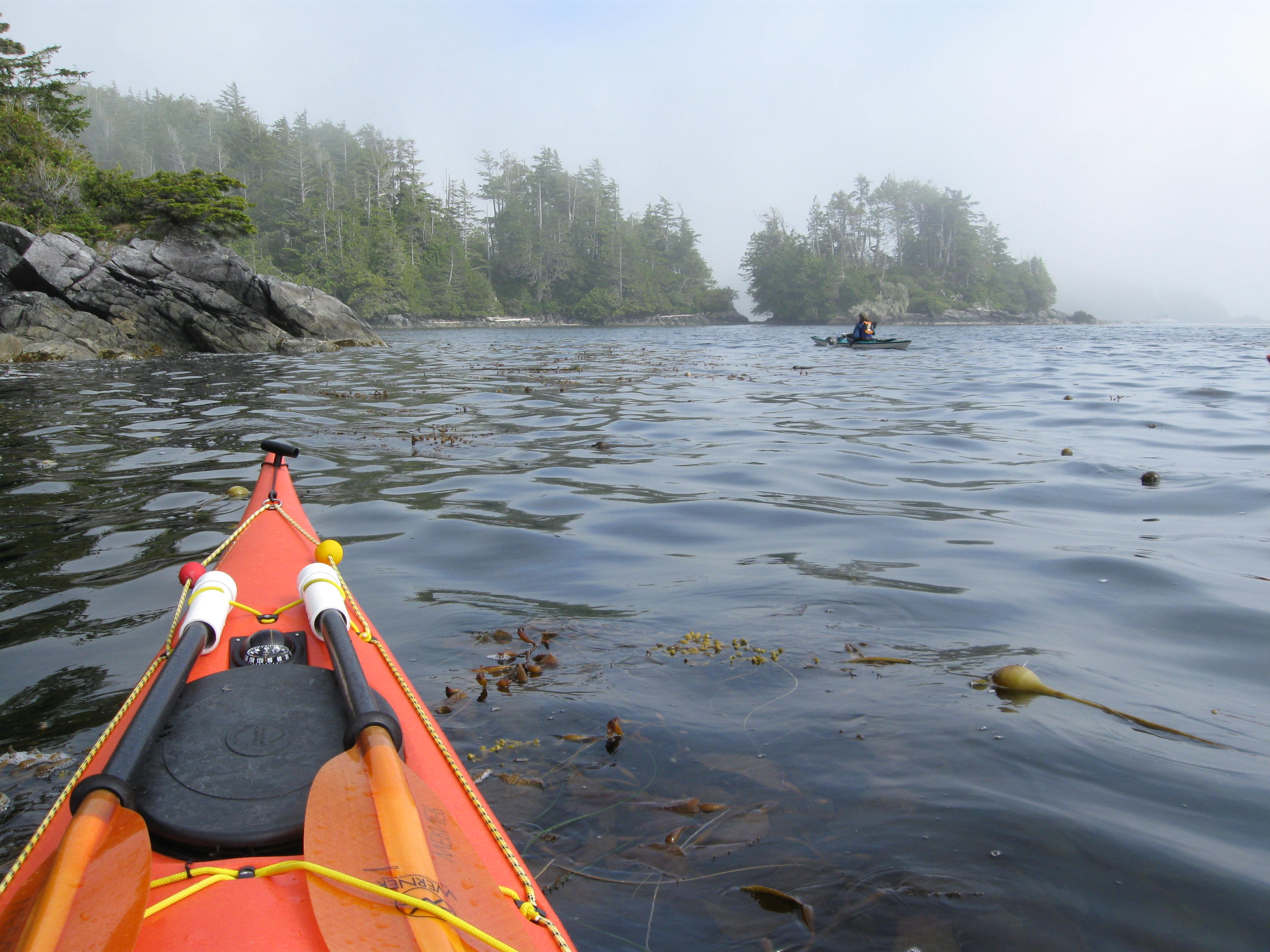
The fog blows in and out. We soon realize half of the view here is underwater. We encounter our first kelp bed and we’re amazed! You can see twenty or thirty feet down – there are crabs on the kelp, fishes, starfish.

To get the most out of the underwater view, you need polarized glasses! They cut through the glare. Lisa has an underwater camera – I promise to get her underwater shots soon!

We check out the campsites at Turret Island. I’m surprised to find the campground is super full. But I do find a trail to a private, gorgeous campsite with a Lord of the Rings feel to it. We ponder and decide to push further to Clarke Island.

Pushing off from Turret Island

Once decided, we had to make our way into the fog and out into the invisible outer islands.

This required my skills in navigation. Visibility was at times maybe 600 yards or less. When this is the case, and you have navigational object on your chart, you can sometimes hear what you cannot see, and make navigational judgments based on that.

What I mean is on the chart I could see an island with a nearby shoal – exposed to the ocean. That meant surf – something one can hear. If we got seaward of the shoal and heard the surf we could plot our location and then make a compass course to Clarke Island. We did exactly this. We paddled until we heard breakers and stopped. We could not see the surf or the island nearby but I knew it had to be there. If I plotted a compass course from this spot to Clarke Island we’d be there in an estimated 15 minutes. I gave Lisa and Bill a compass course and we started paddling. Sure enough, Clarke Island came into view – which they found amazing!

Clarke island cleared later in the day, and we had a really nice sunset! It was busy with campers. Yes. But beautiful! We made it!

Fog lifts…and voila!

The Clarke Island welcoming committee.

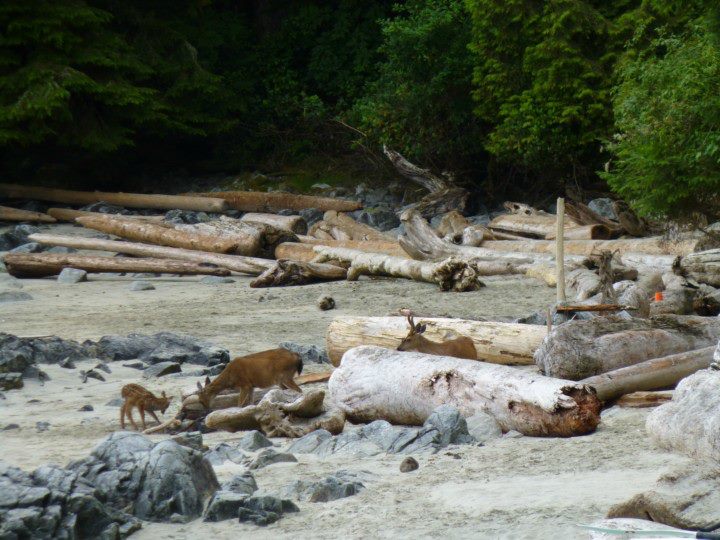
We even had visits from island residents! A deer family.

We enjoyed a meal with sausages and pasta tonight. We’ll make Clarke our base camp for a couple of nights and explore from here.

This is a nice place to stay! It’s got a composting toilet arranged for visitors. And really choice camping.


Kayaking West Vancouver Island, British Columbia: Barkley Sound and the Broken Group Day 1

26 09 2012

Toquart Bay

I have lived in the Pacific Northwest since 1993. Yet I have never explored the big backyard to the north – British Columbia! In that time I have been to Thailand 7 times, Cambodia twice, Laos, Indonesia, Singapore twice, Hong Kong, Bhutan, Chile, Argentina, and Mexico. Yet a world class destination lay at my doorstep. I was not going to let another summer pass without visiting BC. Time to go!

Early in 2012 a bunch of my friends decided to kayak camp in and around Vancouver Island. By May, the group was whittled down to three. Myself, Lisa and Bill. Round and round we went on the length of drive (which might include two ferries) and which venues were most interesting. We settled on the Broken Group which is in Barkley Sound, on the west side of Vancouver Island.

The Broken Group consists of at least 100 undeveloped islands scattered in the sound – and it’s a national park. There are several island campgrounds. The outer islands, nearer the Pacific Ocean, are exposed and require a higher skill level whilst the inner islands are not unlike freshwater lake kayak camping, with the exception of seals, sea stars, kelp, and other saltwater fauna and flora which abound. Not to mention humpback whales, gray whales, and orcas!

I live in Portland, Oregon. To get to Toquart Bay we’d have to travel 12 hours by highway, back roads and ferry. We’d spend the evening camping there. Then launch the next morning with the outgoing tide and explore the islands.


The adventure includes a ferry from Port Angeles, Washington to Victoria, British Columbia. We arrive early and wait in the staging area. Countless cars and trucks, some with kayaks like us, pile in. I’m excited for the ride! Once underway the splendor of the Pacific NW was visible everywhere!

Lisa and Bill on the deck!

Once at sea, we glimpsed the Olympic Mountains, which form a backdrop for Port Angeles.

Along the way spectacular sights abound.

Way off to the right is towering Mount Baker. In the middle sit the San Juan Islands. And directly ahead is Vancouver Island and Victoria!

The day’s weather is sunny and warm. Our forecast is optimistic – light winds with dry days ahead!

We arrive in famous Victoria Harbor. It’s busy with sea planes coming and going, ferries, yachts, kayaks and tourist boats plying the waters.


It’s really pretty. People are walking about. And the British heritage is evident everywhere.

Customs…yes…everybody’s got to wait and go through customs…yet another delay.

So we sit and wait while the agents do their thing.

But our visit with customs officials goes without rigorous inspections or interrogations.

We sail through and are on our way.

Then it’s several more hours on the road. We’ll have to pick up some supplies at a grocery store somewhere on the way, then register and camp at Toquart Bay campground.

The road is full of fantastic scenery. Countless mountains and fjords line our path. We make it to our destination about 6:30 p.m. and settle in for the night.

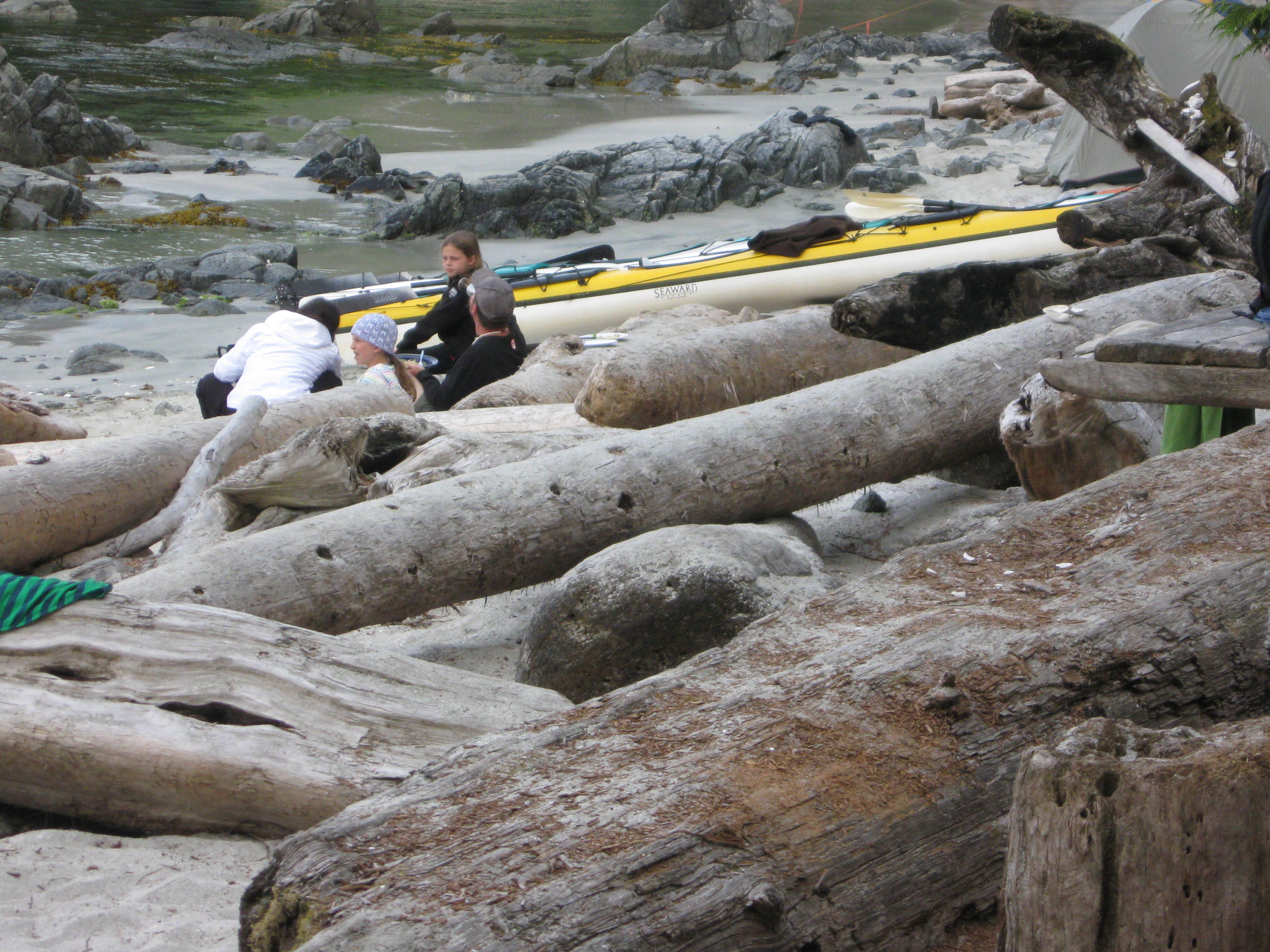
Toquart Bay Campground is not what I’d describe as a “communing with nature” experience. This is a spot for fishermen – period. Ninety percent of the folks here have trucks with trailered fishing boats – so fishing is their primary interest, not the camping amenities! Trucks and boxy hunting tents sit

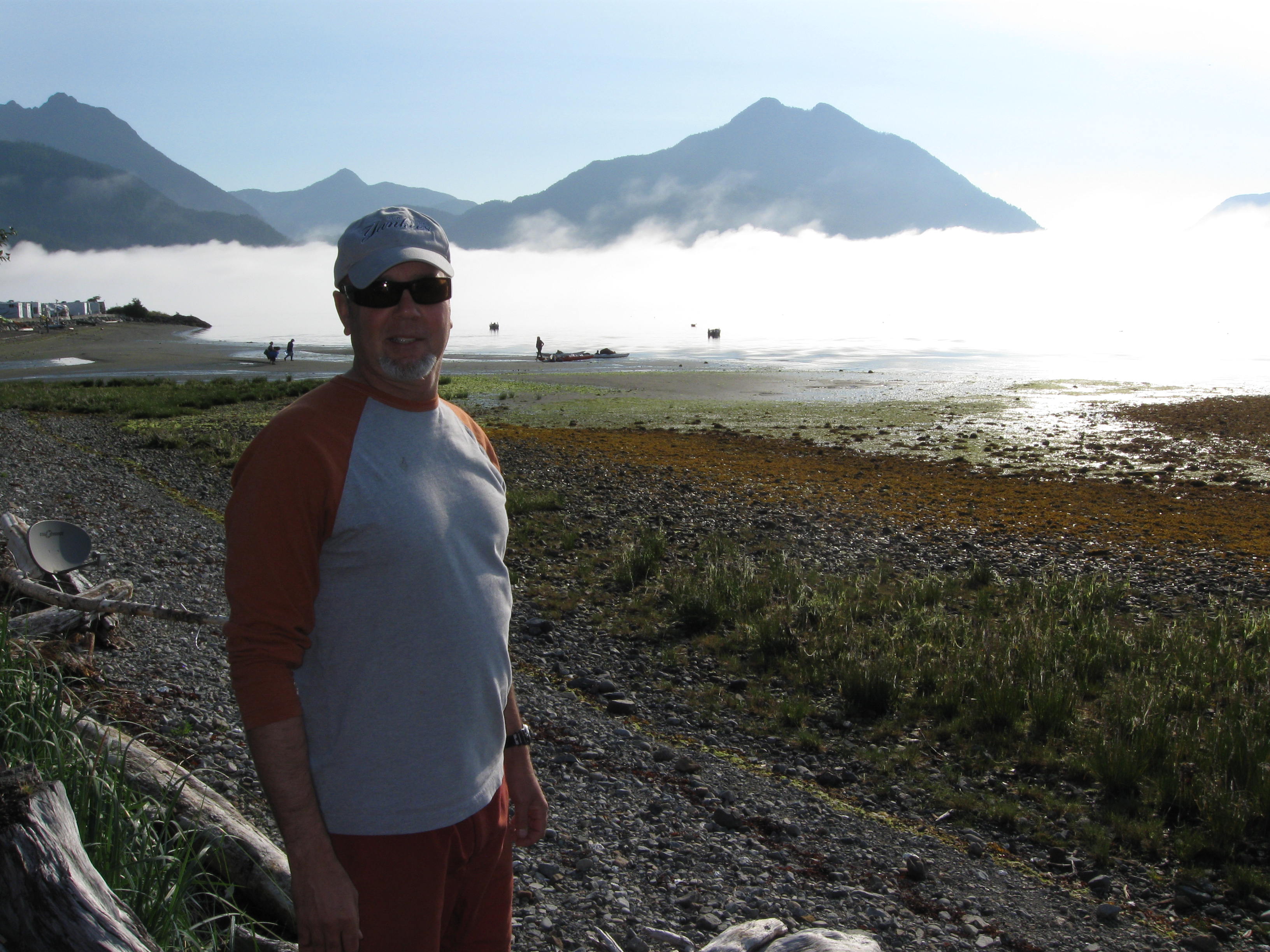
On the beach at Toquart Bay

shoulder to shoulder along the waterfront.

We’re happy to be at the starting point for the paddling adventure.

Can’t wait for tomorrow’s launch!