Holiday Season in New Zealand

3 02 2013

The first part of my New Zealand trip was to be five days with my friend Paul Lepper and his family, in Palmerston North. This would be a great introduction to Kiwi life. For the first part of my trip, I would spend time with 100% Kiwis – people who live and work in the heart of the country. My flight left Portland, Oregon – to Vancouver, British Columbia. There, I’d catch an Air New Zealand flight to Auckland. Once there, I’d hop on a 60-minute domestic flight to Palmerston North. Total trip length? Two hours to Vancouver and 14 hours from there to Auckland, plus layovers. Total was about 22 hours.
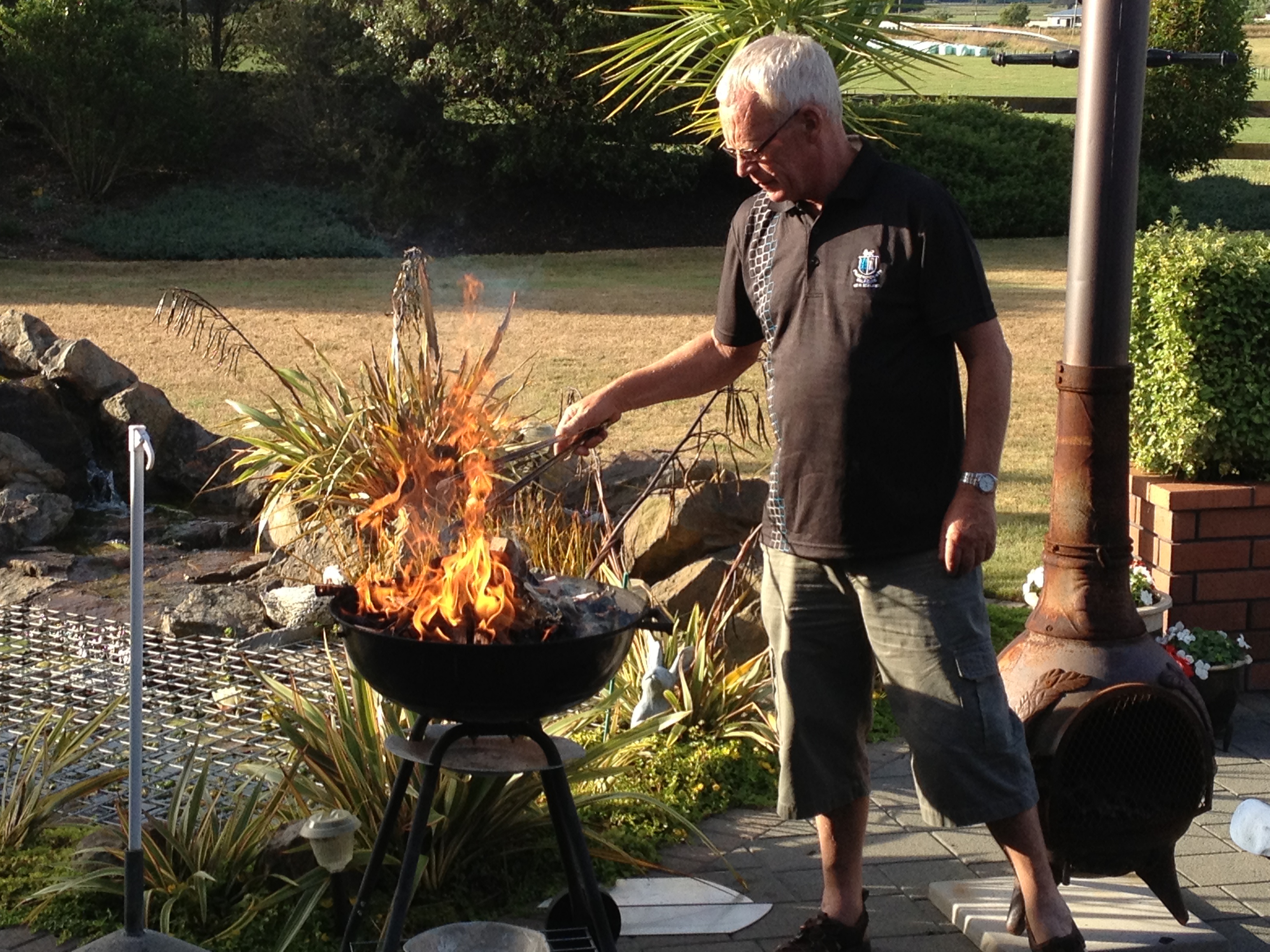
Preparation for grilling!

Preparation for grilling!

I have known Paul and his wife Liz for seven years. Paul designs kayaks for Feelfree Kayaks. I was a USA Brand Manager for Feelfree Kayak USA, which distributed Feelfree in America. I’d worked with Paul on many occasions – in Bangkok, where they are manufactured, or at the Outdoor Retailer Trade Show in Salt Lake City, Utah. We’d trained sales reps. We’d worked on design tweaks. We’d discussed where the market is going. We’d talked manufacturing schedules. We’d shown boats to countless dealers. We’d tipped more than a few pints in Bangkok or Utah. But I had never been to New Zealand! Paul had told me many times I have to come and visit. The timing was right this time!

View from Paul's house

View from Paul’s house

I arrived December 28th – Liz met me at the airport – and I was surprised that it was maybe 10 minutes to their house! It was SO nice to see her!
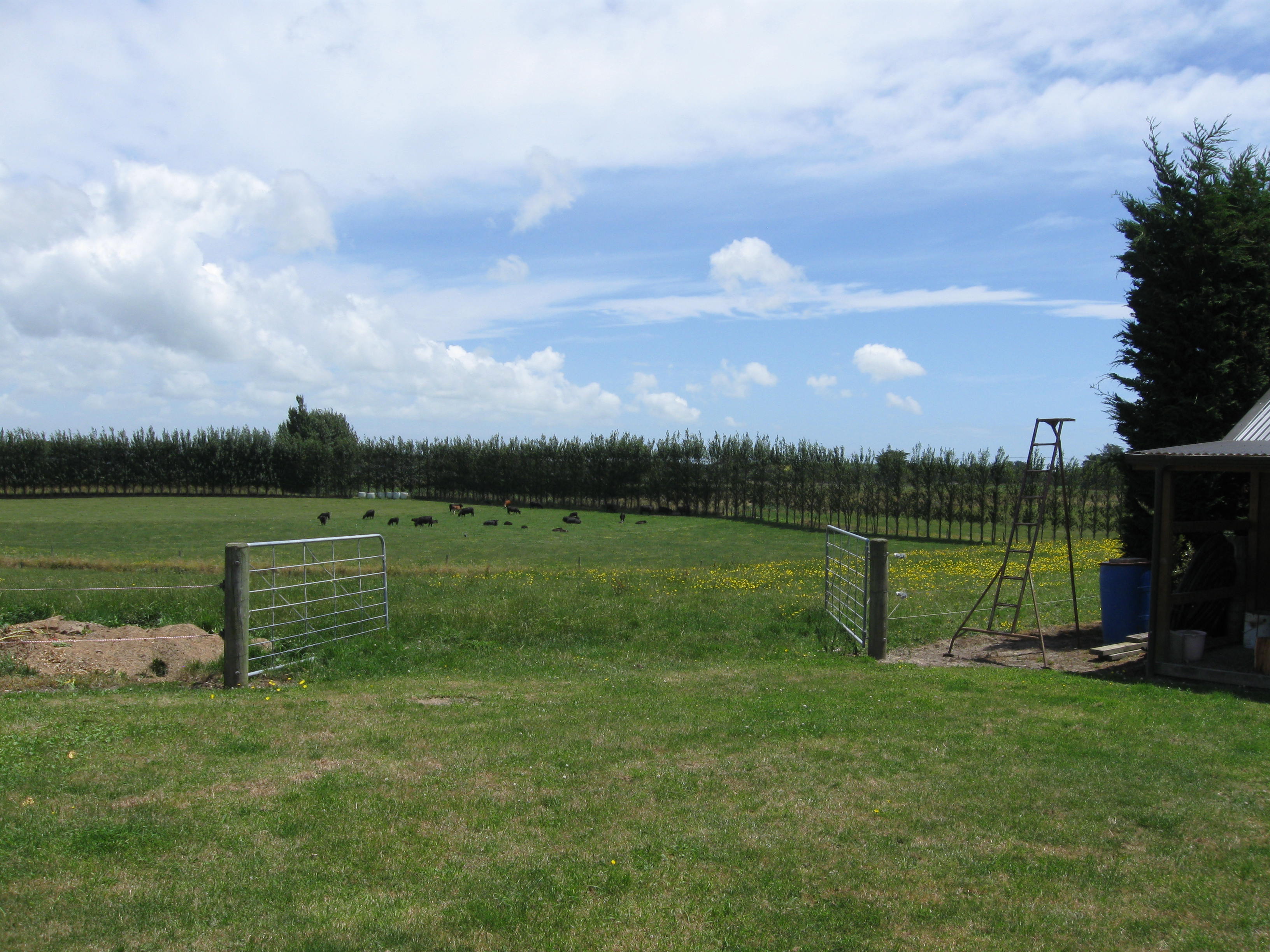
 

Cows out back

Cows out back

They live on 40 acres, have 44 cows, two dogs, several sheep. The house is crescent shaped, partly to deflect wind. It’s a one-story house, so it kind of sprawls to account for the rooms. There is also a view of Mt Ruapehu. Once arrived I went to work tending the cows! This was a good thing for a jet lagged soul. I donned gum-shoes, and set about moving the cows from one paddock to another. The property also has a fabricating facility – and it is there that the kayak designs come to life. I did not take any pictures in there!

Liz and Anthia

Liz and Anthia

I met Paul’s daughter Anthia a and son Glen. Paul has done well for himself. Everyone is so nice and made me feel comfortable. Essentially I was made to feel part of the family. I had a room, and anything I needed don’t ask just grab, whether it be a beer or something from the refrigerator.
IMG_0048

Something very down under!

The next day I joined Paul, Anthia and Liz on a journey to the east coast of New Zealand’s North Island. Hastings/Napier to see Paul’s dad. We would also visit a mountain with a terrific view, and a winery! Anthia lives in Melbourne, Australia and was home for the holidays…she had lots to say about Melbourne!

One thing about New Zealand is they are into sit on tops and there a lot of Feelfree Kayaks down there.
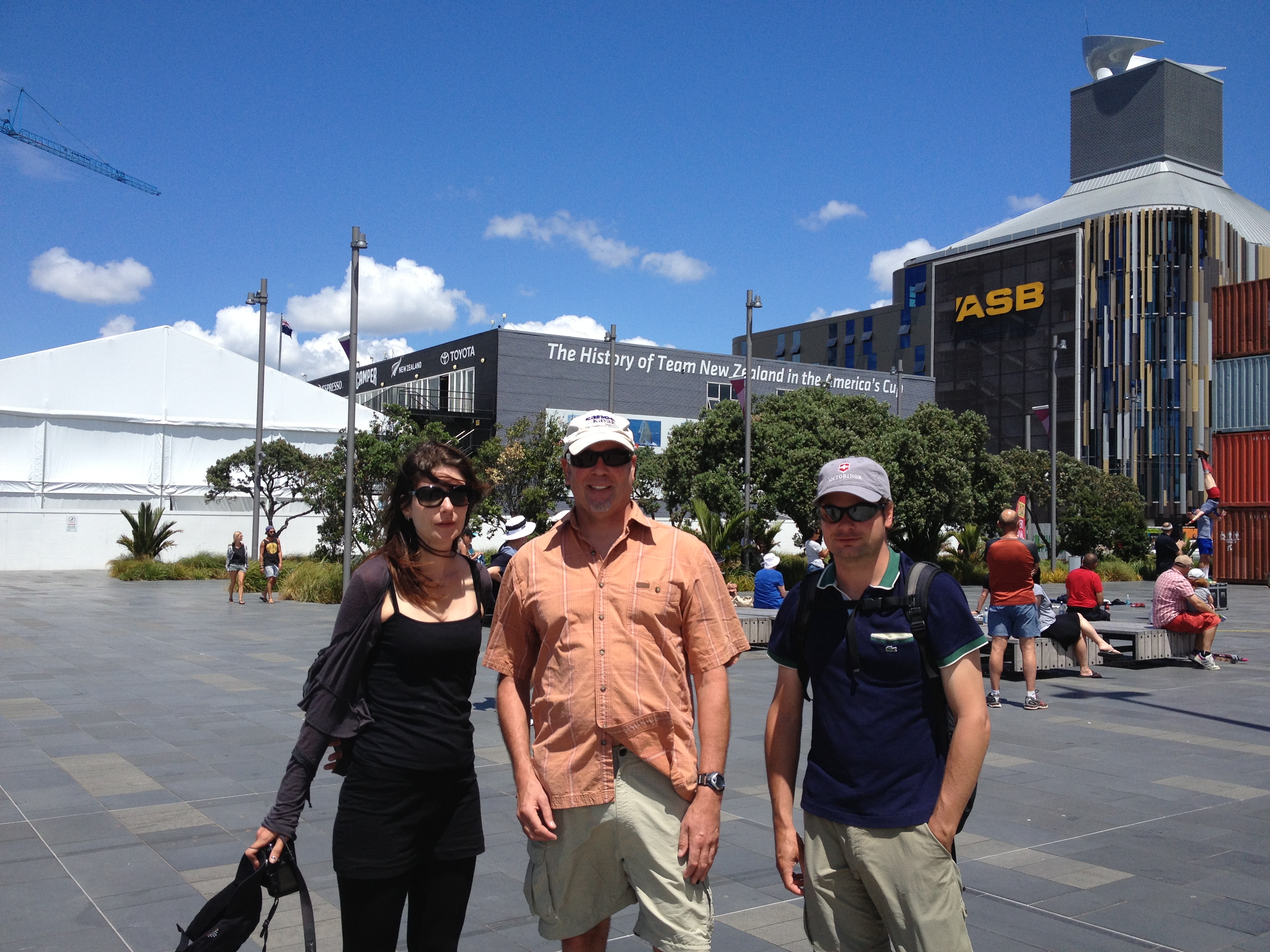


Down Under Part 2: New Zealand 2012-13

31 01 2013

IMG_0385

If you’ve followed this blog since 2011, you may recall I went to Patagonia in November. On that trip, I spent a lot of time with Elwin and Angelique, from The Netherlands. We had so much fun that in July of 2012 they asked me, “Hey Rod, want to get together for a trip to New Zealand this winter? Of course it will be SUMMER there!” That deserved some serious consideration! Especially since I have friends living there! First, Paul Lepper, a kayak designer for my old company Feelfree Kayaks, who’s encouraged me to visit for several years. And two other friends, Oscar Manguy and Yurira Hernandez, Mexican kayak guides I met at the Lower Columbia Kayak Roundup in 2011…they work for NOLS in New Zealand. I figured this has got to be the perfect time to visit New Zealand. So I said, “You bet I want to go!” And a plan was hatched.

I’d spend New Year’s 2013 with Paul Lepper and his wife Liz on the North Island. Then fly to Christchurch, on the South Island, to meet up with Elwin and Angelique. Then we’d all get together with Oscar and Yurira. Following that, the merry trio would wander all around both islands, through cities, fiords, beaches, rivers, glaciated peaks and volcanoes as well as geysers. And of course Mount Doom, plus all the other Lord of the Rings places! We’d hike, kayak and maybe sail! And learn how the Kiwis do things. Meeting all these friends down there seemed like such a far fetched thing. But not really! One just needs to plan it! And then the pieces fall into place.

In 2012 I sent word to Paul Lepper and Oscar and Yurira and we coordinated schedules. I’d land 12/28/2012 and then spend New Year’s up in Palmerston North with Paul and his family. Then fly to Christchurch on January 2nd and pick up Angelique and Elwin. Then on the 3rd we’d meet up with Oscar and spend the day together. Following that, Elwin, myself and Angelique would head south, beginning our exploration of New Zealand’s South Island!

As you may know, I live in Portland, Oregon, and New Zealand is on the other side of the International Data Line. It’s actually 22 hours ahead of Portland. For jet lag concerns, well, it turns out it’s not that bad. If you just ignore the day difference. Pretend that time in New Zealand is now minus three hours. So it is “tomorrow minus three hours from now.”

About New Zealand

New Zealand is very isolated from the rest of the world. A lot more than even Australia. New Zealand sits apart from Australia geologically – it’s right on top of the division of the Australasian Plate and Pacific Plate. Further, New Zealand is 1,300 miles from Australia. New Zealand has been separated from Australia for about 90 million years. Therefore, the flora and fauna native to the islands have not had outside influence for most of that time. Before man landed, birds and sea mammals were the primary fauna. Without competition, some birds evolved to be wingless. There were no rats and even today there are no snakes. Insects and spiders are present but they are not nearly as numerous as elsewhere – you won’t find insect screens on windows!

New Zealand is a Commonwealth country – and that means much English heritage. Rugby and cricket are popular, and sailboat racing is a national obsession. Gardens are neatly tended, and farms won’t have derelict vehicles on the property. Bars and pubs, even those targeted to young people – still have traditional pint-swilling patrons gathering for the neighborhood gossip. The driving is most definitely on the left-side. It has 4.45 million residents. And you will see plenty of Maori, especially on the North Island. But nobody of African descent.

New Zealand is packed with interesting landscape features in a small area. Check out these largest/highest facts for Australasia:

Other unique New Zealand trivia:

  • Tipping in restaurants is not expected
  • Many locals go barefoot
  • Typically it’s cars towing trailers, boats, RVs, not trucks
  • Diesel costs 50 cents less than gasoline
  • Many cars and trucks are available in a diesel version not available in the USA
  • Many cars come in a station wagon version not available in the USA
  • Backpacking often means staying in a hut on the trail instead of a tent
  • Sit-on-top kayaks are by far the most popular
  • 75% of forest was cleared by Maori or Europeans for agriculture
  • Lupine comes in blue, purple, white, yellow and pink
  • It had the tallest geyser in the world at 1,500ft
  • Tree ferns are common – ferns with 25ft trunks
  • Homegrown food is common – not rare at all
  • You will pay 40 cents to $2 to have ketchup on your french fries
  • You probably will never see anyone of African ancestry. In a month in the country, the only people of African ancestry I saw were travelers in the Auckland Airport.
  • You will probably see no native land mammals
  • You will not see any crows

So stay tuned for blogs about the recent trip to New Zealand! It is a wonderful country to visit. And parts of it definitely do look like Patagonia!


Cabins at The Cove Palisades at Lake Billy Chinook 2012

13 11 2012

13 friends rented all three cabins at The Cove Palisades State Park on Lake Billy Chinook the weekend of November 10-11!

The Cove Palisades State Park closes in October but its cabins are available for rent all winter long. The cabins feature a living room with kitchenette and futon and a rear bedroom. Heated and with running water and with lovely views, they each sleep five. One can paddle the lovely canyons of Lake Billy Chinook from then until winter sets in.

Why go? For us human-powered recreation junkies, the thought of summer on the lake makes us cringe. Party boats, wave runners and speed boats ply the lake, their noisy exhausts reverberating off the canyon walls. There are over 100 boat slips at this marina alone! But once closed, the lake is very pretty in its quiet solitude. Further, if you reserve all the cabins, you can have the lake just for you and your friends!

I’m a happy camper with my morning cup of Joe!

This weekend, we drove over snowy Government Camp pass – in fact it was snowing on and off the entire way to the destination. Laura and I had made plans for Friday dinner – we’d grill steak on the cabin’s propane grill, and enjoy baked potatoes and salad as well as grilled veggies. These turned out delicious!

Later, Jessie, Mike and Joel, our cabin-mates for this weekend, showed up. Then we saw April and Jim. I drifted off to sleep – and yes Laura and I were up first in the morning.

Laura and Jessie by the fire.

The cabins share a five-foot diameter fire pit with a lake view. Saturday morning, we shared a fire to warm us up and had a breakfast. Jim and I each brought bins of wood.

As the sun rose and began to warm up the area a bit, Jessie, myself, Mike and Joel gazed upon the lake.

Although gray early on, it was to be a beauty of a day!

Soon it was time to paddle. Thirteen paddlers. Rod, Jim D., Jim H., Jessie, Joel, Laura, Becky, Bob, Andrea, Kristi, April, Mike and George. Getting a group of that size going doesn’t always happen in a snap.

Andrea and April almost ready…but some cars are still on roof racks!

Laura and I get our boats down to the dock early,
and she is ready to go. But as I look back toward the parking area, there are lots of kayaks remaining on roof racks! It’s going to be a while.

Last to go are Kristi and George – so Mike and I help things along by carrying their boats down to the docks.

Today is Becky’s first paddle! So we pay extra attention to her needs.

Jessie lends a hand at the dock, stabilizing Becky’s boat, which she rented from Portland State University’s Outdoor Program.

The forecast calls for temperatures in the mid 40’s and light winds, less than 10 mph. Once on the water the sun comes out and I began to believe I was over dressed! I didn’t bring a baseball hat, figuring it was too chilly. Lucky for me Kristi loaned me a sun hat she brought along.

The dominant features of Lake Billy Chinook are sky and canyon walls. The sun’s arc across the sky changes the glow and colors along the walls.

Jim D. about to head into Crooked River Canyon.

I’m not a geologist, though I took Geology 101 in college. What I can say is that examining these canyon walls tells a story. It is a story of violent volcanic activity taking place over millions of years. Layer upon layer of rocks and ash reveal the episodes. Basalt columns formed as the rocks cooled – some dozens of feet thick. Other layers are softer – ash from distant eruptions. Rain and thermal warming/cooling cracked the structures, sending rocks, sand and boulders down the sides.

We search for a lunch spot. One drawback of this lake is the few sandy takeouts. Mostly the drop off from lake shore goes straight down. We find a narrow area to disembark, but most of us just take lunch in our boats.

During lunch we see a potential change in weather dark clouds back toward the cabins, so most of us head back. But Bob, Jim D., George and April continue upstream.

Once back on shore, we retreat to our cabins for snacks, naps and getting ready for dinner.

It’s not long before dark! Tonight we have a great party by the fire pit. No shortage of firewood! The stars are out! It’s dark enough to easily spot the Little Dipper and the North Star. The Milky Way glides overhead.

We’ll see what tomorrow brings!


Mount Rainier National Park

2 11 2012

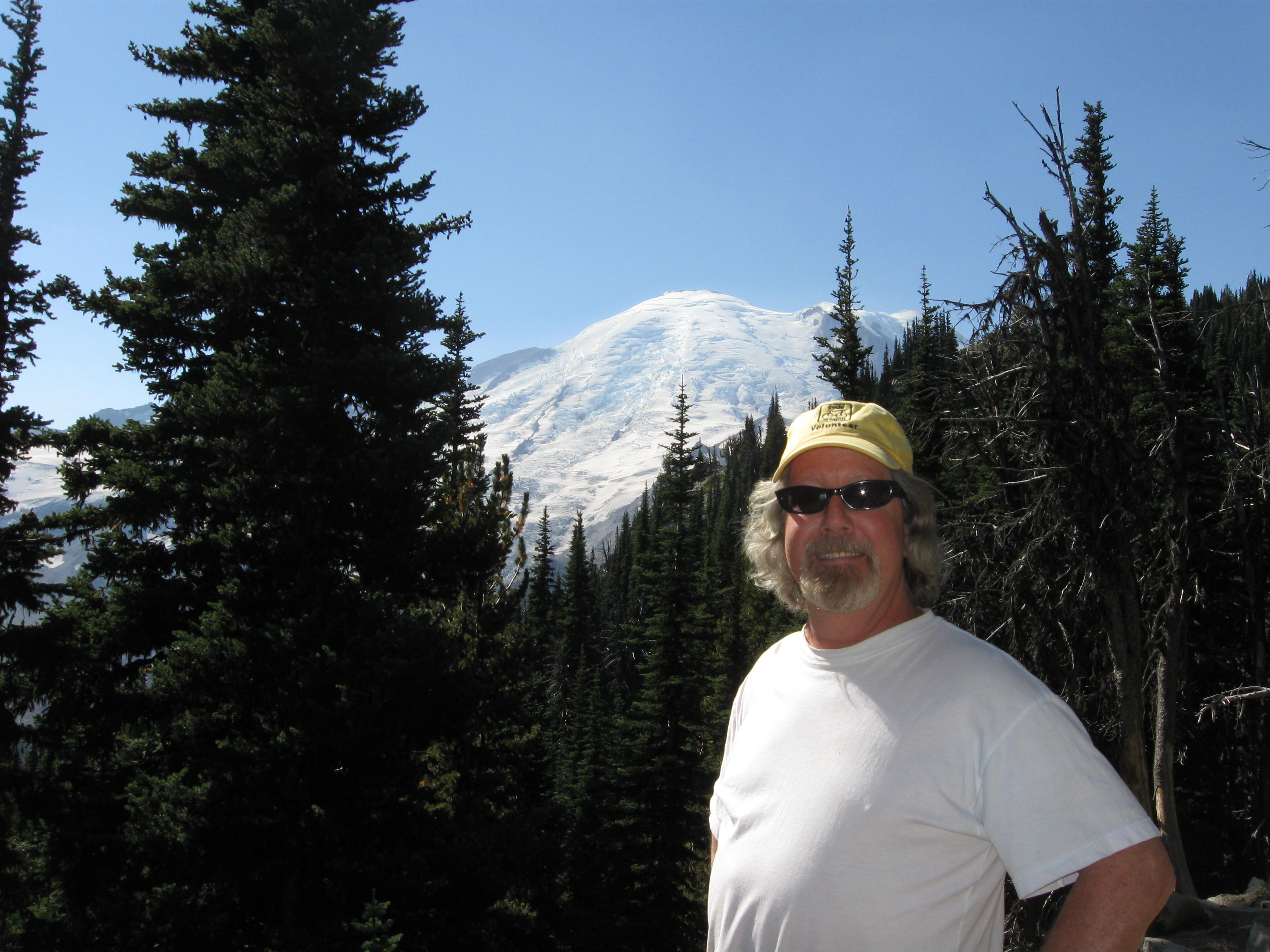
Mount Rainier from a meadow above Sunrise

Summer of 2012 featured a record 80+ days where it only rained one hour during that time! With the end in sight, and the inevitable rain switch about to be turned on, my friend Tully and I headed to Mount Rainier National Park for a last campout!

It was beautiful weather. There were wildfires nearby, and before we arrived, smoke obscured views of 14,410 ft Mount Rainier.

For us, the wind blew the smoke away. We were treated to crystal clear views.

We camped at the White River Campground. It’s on the eastern side of the park, higher elevation.


We figured we’d have the park to ourselves, since it was after Labor Day. But that was not the case and the campground had lots of guests in its not-so-spacious campsites. This was because the wildfires closed many nearby outdoor destinations, sending people here.

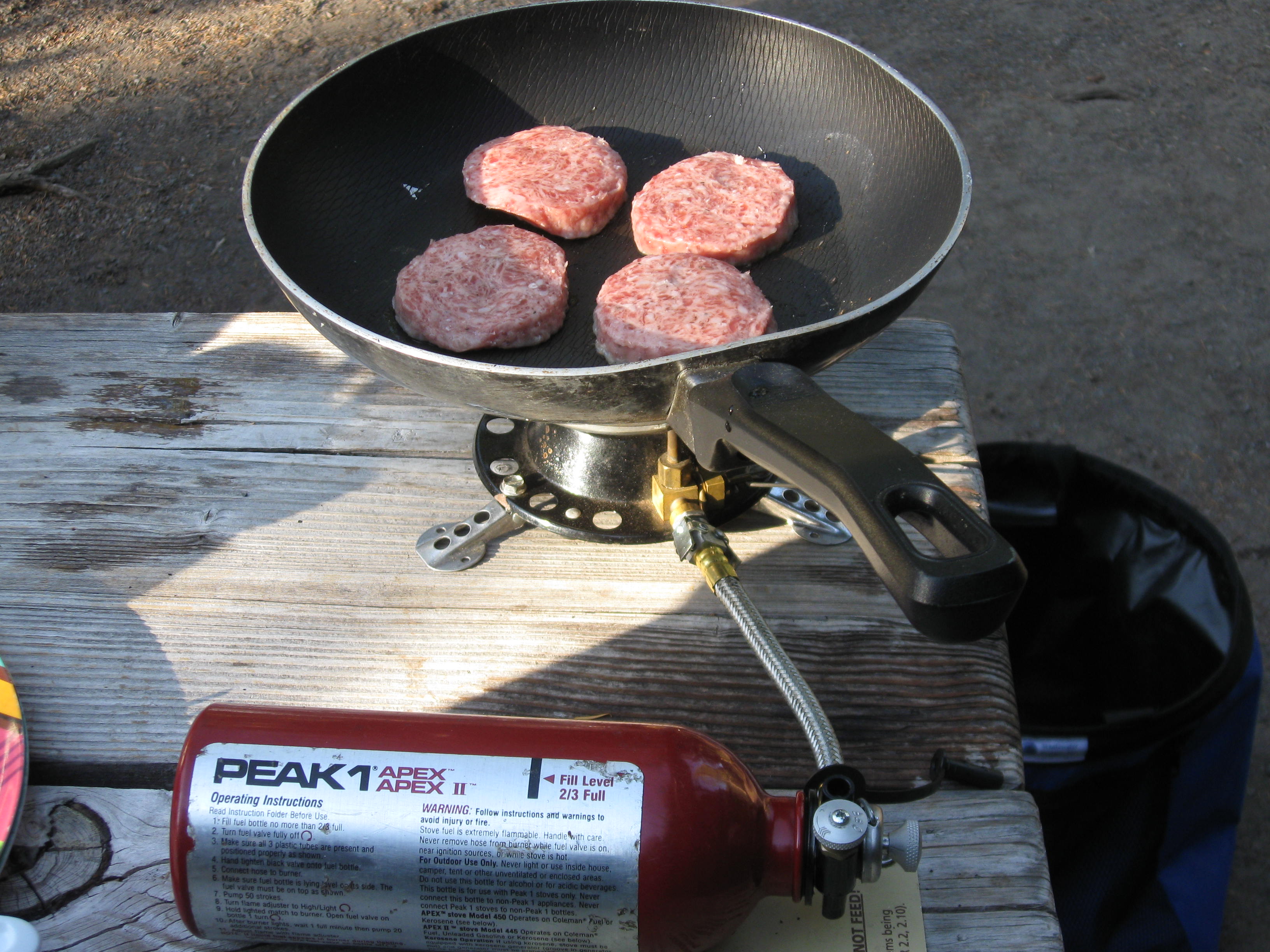
Sausages brown ‘n serve!

We planned to hike from the Sunrise area. This is a higher elevation staging area on the eastern side. It has a lot of trails. Some of the trails follow ridges with spectacular views in several directions! I could see Mount Adams to the south, and all the way to Mount Baker north. Looking all around I watch to see signs of big fauna – bear, elk, the elusive mountain goat – but see none. We catch sight of gray jays and ravens, as well as various unidentified raptors.

For dinner, we did a stir fry – which consisted of green pepper, carrot, nuts, pineapple, chicken, onion, broccolli, and baby carrots. Scrumptious! Another night we did a skewer meal over rice. Breakfast was pretty traditional – eggs, toast done on the grill, and this time instead of bacon – sausage patties. Sausage patties are a lot easier to clean up than bacon, because they don’t produce much grease! I’ll be cooking more of them in the future!


We also spent some time hiking the area around the Grove of the Patriarchs. It is in the Ohanapecosh area. While the grove’s hike is only 1.3 miles, it’s packed with incredible flora. 1,000 year old Western cedars, Western hemlock and old-growth Douglas fir! Quite a few of them! They’re simply huge compared those typically seen around the Northwest.

The Grove is located on an island in the Ohanapecosh River. It’s a place you can feel the history. These trees were already hundreds of years old when America became a country. They were 200 years old when Columbus landed in the New World!

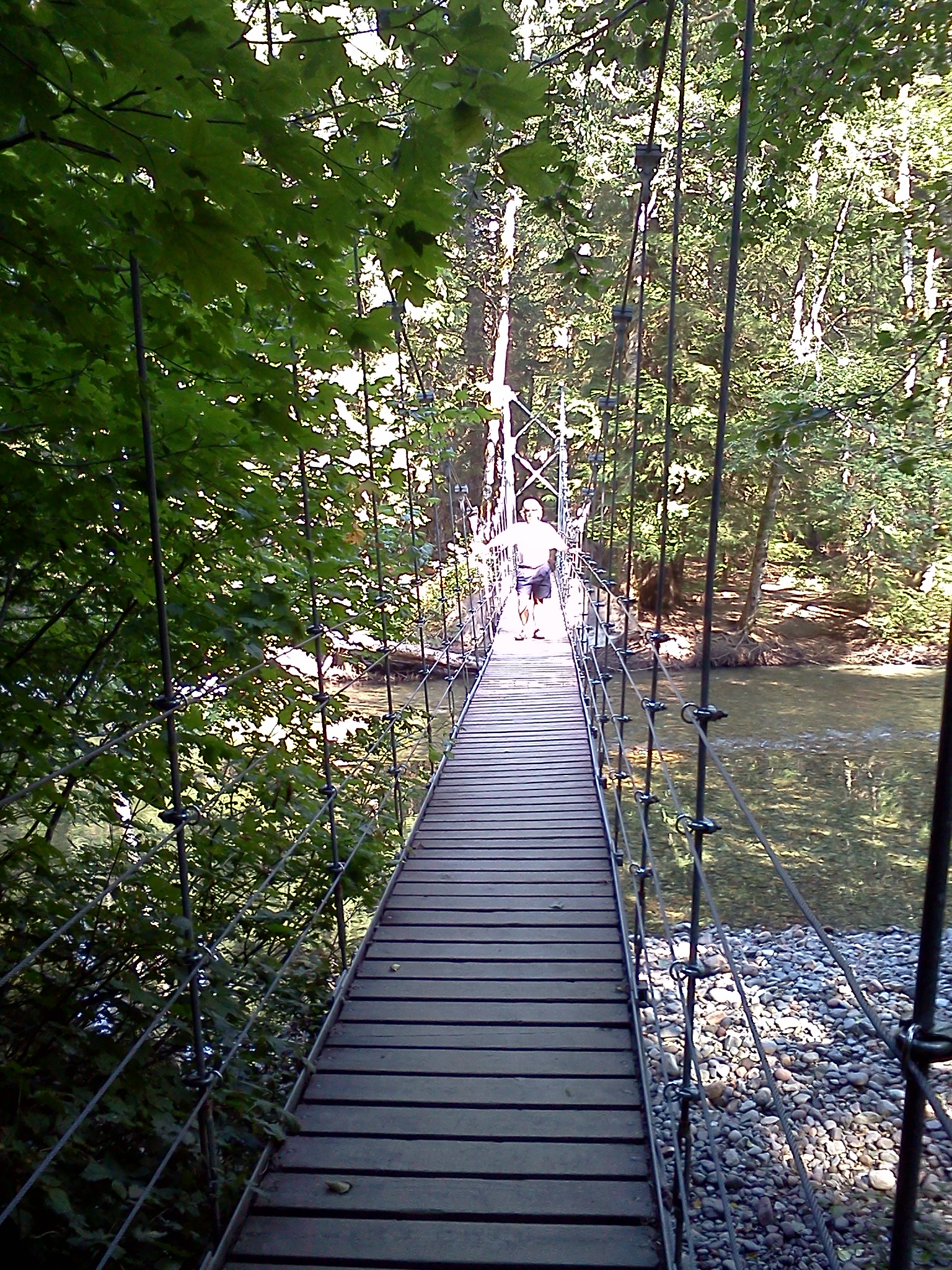
You walk across a suspension bridge to get there – one at a time.


1,000 year old cedar in the Grove of Patriarchs

By far the best time for experiencing the outdoors in the American Northwest is September – after Labor Day.

After Labor Day, the weather is still dry and warm – summer. But kids are in school and parents home. Hiking trails and camping are generally a lot less busy!

So, if you can, make plans to head into the outdoors in September!


Three Fingered Jack

21 10 2012

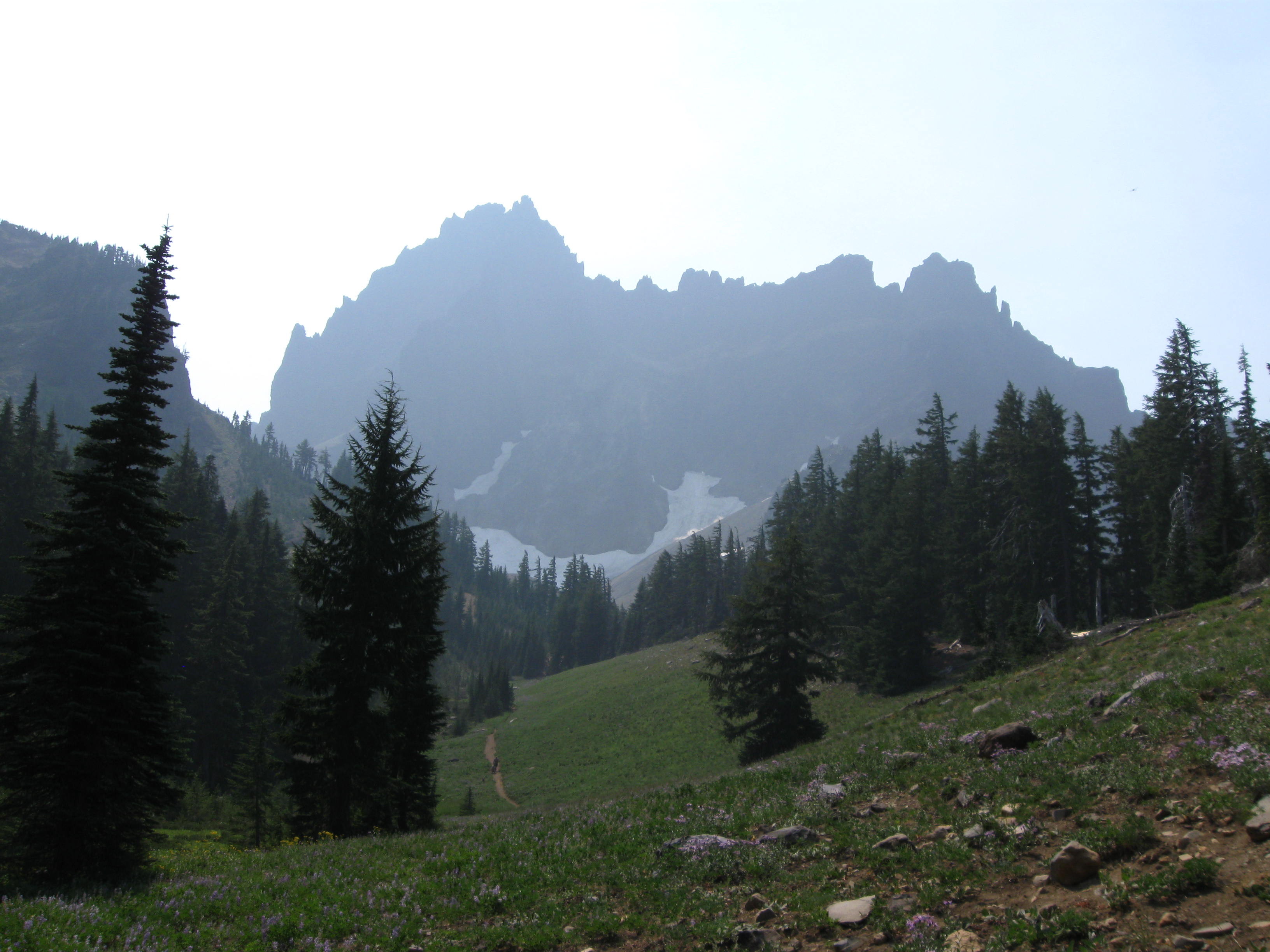
One of Central Oregon’s crown jewels is 7,844ft Three Fingered Jack. It is the core of an extinct volcano. Three Fingered Jack lies in between Mt Washington and Mt Jefferson and sits on the Pacific Crest Trail.

Jessie, Joel, Laura and I paid a visit there recently – camping at nearby Metolius River. We arrived mid afternoon Friday and got skunked at our favorite campsite on the peninsula at Allen Springs Campground. Figuring we had the luxury of time to search for a choice spot, we hunted around the local campgrounds. How naive we were! When we circled back one campground after another posted the “FULL” sign! We wound up with the very last site in the valley. No matter we made do and promised to try for a more choice spot that might get vacated in the morning!

Jessie, Joel and Laura by Canyon Creek

Though full the campground’s campers are gregarious but mellow. Nobody has trouble sleeping! Morning finds me fixing traditional bacon, eggs, and home made hash browns. All fueled up we head up to the trailhead at Jack Lake.

The three mile trail winds past a burned out area, then through shaded forest, then into wildflower-packed Canyon Creek Meadows and then into the basin underneath Three Fingered Jack. I’ve backpacked into the area and remember the view from the basin: You look straight up at the internal workings of a volcano! Spectacular.

And, this is not an ultimate challenge hike. It is a big payoff for easy effort hike! While we sweat on the trail, the climb is easy enough that we have no problem holding casual conversation on the way.

For the first three quarters of a mile of the trail passes through what was left after the B and B Complex fire, which burned 91,000 acres in 2003. It is a testimony to the catastrophic effects of climate change. Winters are warmer, allowing insects like the bark beetle to have longer reproductive cycles, leading to a population explosion. Normally lower temperature helps control the breeding season. With more beetles, the trees upon which they feed don’t stand a chance. The beetles feed on wood just below the bark – and when they complete a circle around the tree, the tree becomes “girdled,” and slowly dies. The only defense the tree has is to produce extra sap. In bark beetle-infested forests, mile upon mile of trees stand with the lower bark falling off to the ground, and the trees eventually dry out. They become the perfect fuel waiting for the moment of ignition = a forest fire in waiting.

Then it takes us through a section untouched by fire. It’s as it was. Mountain Douglas Firs and Cedars. Shady. A patch of snow here and there. A pond. No bugs. Then the it opens up into meadows carpeted with withering wildflowers, and the mountain dominates the view ahead.

Our goal is to reach the basin beneath the caldera, where we will take in the view and picnic.

We climb a forested moraine and descend into the basin. Wow! Above our heads lies exposed the plumbing of a volcano. Clearly visible are layers of lava but injected into the layers are volcanic dikes, which are like pipes through which lava flows to the top of a volcano. Cool!

I love this spot!

And all around us a sea of wildflowers.

Here, I glimpse a wildflower I’ve never noticed before, which is a kind of wild petunia. Beautiful!

We pause to drink in the view and warmth.

Laura makes the best picnic of all. Very European with fruit, cheese, and even some wine to accompany!

We love wildflowers. And there are plenty to see! But they won’t last forever.

It won’t be long before they fade and winter returns to these parts.

But for now we are happy to enjoy the moment!


Operation Bullwinkle: To Gibralter Island Camp

5 10 2012

This morning’s breakfast conversation focused on where to camp tonight. We kind of started chronologically backward. To get back to Portland by early evening and make the afternoon ferry on time, we’d have to leave Toquart Bay Campground by 7:00 a.m. the day of departure. So by default we’d have to spend the prior night there. But that day we could spend paddling mostly. So we picked a campsite farthest to the east – Gibralter Island.

We could take a long day paddling today and another long one from Gibralter back to Toquart. After eating we packed up our kayaks again…heavily laden of course. This time it was paddling east, to the head of Effingham, then north past a string of islands…Faber, Onion, Mullins, Keith, and then Jarvis and finally Jacques. There is supposed to be an interesting lagoon inside Jacques one can explore.

On the way we duck in behind some of these islands. Behind Mullens is the best underwater viewing I saw!

There was a quiet area with rocks and kelp. It was maybe 15 or 20 feet deep. More bat stars, sea stars, and even some 15-inch long fish. But the most amazing thing I saw here was the arm of a giant octopus. It was amongst a bed of seaweed atop a rock only two feet down. It was five inches in diameter! But just an arm. What chopped it off? Must have been something big. An orca?

We reach a shortcut into the lagoon at Jacques Island. Because of the low tide the channel is exactly kayak-width wide right now. The tide’s coming in, so we wait. And wouldn’t you know it a group appears on the other side and squeezes through!

Bill knuckle-drags his boat through and so I give it a shot. I feel the dreaded scrape of oyster on kayak but it’s not drastic and I do have a plastic boat. Lisa’s is kevlar so she wants to wait a bit longer.

We explore the lagoon and all of us decide it’s actually NOT that interesting.

Exiting the lagoon we saw the Lady Rose, a little ferry that shuttles kayaks from the mainland out to Sechart Lodge.

The Lady Rose

Gibralter Camp is just fine – and we’re the only ones here – at first.

Then a group of kayakers shows up, led by a couple of guides. One of the guides is a friendly Canadian girl and sure enough her conversation is full of “ey” and stuff. They have salmon for dinner and have lots of leftovers to offer us.

Tonight we play in the phosphorescence at the shore. Anything stirring up the water causes a brilliant effect!

Tomorrow we’ll take our time and head back to Toquart.