Kayakers Rejoice! Kokatat Re-Invents the Dry Suit – The Idol

24 01 2015

This week I was one of a few privileged souls to witness a revolutionary development in the kayaking world: The unveiling of the Idol dry suit by Kokatat, Inc. Why is the Idol dry suit revolutionary? Answer: The Idol is the first dry suit in history that can be zipped into two pieces – and each can be worn independently.idol-drysuit-leaf-small

Why Own A Dry Suit?

A dry suit is an expensive proposition. A top notch Gore-Tex drysuit from Kokatat or Sweet Protection can set you back $1,100, and that’s not chump change. So, what is the big deal? Your life. If you exit your whitewater or sea kayak in 50-degree water, and you don’t have a wet suit or a dry suit, you are a goner in short order. So, you ask, why a dry suit instead of a wet suit? There are several reasons. Suppose you are paddling and the water is 45 degrees. You’ll need a wetsuit north of 10mm to be safe if dunked more than 30 minutes. And you must get wet to even get warm. When dry, that wetsuit is useless. Wind goes right through it. Now, imagine paddling with that. With a Gore-Tex dry suit, all you need is a dry, comfy fleece layer under that dry suit. When out of the water, you’ll be warm and dry. It shields you from wind. The Gore-Tex will move your perspiration out of the suit. If you do take a spill, this doesn’t change. Even under water, Gore-Tex moves your sweat to the outside environment.

Dry Suit Trivia

Are dry suits something invented for 21st Century adrenaline junkies? Nope. Dry suits have been the immersion wear of choice going back to ancient times. Fact is, Arctic Inuit hunters invented dry suits centuries ago. They discovered seal intestines had the ability to pass sweat in one direction and keep water out. They used dry suits in their whale hunting exploits.

What is the big deal with a two piece dry suit? Well, for one thing, in a one piece dry suit you are stuck when needing to relieve yourself. Manufacturers have come up with rear zippers or front zippers. But still, kayakers have to wear this garment with neck and wrist gaskets even when it’s warm outside. Always a source of irritation. And it’s all or nothing because it’s one piece. Garment makers offered Gore-Tex pants or Gore-Tex tops. But if you are capsized, either meant total immersion in icy water as water enters at the waist. Therefore, for many years, the vast majority bought a one piece dry suit.

The Challenge – A Zipper That Can Do the Job

The Holy Grail was to somehow make a two-piece dry suit. And one that can be three garments in one. A dry top, dry pants, and a total dry suit if zipped together. The challenge has always been a waterproof zipper capable of the job. Metal zippers when worn around the waist are just unforgiving and uncomfortable-after all, a spray skirt has to fit over the zipper. The breakthrough is an upgraded T-Zip plastic zipper, and its SwitchZip technology and Ringseal closure. The plastic zipper is waterproof and much more flexible than a metal zipper.

idol dry suit,kokatatThe Kokatat Idol drysuit can be split into two separately worn pieces. The top can be worn as a standalone dry top. The pant can be worn as a waterproof breathable pant-with included waterproof breathable socks. That means on warm days, kayakers can launch their boat completely dry and paddle comfortably without having to wear the whole dry suit. So while the Idol drysuit costs $1,100, it replaces two additional garments! Not only that, it makes relieving oneself in the great outdoors so much easier. Whether you need to go #1 or #2 you can separate the pants and perform the duty much easier than performing the whole machinations necessary with a one-piece dry suit!

OK, I Wanna I Wanna! How Can I Get My Mitts on One?

To order one of these amazing products, you must visit a Kokatat retailer. In Portland, Oregon, visit Alder Creek Kayak and Canoe. Kokatat says the Idol will be available in the 2nd quarter 2015. But you can order today.

Here’s a Kokatat Video on the Idol Drysuit


I Love Camping and Hiking in the Metolius River Region

7 01 2015
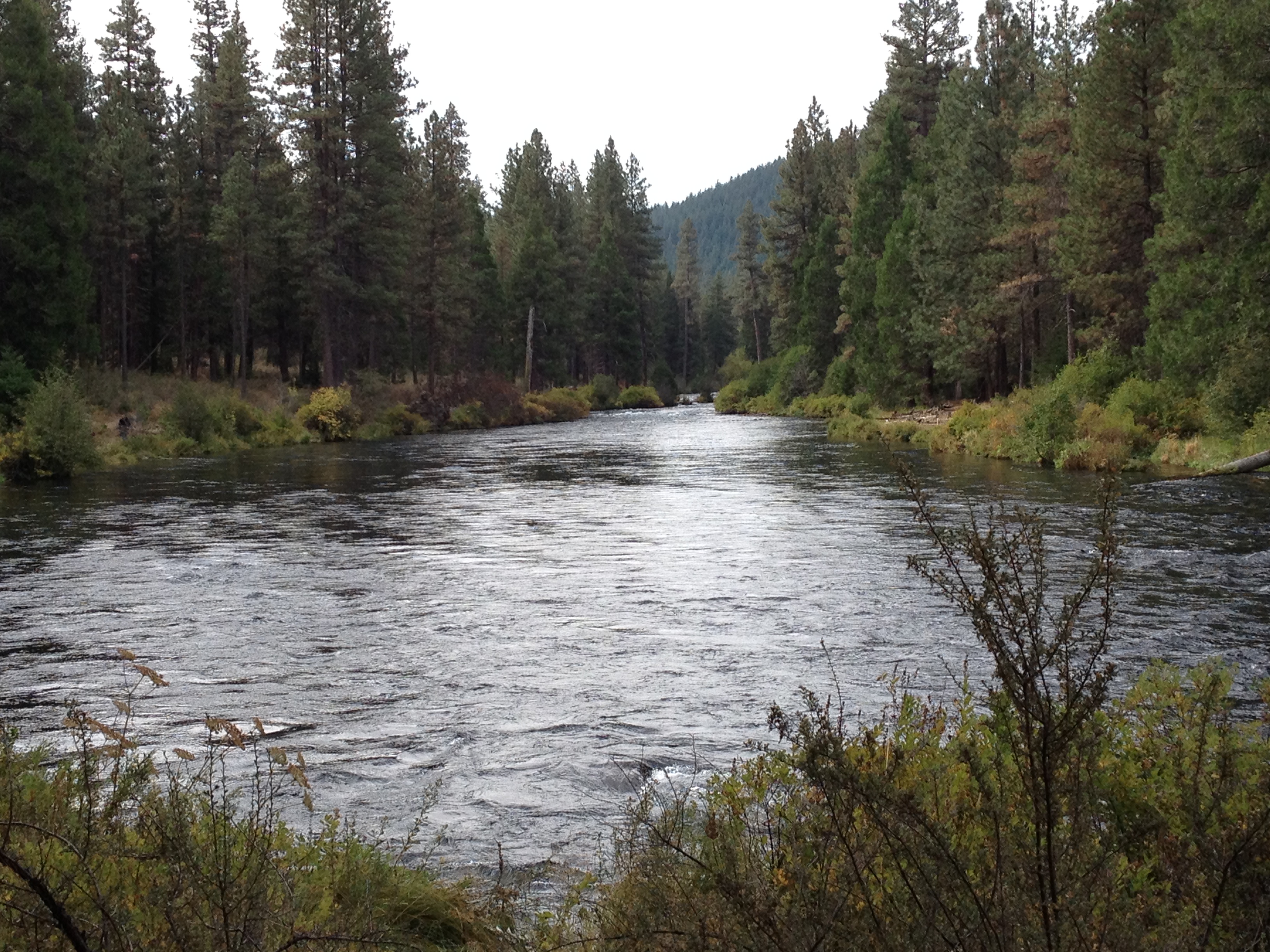
metolius river,camping in oregon,camp sherman,camping camp sherman,trout fishing oregon,allen springs campground

The Metolius River from our campsite!

Bubbling up from the ground fully-formed, the Metolius River, at Camp Sherman, Oregon, is one of the state’s most magical outdoor gems. The Metolius River Valley stretches 13 miles from the mouth. Because it lies just to the east of Santiam Pass, it is solidly in the Central Oregon ecosystem. Blessed in a rain shadow, the valley is dry most of the year – and dry-climate-friendly Ponderosa Pines dominate the forest.

There is a lot going on in the Metolius River Valley – but it’s subtle. It’s not widely advertised. First and foremost, it’s all about the river. At the head of the valley the Metolius emerges from the ground as a fully formed river. It’s not a little spring. It is urgently rushing out at its headwaters. The water is glacier snow melt coming directly from glaciers in the Three Sisters, where it disappears underground and flows for many miles in underground lava tubes, only to emerge in the Metolius River Valley. That means it’s extremely cold and pure.

metolius river,camp sherman,fly fishing,metolius river fishing,camping in oregon

Fly fisherman on the Metolius

This river, wending its way through snags and bends, is perfect habitat for trout and salmon. The Metolius River is a national blue ribbon trout fishing stream. When visiting the area you always glimpse fly fishermen trying their luck along its banks.

metolius river,allen springs campground,camping in oregon,camp sherman

Nothing like a multistory fire!

There are several campgrounds sprinkled along the Metolius River, plus there are lodging opportunities in Camp Sherman. My personal favorite is Allen Springs Campground because it sits along a U-shaped bend in the river. There are three walk-in campsites on the U-shaped peninsula. If you score the campsite at the end of the peninsula, you have guaranteed privacy and simulated back country camping. You just need to walk your gear to it. This guarantees no RVs parked next door. No generators grumbling during the night. All you hear is the glorious burbling of the Metolius!

Forget to bring everything? Fear not. You can get what you need at the Camp Sherman General Store. Even better, the store has delectable made to order sandwiches! It’s worth not bothering to pack your lunch because you can get a scrumptious fresh hand made sandwich at the store! If you order a club sandwich they’ll be cooking the bacon right in front of you.

There’s much more. There is a hiking trail running for at least 10 miles – down one side of the river and back up the other. A visit to the Wizard Falls Fish Hatchery is well worth the stopover. For swimming and boating, Suttle Lake is just a few miles west of the exit for Camp Sherman off the highway. And in July, if you are up for an alpine hike through spectacular wildflowers, Three Finger Jack beckons.

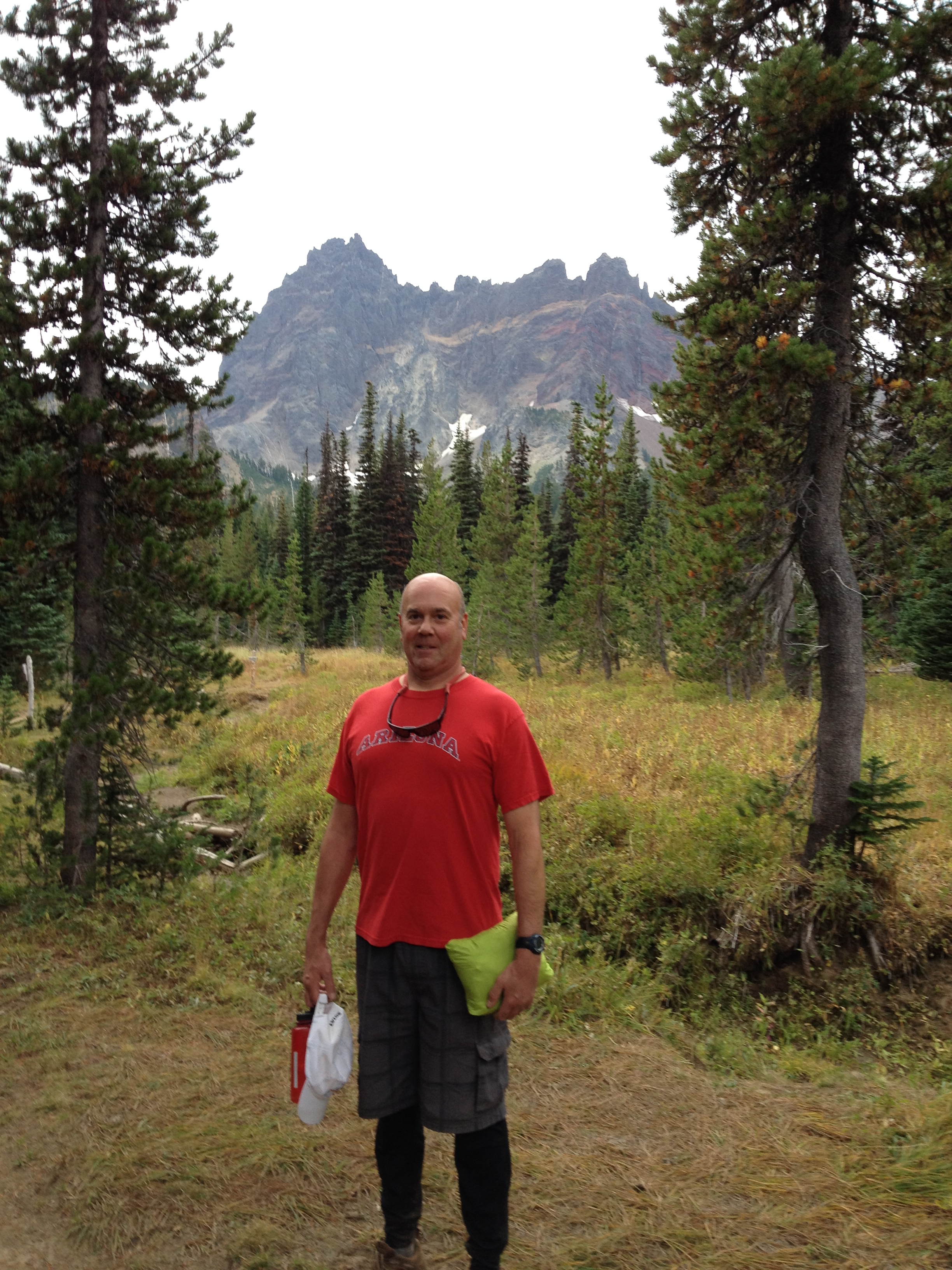
rod richards,roderick richards,three fingered jack,hiking oregon

Rod pauses in front of Three Fingered Jack

On this trip my old college buddy Tully accompanied. For dinner, we used the tried-and-true Wok cooking method. Wokking is a great alternative to traditional camping meals. First and foremost it’s delicious! And fresh. It’s great for group cooking because the ingredients are all laid out and then each camper cooks their own. Some may be intimidated at first, but it’s virtually impossible to screw up a Wok meal!

wok cooking,camp cooking

But prior to dinner there is the obligatory post-hike and pre-dinner happy hour. That requires a campfire. We violated all dietary guidelines by having a bag of Fritos. A camping secret is that Fritos and Doritos are excellent fire starters!

fritos, frito-lay,fritos fire starters

Fritos are super fire starters!

No kindling??? No problem, IF you have a bag of Frito-Lay products on hand. The next thing is music. Tully provided plenty of songs from The Grateful Dead, The Eagles, and Eric Clapton. All good blended with the burbling of the Metolius River.

metolius river,allen springs campground,camp sherman,camping in oregon

Tully pickin’ on the guitar

Next day we glimpsed an unusual sight walking along the river. Turkeys!

turkeys in oregon,turkeys,camping in oregon,camp sherman,metolius river

Turkeys!

There were 8 – 10 of them. Who knew! During a lunchtime visit to Camp Sherman we learned there are a lot of turkeys in the valley and they are a nuisance to some homeowners! The ones we saw looked innocent enough.

If you are in Central Oregon you should consider a visit to the Metolius Region!


Clear Lake and Clear Lake Resort, Oregon – The Submerged Forest

13 11 2014
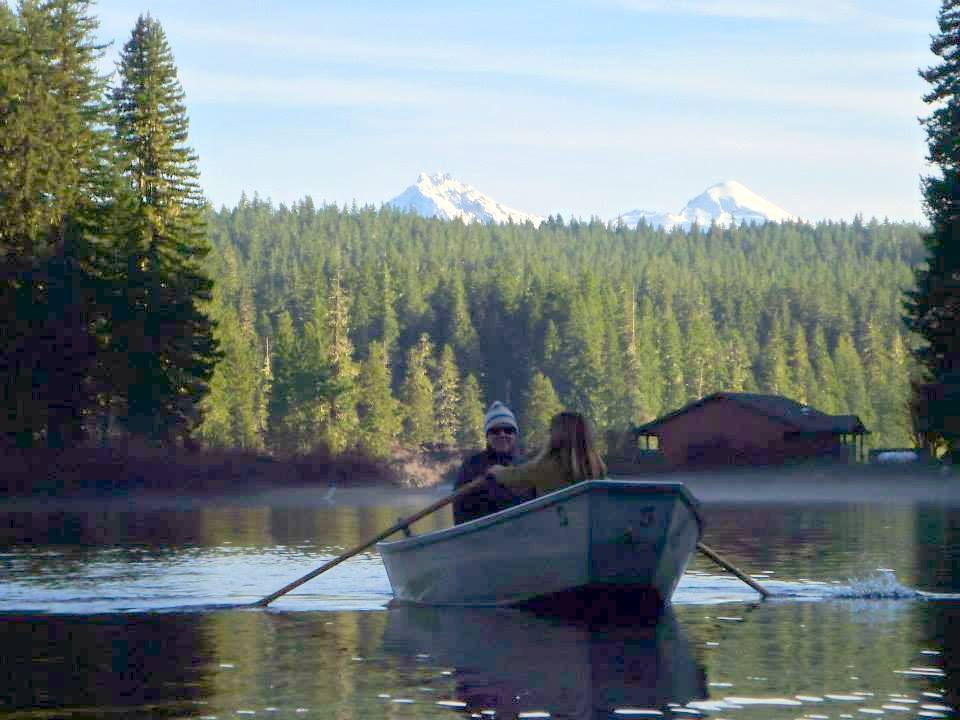
Laura rowing Rod

I take the back seat as Laura navigates. Two of the Three Sisters rise in the background.

DSCF1636

No photoshopping here. There really was fog to Laura’s right and sun to her left!

The 2nd weekend in November my friends and I traditionally rent cabins at Lake Billy Chinook and kayak. This year we threw tradition out the window. Instead, we rented cabins on Clear Lake at Clear Lake Resort. Clear Lake is famous for its clear water and submerged forest. Thousands of years ago, a lava flow moved across the McKenzie River at this location, blocking its flow and creating a lake.

DSCF1641

A tree trunk in the submerged forest.

DSCF1637

The “seascape” at Clear Lake.

South End Clear Green Water

In the shallows, sometimes the water was emerald green.

But there was more. The river ran through a forested valley, and the trees were submerged in the lake that formed. Today, at the head of the lake, water emerges through fast-flowing springs, and the water is crazy clear. At the foot of the lake, a waterfall spills to form the headwaters of the McKenzie River.

Clear Lake Oregon is popular for canoeing, kayaking, rowing and scuba diving. Those plying the surface can peer down into the sapphire and emerald waters, and scuba divers can see the submerged forest up close and personal.

While most November days in this part of Oregon are rainy and cold, this day was calm and sunny. We lucked out!

DSCF1646

Our cabin. Sorry about the focus…some moisture on the outside of the lens!

Today, Laura and I arrived first. Our group had booked two sides of a tandem cabin. Each side has two bedrooms with double beds and a double futon in the living room. A propane-fueled pot bellied stove heats each side, and there are kitchens on each side. Cost? $99 for two nights per side. Heck if you have some friends along it’s super cheap! Other facts to know…A hiking trail runs around the lake, and there are hiking options nearby along the McKenzie River. Hoodoo Ski Resort is 30 minutes distant. And there’s cross-country skiing at Ray Benson Snow Park. For mountain bikers the nationally famous McKenzie River trail awaits.

The Clear Lake Resort provides a fire pit for the cabins and we took advantage of that.

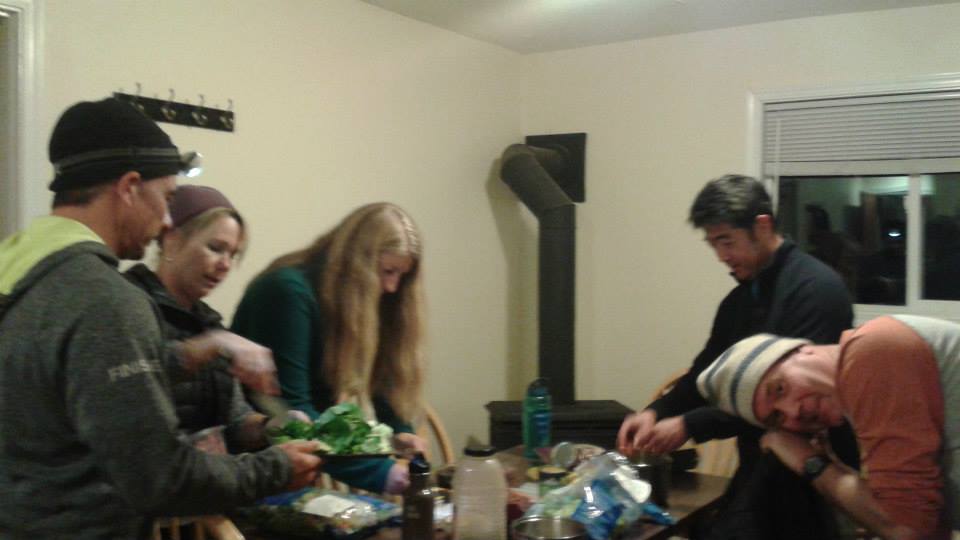
Group camping/cabin cooking presents some interesting possibilities. What to eat? What’s easy? In this situation we settled on Wok cooking. It’s practically impossible to screw up wok cooking no matter what. Plus it’s FUN. So we brought the woks, each member bringing along a different wok ingredient. Mini carrots and corn, water chestnuts, pineapple, nuts, jasmine rice, mushrooms, bok choy, broccoli,  shrimp, chicken, peppers, etc. plus a myriad sauces. YUM!Jim and Becky sapphire pool Woking

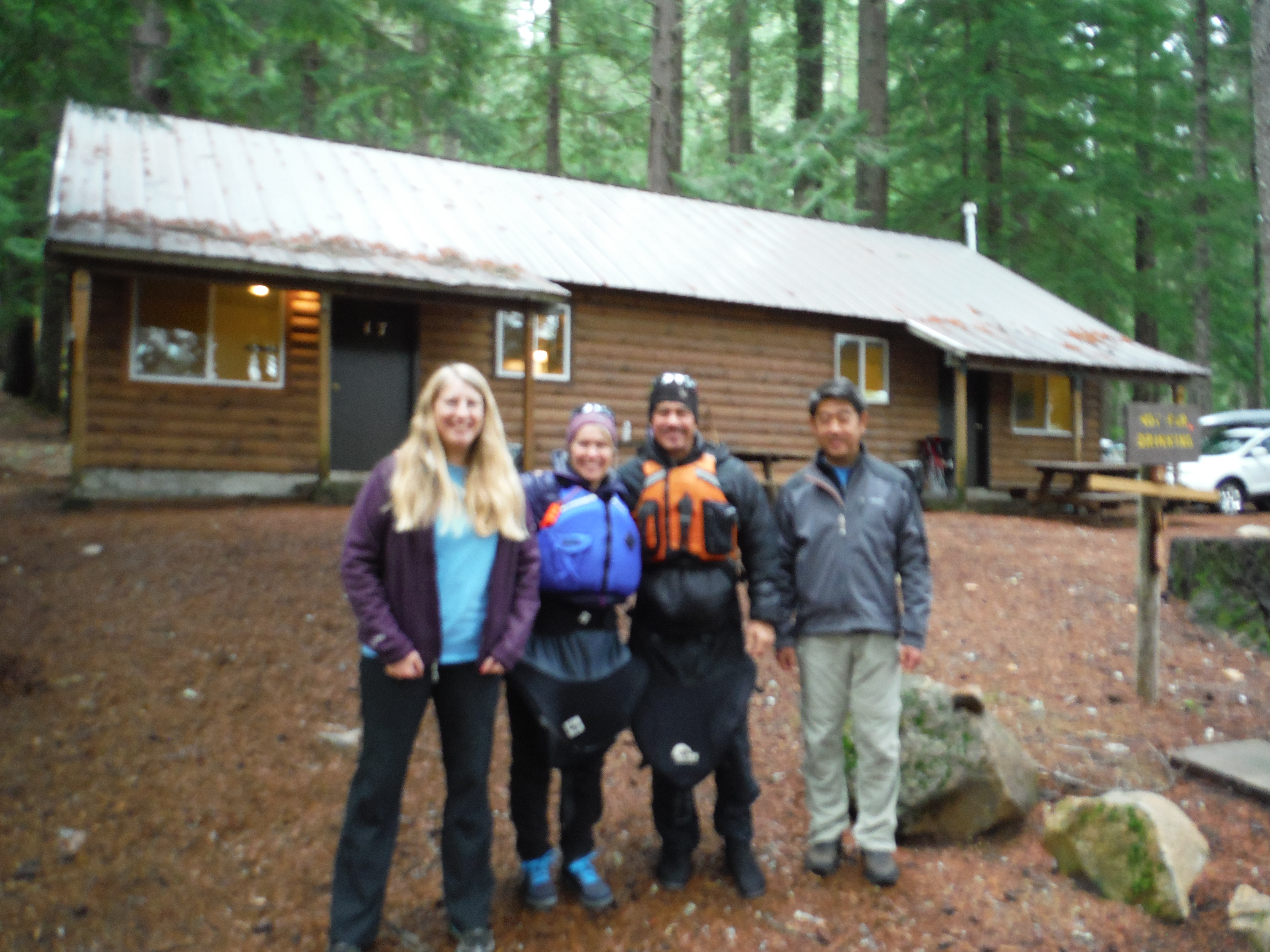
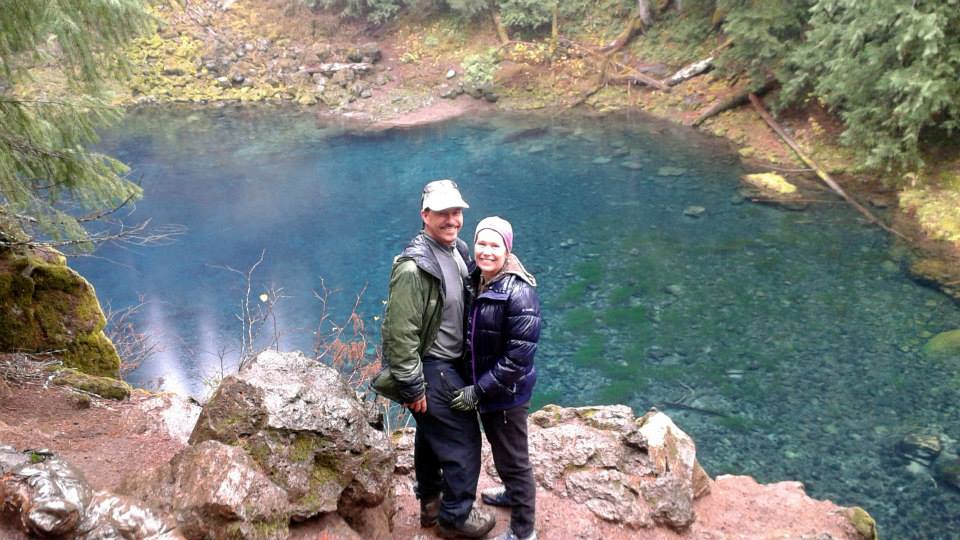
Sunday, we picked a 4.5 mile hike which ended at a really beautiful pool on the McKenzie river. Sunday it started to rain, but it didn’t matter. We got a picture of Jim Hashimoto and Becki above a sapphire pool!

All in all, the cabins at Clear Lake Resort Oregon are worth a visit!


North Fork John Day River and Granite Oregon – Gold Country!

31 10 2014

north fork john day river, camping, oregon, hikingHiking on the North Fork John Day River Wilderness Trail has been on my bucket list. So I made plans with my friend Tully to head out there and explore the river, and to check out the central northeast Oregon area – also known for its place as Oregon’s Gold Rush region.

The North Fork John Day River is a National Wild and Scenic River for good reason. It’s remote, it’s to-die-for beautiful, and it’s got historical gold miner’s cabins sprinkled along the way. One can do out and back hikes, or circular routes, or even through hikes where one car sits at the beginning and the other at the end.

An ideal spot for exploring the area is the North Fork John Day Campground. It’s on Forest Service Road 52 and is right at the intersection of the Elkhorn Scenic Byway and the Blue Mountain Scenic Byway.

When we arrived, there were only three campsites occupied of the twenty available. Instead of camping at a drive-in site, we picked a walk in site right on the river. It had plenty of real estate and we couldn’t see anyone from the site. Our first dinner was a skewer bbq – chicken with veggies on skewers and some rice.

Next morning it was time to hike the trail by the river. The trail wends its way sometimes right along the river and often climbing 100ft above. But always it’s really beautiful.
north fork john day river, columbine, wildflowers

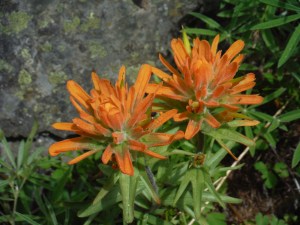
Columbine

indian paintbrush

Indian Paintbrush

We saw a lot of wildflowers along the way.

Lupine, Indian Paintbrush, Columbine, and others I can’t positively identify.

There were popcorn clouds, so the lighting in the river valley varied as we walked along.

The breeze was refreshing.

We came upon some strange things in the trail. It looked like hair. Lots and lots of hair. Or fur. Light brown fur. But no skin. What could it mean ? And then, not long after, we saw the remains of a large animal down upon the bank of the river.
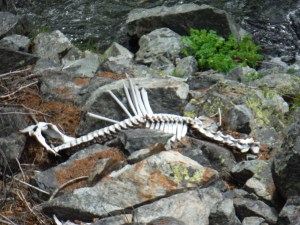
DSCF1577 Was it a horse? Or an elk? Its head was nowhere to be seen. What killed it? It might have been a cougar. Hunting season was back in the fall.

In any event, the carcass had been picked clean. Nothing left but bleached bones.

So along the trail we walked. Further down the river we glimpsed some history we’d heard about.

This region, which includes the towns of Sumpter, Bourne, Greenhorn and Granite, was a Gold Rush area in the late 1800’s and even into the early 1900’s. Even today, there are claims along some of the creeks.

The first thing we encountered was a miner’s cabin. It looked like it had just been abandoned.

DSCF1573DSCF1575There was still some structure to it. It even had a kitchen counter and rusty remains of beds.

I sure wouldn’t want to stay in it!

One has to wonder what was going through the minds of the people that built these places.

The windows definitely were not from 1890. They looked like they were 1970’s vintage.

It must have been a rat and bug infested sleeping experience for sure.

The place had an outhouse not too distant. Peering into that structure gave me the creeps, as if Hannibal Lechter from “The Silence of the Lambs” lurked somewhere down below.

DSCF1566The North Fork John Day River Trail is a beautiful experience. I did not backpack it this time – as Tully doesn’t backpack. But I will return here and do a backpack for sure. It’s got to be the best way to experience the area.

The following day we decided to drive out to Granite, Sumpter and even Bourne. This is the heart of Oregon’s Gold Rush Territory.

Leaving the campground, Granite, Oregon is only seven miles away. It has a population less than 50 and struggles to survive as a recognized town. But it does have a gas station and a store. Only not open when we were there! Interestingly it has a free Internet wireless antennae right in the midst of the 30 or so homes littering thee hill it lies on.

We drove on to Sumpter, Oregon. There are countless mining claims lining the road. We never saw an

ybody mining but there were hundreds of piles of “tailings” where people had piled rocks and sand in their efforts to find the gold.

IMG_1073

On the way we decided to explore a dot on the map called Bourne. Driving up its little side valley, one wends through countless 15-ft high piles of tailings from past mining endeavors. Almost when you think it’s time to turn back, you find Bourne. Sitting at the end of the road, in a valley, are maybe two dozen homes some of which have actual mine shafts on their property.

Not much going on there these days. We got out of there pretty quick.

After Sumpter we decided to head over to Anthony Lakes, on the other side of the Elkhorns. The road climbs to 7,450 feet before descending to the lakes. The Anthony Lakes Ski Area was long closed for the season, but I just had to drive my car up to the ski lift to see if I could catch a ride!

All in all we had a good trip up there. It’s quiet, remote and there’s quite a bit to see if you make the effort! You will not find Disneyland crowds for sure.

anthony lakes ski area

IMG_1072


Waldo Lake Oregon – Water Doesn’t Get Any Purer Than This!

26 09 2014
paddling,waldo lake,oregon,camping,kayaking oregon

Paddling over the indigo waters on a calm morning.


There are a lot of breathtaking places to paddle in Oregon. Many places with jaw dropping views. But only one, Waldo Lake Oregon, has such pure water and easy back country kayak camping – with no power boats to interfere with the serene experience!

Waldo Lake is unique in Oregon. It’s 22-miles around, making it the 2nd largest natural freshwater lake in the state. It’s natural – not a reservoir. It’s high elevation – 5,414ft. No power boats. Just human powered craft, like canoes, kayaks, or row boats, and when the wind picks up – you’ll see sailboats plying its waters. The water is so pure Waldo Lake set the world’s deepest visibility record – you can see down 157-ft! It is almost as pure as distilled water.

I organized a group of 12 friends (and Cameron, a 3-year old happy camper) who convened at Waldo this past weekend. Waldo is renowned for its primitive camp spots on the west side of the lake. But this weekend, dry conditions caused the Forest Service to issue a ban on campfires outside established campgrounds.


kayaking waldo lake,kayaking oregon,camping waldo lake,camping oregon

Katie, Christian and Cameron

We needed a fire to cook a salmon for six – because my friend Daniel Fox, who was paddling from Victoria BC to San Francisco, had stopped in Astoria, Oregon and just caught a nice Chinook salmon on the way! It had to be cooked on the fire. So, we settled on camping at North Waldo Campground. It was almost full when we showed up – only three campsites – and we needed all three! It was totally last minute. We all had packed compactly for wilderness camping. Once the car camping decision was made I pulled out everything. The barbeque, the tiki torches, the tablecloth!

north waldo campground,waldo lake,camping,hiking,oregon,kayaking,canoeing

Happy hour watching sunset!

The salmon turned out delicious and there was plenty for all. Simple – cooked in olive oil wrapped in tin foil and some dill added. On the side were veggies cooked in tin foil. Really yummy!


camping oregon,camping waldo lake,waldo lake,north waldo campground

Folks at site #32! Waldo Lake awaits.

Morning all awoke at a different pace. At campsite we were up by 7:00 and ready go to by 9:00 – but a visit over to George & Kristi’s site revealed they’d just awakened when I got there at 9:30.

My breakfast was just oats, berries and yogurt…Kristi’s was more like home! Either way breakfast in the woods is better than at home!north waldo campground,waldo lake camping For me, anyway.


View west with kayaksIt was time to set out on the lake. There is much to explore. There is “the burn” on the north side, full of coves and warmer water.On the west side there are primitive camping sites for miles. There is a trail to a lookout, up 2,000ft, where views of Central Oregon can be glimpsed. And halfway down the west side of Waldo Lake, Rhododendron Island. It’s a good spot to land your craft for a picnic!

The water of Waldo Lake is “dramatically ultra oligotrophic” meaning crazy clear with little organic matter. Chemically speaking, it’s more pure than distilled water. At an elevation of 5,414 feet, it’s so high it has no incoming streams. The water comes from snowmelt or springs. As such it’s so pure that a food chain is not supported. We saw only four seagulls and certainly no ospreys.

Words cannot really describe the clarity or color of Waldo Lake’s waters!

dramatically ultra oligotropic,waldo lake

Shadow, some 60 feet down. In deeper water the blue darkens.

Out in the middle of the lake, the water can appear purple-indigo. Look up ultramarine blue.

I took a photo of myself from under the water.Rod from underwater - Copy

We experimented with taking underwater photos from all sorts of angles.


kayaking waldo lake,paddling oregon,camping oregonOne such photo was taken by Bill Baxter from underneath his kayak! It makes the surface kind of look like blue mercury!

It was a glorious day! Our group split up. Some, led by April, set out to kayak to a trailhead and climb some 2,000 feet to an abandoned fire lookout. From there you can see the lake plus all of the Central Cascades Region of Oregon including Diamond Peak, the Three Sisters Wilderness, and Bend.

The rest of us paddled south to have a picnic at Rhododendron Island. On the wind protected side of the island it was HOT!


waldo lake,oregon, waldo lake snorkeling

Bill shows Cameron a frog!

After lunch we dared the chilly waters. Bill seemed less concerned than most and was out there with mask and camera quickly.

waldo lake water,waldo lake,oregon

You can see across as well as down


It took me forever to finally get all the way in the water. I should have just dove in!

Julie’s thermometer said it was 66 degrees. That is not terribly cold!Half Underwater

We all got together for a Mexican “bar” meal back at the campsite. It was a make-your-own burrito affair.

We set out the ingredients, then one would wrap up in aluminum foil & melt/heat over the fire!

Katie gets Cameron ready for the water

Katie gets Cameron ready for the water

It was a good reward after the hikes, paddling and picture taking!

We all agreed we will come back next year.

NOTE!! Waldo Lake is full of biting bugs/mosquitoes until mid August.

Plan your trip for late August or September. We think the best way to experience Waldo Lake is to camp outside the established campgrounds on the west side of the lake. There are plenty of gorgeous sites. But if your preference is for car camping, we recommend making a reservation – we managed to get the last three sites! Waldo Lake is unusual in that it gets more busy after Labor Day – and that’s because everybody’s avoiding the mosquitoes.


Snorkeling The Great Blue Hole – Lighthouse Reef Belize!

19 05 2014
snorkeling the great blue hole belize

A lush ecosystem just under the surface!

On my vacation with Island Expeditions to Half Moon Caye Belize, my favorite snorkeling spot by far was The Great Blue Hole. It is featured in Lonely Planet Publication’s recent book, “The World’s Great Wonders.”

Made famous by Jacques Cousteau, The Great Blue Hole lies in Lighthouse Reef, 55 miles off the Belize mainland. He said it’s one of his top 10 dive sites in the world. Physically it’s 1,000 feet wide and 400 feet deep – whereas the rest of Lighthouse Reef is 22 miles long and 8 – 10 feet deep. The outer ring of the blue hole is an amazing forest of coral just below the surface. Click here for a wonderful time snorkeling amongst the corals!

blue tang swim in the great blue hole belize

A school of blue tang

No diving gear is required to explore this lush paradise of fish and coral. Divers can descend to explore the many caverns below. Click here for blue tang synchronized swimming!

The Blue Hole wasn’t always a hole. Turning the pages of time way back to the Ice Age, Lighthouse Reef was an island several hundred feet above sea level. At that time, the Blue Hole was above sea level and it was a cave. It was a great cathedral with side caverns filled with growing stalactites and stalagmites.

stoplight parrotfish at great blue hole belize

A female Stoplight Parrotfish pauses at a “cleaning station”

Then the earth warmed, the Ice Age ended, and as glaciers melted, the sea level rose. The island was submerged under water and became Lighthouse Reef. The roof of the cave collapsed, and sea water entered, creating what we see today.

Our Island Expedition guides shuttled us out to the Blue Hole as it’s pretty far from Half Moon Caye.

shuttle to the blue hole belizeOnce there, we slip on our flippers, don the dive masks, and somersault into another world. Once I adjust my mask and focus, a wave of excitement washes over me! This spectacularly preserved ecosystem is but a few feet below the surface, and I can swim right through it.

This is the healthy reef system I was longing for – everything I wanted to see. It is the ultimate snorkeling experience. Snorkeling the ring surrounding the Great Blue Hole, you witness healthy brain coral, staghorn coral, sea fans, barrel sponges, great barracuda, reef sharks, midnight parrotfish, grunts, blue tang, hawksbill turtles, angelfish, fairy basslets, eagle rays, and much much more!

Wrasse living near a sea fan blue hole belize

Wrasse and a sea fan

We spent three hours at The Great Blue Hole, but I could have explored a full day there. I knew that down below snorkeling level, there are great predators. Great Hammerhead Sharks, Bull Sharks, Lemon Sharks, and more spend time at depths in the Blue Hole. But the examples of these species are juveniles – they come to this spot for protection from predation by the full grown members of their own kind out on the ocean side of the reef.

brain coral at the blue hole in belize

Brain Coral, on the right

For this snorkeling trip, I purchased an underwater camera capable of video. It is the Fujifilm XP60. Like most point and shoot cameras these days, it only has a video screen. I am far sighted. So it was difficult to know, looking at the blurry screen in front of me, if I was definitely in focus, or even had the subject correctly framed! Add to that my body bouncing on the surface, or down under, holding my breath. Further, fish don’t just pose for pictures. They are always moving. I learned to listen to the beeping sound for focus.

Another factor I learned about is that underwater, the further you are away from your subject, the more blue-tinged the photo shall be. The closer I took the photo, the more the real colors showed up. Andy, one of our group, knew how to free dive. He could go down 20 feet and just hang out down there and got the most incredible close up photos of fish.

colorful sea fans at the great blue holeAnother factor in getting good photos of fish is their behavior. Fish tend to retreat into their hideouts when you approach. But if you linger a bit, they come back out. Lingering underwater with lungs full of air is pretty hard because your body tries to float up. Andy’s trick is to hold onto something like a rock.

He gave me some tips on staying down longer. Instead of using your air/energy do go down by kicking hard with your flippers, get completely vertical with your head down and legs straight above and let the weight push you down. When you are feeling pressure, pinch your nose and blow out to equalize the pressure. Now that you are down, and equalized, you have more time to stay down…and you can grab a rock to keep you from floating up too fast.

I tried this and many times, I got so comfortable down there I lost track of how far I had to go up to catch a breath! It was fun, and a new thing for me.

The Blue Hole was certainly well worth visiting! But it’s far offshore. So I recommend spending a few nights on one of the islands out on the reef. You can always book with Island Expeditions! They’ll take good care of you.