A highlight of our Egyptian experience was spending 3 days on a riverboat! It’s a laid-back, comfortable way to see some of the most important archeological sites, which are all in the river valley. Our boat took us from Aswan to Edfu and then Luxor.
The rooms were spacious! Generous beds, desks, bathroom, and deck all ours. Housekeeping did a great job keeping it clean.
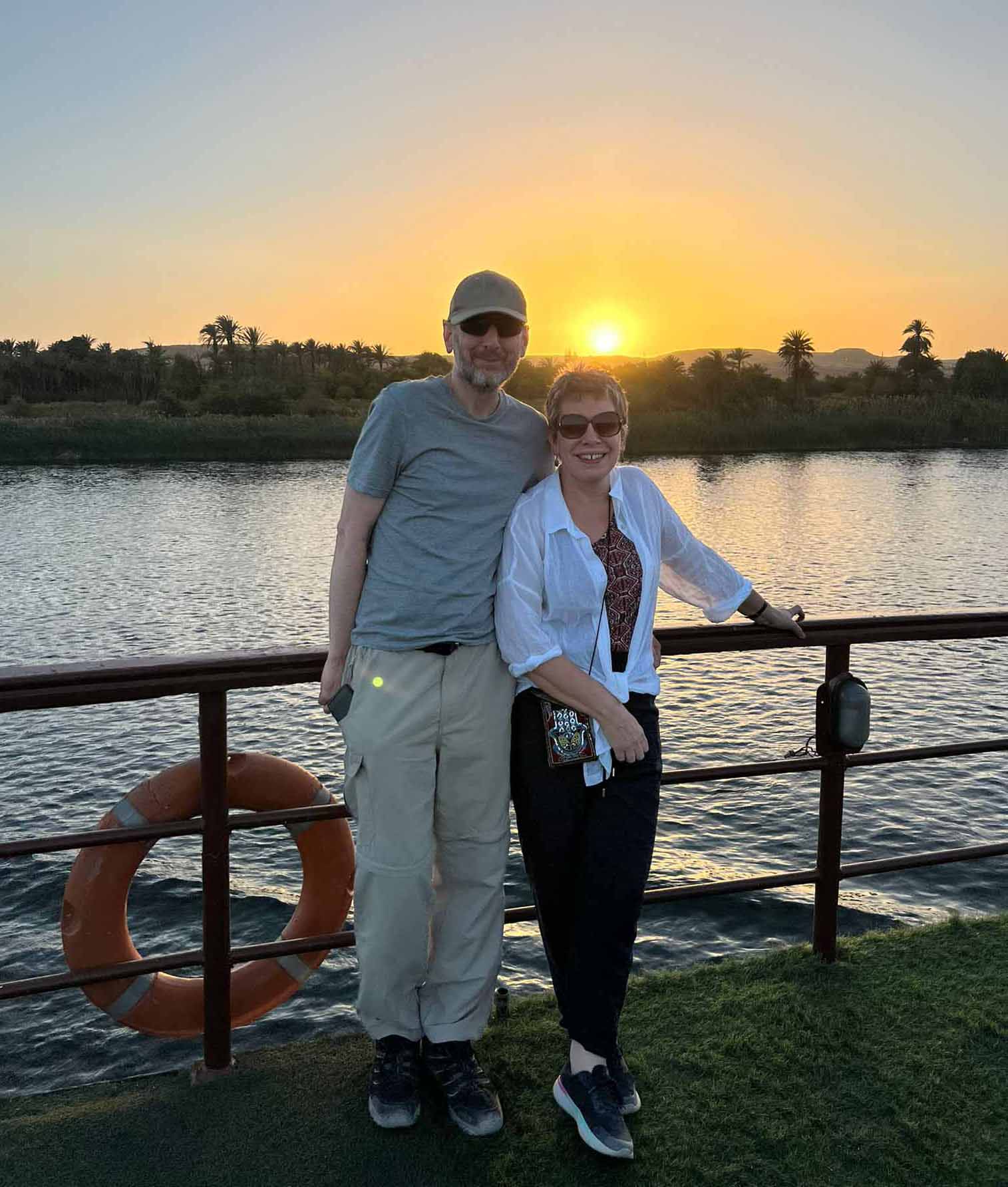
Desk, bureau, TVComfortable bedsThe river glides by – especially alluring at dusk
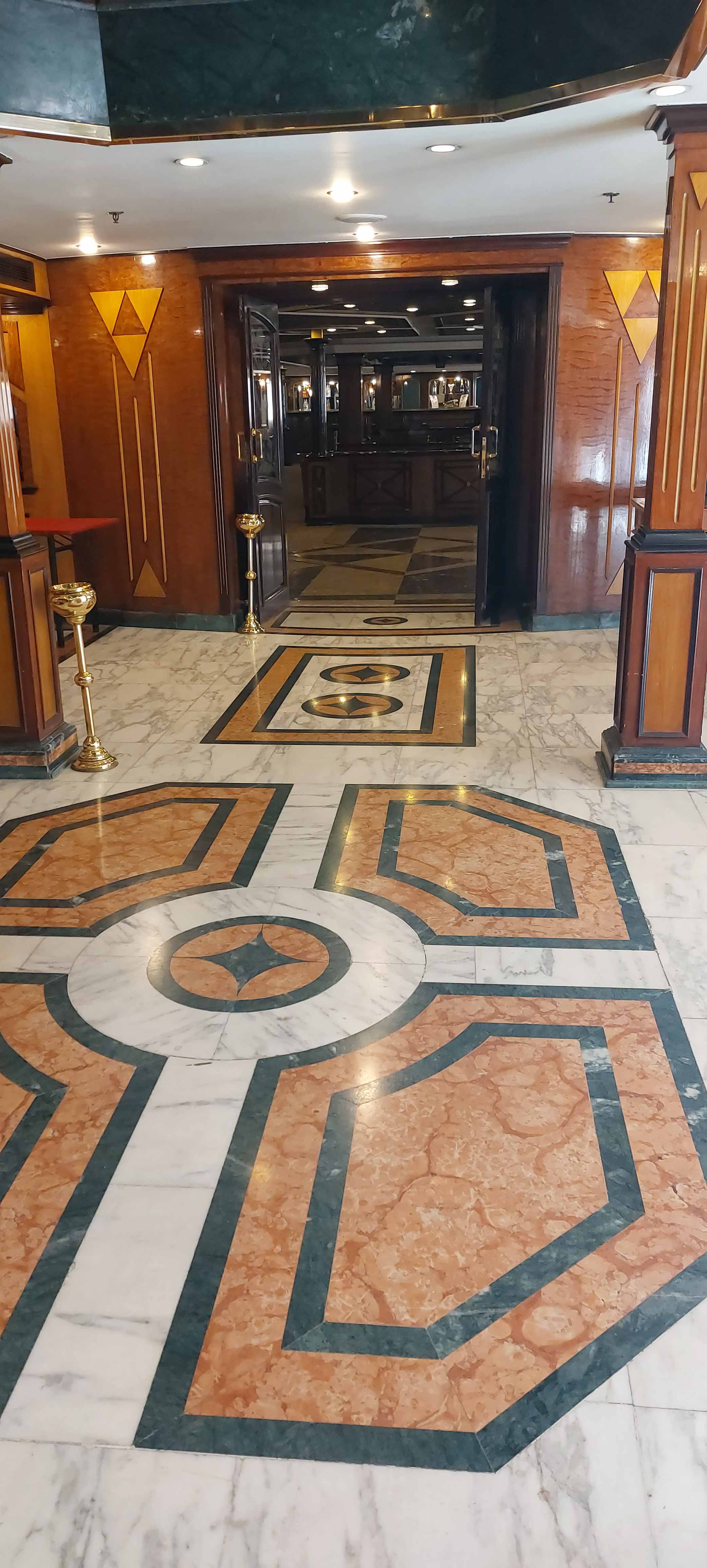
The ship had four decks, including the rooftop deck with bar and swimming pool. On the river level, there was another bar and the restaurant. All our on board meals were included. The food was good! The lobby area was grand. Polished granite everywhere, spiral staircase, and a stained glass overhead light.
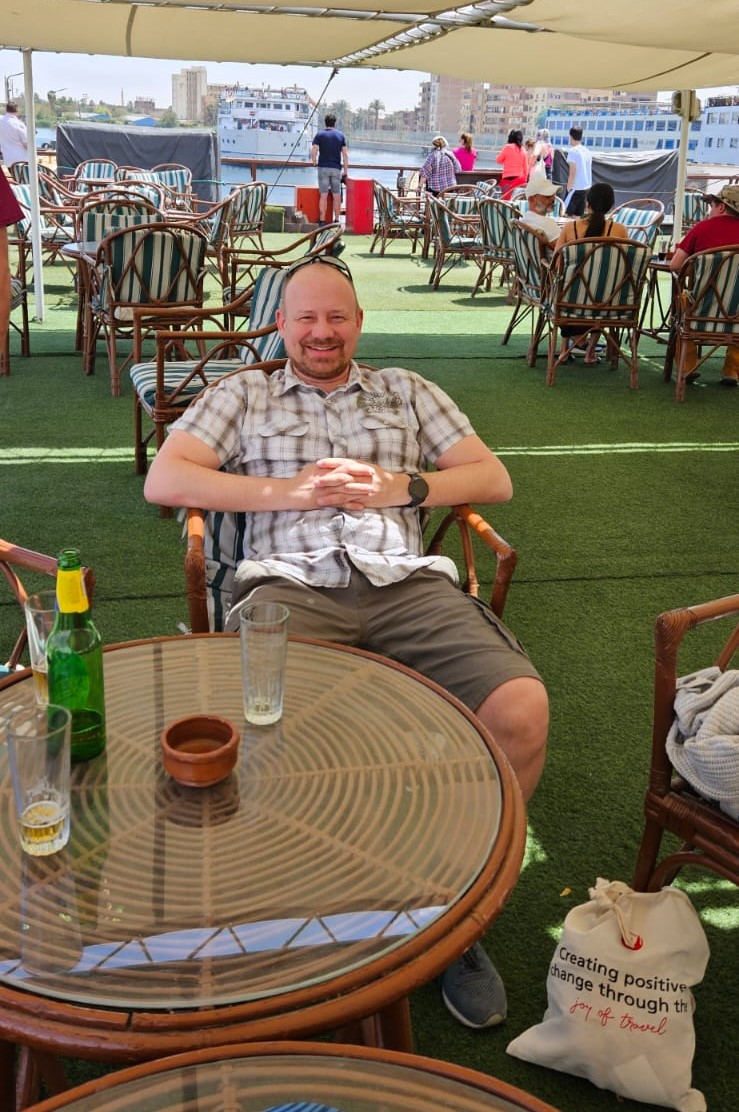
For me, the best place to be was up on the covered roof deck. There, we all found ourselves lounging at the cocktail tables, enjoying the cool Nile breezes, watching life unfold on shore.
The “ship” would dock at various points of interest along the river. In Edfu, we spent the night at the dock, and then departed very early in the morning to be the first at the ruins when they opened. At Kom Ombo, we stopped after dark for a floodlit tour of its temple. For Luxor, we arrived in the morning and checked in at a hotel before taking a minibus to the Valley of the Kings.
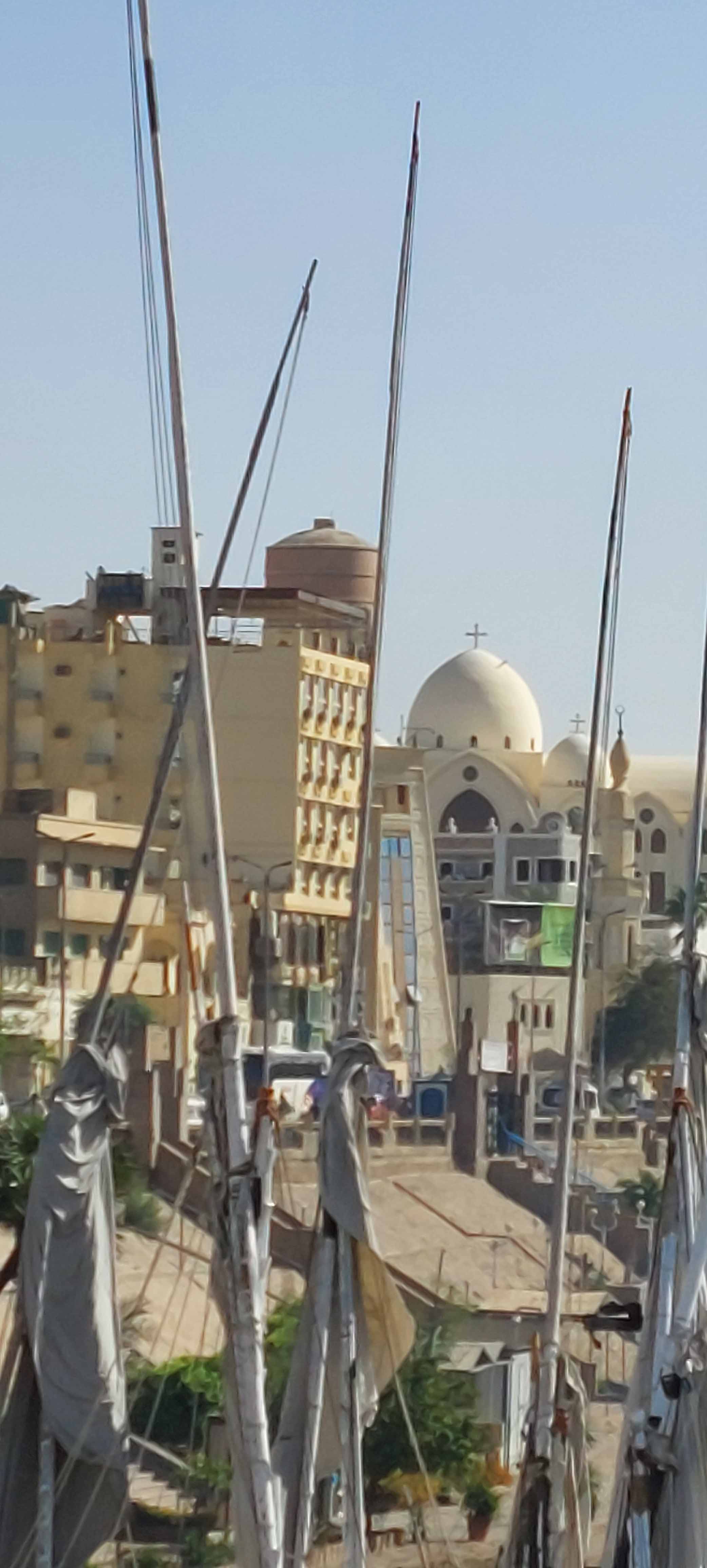
Up on deck, the views were ever changing. Sometimes looking down upon the neighboring boat, which might have a sphinx on its bow. Or, looking past the docks to a Coptic Christian cathedral.
Many tours of Egypt include some time on these “river ships.” They’re definitely a highlight!
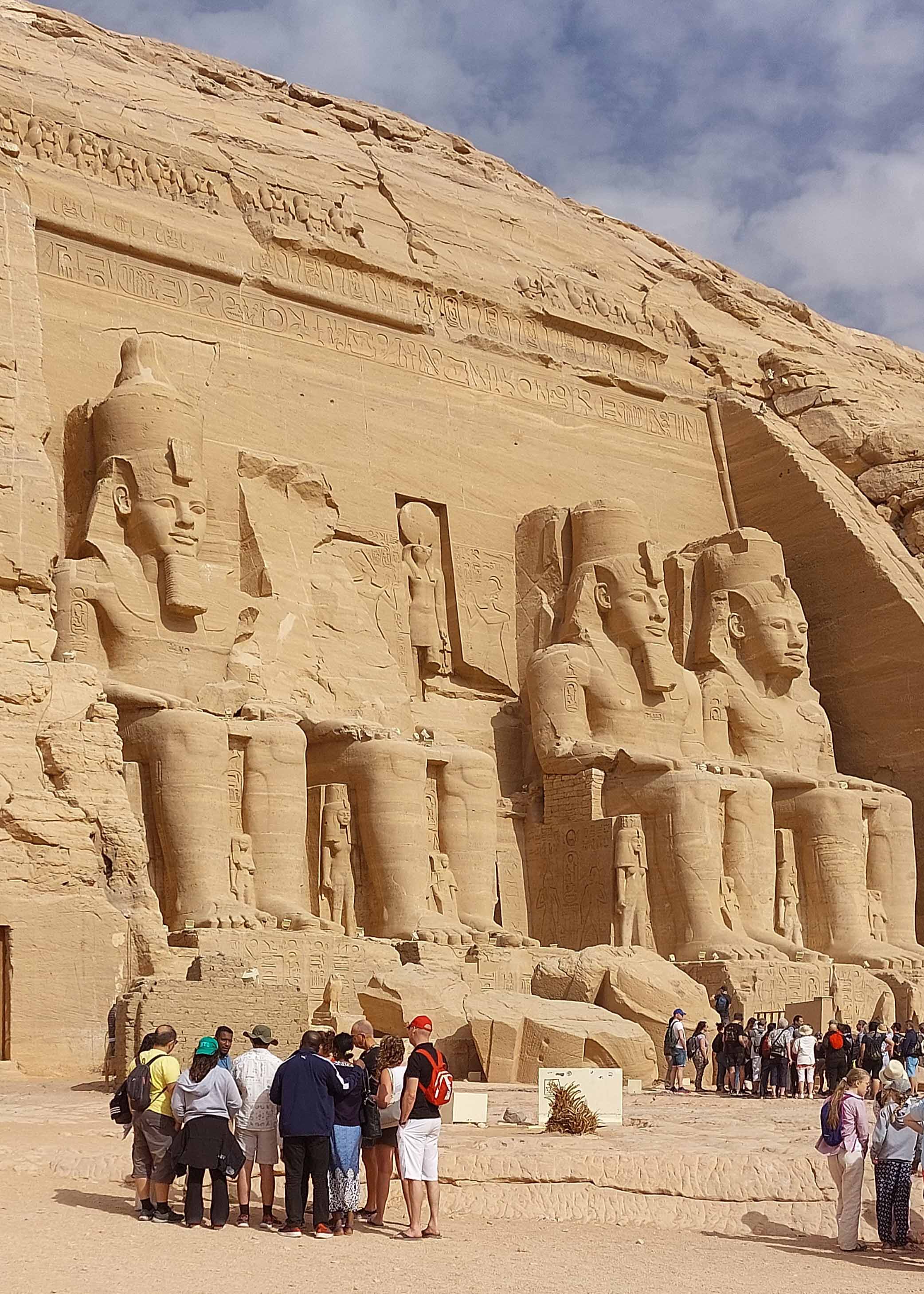
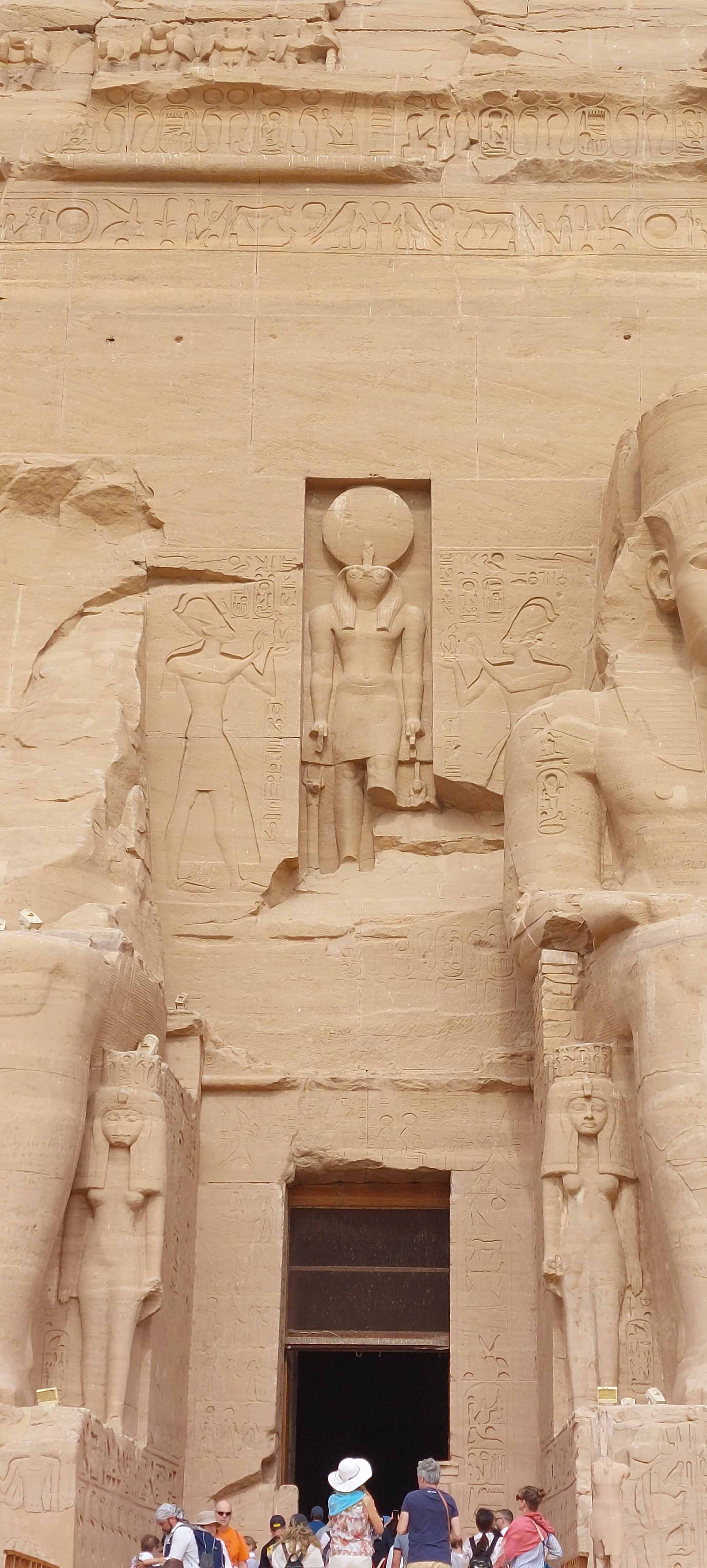
Abu Simbel stands tall as one of the ancient world’s most amazing achievements. Carved into a mountain, for thousands of years it has stood as an emphatic notification to all sailing north on the Nile that this is the border of Egypt, a powerful kingdom. And, during the 66-year rule of Ramses II, 4 giant statues of him informed all comers that this was his country.
It takes a 3+ hours drive south to reach the site from Aswan. It’s close to the border with Sudan. We departed from our hotel at 4:30 a.m., with boxed breakfasts from the hotel. The drive is very flat across Sahara scab land, dusty and rocky – not full of dunes. Little did we know that whilst we were away at Abu Simbel, a dust storm would overwhelm Aswan! But it was gone when we returned. The site sits next to Lake Nasser.
Ramses II cartouche
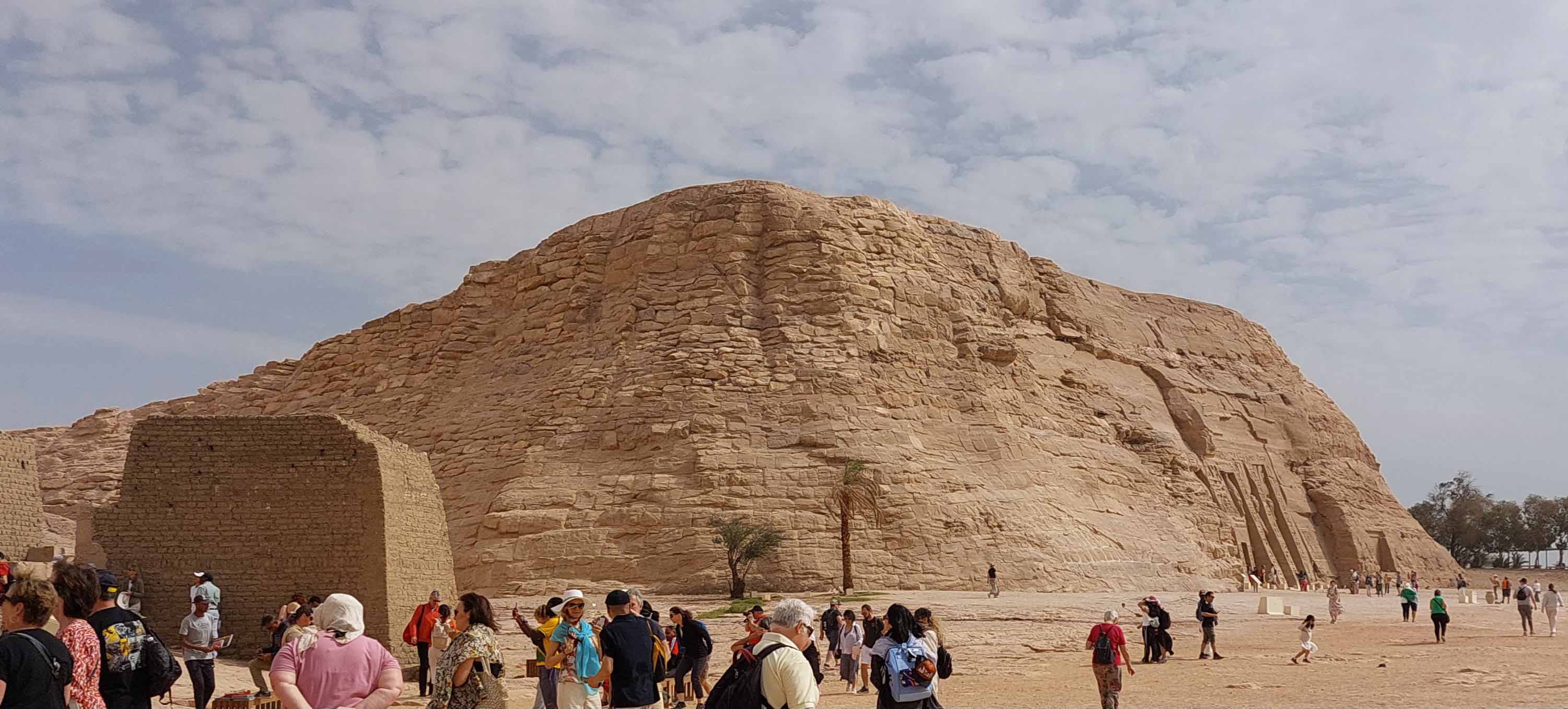
Before I delve into the fascinating ruins themselves, I think it’s important to tell you about the amazing modern-day achievements at Abu Simbel! In the mid 1960’s, impending completion of the Aswan High Dam threatened submersion of many important ruins including Abu Simbel. This site was considered so important to world history that UNESCO orchestrated a campaign to move the entire site away from the rising waters.
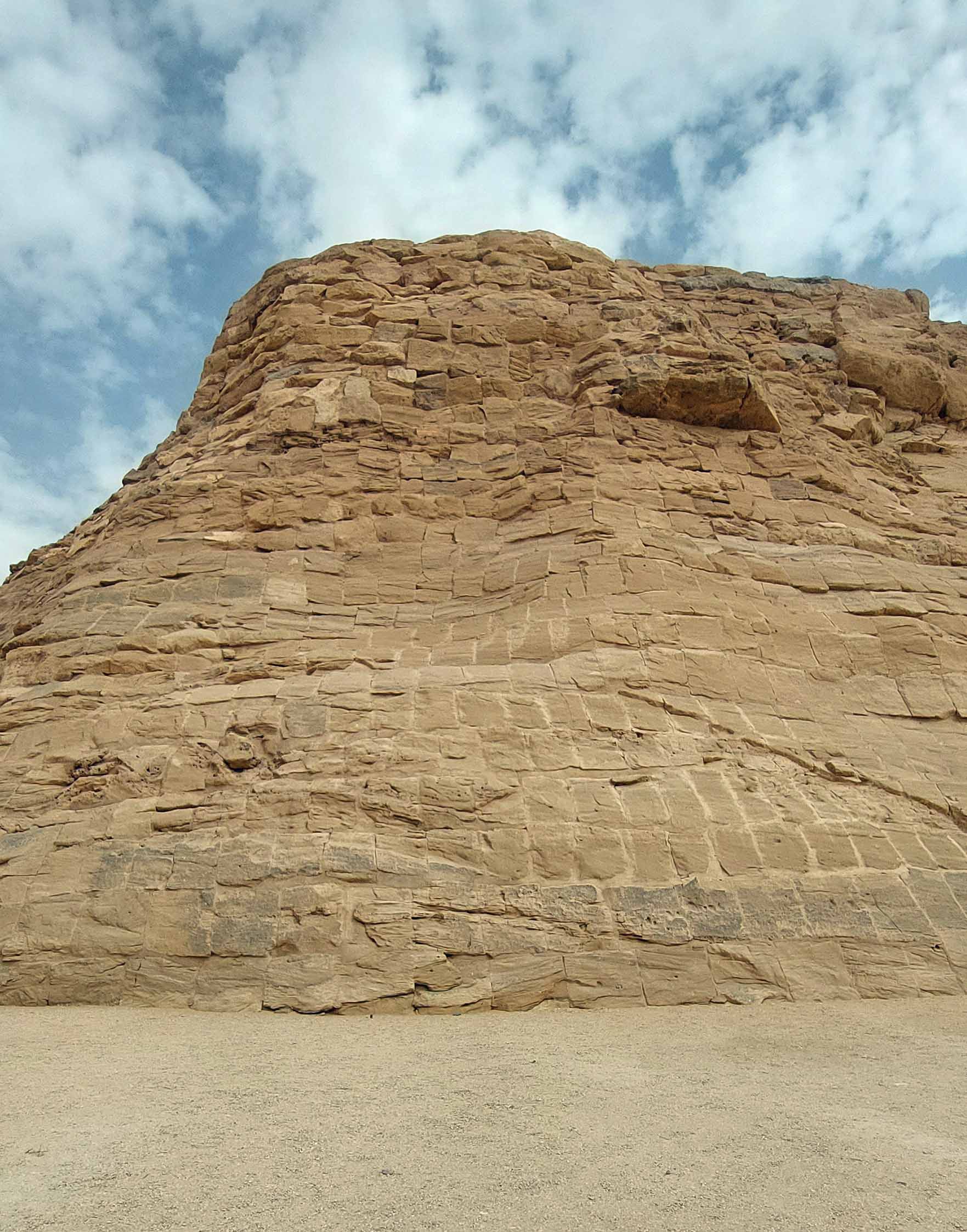
Re-assembled block by block
With such a gargantuan task, a multi-country effort spared no expense to move this monument. The entire mountain, with Abu Simbel outside and inside, was carefully mapped out, precision cut, with the location of each piece recorded, moved, and then re-assembled on higher ground. Today, visitors can witness this incredible achievement up close!
Abu Simbel overwhelms in how it comes into view. Visitors arrive behind the mountain. You can’t see the face. One must walk around the mountain, because it’s on the opposite side. So I got an up close view of the reconstruction.
Then, you view the enormous lake, and then, coming around, these 66-foot high seated likenesses of Ramses II carved into the mountain overwhelm the senses!
And that is only the first image one sees. There are lovely carvings of his lovely wife Nefertari. Her tomb, in the Valley of the Kings, is probably the most magnificent of all.
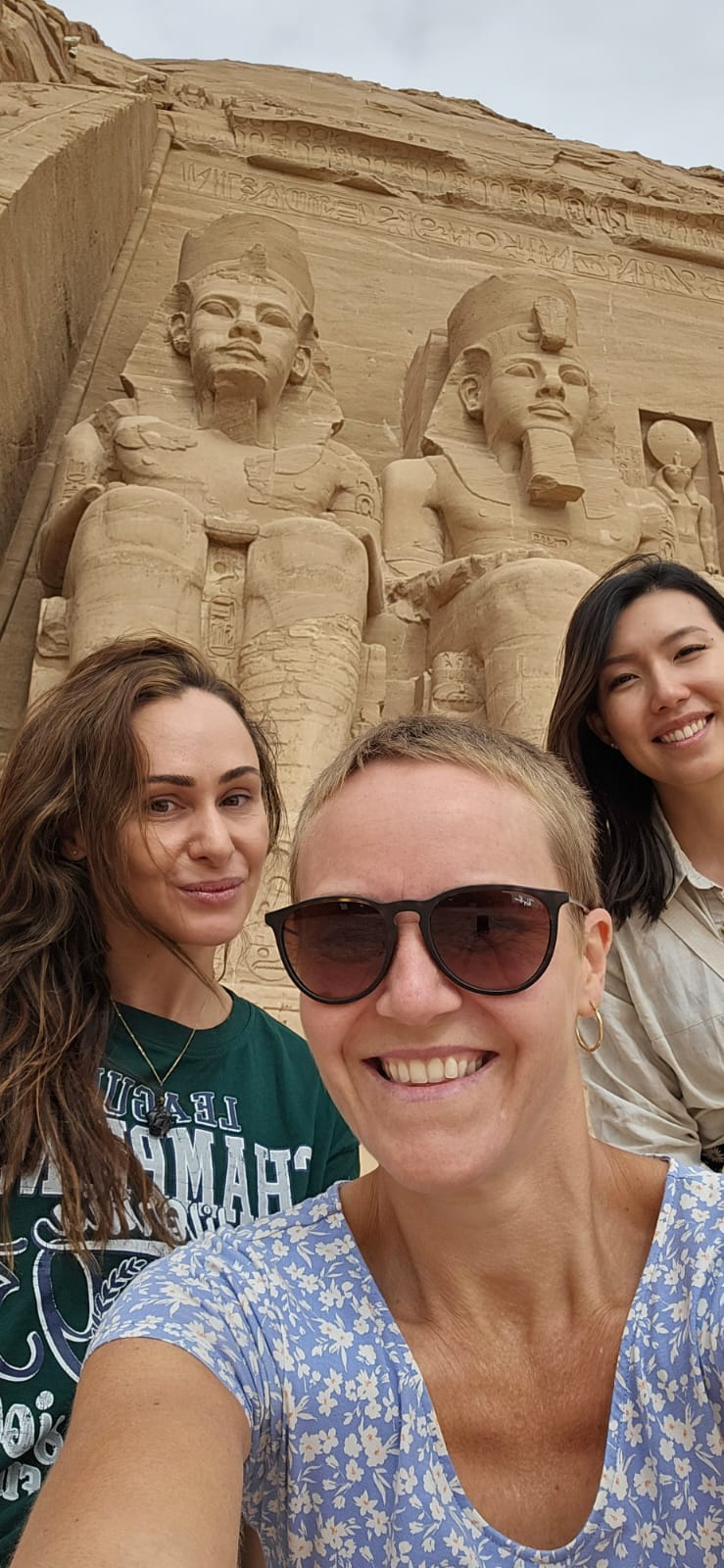
The site is intended as a warning to those coming to Egypt that they are entering a superpower capable of laying waste to armies of enemies. We took images of ourselves at the entrance.
The walkway just preceding the entry door is lined with further reminders of who is dominant here. For 40+ feet prior to entry, on either side, one passes scenes of those Egypt had conquered. Hittites on one side, and Nubians on the other. From what I could see, these Nubians did not look like Egyptians typically depicted on other ruins. And they are tied up and tied together.
Inside, one is immediately in the presence of more of Ramses II. Giant statues line the first hallway.
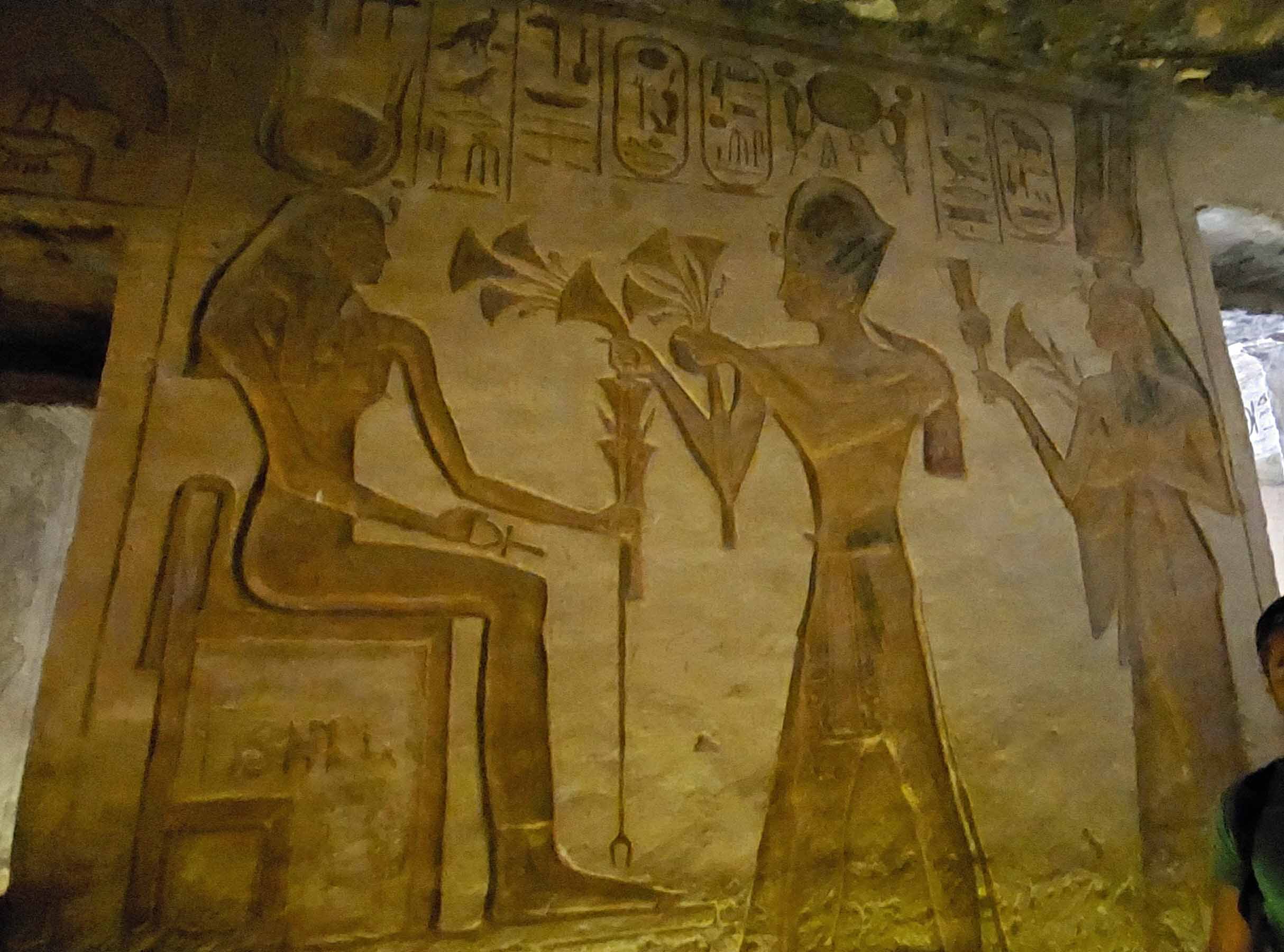
Every single square inch of wall space inside is covered with images. Scenes of gods, goddesses and the pharaoh.
Throughout Egypt, these scenes of the many deities are common, and they’re often associated with after-life rituals. Ancient Egyptians spent their entire lives believing that this life was nothing more than a temporary state on the way to the next world. And to make that transition, they needed to adhere to the lifestyle dictated by Maat. Maat was both a goddess, and a set of principles to live by. This seemed to pervade ancient Egyptian art, which for the most part doesn’t stray out of the bounds of standards set by the priests. However, there are a few times I glimpsed examples of illustrations by artists actually showing emotion, such as terror. Or action – and that was the case at Abu Simbel.
The wall art at Abu Simbel contains more proof of Ancient Egyptian super powers. Not just of the country but of the pharaoh himself. There, I could see the Pharaoh in action slaying a terrorized enemy soldier. Or taking down many enemies with his bow and arrow whilst riding a chariot.
Ramses II stomping on his enemies and slaying an enemy soldier!
Taking down several simultaneously. No mercy!
Above, leading a brigade of chariots. Abu Simbel is a must see in Egypt!
Cruising the Nile was an unexpected delight. I was so focused on the ancient history I’d completely overlooked how pleasant the river can be. It offers pleasant air, cooled by its waters. Life slows down.
On this visit to Egypt, we experienced floating on the Nile three ways. We rode a pleasant open air launch in the early evening. We sailed on a Felucca in the afternoon. And, we spent three days on a Nile cruise ship.
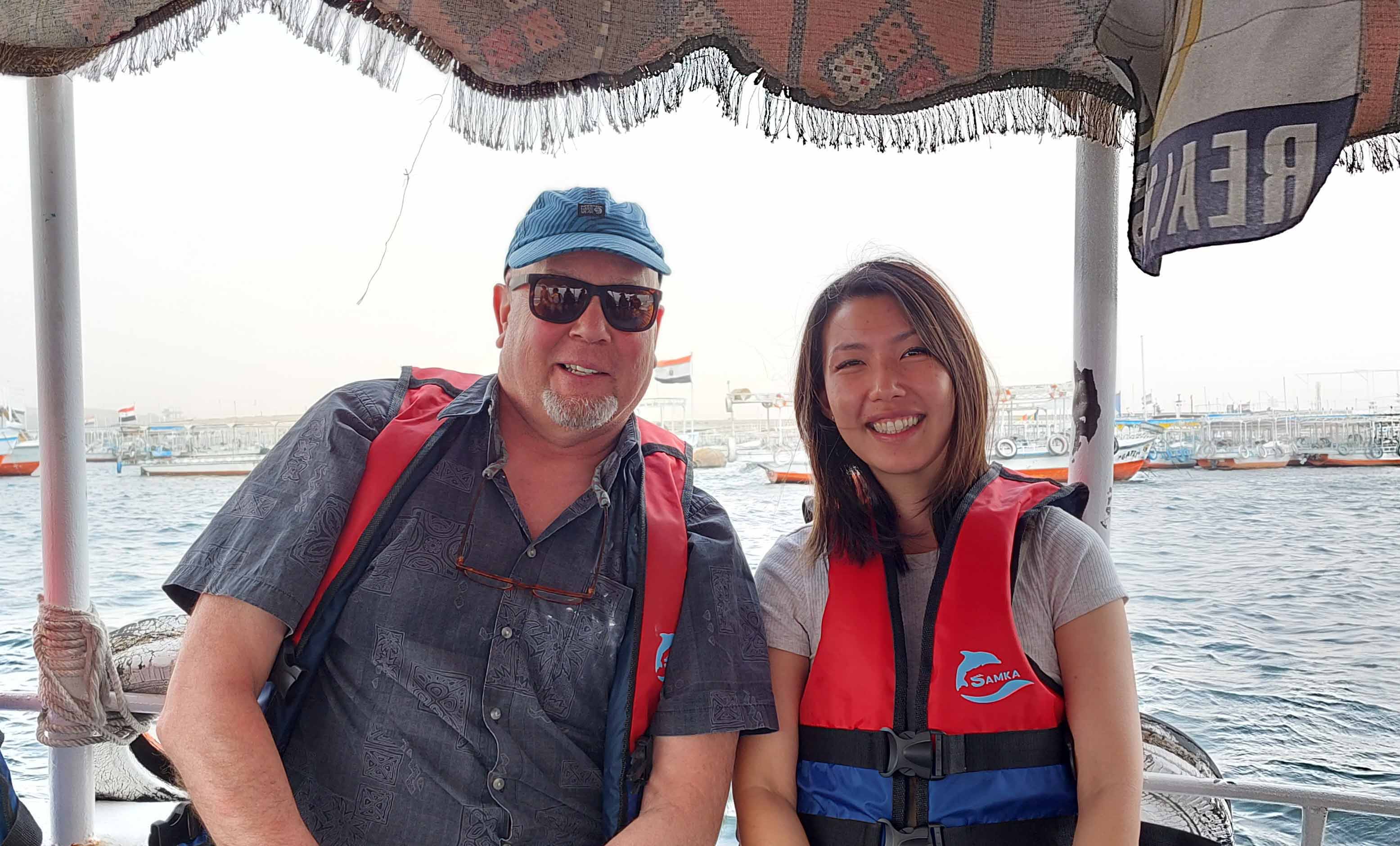
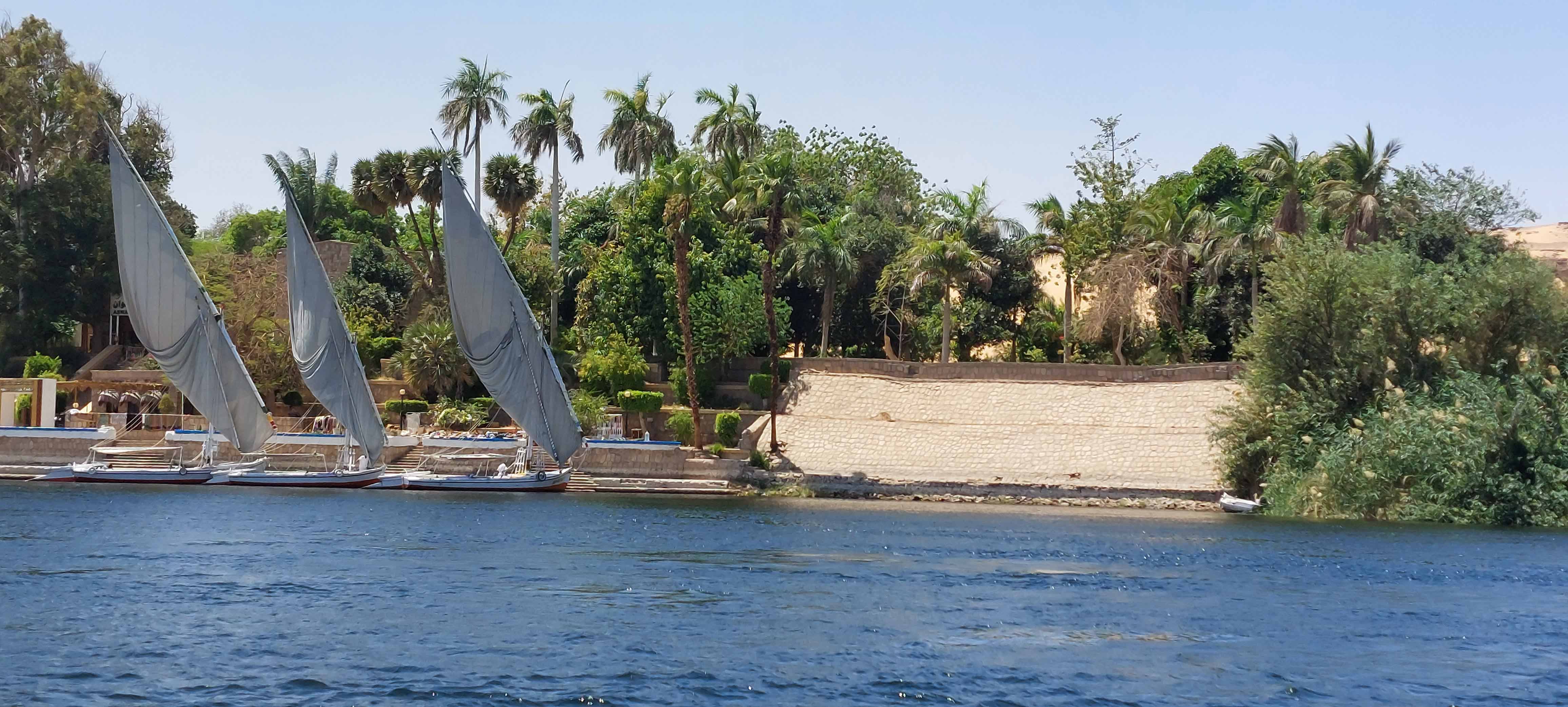
Our first experiences were in Aswan. After Philae, we boarded a motor launch to cross the river, where we were to dine with a Nubian family. But we didn’t expect a thirty minute boat ride. It was warm, with cooling breezes, and the river was lazily moving flat water. Felucca dhows plied the waters back and forth, never hurried. Palm trees lined the shores.
We passed along from the east bank to the west. On the west side, Sahara sands come right up to the river. We also ran through some resident islands. Kids being kids! Some were trying to figure out how to make a sailboat with whatever they could find. One thing I learned about Egypt, is that Ancient Egyptian relics are everywhere. Here, in the river, there are hieroglyphs for navigation marks on the rocks!
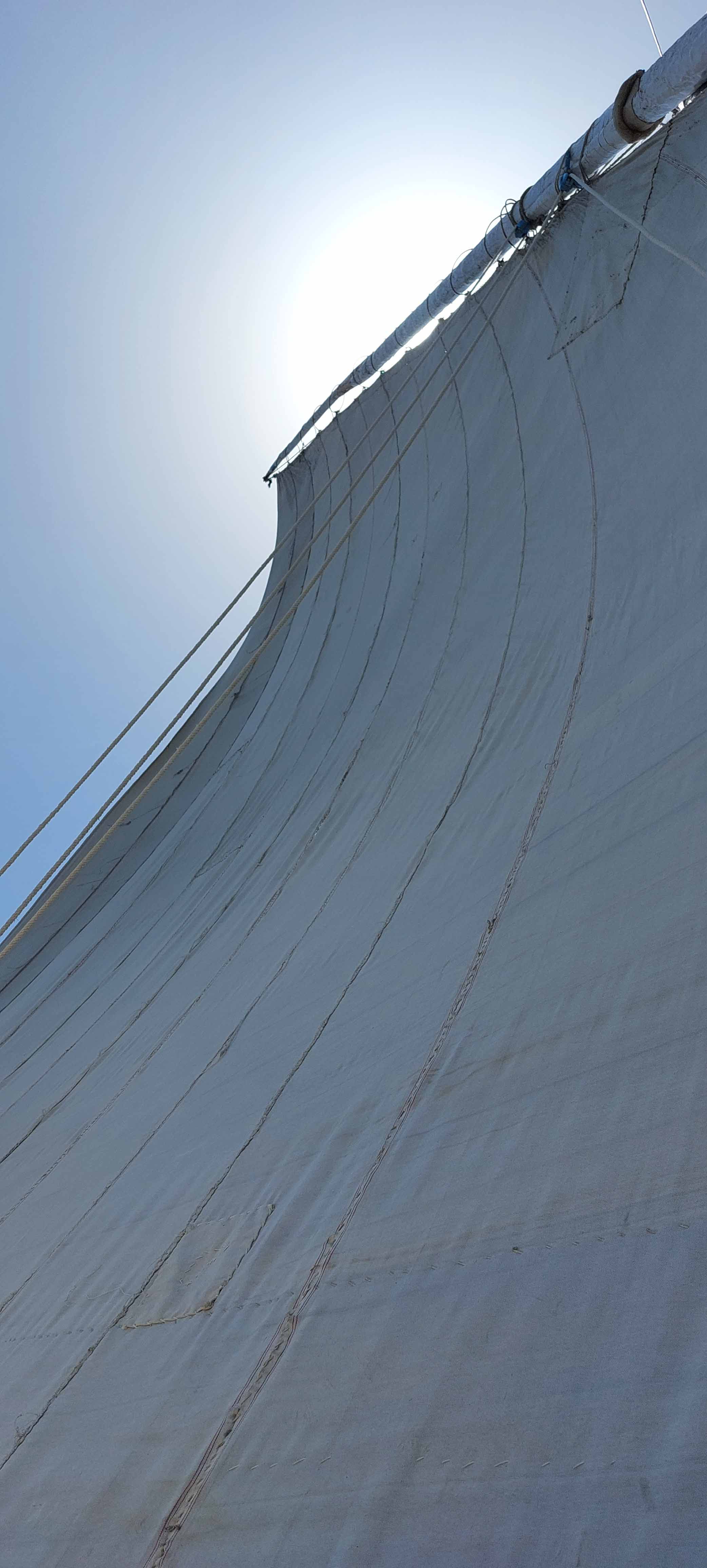
The following afternoon we embarked on a pleasant sail aboard a felucca. These are shallow drafted wooden dhows and can easily carry 15 passengers. There is something about sailing. It was super relaxing!
When we sailed in between islands, the overall depth could be 15 feet, but there were 12 foot rocks – which we passed over and the captain pulled up the centerboard. He knew exactly where they were. We didn’t hit anything.
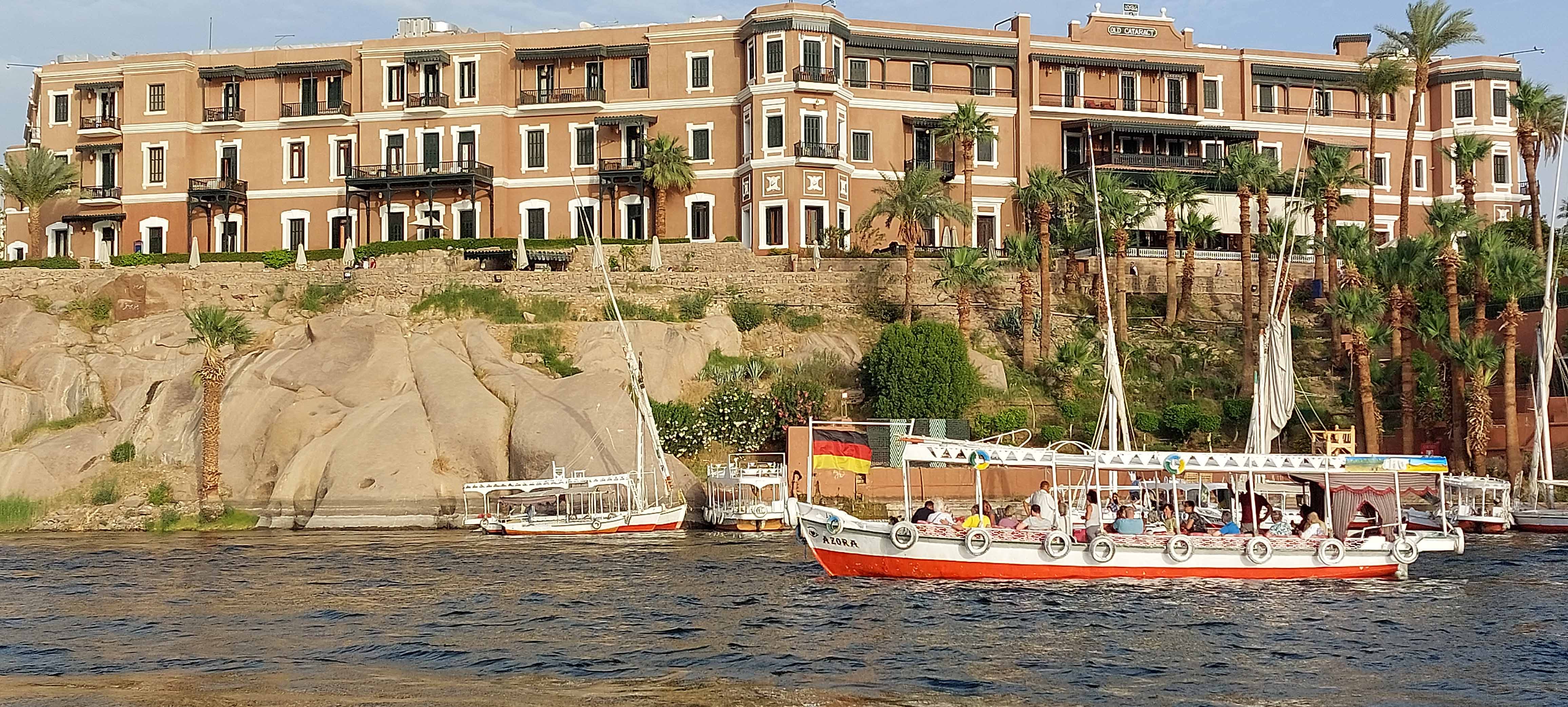
This is a stretch of river featured in the film Death on the Nile. There were scenes from the Old Cataract Hotel, and we passed right by. Today, you can have a nice sunset drink on the bar overlooking the river! Al and Allie did just that.
In one sequence we seemed to be in a little felucca sailboat race, so I had to do a little narrative.
As I hope you will agree, sailing around Aswan is a must-do experience! In future posts I’ll show our Nile Cruise Ship. It is definitely a great way to see the river.
Our overnight train from Cairo to Aswan arrived about 9 a.m. I’ve experienced various 3rd World overnight trains. In Vietnam, Thailand, and now Egypt. All three had the end-of-the-car restroom and toilet, which, when one opens the lid, the wind rushes up and the railroad ties fly by below. I’d rank Thailand 1st, Egypt a distant 2nd, and Vietnam 3rd. This one was a 1950’s Soviet bloc built version. The cabin had double windows, which partially filled in with Sahara sand. It was stop and go all night. We weren’t completely rested, but we were ready to tuck into our riverside hotel in Aswan and head out to visit Philae Temple.
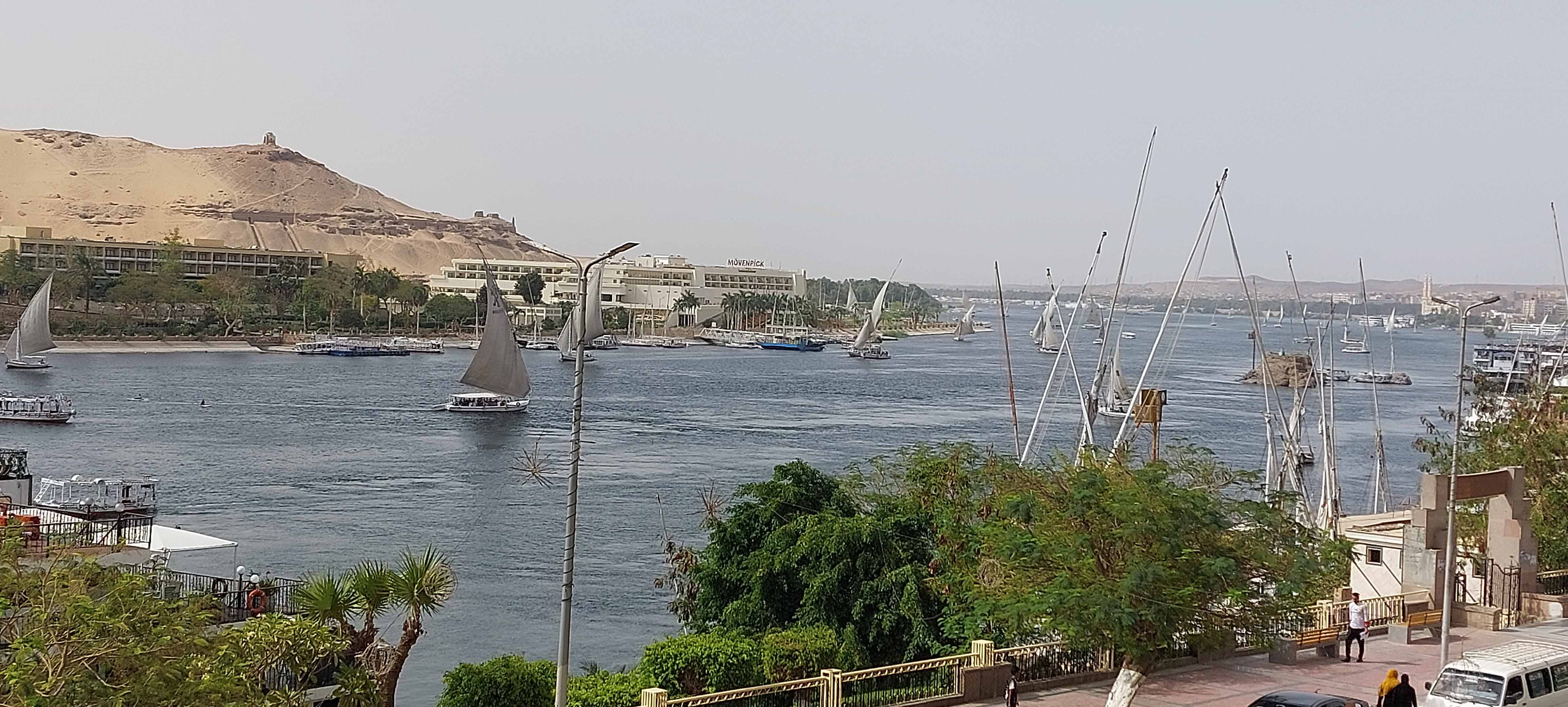
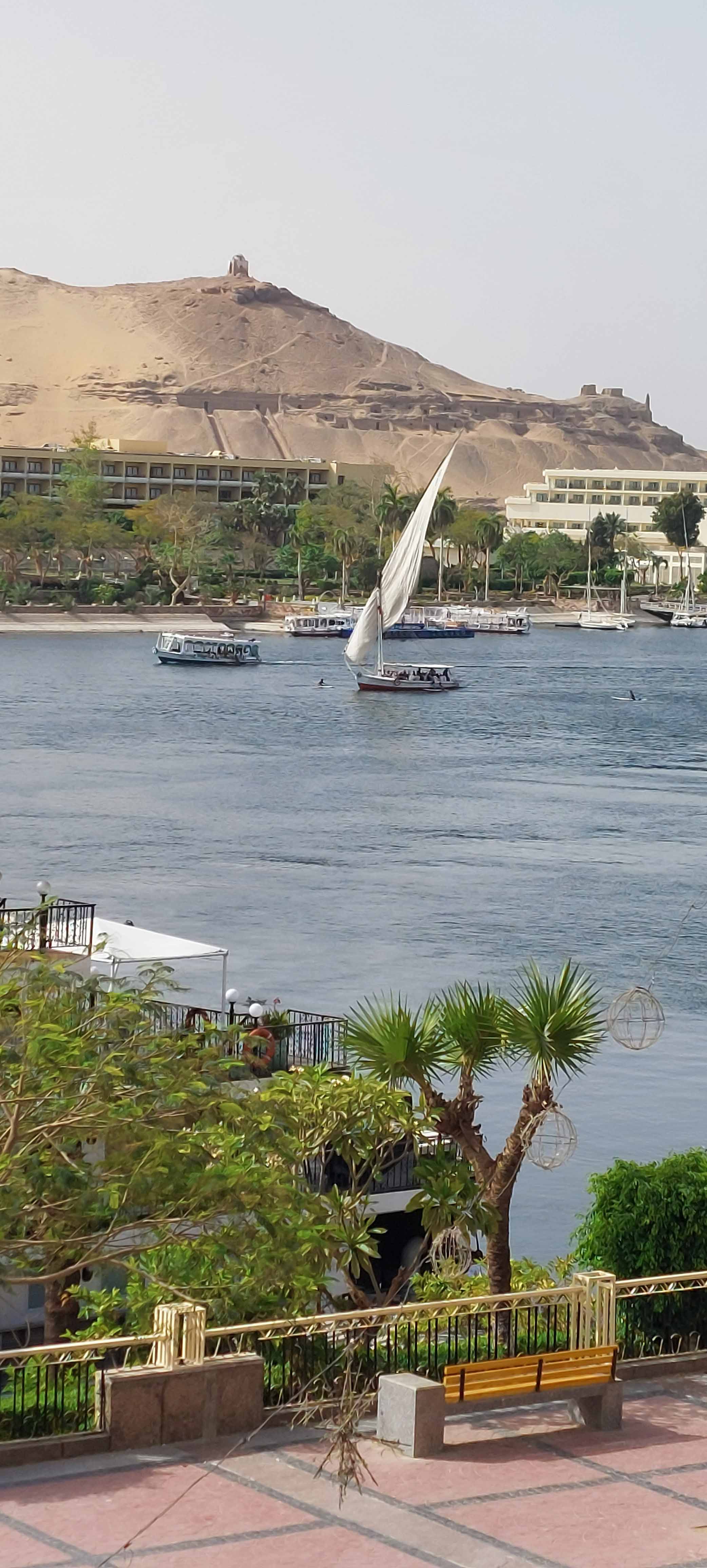
We had maybe 90 minutes to settle into our rooms. Once showered, I took time to sit out on the balcony. Watching the scene of the Nile, lined with palms, fellucca dhows lazily sailing, a dry, gentle breeze, and unhurried traffic, I knew Aswan agreed with me. It is a scene from Hollywood-and yes, it really is a scene from Hollywood! 1978’s Death on the Nile was filmed right here!
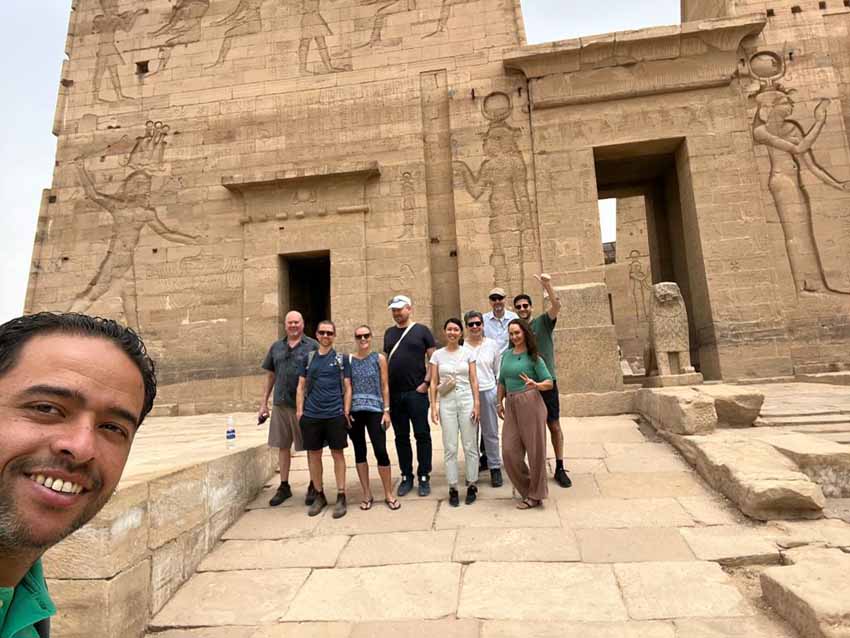
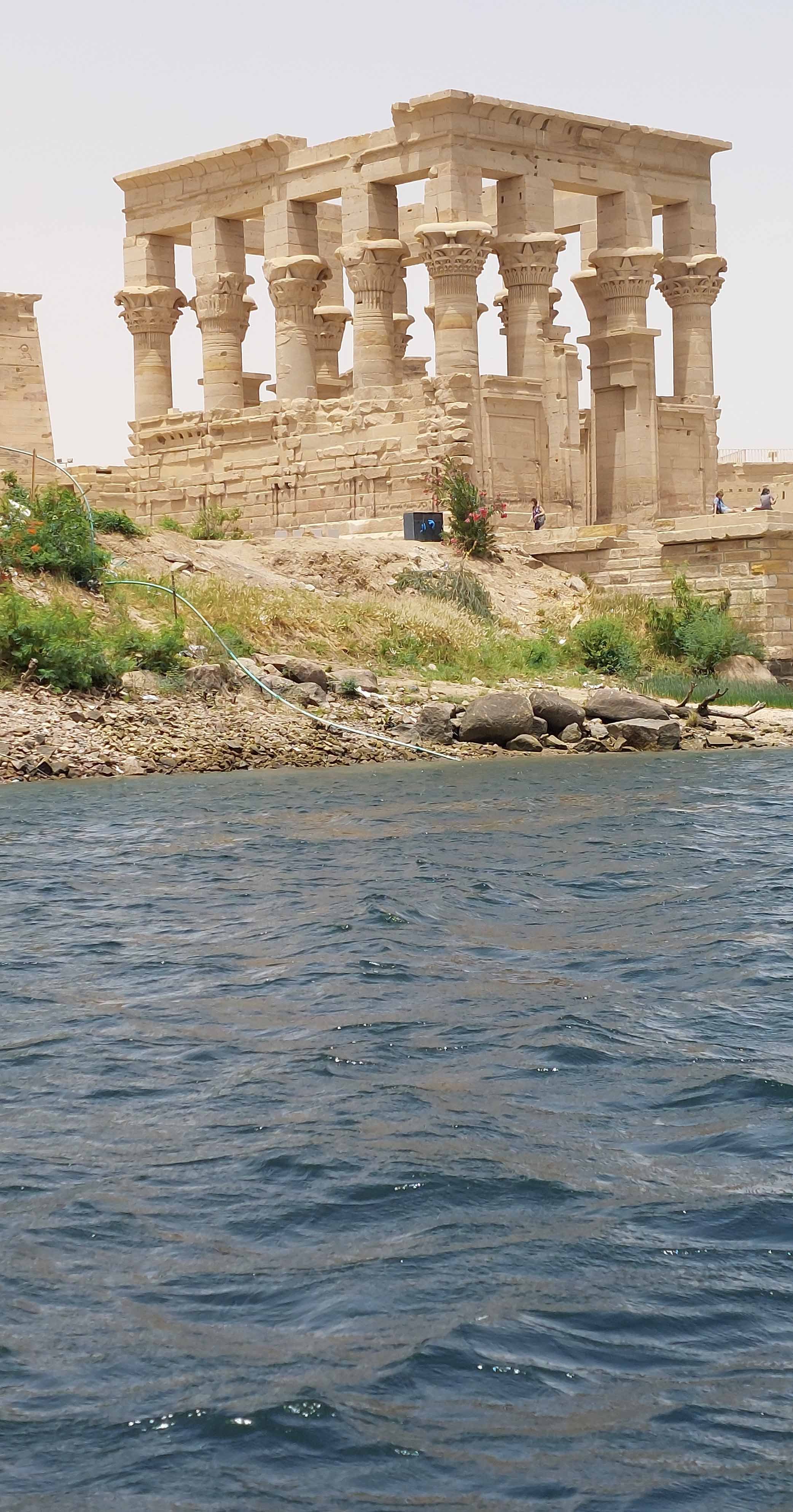
Today’s highlight was exploring the Isis Temple at Philae. It must be reached by boat. Once underway I was simply blown away at the sight of a beautiful, huge temple on the water with palm trees all around!
Philae is a reconstructed temple. It was originally on a lower island, which was submerged when they built the Aswan Dam. It was so important that UNESCO disassembled block by block and then reassembled it on this current higher elevation island. It is dedicated to Isis, one of the most important Ancient Egyptian deities. She was both brother and wife of Osiris, and mother of Horus. She was a goddess of magic, healing, and motherhood. It was believed she could bring the dead to life, as she did in the epic tale of Set-Osiris-Horus. She was one of the most popular goddesses during the Roman era. Archeologists date the earliest construction of the temple around 360 BCE. It is of the Greco-Roman period.
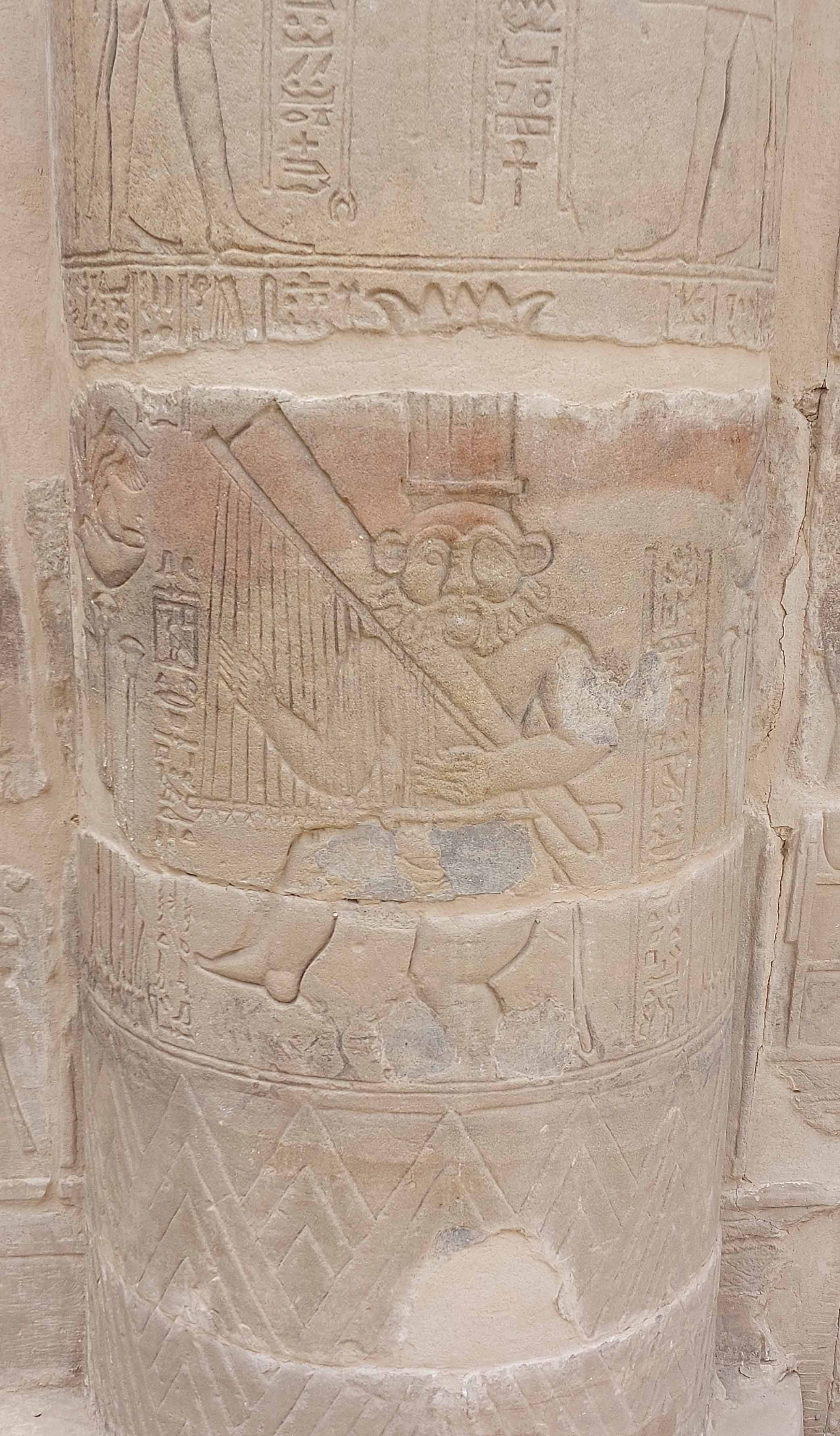
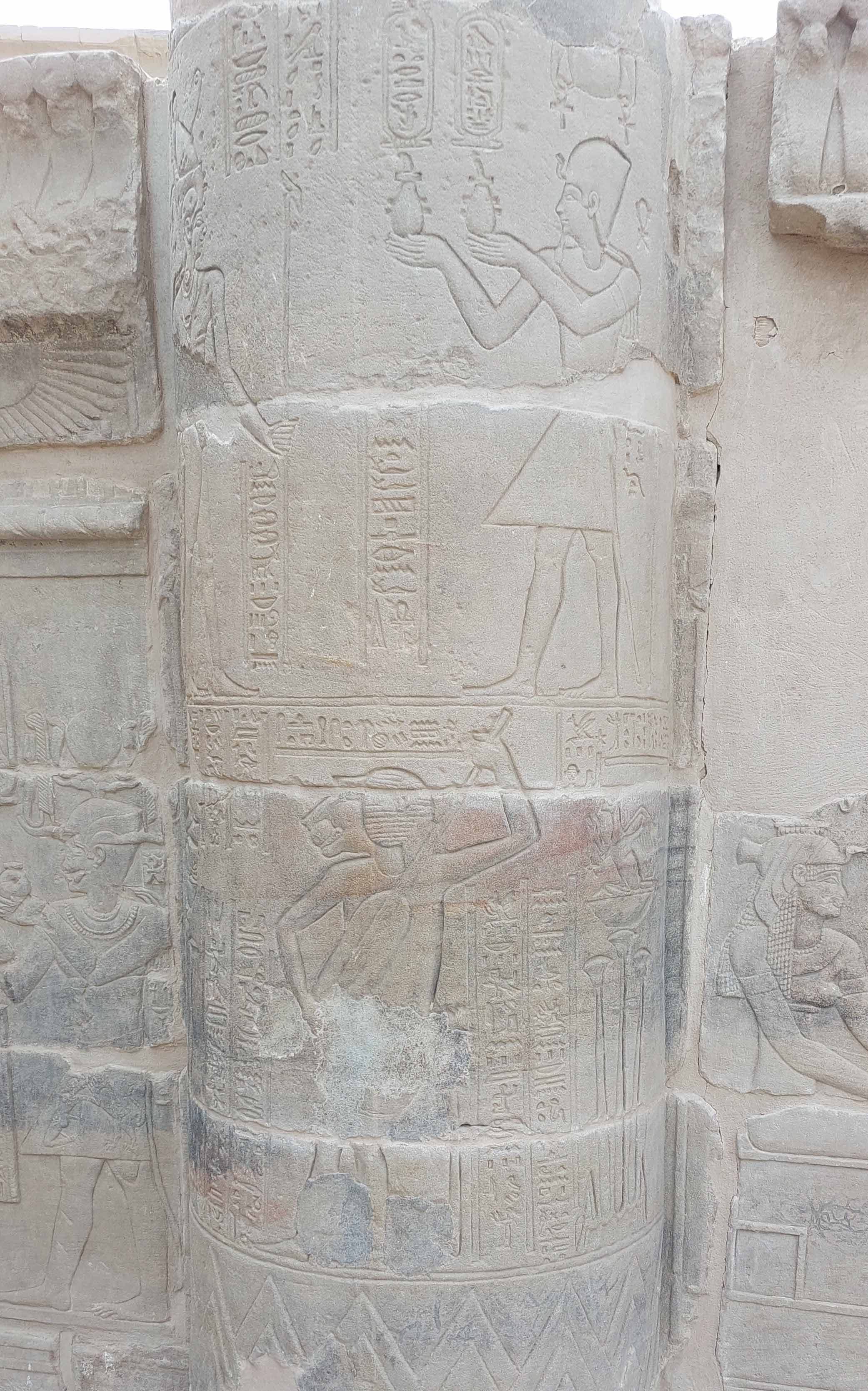
I was very impressed! Many scenes of kings and gods and goddesses. Around the side, there is a much smaller temple dedicated to the goddess Hathor. She was the goddess of women, love, sensuality, dance and music. On its walls there are carved images of harps, flutes, and a stringed instrument being played.
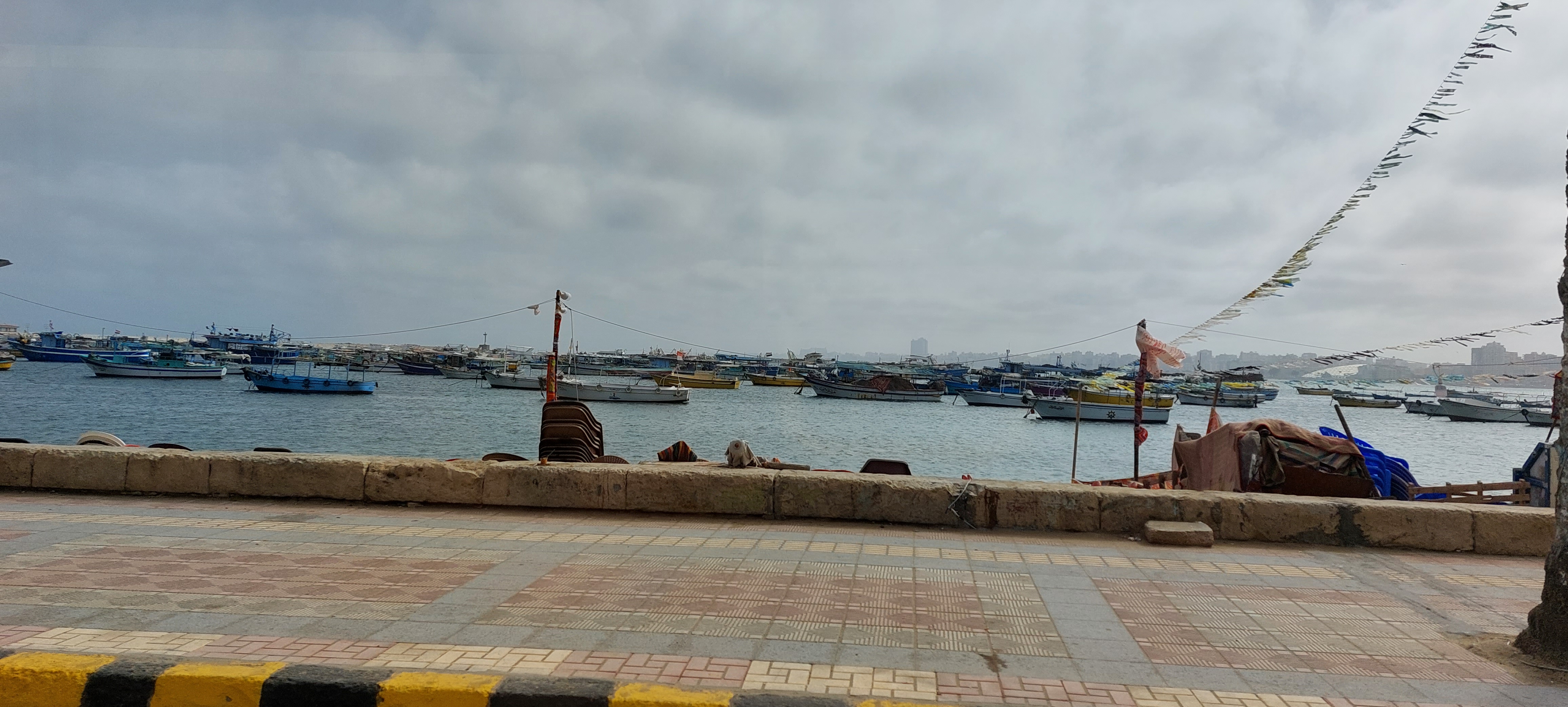
With a 95+ degree forecast for Cairo, we were delighted our next couple of days would be spent right on the Mediterranean coast. There, in Alexandria, a comfortable 75 degrees Fahrenheit would prevail. Founded in 331 BC by the infamous Greek Alexander The Great, Alexandria has been a great city for over two thousand years. It history is best known for the ancient library and the lighthouse. Today, the city we saw was a husk of its former glory.
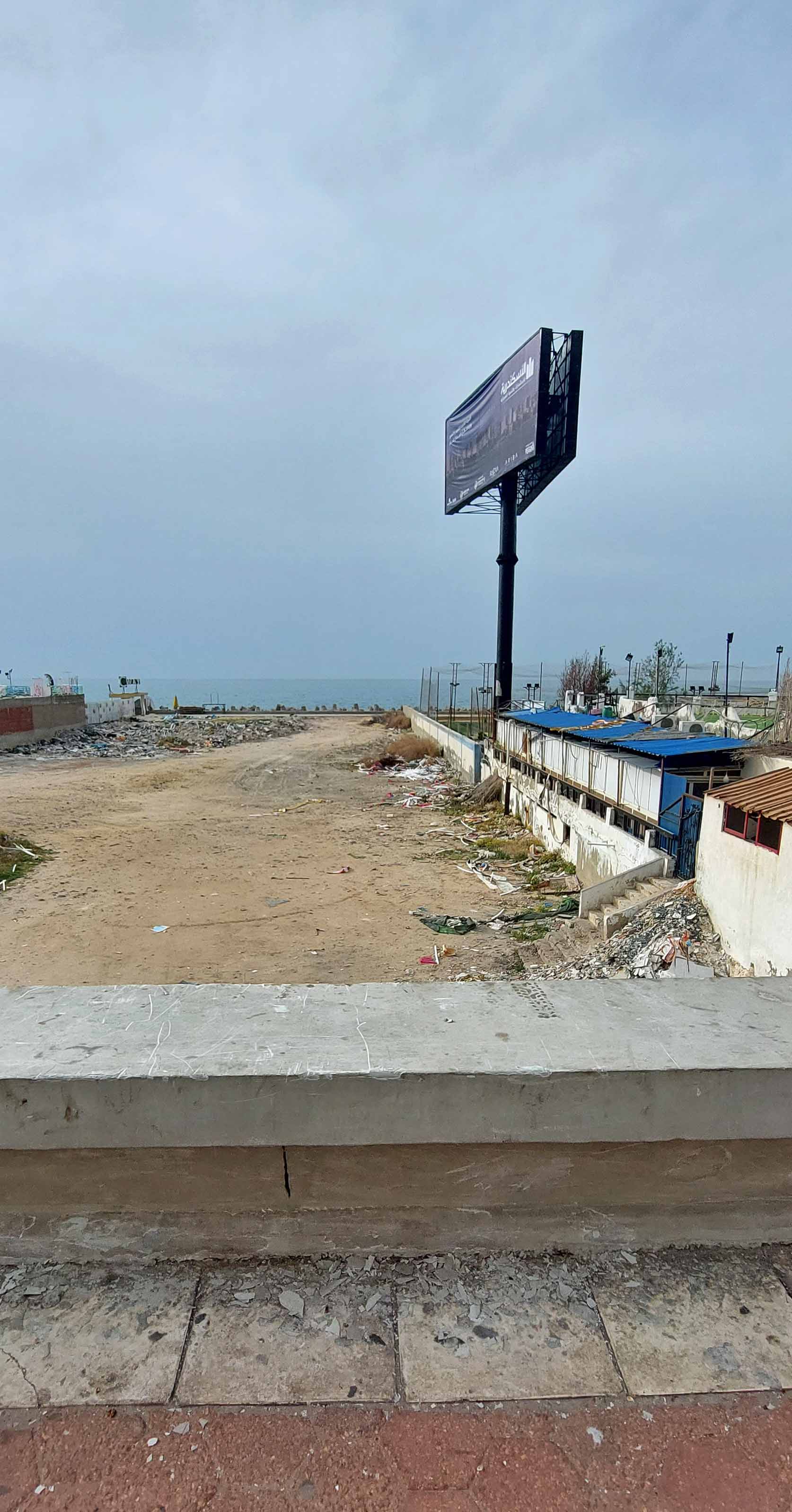
Seaside Alexandria was not what we expected. Rather than lovely shore side paths with pedestrian speed traffic and lovely palm trees, coastal villas, restaurants and hotels, we we were assaulted with dirty beaches, dilapidated apartment buildings, reclamation, unrelenting dusty smog, and incessant traffic so choked that we needed to cross the avenue using subterranean walkways. It was evident that this once was a luxury destination. There is still a Four Seasons resort. But decades of neglect have taken a toll.
Despite our disappointment, we strolled along the waterfront, taking in the sights of locals preparing for an after dusk Ramadan celebration. Some of the beaches were prepared with food carts, tables and chairs. We found a pier with waterside cafes and picked out a spot to sit down and enjoy a cool beverage. Most of us were thirsty for a beer. But, being Ramadan, none was on the menu. We made the most of it.
Adrien, Lorenzo, Michael, myself and Andrea!
The following day, the winds changed direction and significantly improved the weather! A sea breeze cleared away the smog and brought with it refreshment. The agenda called for a visit to the Citadel, a fortress built upon the remains of the ancient Alexandria Lighthouse. And then, a visit to Egypt’s modern Alexandria Library.
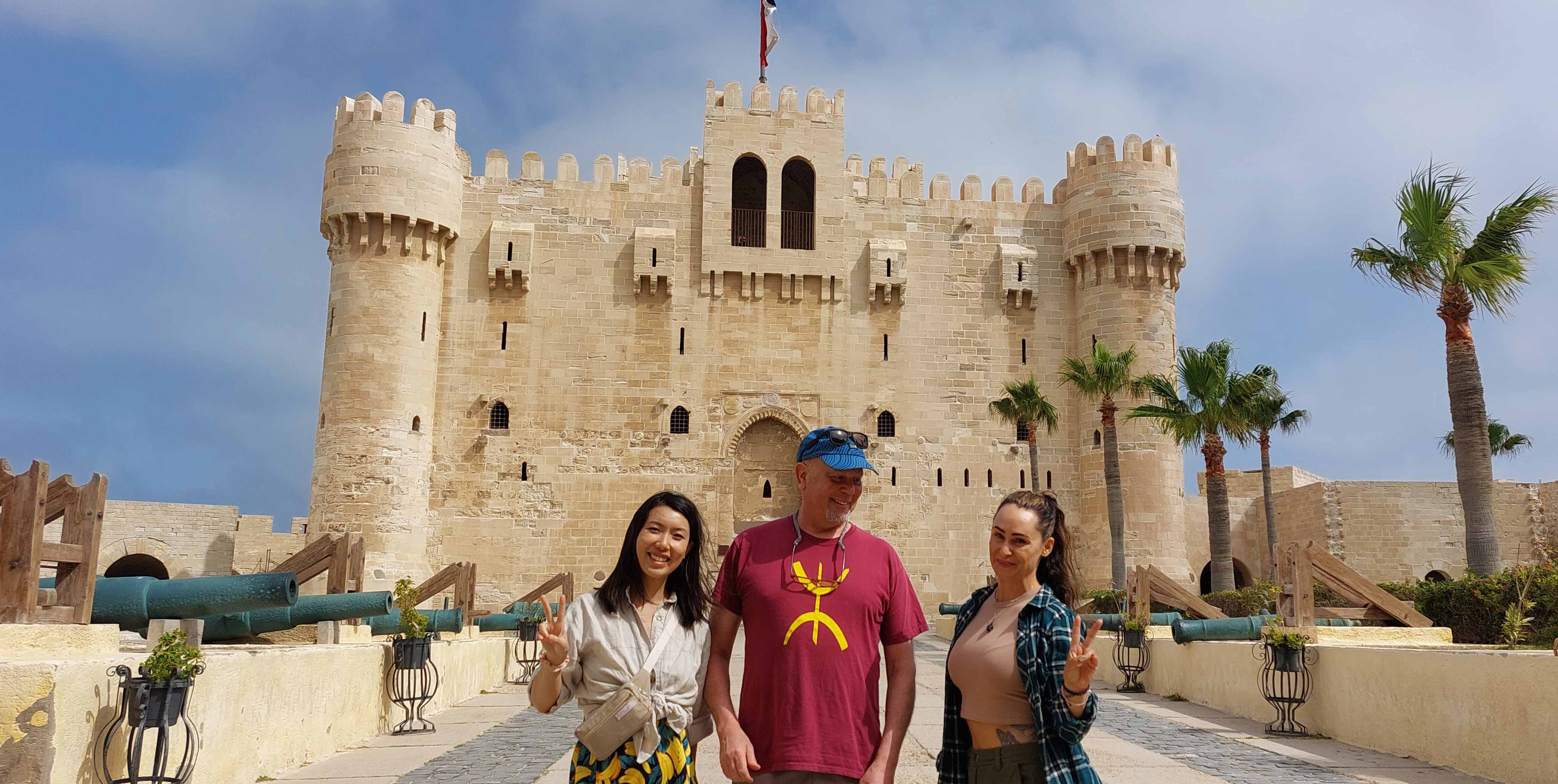
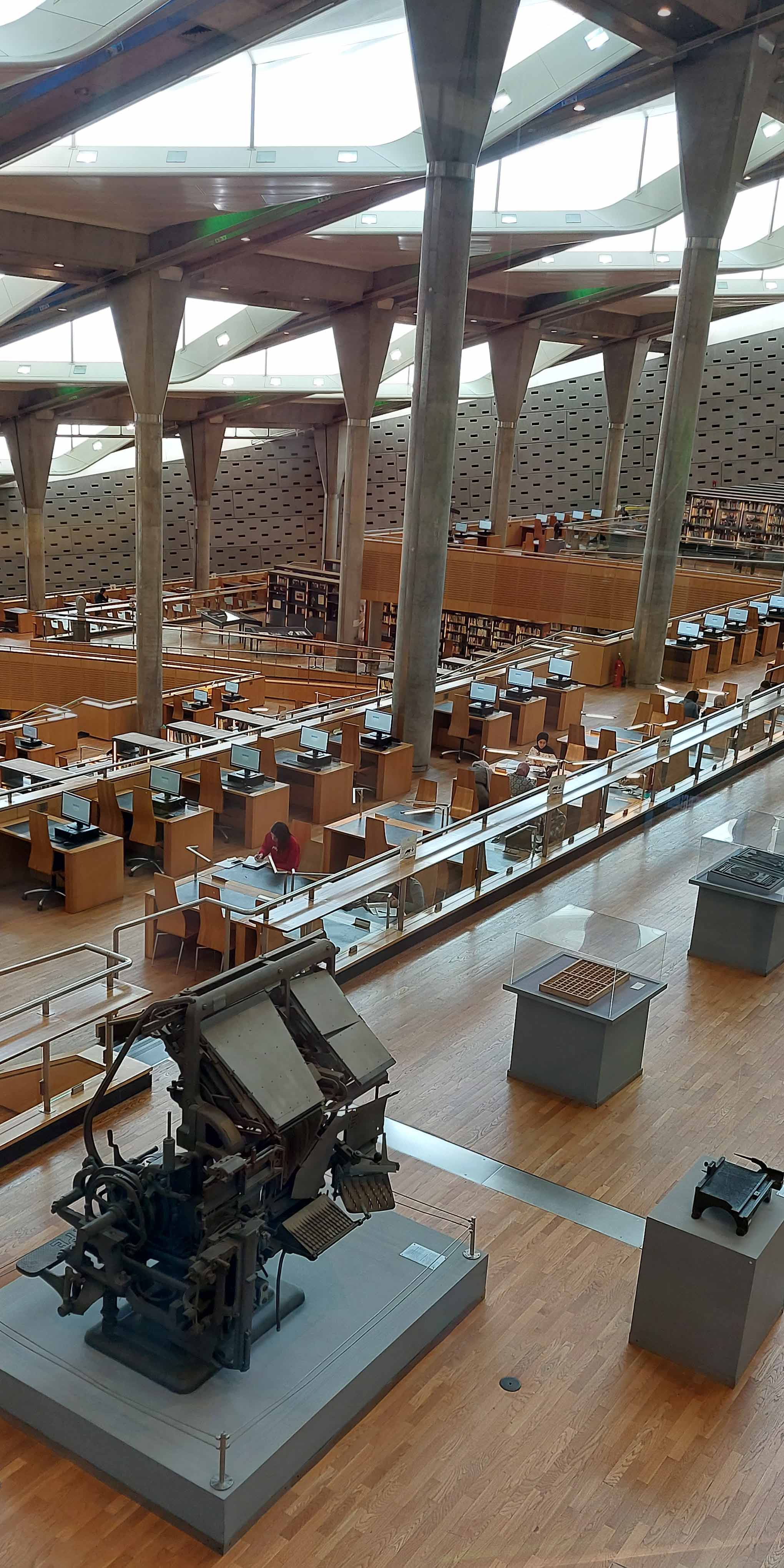
The Citadel of Quaitbay is a defensive fortress. It was completed in 1479. It guarded the harbor for centuries. It stands in good condition. Visitors can walk the grounds, and take in the sea breeze and views of Alexandria Harbor. In ancient times, the Alexandria Lighthouse stood here. It was one of seven wonders of the ancient world. Next, we toured the modern edition of the Alexandria Library. In ancient times, the library housed a collection of most of the works and history of the human race. The collection varied from artistic to scientific. The city was considered a scholarly capital. Over centuries it fell into decline – records show the structure came down in the year 275 AD. Today the rebuilt library is impressive and we spent a few hours there. And had a lunch break nearby.
Allie, Rod, Michael, Lorenzo, Andrea and Allan
Much later that day, we boarded a very old 1950’s era overnight train to Aswan, in southern Egypt. At the railway station, we saw brand new trains. But ours was not one of those!
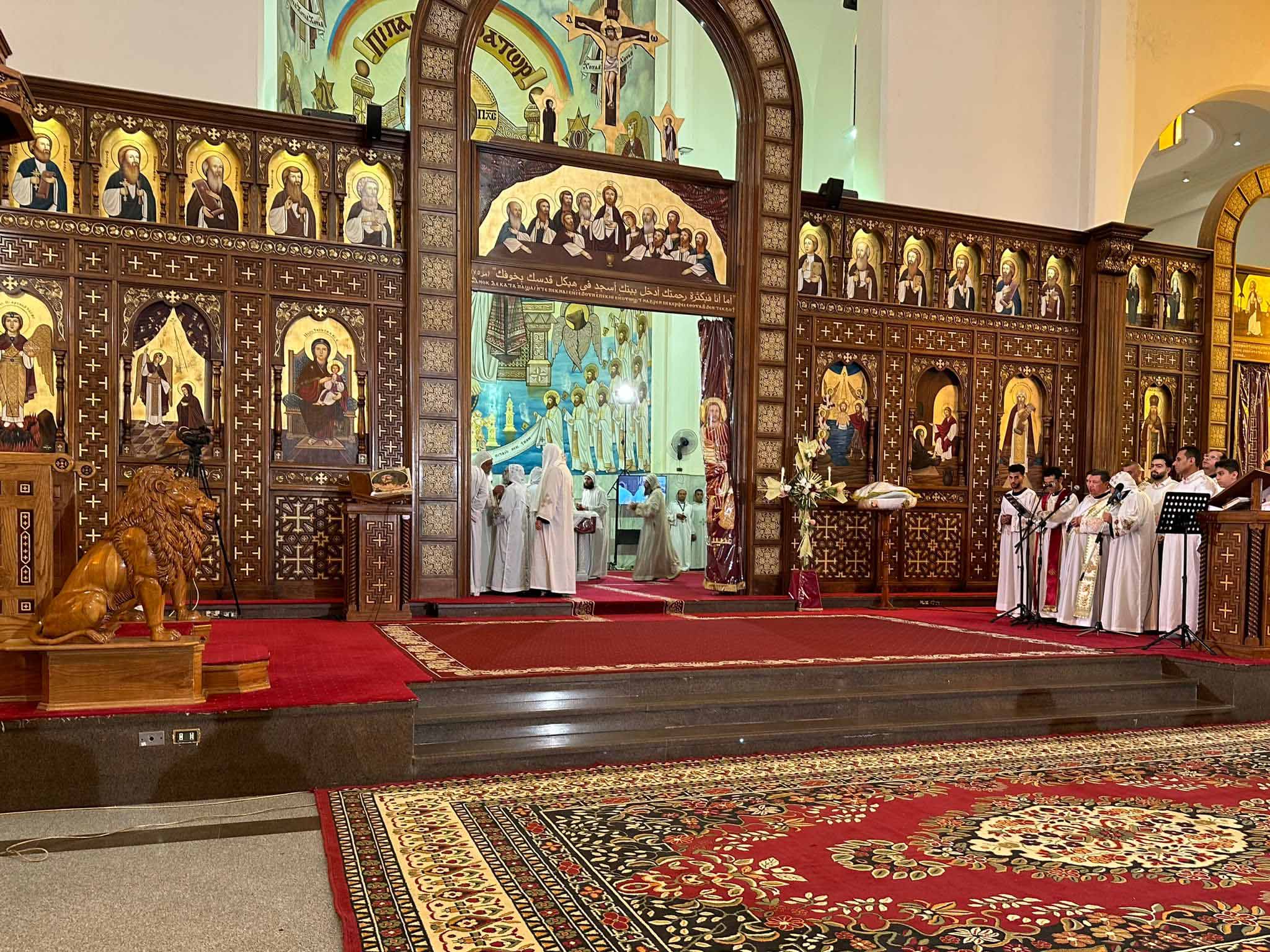
Our Egypt Experience coincided with the Muslim tradition of Ramadan, and also coincided with Easter Season. On the day our journey to Alexandria, Egypt, took place, it was Palm Sunday in the Coptic Orthodox Christian calendar. We visited the famous Monastery of Saint Pishoy, which is one of four monasteries of Wadi el Natrun. Once inside, the experience was peaceful, contemplative.
Our well-connected and ever thoughtful guide Ahmed had a surprise in store for us!
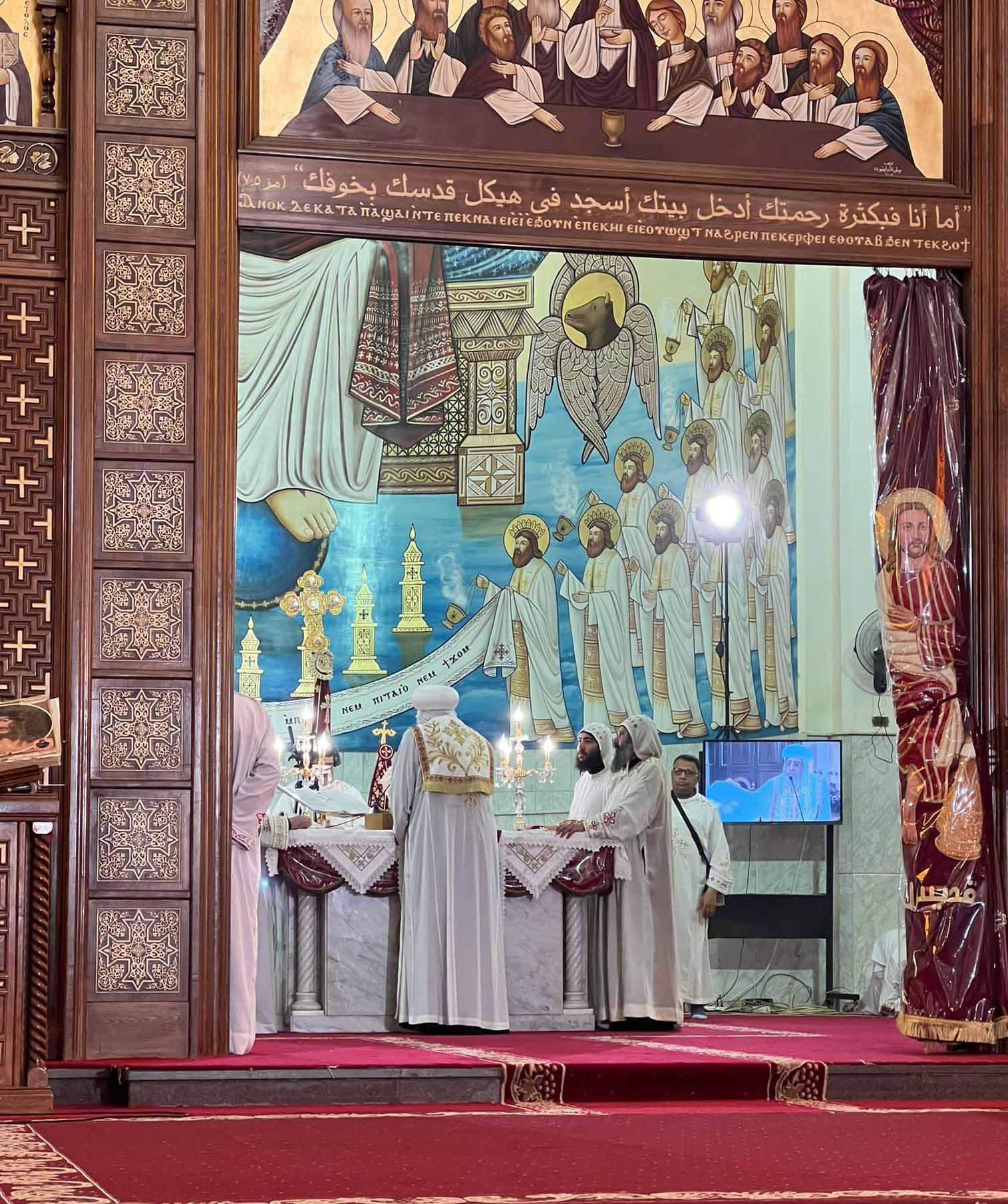
After wending through the outer buildings and walkways, we found ourselves at the cathedral, where Palm Sunday services were underway.
Ahmed had called up the head of the Church, the Pope Tawadros II of the Coptic Orthodox Christian Church in Egypt and had a front row pew reserved for us! WOW! We were welcomed and taken there, where we witnessed this event.
It was being televised for a national broadcast in Egypt.
My faith is Protestant – Anglican – Episcopal. This service was very different to me! We were unable to stay for the entire service. But, the experience was powerful.