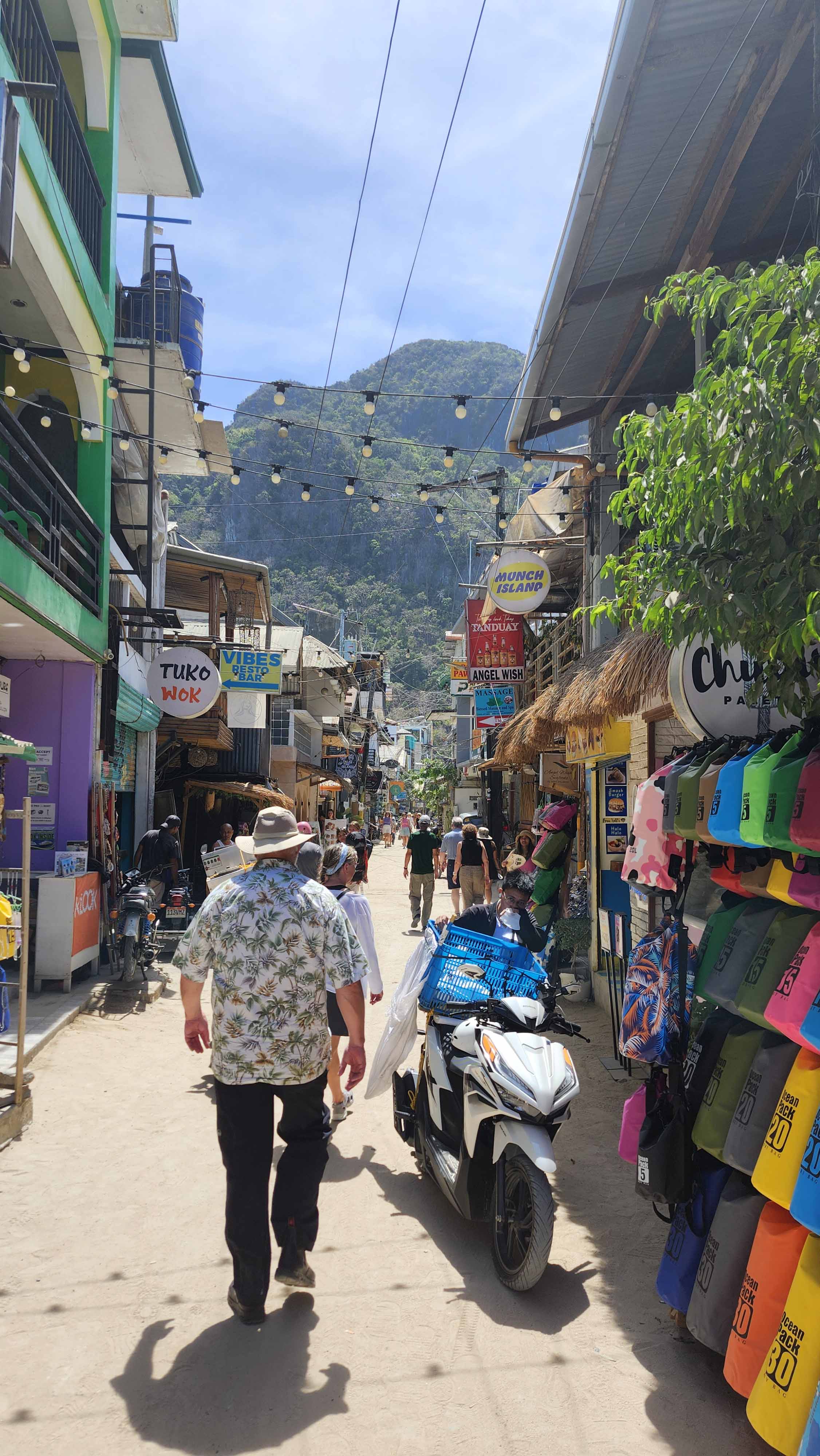
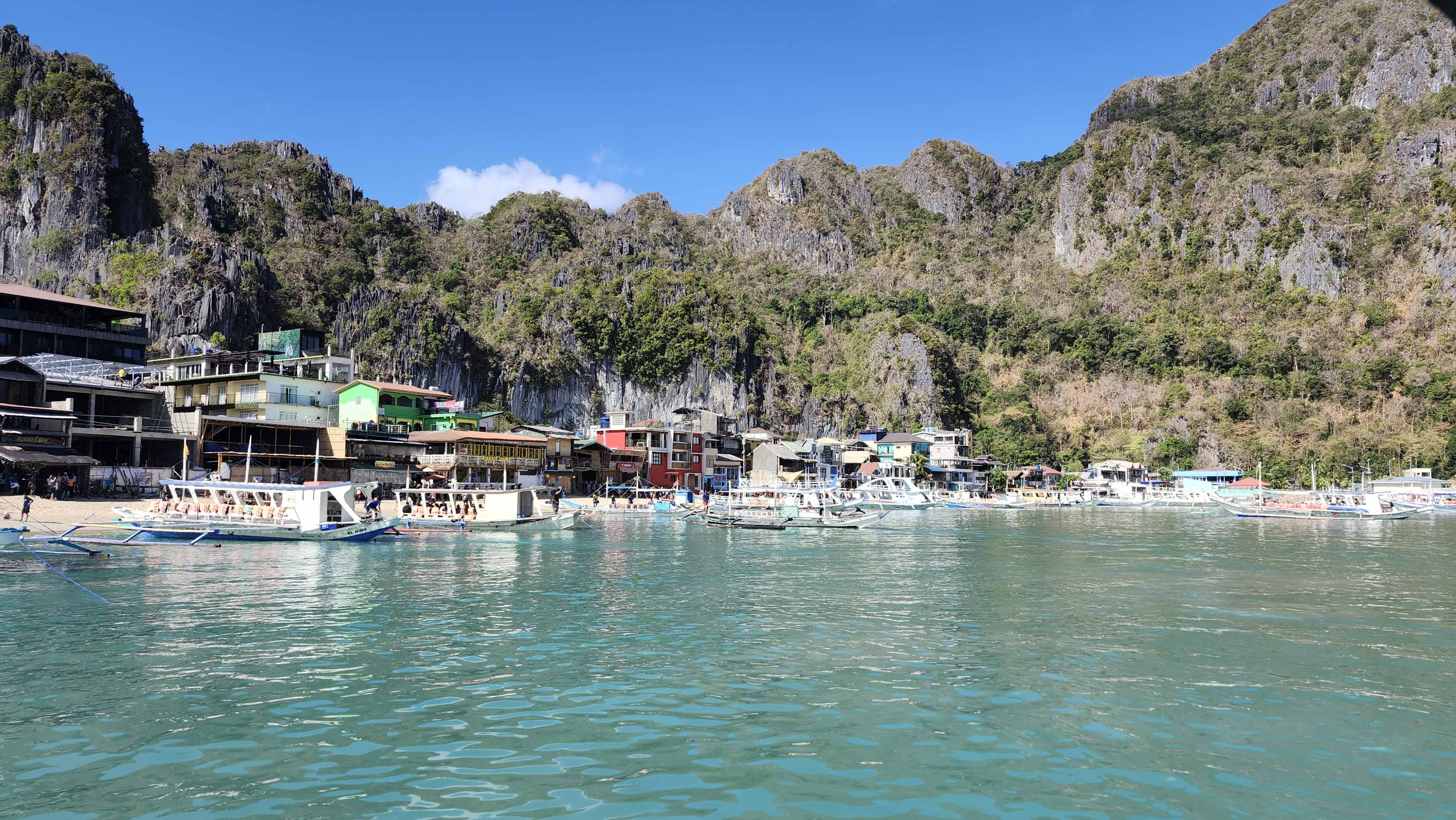
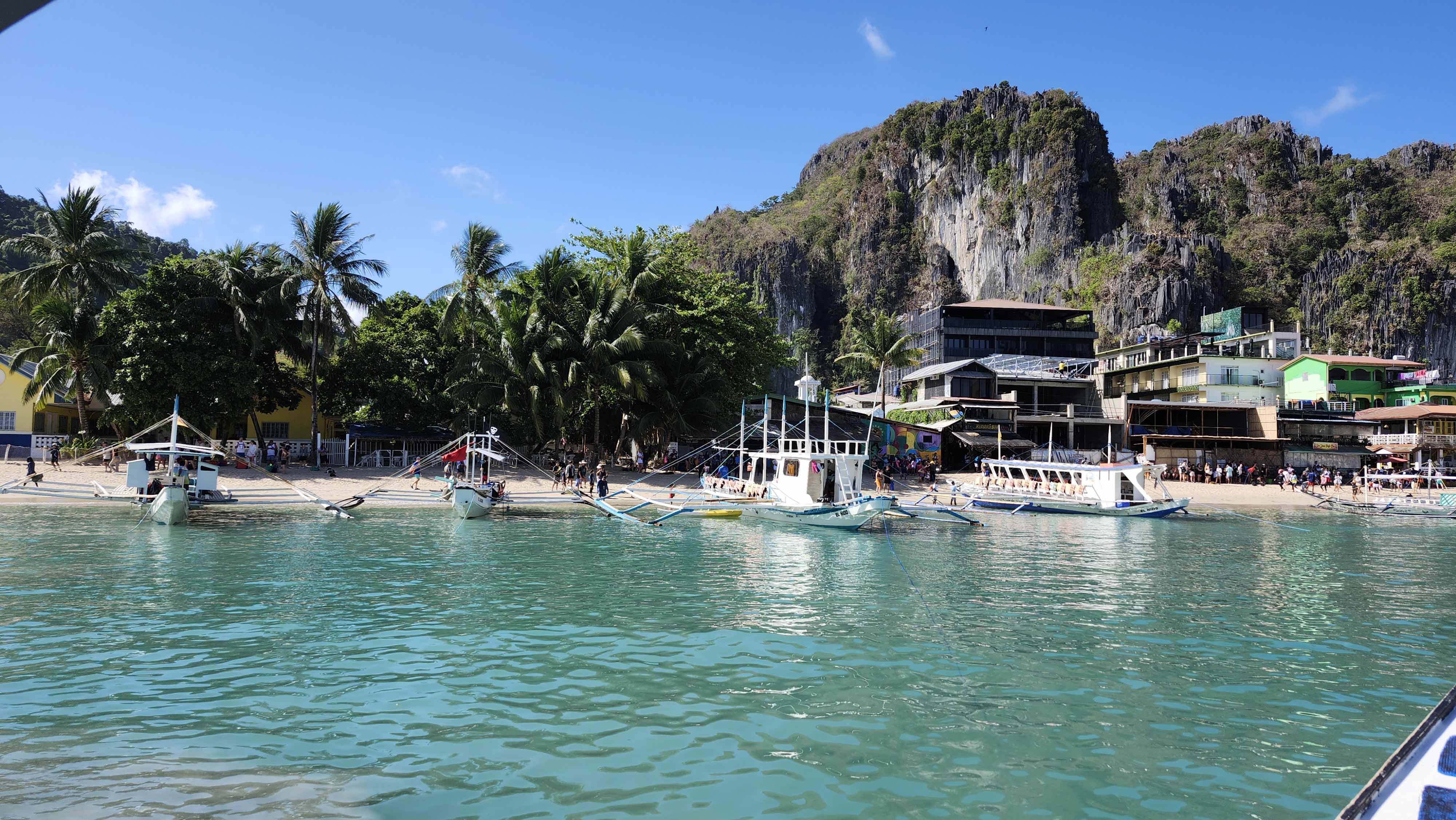
El Nido is in the north of Palawan. It is an easy going place with a beachside vibe. Much of the town is automobile-free, so it’s very walking friendly. Its waters are beautifully blue, its restaurants offer cuisines from all over the world, and its coastline has some of the most beautiful islands you’ll see anywhere to explore, many with gorgeous snorkeling amongst the Bacuit Archipelago. The beach is most busy early in the morning when the outriggers head out on their “island hopping” tours. It can be hot. But once under a shady roof, by the water, it’s pretty comfortable. Walking and checking out the shops is a pastime. There are many services available to travelers. Currency exchange, airline tickets, ferries to other islands, pharmacies, motorbike rentals, snorkeling gear, and more. As I strolled around, I wasn’t subjected to audible offers of merchandise or tours. That was nice.
Myself with LisaMac checking out the street scene
The town has plenty to offer travelers. I saw cuisine from Thailand, local, Greece, Italy, Mexico, France, Japan, China, Ukraine, and more. The beach is pleasant enough. But much more pristine beaches lay further out on the island and especially on the islands in the nearby archipelago.
One of my favorite meals was at a beachside restaurant in El Nido. I ordered a simple chicken pasta and a bowl of green-lipped mussel with peppers and ginger soup. It took a while as usual but OMG so divine! The soup was SO delicious. That combination of spicy and sweet. The pasta was home made! SO delicious. I’d forgotten how wonderful pasta can be!
Later that day I walked to the far north end of the beach and picked out a small shady table to get a beer. It was just so pleasant people watching. It made my day!
In the next blog post I will share from my El Nido Island Hopping Tour. I experienced the most beautiful beach I have ever seen.
The Philippines is my 10th trip to Asia and my first to a Christian Asian country! The Philippines is a nation composed of 7,641 islands, most of them uninhabited. Palawan is a 270-mile long island bordering the South China Sea on the west side of the Philippines. The island is the principal island in the archipelagic province of Palawan. It has twice been voted best island in the world.
Palawan boasts rich natural diversity and beauty. It has hundreds of limestone cliff-bounded beaches, 6,000ft mountains, palm tree lined coves, giant jungle trees, uninhabited islands, jungle waterfalls, massive caves, surfing, snorkeling and world class scuba diving opportunities. English is spoken everywhere, and its citizens are warm and helpful. The food is fantastic. But don’t expect a quick meal. Go prepared to wait for the magic. Locals take their time and when the dish is served it’s obvious much care was taken in its preparation!
Baked sea bassMyself, Lisa and Mac before dinner
One of the island’s must-see attractions is the Subterranean River in Sabang. It’s a UNESCO World Heritage Site. Visitors can take boats to explore several miles of the river, which is accessed via an oceanside lagoon. The river goes on much further underground, and one “hall” is 980ft high! An outrigger boat takes you from the Sabang waterfront to a beach near the river. From there, it’s a short walk to the entrance – a beach on a lagoon – your boat will take you onto the river from there.
A quiet lagoon leads into a world of bats, dripping stalactites and darkness…
The Philippines can be HOT. And, it’s a much more penetrating sun than I’m accustomed to in the Pacific NW of the United States. So the difference between the cave environment and the daylight of Palawan couldn’t be more dramatic. The lagoon is Gilligan’s Island perfect.
The entrance itself is magnificent, and hints at what lays inside.
Prior to entering, the guide admonishes the passengers to stay as quiet inside the cave as possible, so we can experience its magnificence. There are bats and swallows here.
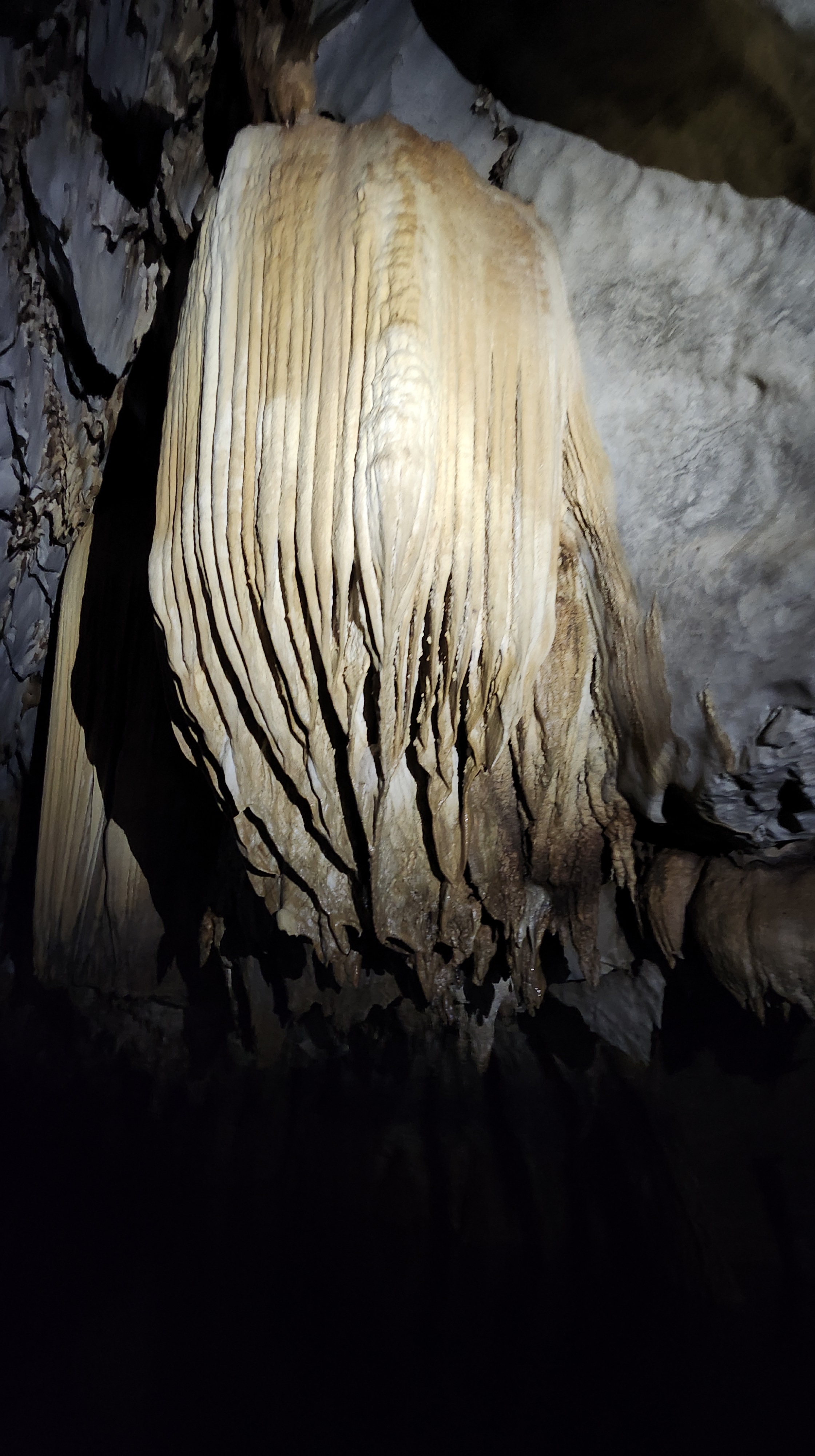
Once inside, the guide switches on his headlamp, which unveils the fantastic shapes created by thousands of years of water dripping over limestone and the river flowing beneath. Mineral-rich water creates what look like upside down candles known as stalactites. Underneath those, right-side up candles reach up. These are called stalagmites. Here, some stalagmites are as big as a cabin!
After the Underground River experience, we are treated to a Palawan-inspired outdoor buffet lunch. It is on a roof covered deck in the jungle. At some point during the meal, local kids squeal with delight, dress up in costumes, and begin a dance. They are having such a good time! And I love watching. It’s infectious!
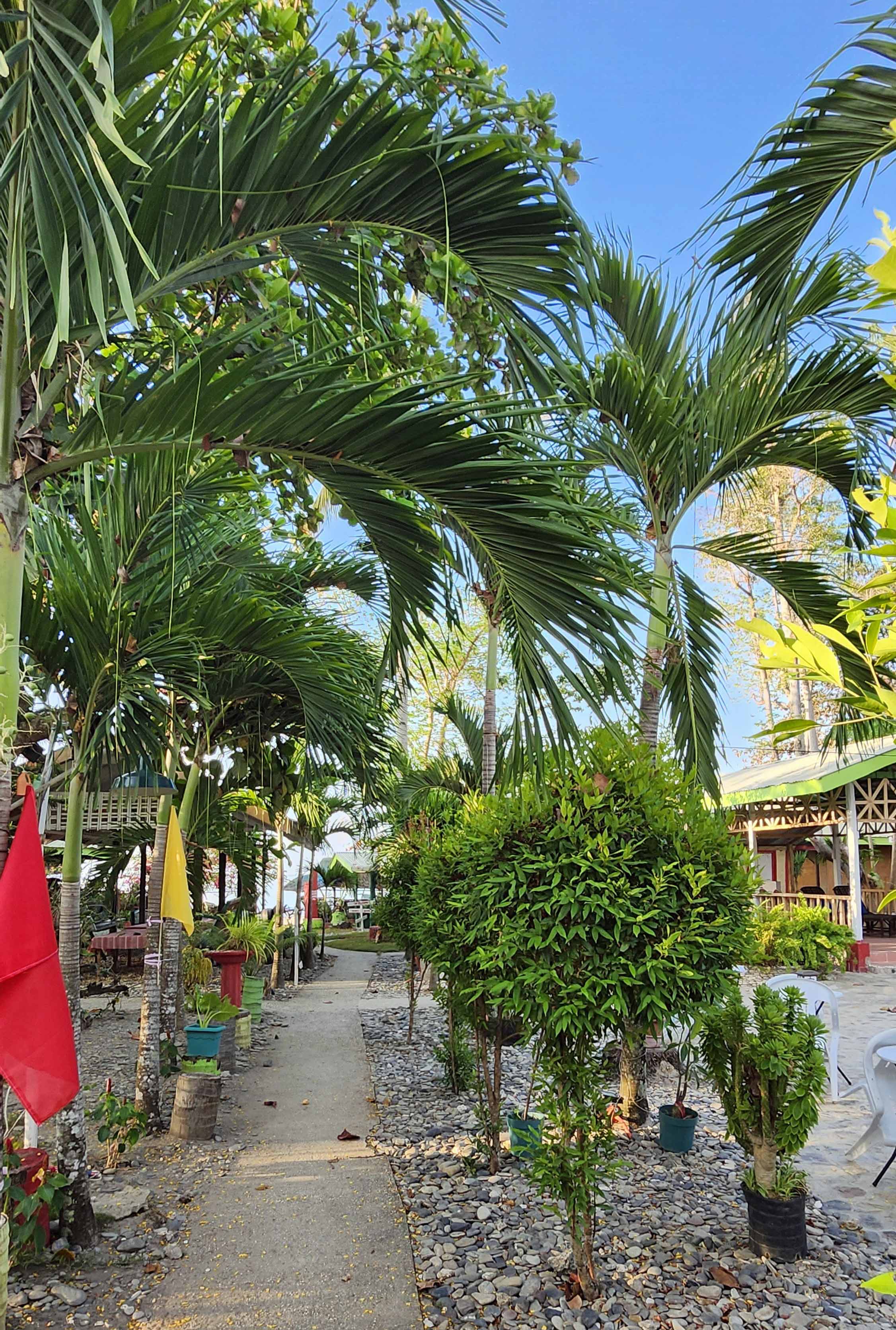
Then we are taken to our San Rafael Beach “backpacker” resort called 67th Heaven Holiday Resort. It’s run by a Swedish/Filipino couple. Not exactly a 4-Star Sheraton, it’s more laid-back seriously informal. Its grounds are filled with palms, flowers, a pool, beach bungalows, and a restaurant. You will probably see a gecko in your room. Don’t worry – they go after the insects! It sits on an ocean-side beach. So there is a surf. I found the water too warm for my liking. I preferred the pool. The food was the best part. You need to order hours ahead so they can prepare it exactly. And the menu is varied, everything from Chicken Cordon Bleu to Crab to Pumpkin Soup to Grilled Grouper. And after hours – they made a beach bonfire for us. The staff were locals. It’s a place to slow down and take things as they come.
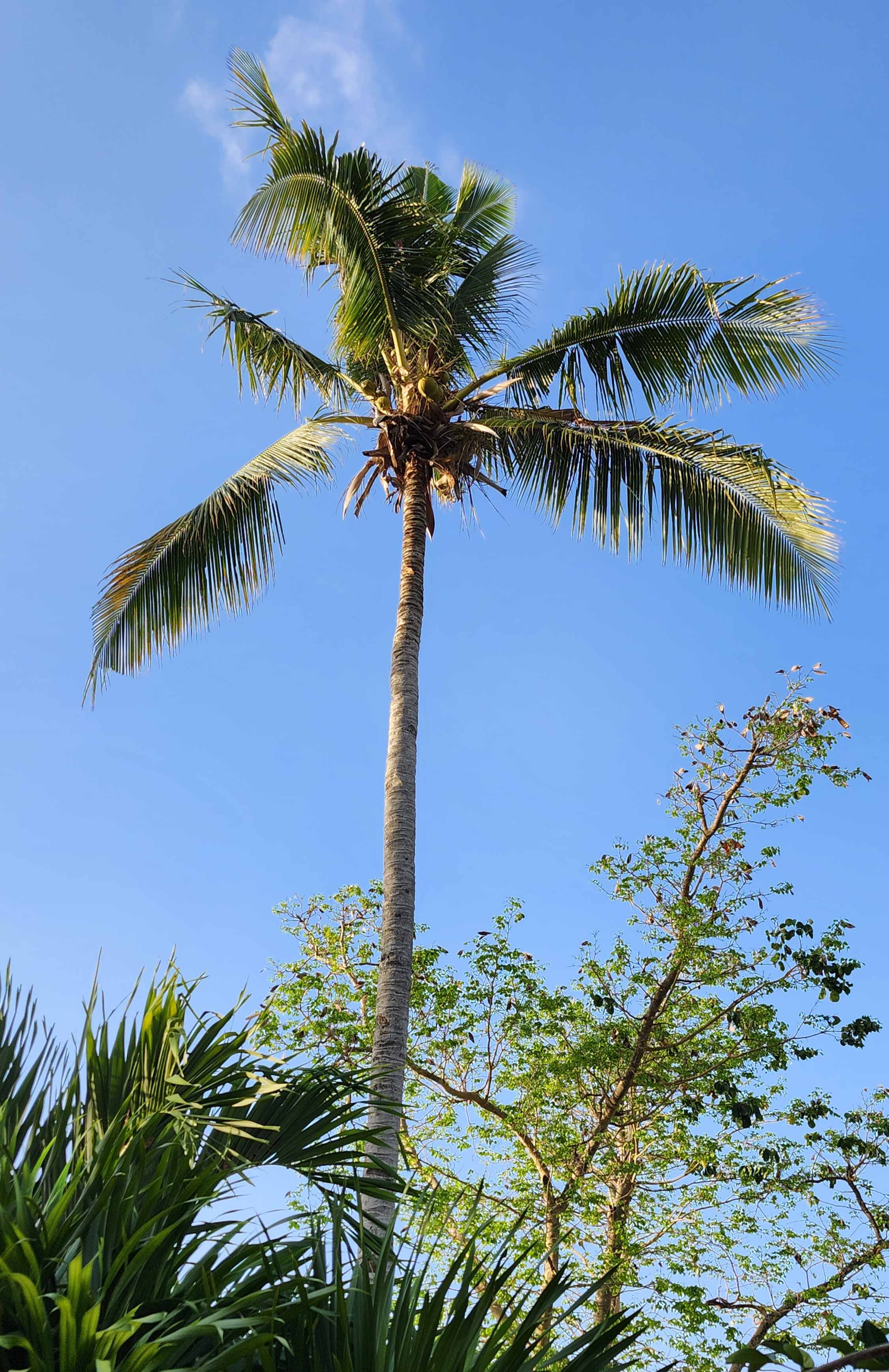
One of my peak experiences on this trip was right here in the pool. On that morning, I chose to remain at the resort whilst the group hiked to a jungle waterfall with swim worthy pools. I had developed small blisters on my feet from sand in my shoes. So, I was incapable of the hike. I was alone back at the resort. Floating in the pool, with nobody around, my senses picked up the ocean breeze whirling through the palm trees, making sounds as the fronds caressed each other. That, with the sounds of the surf, buzzing bees and chortling shorebirds, took me right into the here an now. The moment. The peak experience!
The wind in the palm fronds did the trick!
Our next stop on Palawan would be El Nido. It’s several hours drive distant via a picturesque road. We couldn’t wait to discover more there!
I drove the spectacular lake and mountain splashed Trans Canada Highway from Revelstoke to Kamloops. It’s about 3-4 hours. Eye popping views the entire way. Huge lakes with mountains dropping right down to the shore. And the Canadian National Railway snakes along the shore right along the other side. It was right out of a model railroad scene. Snowy, and I glimpsed a lakeside tunnel opening just as the lead freight locomotive popped through! I even saw my favorite wildlife of this road trip: a trumpeter swan.
I arrived in Kamloops about 1:30 p.m. and checked in to local landmark Scott’s Inn & Suites. Turned out to be a winner! I was checked in by a recently immigrated sub continent Indian who was training a recently immigrated woman from Ivory Coast. Best room of the trip with the biggest TV too. The Inn is a mid 20th Century kitschy architecture outside, but the rooms are 100% updated. Plus it has an equally quirky comfort food restaurant where hotel guests get 15% off. Most of the patrons at the restaurant are retirees. The food is straight up North American fare. Service is very efficient and helpful. I found it to be a super easy place for breakfast. Just crawl out of bed and head over. Once at Sun Peaks, every local I talked to knew about Scott’s! Seems like it is a staple in the Kamloops culture. After all, it’s been there over 60 years.
In contrast to Revelstoke and Rossland, which cater to the outdoor enthusiast, Kamloops is some kind of hodgepodge of outdoor recreation, agricultural, mining, railroad and timber industries’ regional headquarters. It has a gigantic railroad yard, where the famous Rocky Mountaineer passenger train was stored for the winter. I saw a film in a large shopping mall. Lots of tractor dealerships and service centers. The Canadian National was moving potash trains day and night. Potash is a mineral left over from ancient lakes, essential for fertilizer and mined in central Canada and shipped globally. And the banks that support these industries are well represented. It has a well developed bus transportation system with a sizeable central bus station. Kamloops is an easy 40-minute drive from the ski lifts at Sun Peaks.
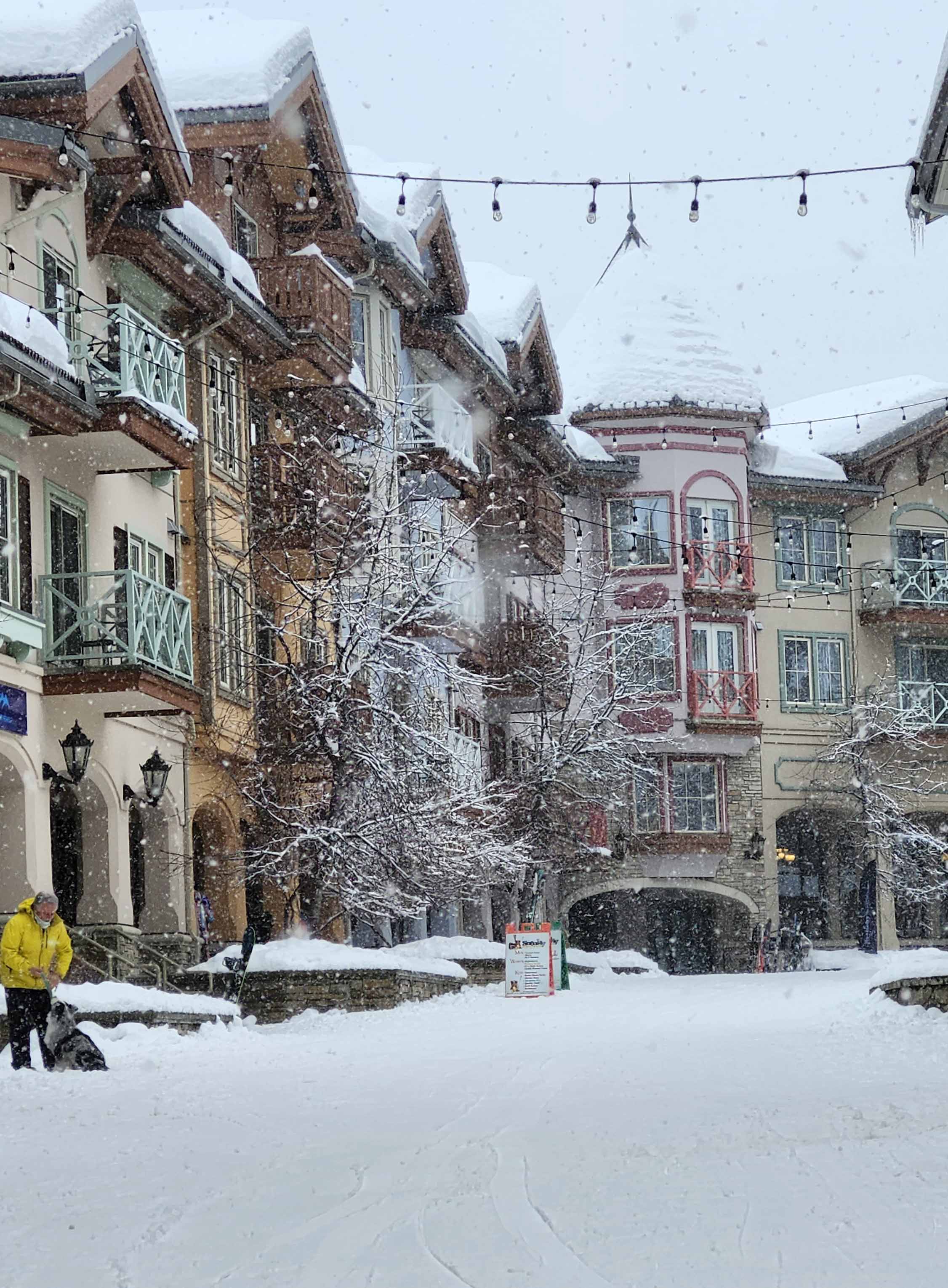
With 4,270 acres of terrain, Sun Peaks is the second largest alpine ski area in Canada after Whistler Blackcomb. Its alpine village is walking-only, giving it a European feel. There’s no need to rush from Kamloops. You can get a good parking spot no worries!
During my three days at Sun Peaks, I covered the whole resort. I found the locals inclusive and friendly. In fact, on my very first lift up I met Redge and Louise, who own a house at the base. I skied with them all morning!
Conditions were very good, with plenty of fresh snow on tap. There was occasional fog blowing through.
Sun Peaks covers both sides of a valley with the village at the bottom. Locals said it gets drier snow than Whistler. Some said they’d switched to this place from Whistler because it’s less busy, less expensive and the snow is more reliable.
On day two, I opted to take part in one of Sun Peaks’ complimentary guided mountain tours. Like at RED Mountain, tours are divided up by ability level. We had maybe 7 guests in our group and two guides. They took us all over, including both sides of the valley. Lots of fun!
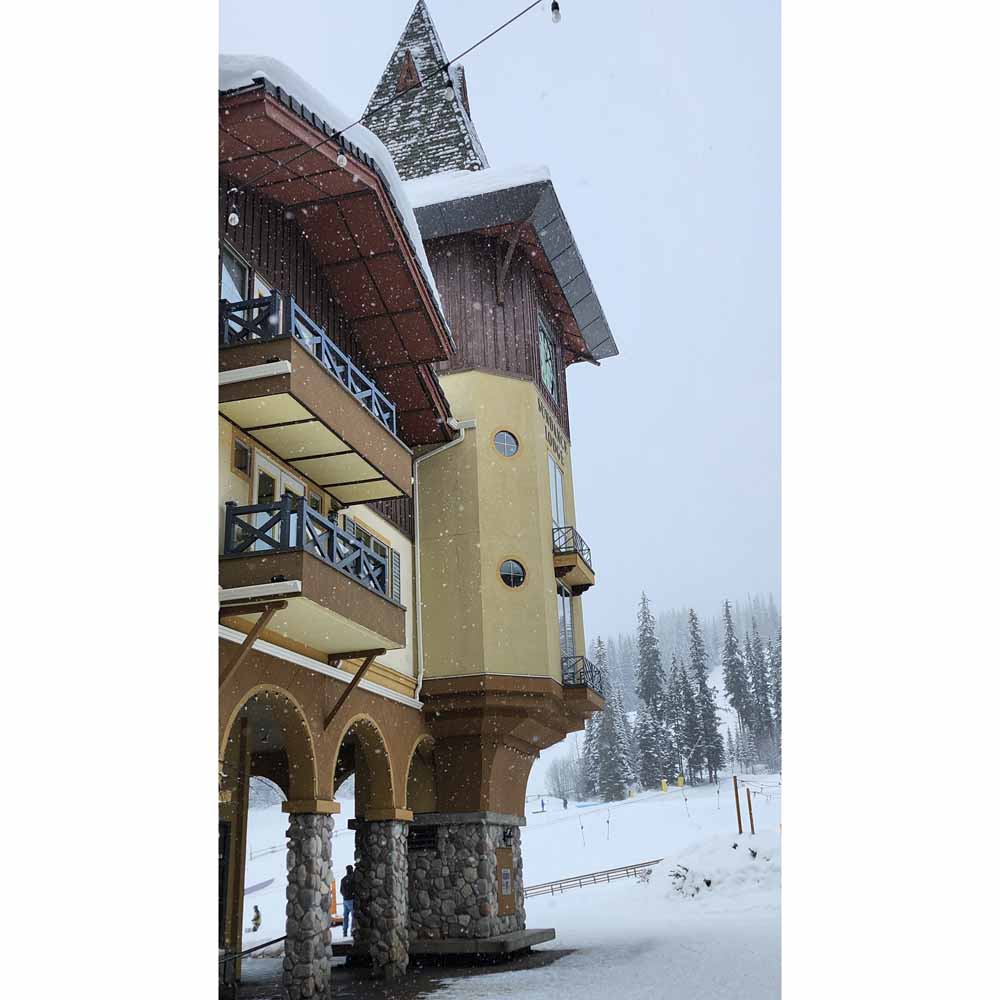
Sun Peaks Base area
Negotiating some trees!
While Sun Peaks definitely caters to vacationers from afar, it’s very definitely a local Kamloops family ski area. There were races going on, and the lodge had many, many kids doing what kids do!
Sun Peaks was my last BC ski area on this road trip. I liked all of them! RED Mountain, Revelstoke and Sun Peaks all have strong points. I was to make Crystal Mountain, WA my next stop on my way back to Portland, OR where I live. But a strong warm front brought a rainy monsoon that washed over a foot of snow away. I canceled that part and returned home.
Would I return to these ski resort? Definitely! Good snow, welcoming people, and very uncrowded. These days, less crowded alpine skiing is priceless!
My Canadian ski bum tour’s next stop after RED Mountain was Revelstoke. It’s a four hour drive north. On drive day, it was snowy and icy all the way. Twice I had to stop and knock off ice in my wheel wells. There isn’t much in the way of food options in January along the route. It’s beautiful, meandering along 142 mile long Arrow Lakes, which have steep hillsides. Luckily I like driving in the snow!
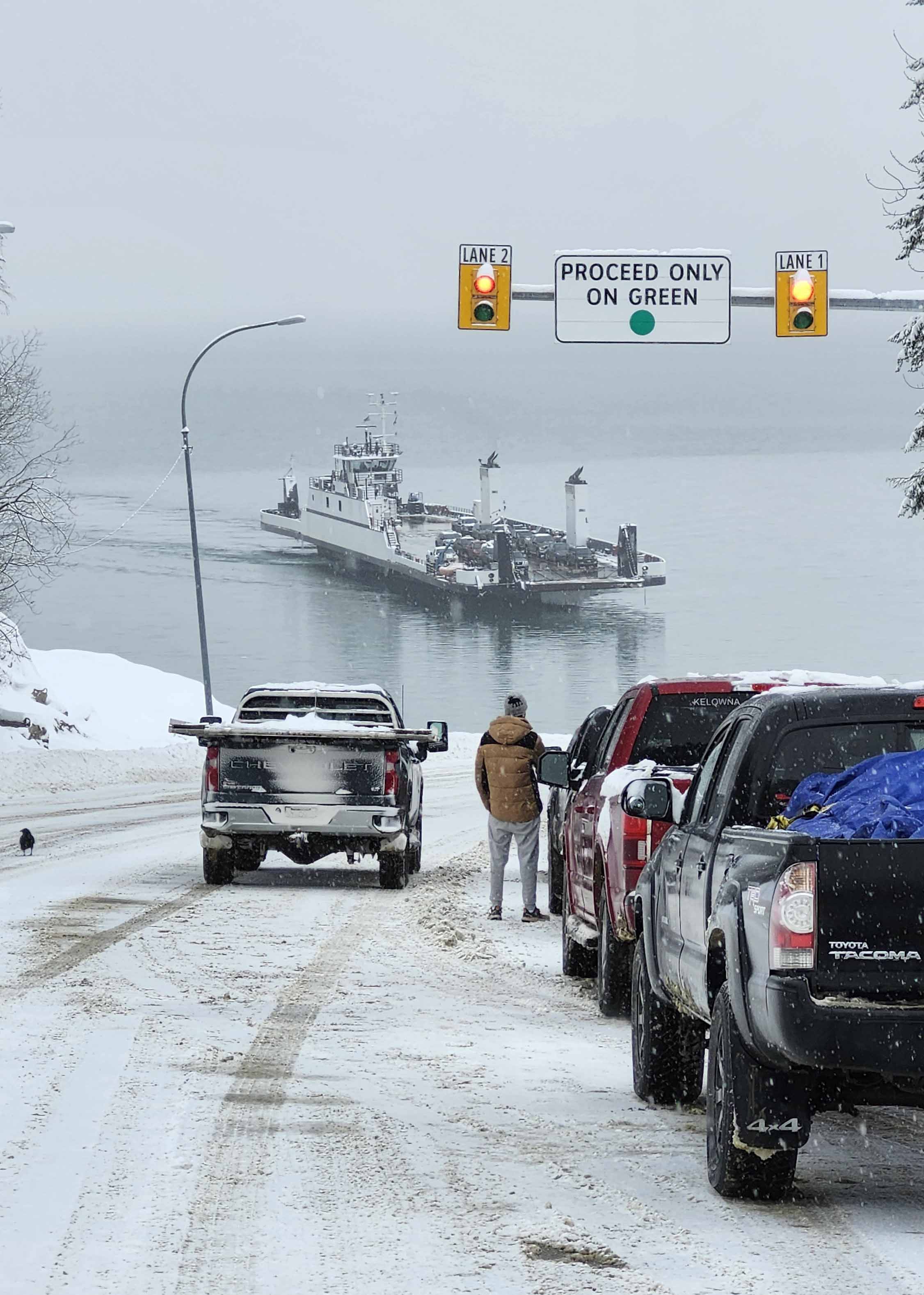
An added twist was that at the end of the lakes, the road ends and one must take a ferry to reach the road on the other side! This seemed so bizarre to me. For the first time in my life I was taking a ferry to go skiing.
I reached the town about 2:30 p.m., and checked in at Monashee Lodge. Just before town there’s a recommended restaurant called the Big Eddy Pub. Everyone loves it. I paid a visit. As soon as I opened the car door at the lodge, the sound of big mountain skiing came to my ears! A helicopter’s thump thump thump!
Someone’s heli skiing!
The town of Revelstoke has lots of late 19th Century architecture character plus hotels, restaurants and stores. It is a fully three-season outdoor recreation powerhouse. The Columbia River and Upper Arrowhead Lake, plus numerous creeks and streams, offer swimming, fishing, sailboarding, kayaking and powerboating. The mountains, which reach over 11,000ft, contain a few national parks such as Revelstoke and Glacier. So there is hiking, backpacking, camping, alpine and Nordic skiing, snowboarding, sky diving and paragliding. The town also has an active arts and music scene. Something for everybody! They even have a local curling club.
I came for the skiing at the infamous Revelstoke Mountain Resort, with the largest vertical drop in North America. In fact, I never could ski all the way down. I opted to ride the lower Revelation Gondola back to the base. The base is just outside of downtown, 10-15 minutes from town center. The legendary terrain did not disappoint. And I got lucky with plenty of fresh snow! It was so snowy and sometimes foggy that I never saw the views! Revelstoke has plenty of bowls and tree skiing. My advice is never ski in those areas alone! They might never find you, if you get lost!
The base is pretty spartan. It’s got a lodge and essential services, like a coffee shop, ski retail, ski repair and rentals. It was snowing magically. I met a lot of people from all over – France, Switzerland, New Zealand, Quebec, Belgium, and more – but no Americans. I even encountered people on the lift who know my sailboat racing friends in Marblehead, Massachusetts!
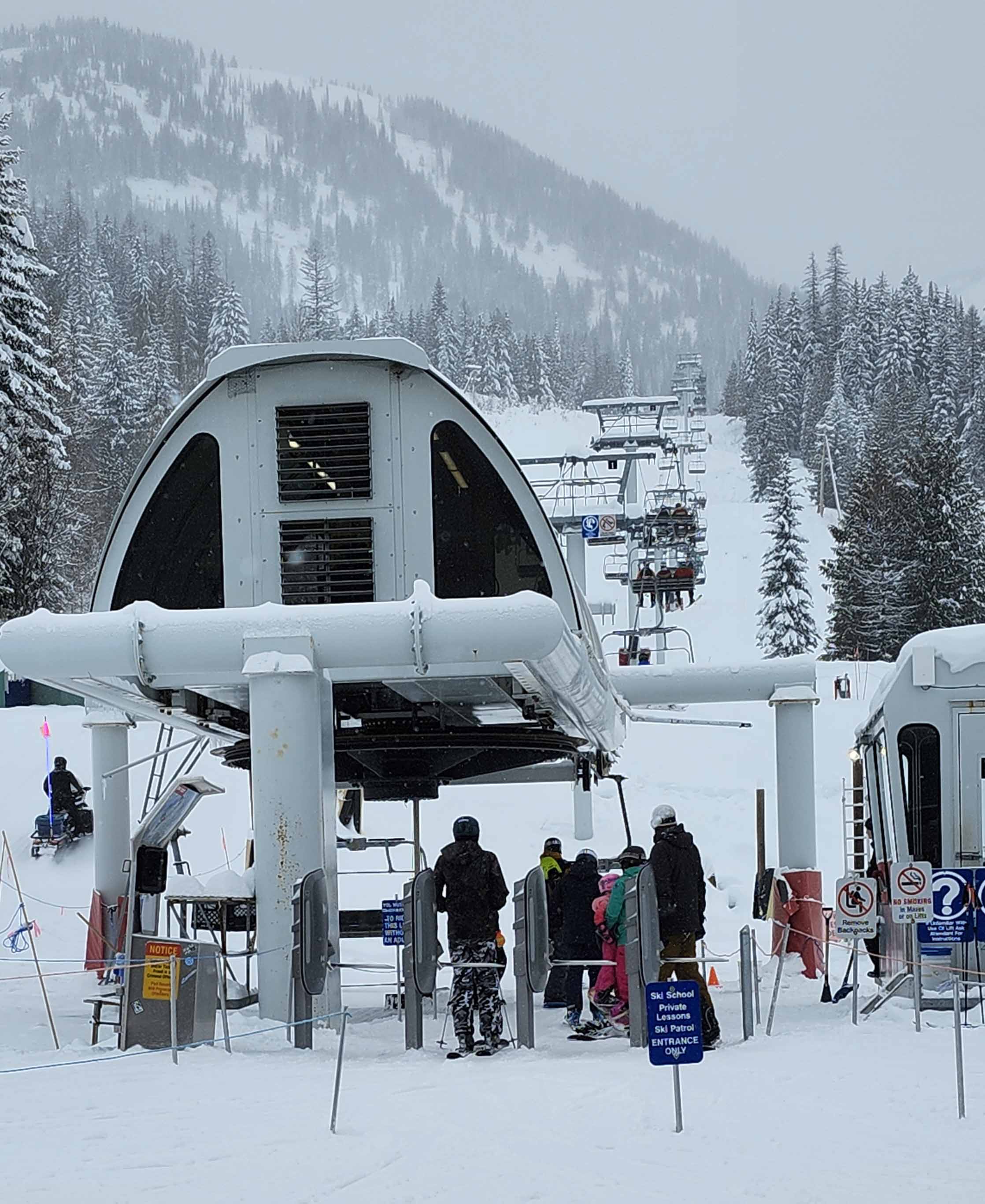
In January 2024 I did my 3rd annual ski bum road trip! This time, Anthony Lakes, OR, Schweitzer, ID, RED Mountain, BC, Revelstoke, BC, and Sun Peaks, BC! I planned to go to Crystal Mountain, WA, but a warm up cut that out. I loved RED Mountain! It’s in the Kootenay, about 12 miles north of the Washington border, in lovely Rossland. All towns had their positives, but for me Rossland is the most charming of all.
RED Mountain is only 12 minutes from downtown. It has a very local feel to it. No high speed quads here. Regulars say that keeps the crowds away. I was fortunate to have nice conditions in this El Nino winter, which has been cruel to Pacific NW resorts. It snowed 3-4″ each night, leaving comfy conditions.
RED Mountain offers complementary guided skiing twice a day. You can choose skill levels from novice to advanced/expert. I chose intermediate, with my knee still recovering. It turned out that I had a one-on-one guided experience with Abigail! She showed me all the lifts, and we did groomed blues and also a tree run with tight turns.
Like almost every day on this trip, it was cloudy and I never saw the tops of the mountains surrounding. The bright side? SNOW. Lots and lots of fresh fluffy snow! Back at my Lone Star Hotel, which sits in the forest at the bottom of the access road, intoxicating calm-wind snow showers came and went. RED mountain offers terrain for all skill levels. And even on a Saturday with fresh snow, lift lines were insignificant.
It is easy to be spoiled there. One starts to just take for granted that you can get an easy parking spot. No reservations necessary. People are very laid back and friendly. It’s so uncrowded that it is ranked #1 acres per skier in North America! What’s not to like? I also met quite a few Kiwis either skiing or working at the lodge. When asked about skiing in New Zealand, they said, “Not very good. That’s why we’re all here!”
As an IKON pass holder, I follow the IKON user group. Day after day, members post images of enormous lines at California, Colorado and Utah resorts. It’s a wonder BC is still so relatively undiscovered!
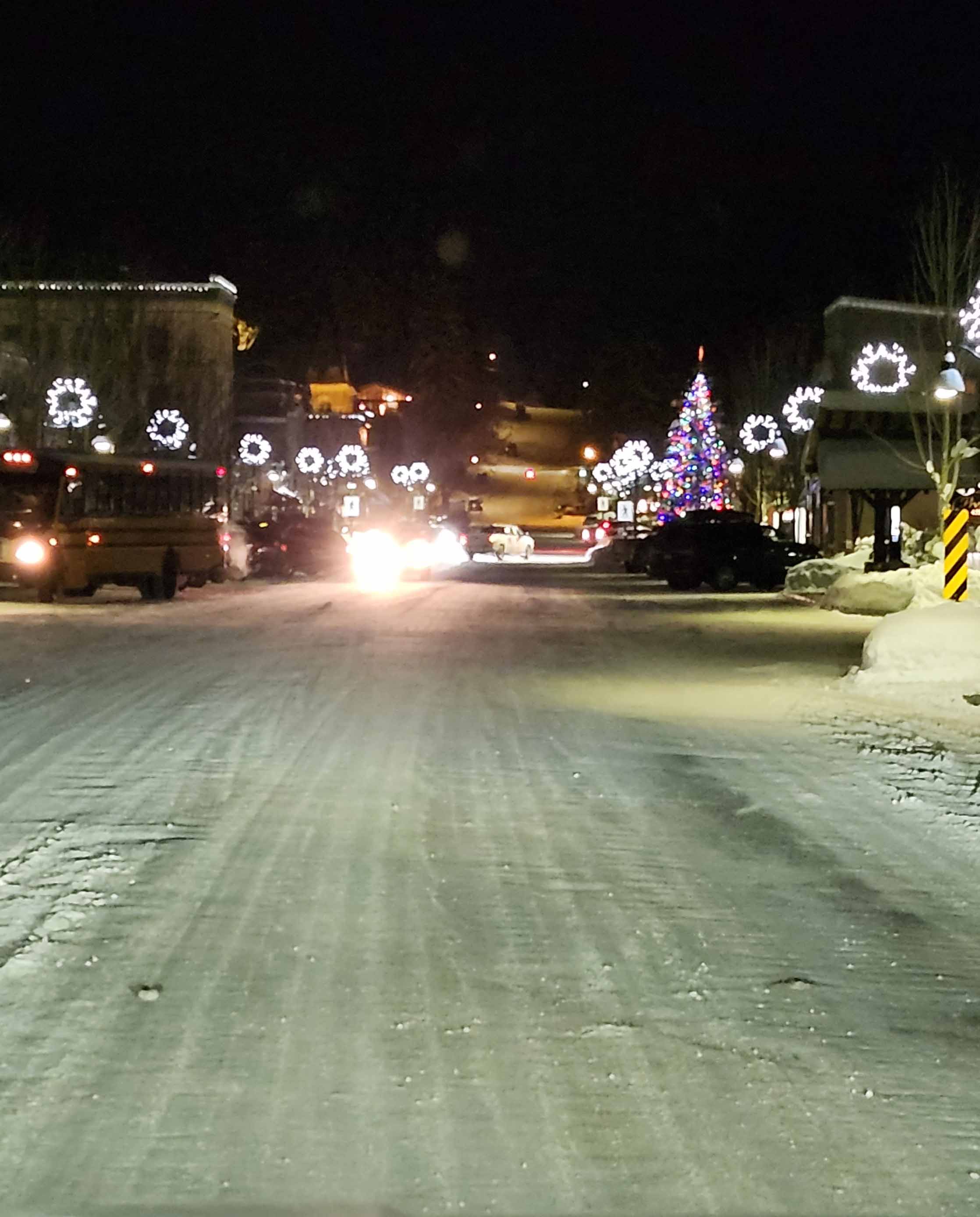
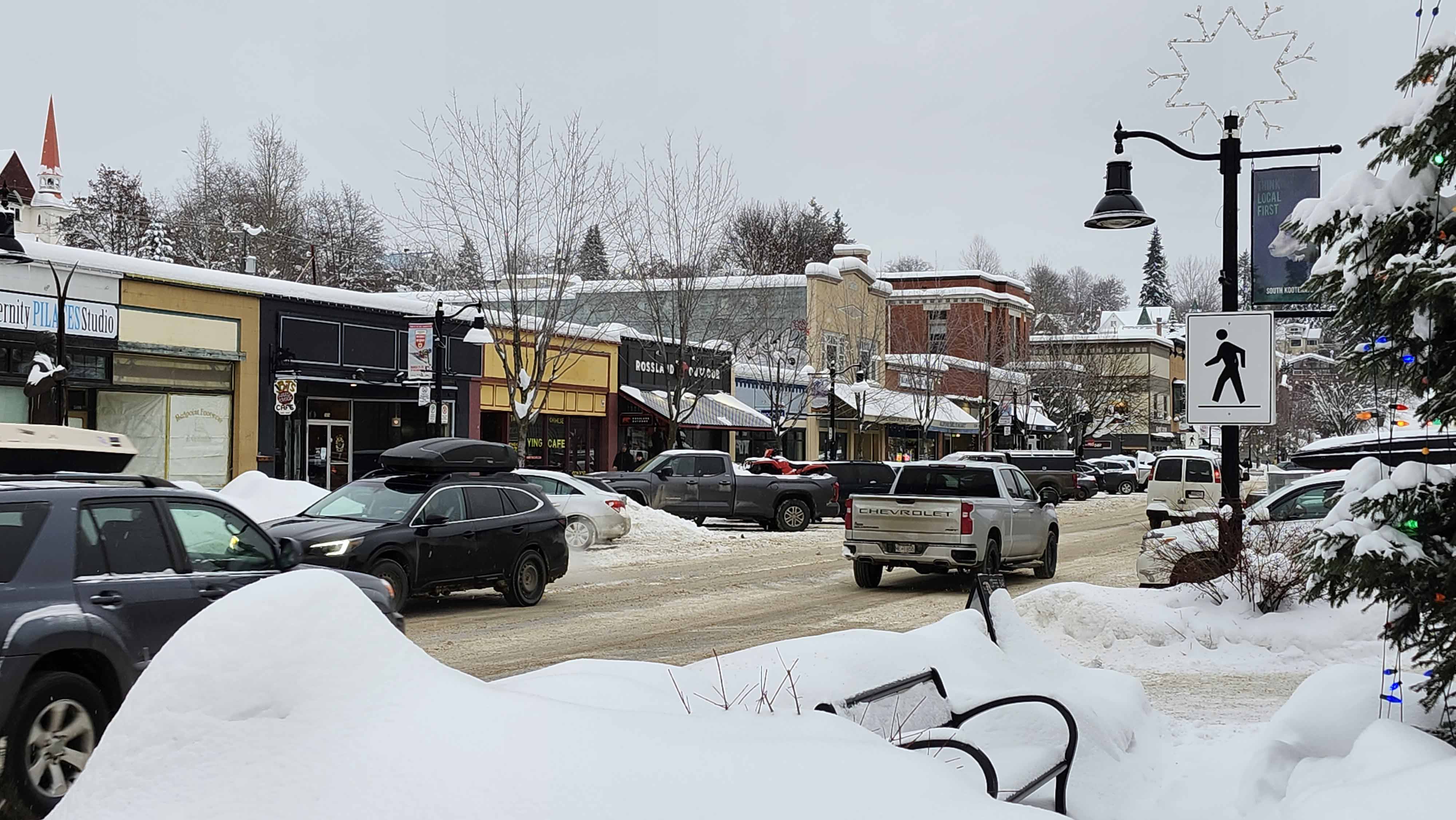
RED Mountain boasts one more signficant asset, and that is the so cute you can hug it town of Rossland! Its small, it’s welcoming, it’s got lots of late 19th Century architecture, a bevy of nice restaurants, shops, and outdoor gear outfitters. At the grocery store, Ferraros, you find all that you need, and folks recruiting volunteers for the upcoming music festival.
After visiting some other ski towns infested with corporate resorts catering to the very rich, Rossland is very refreshing. I will definitely return. Here, childhood really is filled with healthy outdoorsy activities rather than cell phone video games.
Summertime activities include river running, hiking, backpacking, fishing,
Our final visit in the Luxor region was the Karnak Temple Complex. Taken together with its connection to the Luxor Temple, is said to be the largest in the world. It is dedicated to the King of ancient Egyptian gods, Amun. Over several thousand years, it was expanded by pharaohs Thutmoses I, Queen Hatshepsut, Amenhotep III, Ramses II, and the Ptolemys. It is generally thought that it was started during the Middle Kingdom, about 2040 BCE. Its construction continued through the centuries into the Ptolemaic era which ended 30 BCE. It is estimated that during the New Kingdom 80,000 priests worked at Karnak.
The ancient Egyptians referred to this place as “the select place,” “the origin,” etc. They believed this was the place where the world emerged from the chaotic soup that was, in effect, the Big Bang, and the creator god Atum started the work of creation. They also believed this was the place they could communicate with Amun. Egyptian mythology says that Atum and Ra merged to create the supreme Amun.
Each year the ancient Egyptians held the Opet Festival here. They’d carry statues of Amun, Mut and Khonsu in a barque to Luxor Temple, celebrating the god’s guiding the souls of pharaohs to renewed life.
It was believed Amun was a protector of pharaohs. Here, this is specifically spelled out with the ram-headed sphinxes, which can be seen guarding pharaohs under their chins.
Karnak is so iconic that a number of films and film scenes were shot here. Death on the Nile, The Spy Who Loved Me, Valley of the Kings, Poirot, an episode of The Love Boat, and more.
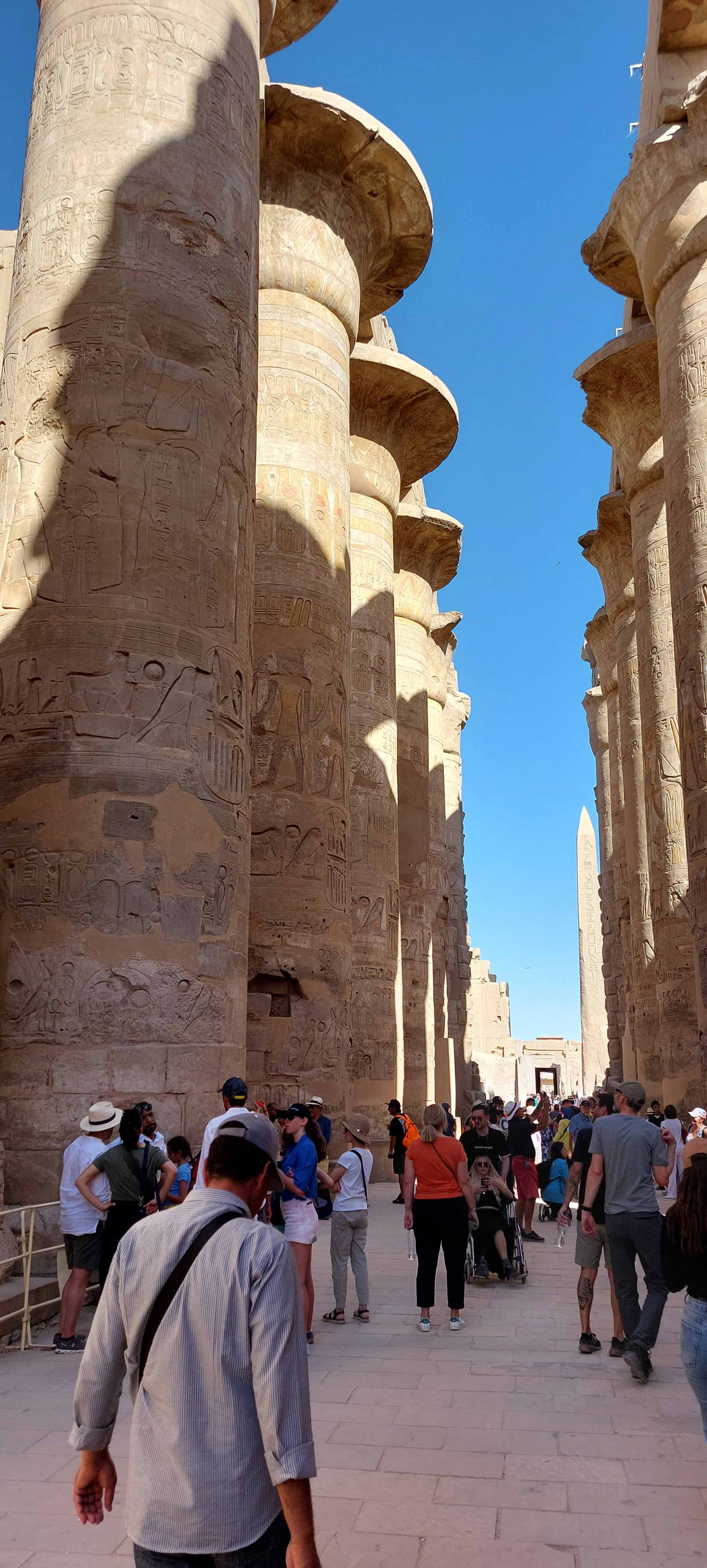
The interior galleries and chapels are full of heiroglyphs. There are 134 columns 65 feet high.
There’s also a number of obelisks. Historically there were hundreds around Egypt but many fell over and many more were taken to places like New York, Paris, Rome, the Vatican, and London. Today there are more obelisks in Rome than Egypt.
Egypt is without question the world’s most archeological rich region. It was one of mankind’s first civilizations, and due to the desert weather, it’s incredibly well preserved. Karnak is a pinnacle of the sites.





















 Cabin Fever Chronicles - Getting Outdoors with Rod