Our Kasbah Hotel in Midelt, Morocco

23 04 2020


Midelt Hotel resized

We left Fez for a long day on the road through the Mid-Atlas Mountains and then onto the high desert plateau. Along the way we witnessed a market for sheep. And got ourselves a picnic lunch, which we ate at a riverbend site. A shepherd with her flock of sheep passed through.

Shepherd resized

Like every day, it was sunny, dry and comfortable. The wind was light.

We descended into a high plains landscape, passed through the town center of Midelt, reaching our hotel on the outskirts of town.

Right in front of the hotel, the snowy northern High Atlas Mountains dominated the view.

Mid Atlas resized

This hotel is built to resemble a kasbah. I though it was cool architecture. It had an outdoor swimming pool as well.

The style of the rooms, and some of the surrounding buildings, walls, and even geography made me think I might be on the other side of the Atlantic, in Mexico! No doubt this is because of the Spanish-Moorish interchange over the centuries, and the shared architectural styles, which the Spanish brought with them to Mexico.

The rooms were airy and generous. The terracotta colored floor and the colors of the walls and drapes made me think of Mexico, too. I’ve never been to Spain myself. Perhaps it has a flair of Granada? The rooms were very generous. Each had a “sitting room” capable of sleeping two and a main room capable of sleeping three.

There was a little hike we could do to a pond nearby, and on the way, once again, I felt like I could be in Mexico. The look of the houses, the walls, end even a nearby mesa completed the image.

The walk wasn’t without beauty, as spring cherry trees were flowering and some peacocks strutted around!

Down at the pond, an information sign got me grounded. It definitively reminded me that I was NOT in Mexico, because it was in French! Essentially, it said the surrounding area and Atlas mountains drained into this river, which the pond is part of, and that it joined other rivers heading north to the Atlantic. It is 13 meters deep. The fish that find home here are bass and trout. There are also Green North African frogs.

Pond Information resized

That night, I ate trout, which was quite tasty, from this pond!

On the way to the hotel, we passed through central Midelt, and like many towns in rural Morocco, it was very quiet. In my pictures, there’s nobody in sight. There are many reasons. There are people, but the men are out working their fields, or women are inside cooking and cleaning. We passed through at a time later in the afternoon. We’d see lots more people when children are going to or coming from school. Or, on certain days of the week markets are open, and locals plus people from surrounding areas are all shopping. We’d see women gathering discussing women stuff, or men at the Mosques or cafes. In the most conservative rural towns, there is a culture about women and their attractiveness to men. Women stay inside and the homes are designed so that women can see out, but men cannot see them inside. That way, the men can concentrate on the tasks at hand, rather than “distractions” or “temptations.” In the cities, this was not so much the case.

On the next day, we were traveling to one of the HIGHLIGHTS of our trip! We would be riding camels on the Sahara! And spending the night in the desert.


Fez, Morocco: Crafts and Medinas

19 04 2020
Katie at the Textile shop

Katie looking iconic!

From Meknes, we made our way to Fez for two nights. Fez has been described as the “Cultural Capital of Morocco.” With 1.7 million inhabitants, it is the second largest city in the country. It houses a Royal Palace, and is known for its medinas, religious schools, and production of ceramics, textiles and leather. It was founded sometime in the 8th Century.

Our drive took us past uncounted olive plantations and other types of farms or ranches.

We arrived in time to settle into hotel rooms, and then went out to dinner. Mohamed suggested I try the Chicken Pastilla. It’s a twist on chicken for dinner! It’s kind of lightly sweet pastry layers over chicken. Delicious!


In the morning, we headed to a kasbah with a commanding view of the city.

From the hilltop, we could see castle walls, the medinas, and university, mosques, city gates, and more.

Like other cities in Morocco, the roads were in good condition and the traffic manageable. Many of the streets were lined with palm trees and modern lighting.

This slideshow requires JavaScript.

It was the beginning of another beautiful day. Next on our agenda was a visit to Dar al-Makhzen, the Royal Palace. We stopped in a square where the palace gates are located. There were guards dressed to the nines from various military branches. Each gate was painstakingly crafted in intricate detail.

Dar al-Makhzen Gate Rod resized


We then journeyed to a ceramics factory. I hesitate to call it a factory because everything is hand made. There, skilled craftsmen perform all the tasks necessary to make the various products. Everything conceivable is made. Bowls, cups, urns, tagines, tablets, vases, figurines and more. We saw everything from the raw clay to how artisans turned pottery wheels, added metal decorations, and fashioned tile inlays.

Even in their unfinished form, the shapes and colors made for very beautiful images!

We got close up glimpses of the artisans at work. Each was a specialist in one area or another. All kinds of skills here. Metal work. Chiseling. Sculpting. Painting.

Fez Ceramic worker 1 resized

Everybody in Morocco wears a NY Yankee hat!

Fez Making a Tagine 1 resized

This will become a Tajine

Next we took a stroll through one of the busy medinas. We’d wind through the many alleyways, filled with sections of shops – in a section you can find textile shops, meat shops, jewelry shops, dress shops – pretty much anything. Along the way, a donkey or cart might squeeze by. Better keep your valuables close at hand, our local guide cautioned.

This slideshow requires JavaScript.

Like other medinas, it had seemingly endless alleys leading in all directions. And all along there are doors – some doors lead to shops, but others lead to restaurants, homes, riads, or even places of worship. And then, just when you are feeling overwhelmed, the call to prayer from the Imam fills the air!

As I’ve said before, whilst walking the medinas, an unassuming doorway often leads to something fantastic. Here, we encountered an open roof mosque. It was incredibly meticulously crafted with marvelous detail.

This slideshow requires JavaScript.

Two more crafts to visit. We toured a section of town where they make leather goods. I imagined it employed several thousand people. And we went to a textiles “factory.” That is where I got the next image of Katie in a traditional head scarf!

Fez Katie 2

That evening, we all gathered for sunset drinks at a hotel roof bar. The stars came out.

The following day would be a long drive out to Midelt – getting closer to the Atlas Mountains.


Outpost of Empire: Volubilis, Morocco

3 04 2020
morocco, volubilis morocco

Standing in front of Corinthian columns.

After lunch, we drove out to Volubilis. This ancient Roman city is the finest archeological site in Morocco. At its peak in the 2nd Century A.D., it spread out over 100 acres and had a population estimated at 20,000. What we see today looks to be Roman, but that belies the many waves of kingdoms and cultures that made this city home. It is often referred to as a Berber city as well.

Before the Romans, it was founded in the 2nd Century B.C. as the capital of Mauritania. It became a Roman client state in the 1st Century B.C. and then was annexed by Rome in 44 A.D. And after the Romans, in 787, it became the capital of Idris I, the first king of the Idrisid dynasty. Eventually it fell back into local tribal ownership. It was continuously populated under various rulers until the 1755 Great Lisbon Earthquake leveled it, along with many cities and towns in southern Europe and North Africa.

Volubilis enjoys status as a UNESCO World Heritage Site due to the numerous cultures that lived here. For over 1,000 years, it was inhabited by Berbers, Arabs, Romans, Mauretanians, Libyans, Jews, Moors, as well as Aftrican and Christian cultures. Archeologists have unearthed evidence of all these cultures.

When we arrived the day had turned dry, warm and bright. The city sits on a hillside and has an uninterrupted view of the surrounding area. Wending our way through the ruins, the extent of the city became apparent. There were baths, rest rooms, an industrial size olive press, elaborate halls, a sewer under the main street, and intricate tile floors depicting elements of daily life, as well as tales of the Gods and Hercules.

Another reason this city was selected as a World Heritage site is its integrity. After 1755, it was essentially abandoned and left alone. So what the architects found was as pristine as it had been for centuries.

All three types of columns were evident – Doric, Iambic and Corinthian. Corinthian are more fancy and detailed at the the top. For Iambic, the top looks like a a sheet of paper with rolls on either end. Doric are the simplest, with the top kind of looking like a chopped off inverted pyramid (I don’t have images for those).

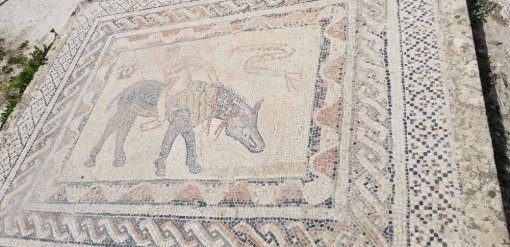
Many of the structures contained elaborate tile floors depicting images of gods, stories of the gods, and pictures of animals.

Chariots and Lions1 resized

Not sure what’s going on, but there is a man, horse, and I think lion

Horseback riding resized

Here, a man riding a horse backwards

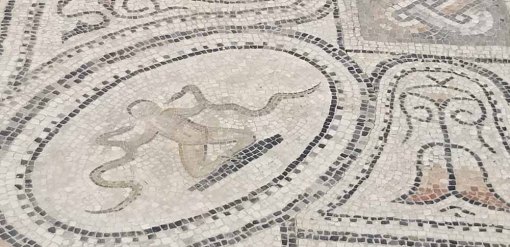
Hercules Wrestling Snakes resized

Hercules wrestling snakes

The mosaics even contained evidence of just how far away influence had come. There was a swastika – a religious icon of divinity and spirituality from Hinduism.

The size, history and significance of Volubilis was a lot to comprehend. We had time in the bus to consider, as our destination for the night was Fez.


Meknes, Morocco – Morocco’s Ancient Imperial Capital

31 03 2020
Meknes Gate resized

The “Thursday Gate”

We arrived in Meknes and hiked our gear to our hotel. Meknes seems to be another well-kept Moroccan city. Roads were smooth and traffic manageable. Meknes is a former capital of the country. Walking to dinner, the sunset foretold another day of perfect weather lay ahead.

meknes morocco at sunset

Meknes, Morocco Sunset

Our plan for the day would split our time with part of the day in Meknes, an afternoon stroll through the ancient Roman city of Volubilis, and then wind up in Fez. With so much to cover, I’m publishing one post for Meknes and another for Volubilis.

First thing in the morning we stopped at a cliffside viewpoint. The city’s history is dominated by the ruthless rule of Sultan Moulay Ismail (1672-1727), who made it his capital. The city’s lengthy walls, blended Moorish-Spanish architecture and huge gates are marks of his power. He built a huge underground prison where humans went in – not out. And he abolished the sales of slaves not so that the slaves could go free, but they would all be his own and work on his projects. Most of his slaves were Christians. Legend says he fathered 1,000 children.

This slideshow requires JavaScript.

The tour then visited Bab El-Khemis, a.k.a. the Thursday Gate. This 17th-Century gate brings the visitor to the medina – which has 19 gates and is inside a 19 km wall. Watching the gate, I was amazed at the birds living there. I actually identified crows, swifts, sparrows, pigeons, cuckoos, starlings, storks, egrets and even small raptors living in the many holes in its wall.

We then began a lengthy morning walk. We came to an old reservoir which was overlooked by ramparts of Dar el Makhzen Palace, built by Sultan Moulay Ismail and still used today. We’d do a long walk along the walls of this palace. We also examined the “roof,” which is actually at street level, of Ismail’s notorious Habs Qara prison – which was estimated to contain 60,000.

This slideshow requires JavaScript.

Just as at the Thursday Gate, I witnessed at least a dozen species of birds living in the palace walls.

Next, we tested our legs walking the 1,000 year old medina. Like others we saw, it is a challenge to navigate, and has entrances / doors / arches leading to wonders inside. This one was not as busy as some.


It was here that we had our much anticipated camel burger lunch! Actually, I really enjoyed it. Our restaurant seemed to be actually part of someone’s home, and we entered via one of those doors.

After lunch, we emerged into the open air Place el-Hedim. It is a large square with a buzz of activity from fruit sellers to a place selling thousands of tajines. Later, a snake charmer and monkey handler set up.

Then, it was off to Volubilis for some time in Ancient Rome.


Rabat, Capital of Morocco – Kasbahs and Bullet Trains

27 03 2020
Rabat, Rabat Morocco

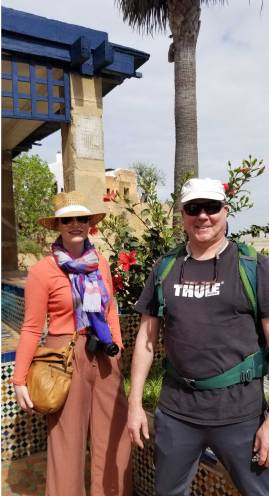
Rod and Penny at the Rabat Kasbah

We awoke early at the Hotel Al Walid in Casablanca. The plan was to go by rail to Rabat, walk around the city, and then continue by rail to Meknes. After breakfast and then fiddling with various ATMs to withdraw Moroccan Dirhams, we walked across the square, managing our luggage as best we could, and caught a train at the Casa Voyageurs Station, originally built in 1923.

The station underwent a recent $47 million renovation for Morocco’s high speed train (more on that below). It is totally up to date. Boarding the train, however, was another matter altogether. Once it arrived, there was a crush of passengers with luggage hastily getting on. The train was European style with cabins and an aisle on one side. Our guide, Mohamed, went into action shepherding us to the right spots and getting luggage on board.

The ride was about two hours to Rabat. The station is situated at an ideal location for checking out the city on foot. It was late morning, and the marine cloud layer had yet to burn away. Mohamed led us to a restaurant across from the station where we would store our bags and have lunch after our walk. We were given maps and an idea of a route. It’d take us past government offices, through a medina and on to a Kasbah with views of the Atlantic.


This slideshow requires JavaScript.

I found the city center to be attractive and clean, with a French architectural flair. There is no shortage of BMW and Mercedes vehicles. The architecture, red flags with stars and palm lined streets had me remembering such sights in Saigon and Hanoi, both of which were French colonial cities, which now have those red flags (But the Moroccan star is green, and the Vietnamese star is yellow)!

We passed through the Medina and reached the seaside Kasbah des Oudaias. It was built in the 12th Century by the Almohad Dynasty. Along the way, we were approached by a couple of unsolicited “tour guides” offering unsolicited information and then asking for a few dirhams. Once through the Kasbah gate, Betty and I allowed one of these Faux Guides to lead us through a residential part of the kasbah (if you are wondering, I paid him 20 Dirham, and he turned around and told the next people we paid him 100). Like in the medinas, it consisted of narrow lanes with centuries-old doors behind which were apartments. Some of the doors had ornamental handles with spiritual significance, and many had the year built above, some of which said 1330. Imagine that, living in an apartment built in 1330?! There was also a lot of blue, which he said it was thought kept mosquitoes away. It ended at a 1/4 acre sized rooftop “patio” overlooking the Atlantic, the river nearby and centuries-old battlements. The weather was clearing and turning nice!

Once outside, we checked out the garden of the Kasbah. It was very attractive, well cared for, and even had a small cafe with a view of the coast.

We headed back to the cafe where our luggage was stored, sat down, and had a hearty lunch.

Then, it was back on the train to Meknes. Ours was a regular speed Moroccan train. It took us about 3 hours to get to Meknes.

The train has European style arrangements. An aisle down one side, with compartments on the other.


The compartments in our First Class rail car had comfortable seats with head rests. Luggage was stored above the seats.


Well, I needed to pay a visit to the WC! And well, open the toilet and let it fly!

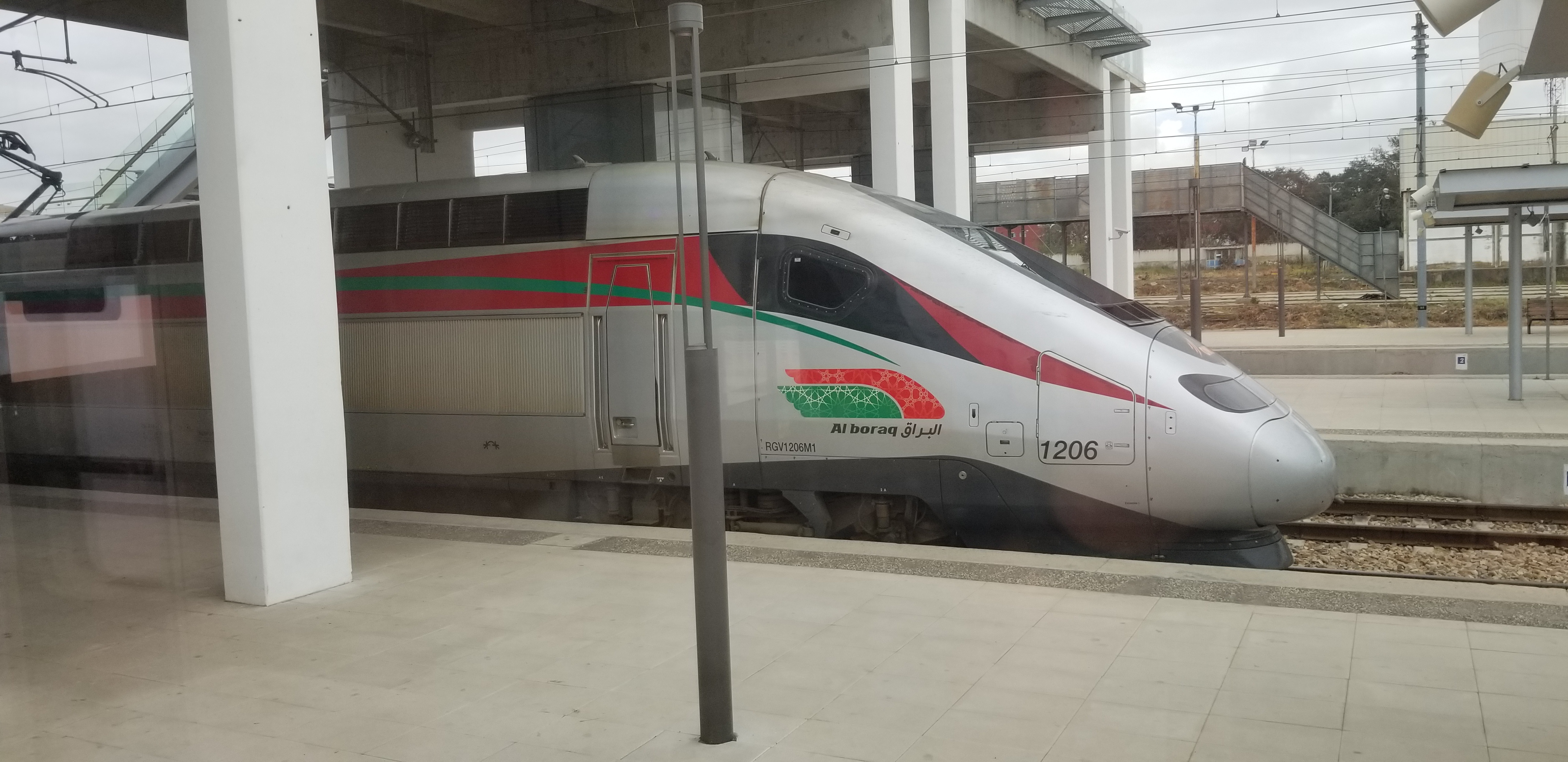
At the Rabat train station, I couldn’t help but gawk at the 21st Century Moroccan TGV as it pulled up.

The Al Boraq

It is called the Al-Boraq, and can travel 200 mph. It operates on a 201 – mile line between Tangier and Casablanca. To be extended to Marrakesh and points south. It opened in November 2018. Tickets can be had for less than $50. It could cover the distance between New York and Washington, DC in about 90 minutes. Kind of amazing! Well, another time I guess.

The train ride to Meknes moves inland, passing olive, orange and date groves, orchards, vineyards, grazing sheep and cows, and fields of barley. Meknes is the religious capital of Morocco, and we’ll see some of it the following day.


Casablanca, Morocco – “Of all the gin joints in the world, she walks into mine.”

25 03 2020

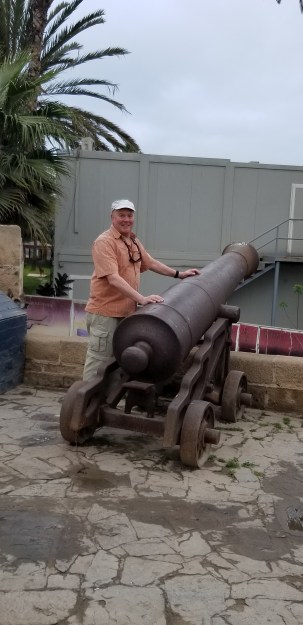
Rod Cannon resized

For several years Morocco has been right at the top of my travel list! Many years ago I spent a month in Turkey. The people, food, history and varied topography impressed me so much, and I’ve been wanting to visit another Muslim Mediterranean country ever since. Morocco, with its coast, Roman ruins, labyrinthine medinas, riads, Sahara Desert, kasbahs, 13,600ft Atlas Mountains and Atlantic beaches, plus a reputation for friendly people certainly checks all those boxes. But for several years I was held back by 40-hour airline flight itineraries. In the fall of 2019, I was able to book a non-stop flight from Portland to Europe with one connection to Casablanca. With that, I was IN!

On Black Friday I signed up with Intrepid Travel for their “Best of Morocco” tour. It hit all the varied spots I was looking for. Even better, with credit card points, I paid for the flight and most of the tour. We had 13 people total.

The 1st day of the tour started with a 6 p.m. meeting. That was the only time spent in Casablanca, and I wanted a chance to see it. So, I arrived the night before and booked a day tour of the city. I arrived at the Al Walid Hotel with enough daylight to walk around the square where it’s located. Across the square is the Casablanca Voyageurs train station. It’s a modern station blended with a French colonial building. Along the square, a Light Rail system shuttled passengers. I immediately noted the relaxed nature of the people. Nobody was rushing around like in some 3rd World cities. The traffic was not dense. There was a lack of the din of horns heard in many cities.

In fact, that evening I slept with my hotel window open all night. After 11 p.m., it was very quiet inside the city! One thing was an immediate delightful surprise – I could hear and understand people speaking French! This was my first night and I ordered dinner, purchased a train ticket, and later spoke to the hotel attendant in French! WTF! I studied French for 7 years but hadn’t used it much. And all of the sudden it came out of my brain from nowhere! It was like automatic. And super fun! I had loaded a French/English language app before I left which helped fill in gaps. But not in French was the Imam prayer call at about 5:45 a.m.! Breakfasted, I snagged a “Petits Taxi” and set off to our joining place, Rick’s Cafe.

Casablanca, population 3.6 million, lies on the Atlantic coast and is the commercial capital of Morocco. Its name is synonymous with the 1942 film noir namesake film – considered by some to be the best of the 20th Century. With that, of course, the day tour met at Rick’s Cafe! The interior of the cafe is an exact replica of the movie set. The morning had typical coastal clouds but they’d burn off.

Ricks-Cafe-resized

The irony is that none of the film was made in Morocco at all. The whole production was done in Hollywood. Nonetheless, it endowed the city with a romantic and mysterious reputation.

Joining me were Stephanie of Washington, D.C., Chevon of the Virgin Islands, and Oliver of Melbourne, Australia.

We introduced ourselves and then Bennie, our guide, led us on a three hour walking tour. Two highlights were the Old Medina followed by the New Medina. A medina is a distinct section of a city (or quarter) often highlighted by narrow walled lanes – lanes with doors or shops on the sides. One can find themselves fascinated and, sometimes, lost for hours in a medina. Sometimes a seemingly ordinary door, when opened, will lead to something completely unimaginable, such as garden surrounded by a multi-tiered lodge – or Riad.

On the walk to the Medinas, we passed through some examples of Spanish-inspired architecture, and the classic form of Minaret found in Morocco.

It was just barely opening time at the medinas. The shops were opening up one by one, each specializing in a type of good for sale. Products included seafood, chicken, leather, textiles, olives, nuts, grains, timepieces, produce, glassware, metals, spices, and even a pet store.

More images of things one can get at the medina!

This slideshow requires JavaScript.

Trotting around medinas can be a bit exhausting for for anyone. Not the least travelers that are jet lagged, with tired legs and minds. So we saw more, stretched our legs, and then, had tea and lunch. Casablanca definitely has a laid-back cafe lifestyle. The weather was turning out superb – dry and warm. We had an outside table by a town square, perfect for people watching. And I continued using French, which was super fun.

Later, Chevon and I headed to one of Casablanca’s seaside attractions – the Hassan II Mosque. Hassan 2 resized

The seaside mosque looms over the city skyline – visible from almost everywhere. It is the largest mosque in Africa.

It was finished in 1993 at a cost of about $750 million, much of which was donated by worshipers and the King. It can hold 25,000 worshipers inside, and 80,000 outside.

It is very intricate and has a roof which can be opened to the sky. Down below is a mammoth area where worshipers can wash before the services.

From outside, near the edge of the property, the city gives way to the Atlantic.

Hassan 2 waterfront resized

It was a full day sightseeing in Casablanca. A good way to begin the trip.

I’d meet our group about 6 p.m. and then we’d go out for drinks and getting to know one another.

Looked like it was going to be a good vacation!