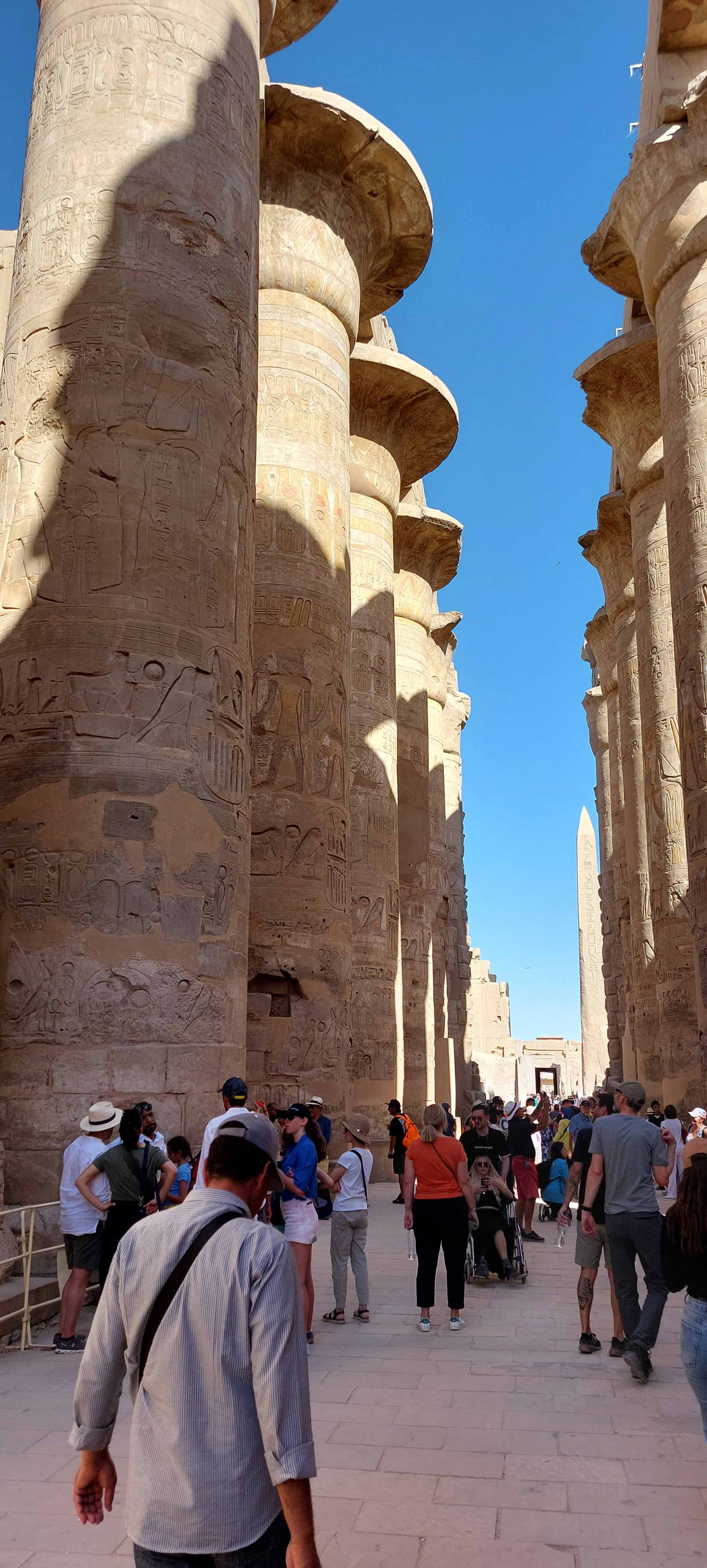
Our final visit in the Luxor region was the Karnak Temple Complex. Taken together with its connection to the Luxor Temple, is said to be the largest in the world. It is dedicated to the King of ancient Egyptian gods, Amun. Over several thousand years, it was expanded by pharaohs Thutmoses I, Queen Hatshepsut, Amenhotep III, Ramses II, and the Ptolemys. It is generally thought that it was started during the Middle Kingdom, about 2040 BCE. Its construction continued through the centuries into the Ptolemaic era which ended 30 BCE. It is estimated that during the New Kingdom 80,000 priests worked at Karnak.
The ancient Egyptians referred to this place as “the select place,” “the origin,” etc. They believed this was the place where the world emerged from the chaotic soup that was, in effect, the Big Bang, and the creator god Atum started the work of creation. They also believed this was the place they could communicate with Amun. Egyptian mythology says that Atum and Ra merged to create the supreme Amun.
Each year the ancient Egyptians held the Opet Festival here. They’d carry statues of Amun, Mut and Khonsu in a barque to Luxor Temple, celebrating the god’s guiding the souls of pharaohs to renewed life.
It was believed Amun was a protector of pharaohs. Here, this is specifically spelled out with the ram-headed sphinxes, which can be seen guarding pharaohs under their chins.
Karnak is so iconic that a number of films and film scenes were shot here. Death on the Nile, The Spy Who Loved Me, Valley of the Kings, Poirot, an episode of The Love Boat, and more.
The interior galleries and chapels are full of heiroglyphs. There are 134 columns 65 feet high.
There’s also a number of obelisks. Historically there were hundreds around Egypt but many fell over and many more were taken to places like New York, Paris, Rome, the Vatican, and London. Today there are more obelisks in Rome than Egypt.
Egypt is without question the world’s most archeological rich region. It was one of mankind’s first civilizations, and due to the desert weather, it’s incredibly well preserved. Karnak is a pinnacle of the sites.
After Luxor, the next morning we were out the door very early to experience the Valley of the Kings and the Mortuary temple of Queen Hatshepsut. We left early to avoid mid-day heat – the area is known as one of the hottest places on earth. It lies in a valley to the west of Luxor.
The Valley of the Kings includes at least 65 royal tombs. They were dug into the mountainsides, and can be quite extensive. They are noted for the remarkable condition of the painted reliefs – which have never been exposed to direct sunlight.
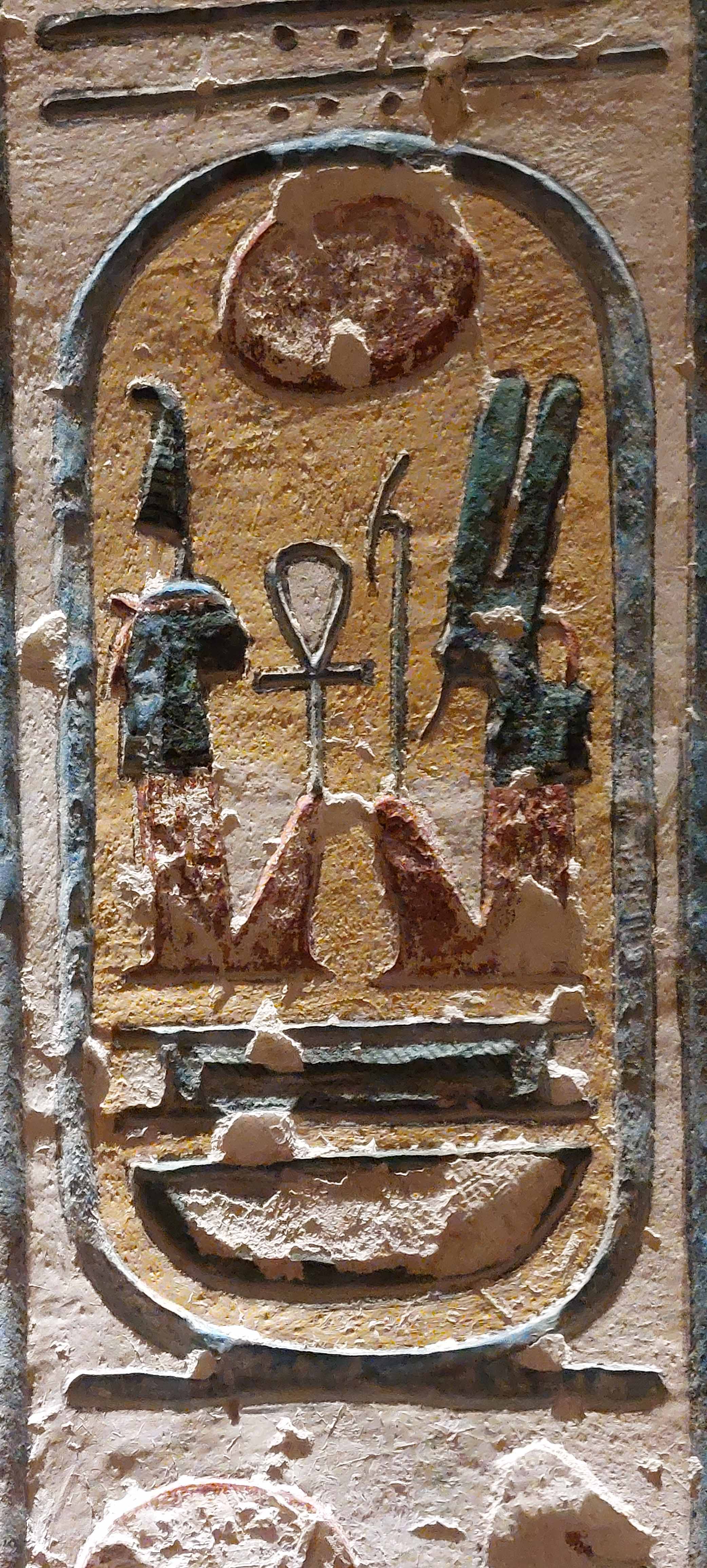
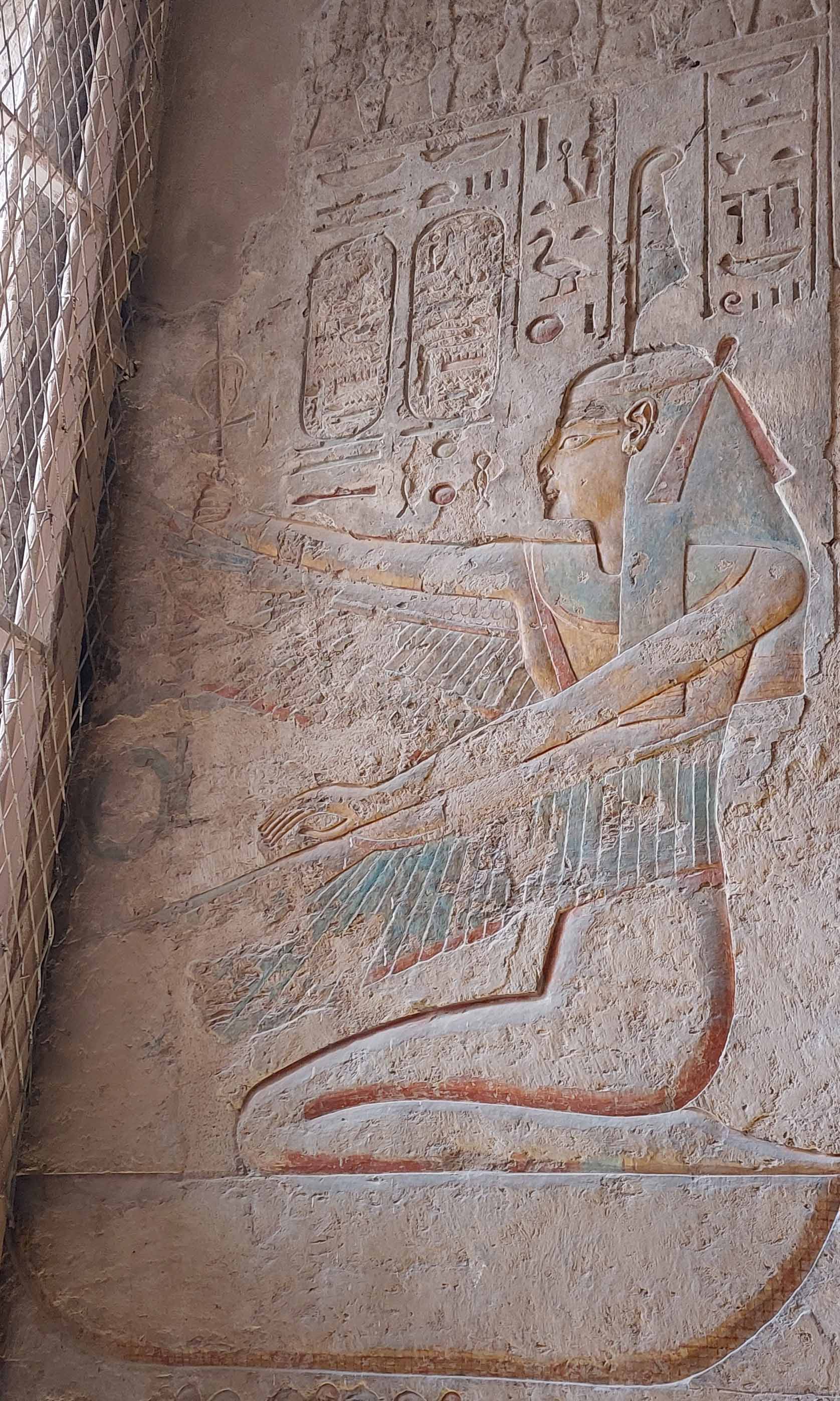
CartoucheMa’at
The tombs are intended to help the soul of the pharaoh complete the journey from this life to the next. The walls and ceilings are completely filled with memories of his life, and after life myths and traditions all ancient Egyptians knew as essential to successfully make the transition to the next life.
Ancient Egyptians believed that their Earthly existence was merely a transitional phase. They believed that if they lived this life following the principles of ma’at, they might make it past this phase. The goddess Ma’at put forth 42 commandments by which all lived. These were more extensive than the 10 Commandments of Moses, and existed for thousands of years prior. Today, it is worth reflecting that most societies and laws still align with many of these values.
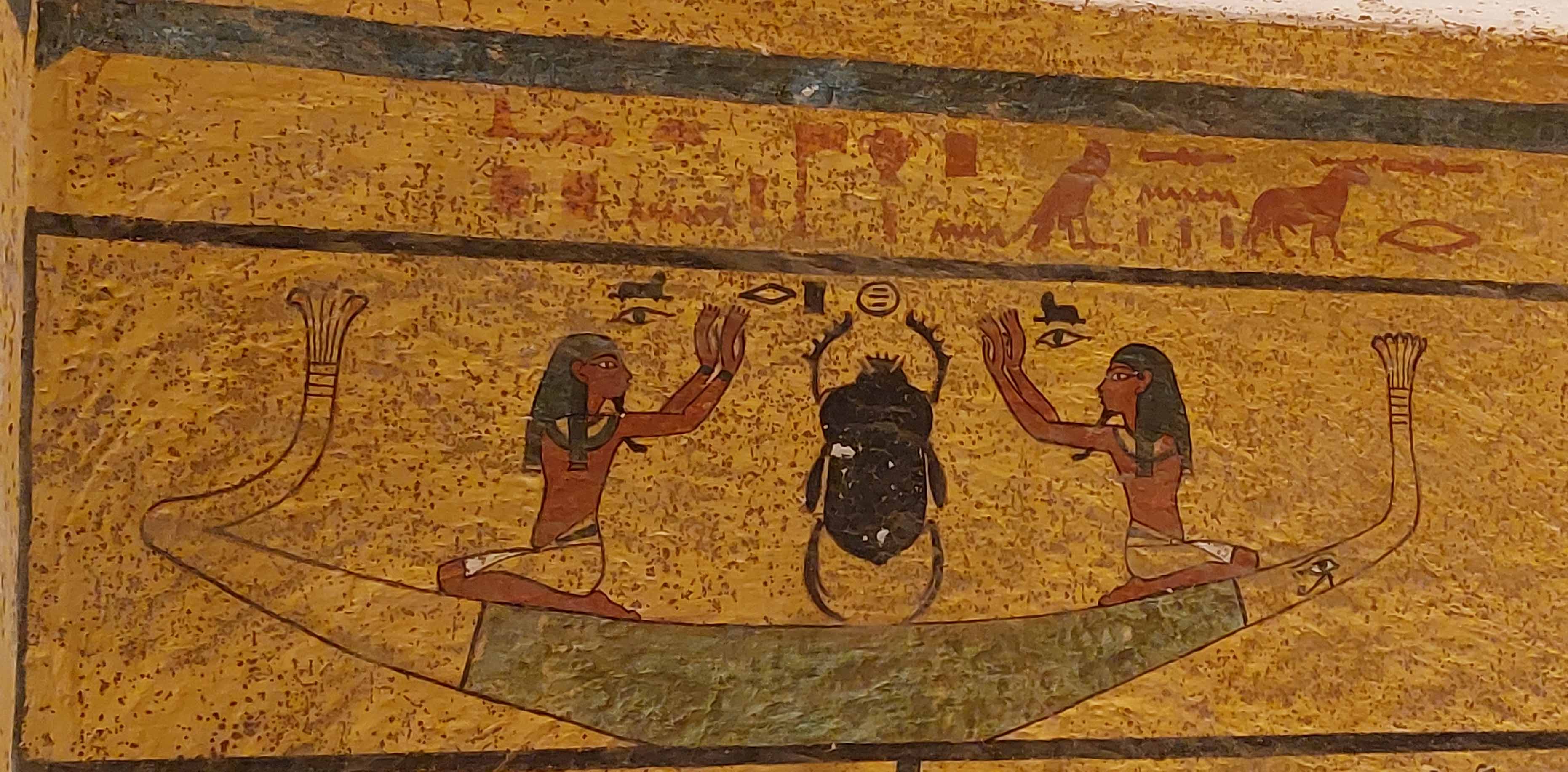
When an ancient Egyptian died, its soul awoke in the Duat. The Duat was the underworld – a place inhabited by the deities Osiris, Nekhbet, Ma’at, Anubis, and Hathor, as well as the souls of others undertaking the journey to the next life. This journey often took place on a raft. Osiris granted or denied entry to the next life. Anubis and Afu Ra helped the soul on its way. It was also a difficult realm, filled with demons and serpents who’d challenge the soul. After making it past all these challenges, the soul made it to a place where it would face judgment by Osiris. There, countless other souls waited their turn. Ordinary Egyptians hoped to ascend to the “Field of Rushes,” where they’d sow and harvest abundant crops into eternity. But the pharaoh, his spirit would unite with the Sun god Ra, ascend into the sky and take its place amongst the stars. Everyone was guided across the duat by the ram headed duat form of Ra – Afu Ra. If they made it to the other side of the duat, the deceased faced a “tribunal” over which Osiris presided. It would have to recite 42 “negative confessions,” meaning they’d say “I did not” engage in each of the 42 rules – e.g. “I have not been an evesdropper.” Then, a scale of worth is presented. This scale has on one side the ostrich feather of Ma’at. The feather of truth. On the other side is placed the heart of the deceased. The ancient Egyptians did not know Hell as Jews, Christians and Muslims know Hell. Instead, the worst would be to cease to exist at all. Once the heart was placed on the scale, if it was lighter than the feather, the soul could go to the afterlife. If not, if heavier, the soul’s heart was fed to a crocodile/hippo monster and extinguished for eternity.
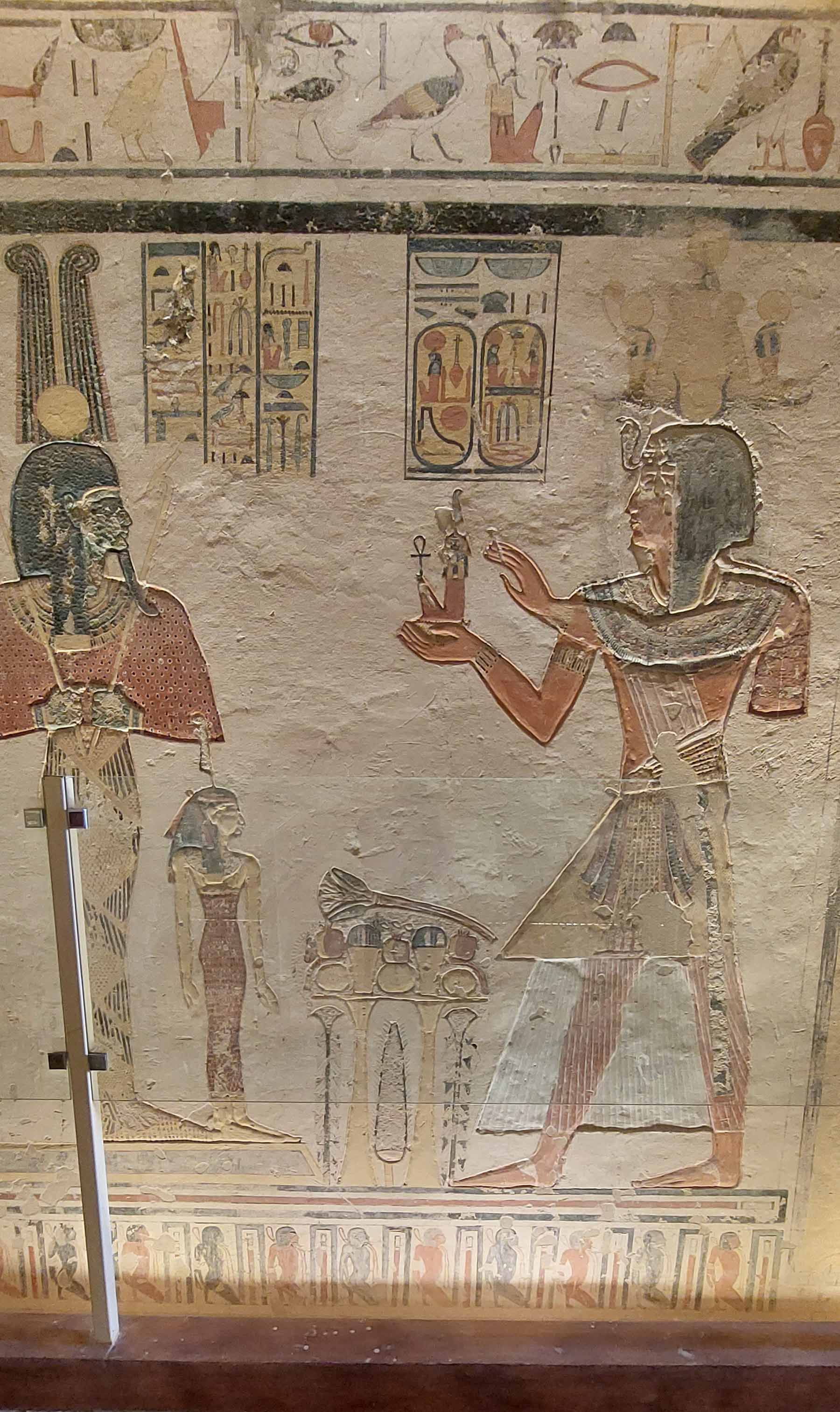
Upon awakening after death, prior to journeying the duat, the soul might not know its identity. To help out, Egyptians decorated the tomb walls with scenes from its Earthly life. We visited the tomb of Ramses IX. This image is such a scene of his life. When pharaohs were crowned, they presented an image of Ma’at to the highest god Amun – assuring him that the pharoah would ensure balance and harmony.
The importance of truth and the principles of ma’at cannot be overstated.
Inside the tomb, images of Ma’at guard its entrance and appear many times over. There is a scene of Ma’at with a harpist, and one of her with the sun god Ra.
The soul would ride on a raft through the Duat. Nephthys would oversee.
Some gods would appear differently in the Duat phase. Here is Afu Ra, how the sun god Ra appears in the Duat.
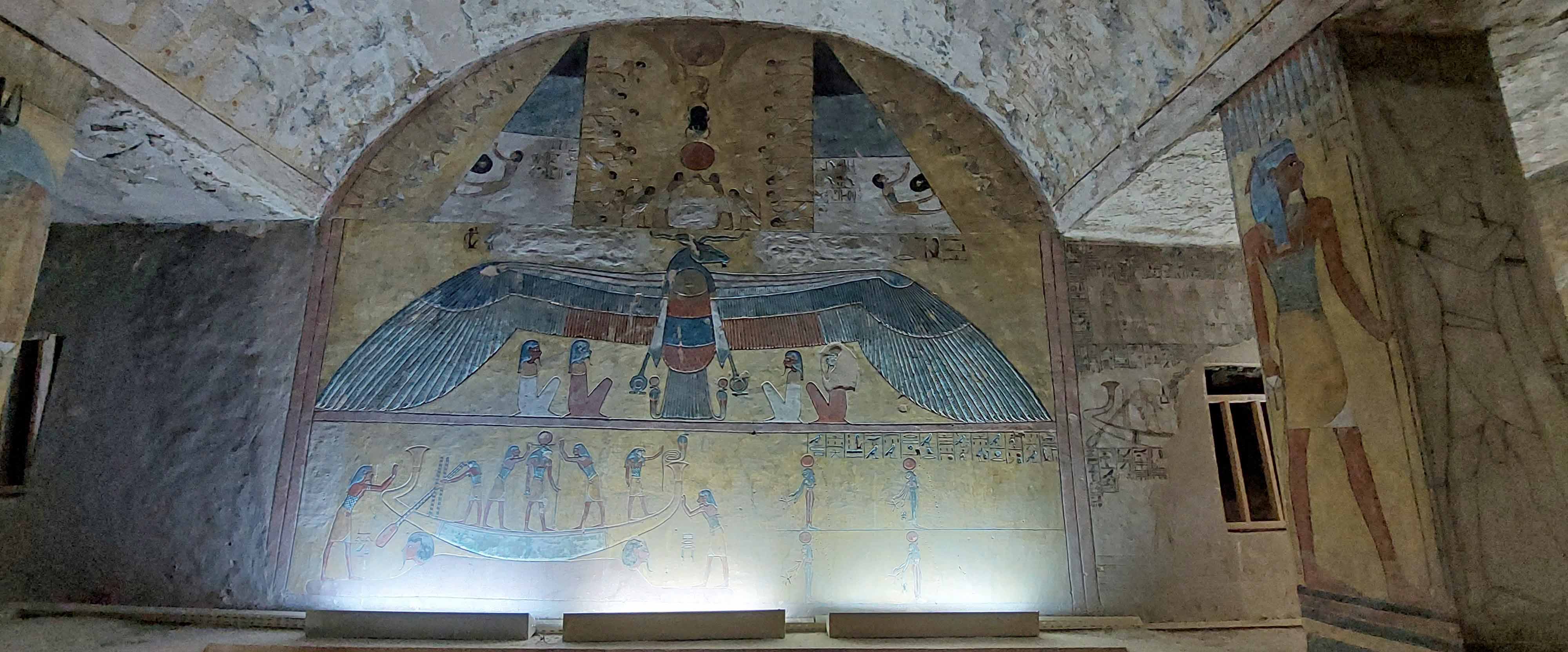
We are now in the chamber where the sarcophagus is located. Along the walls are more scenes from the journey through the Duat. We see the soul being challenged by serpents. We see the representation of the journey through out the night. The goddess Nut covers the ceiling from one side to the other. She oversees the stars. Beneath her elongated body are more scenes from challenges the soul faces on its way.
From an artistic and engineering point of view, the tomb is fantastic. Here is a video!
Glimpsing the chamber was simply awesome, to use a cliche expression!
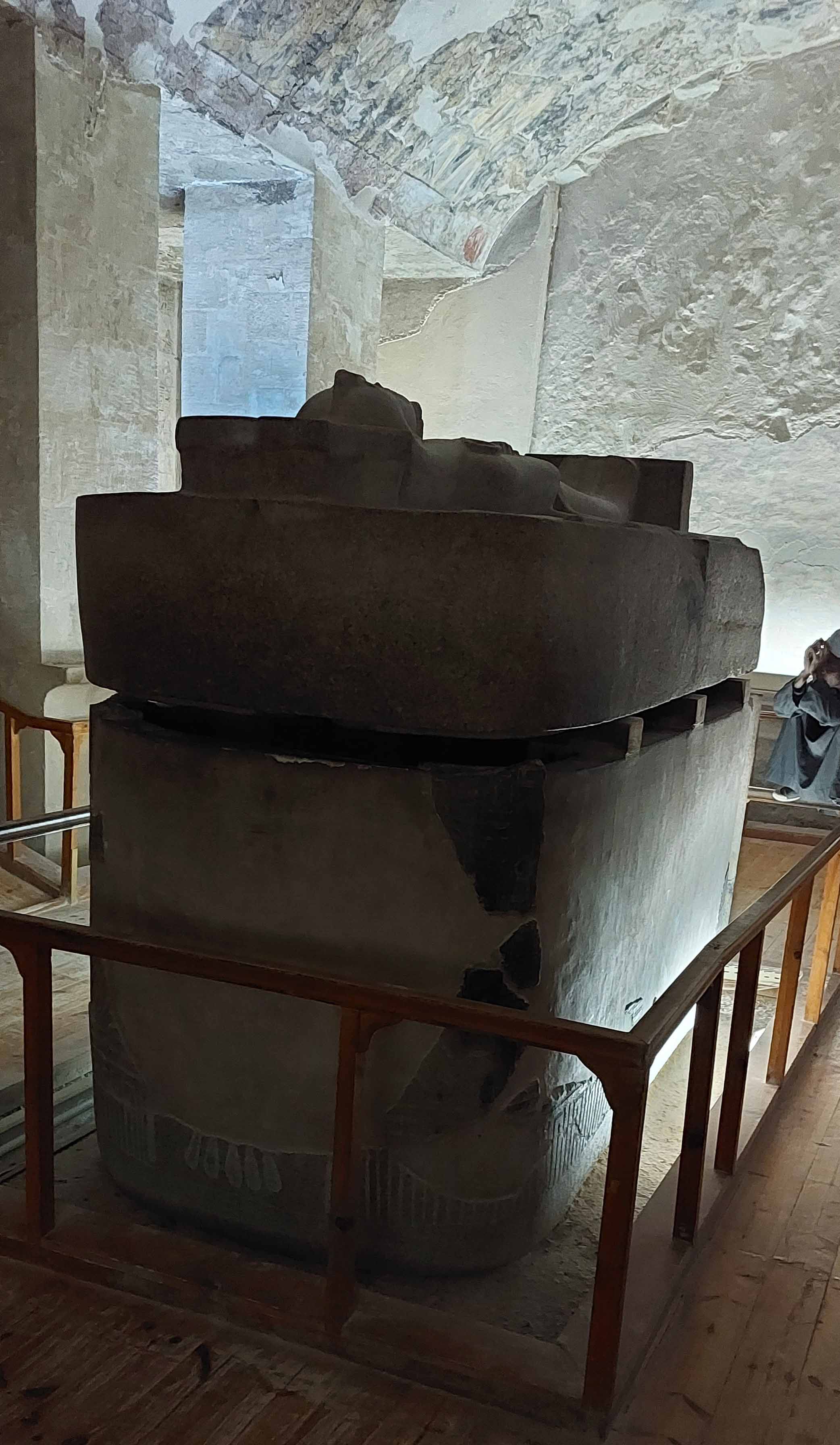
In the center lay the sarcophagus, which must weigh tons.












 Cabin Fever Chronicles - Getting Outdoors with Rod