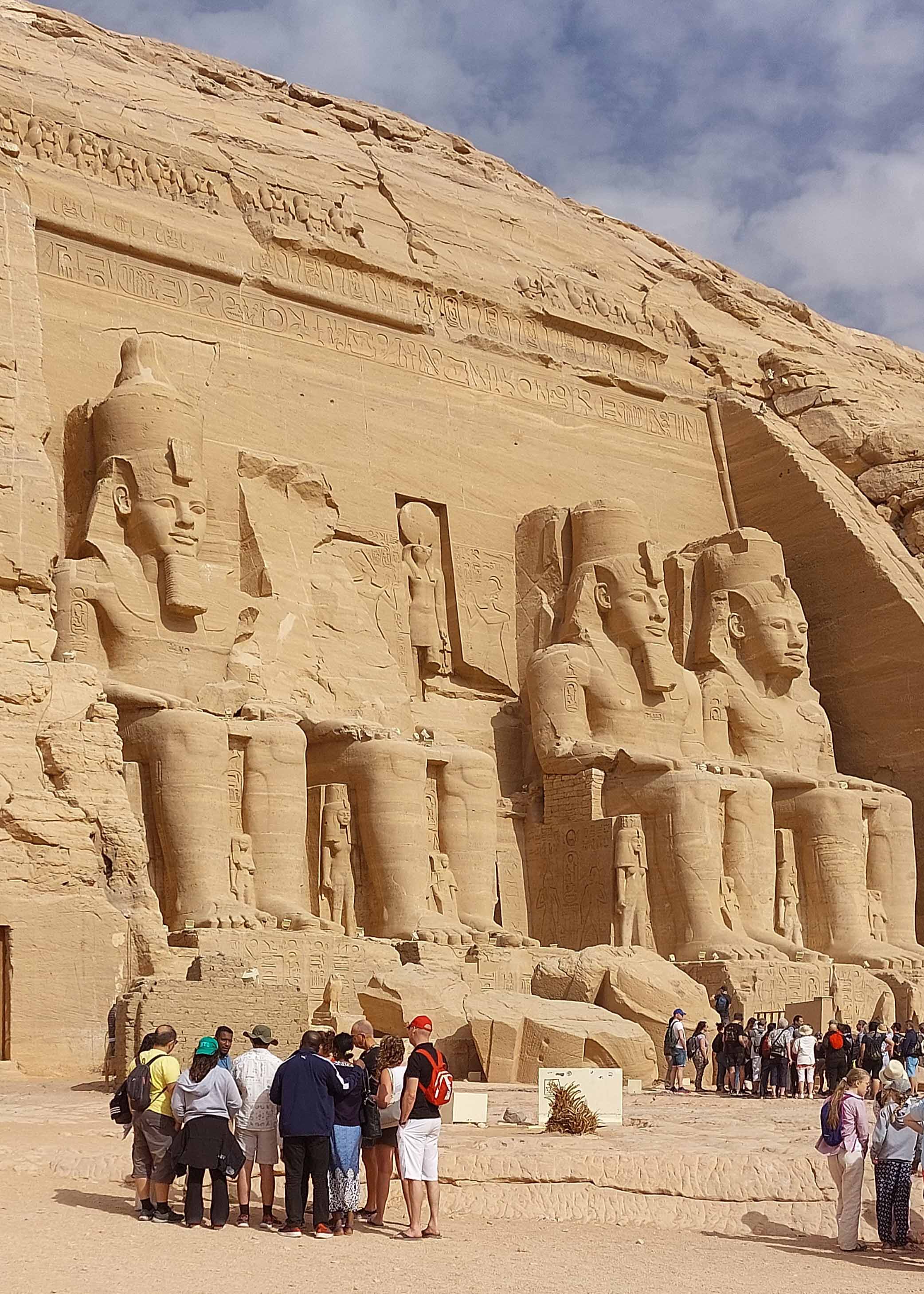
Abu Simbel stands tall as one of the ancient world’s most amazing achievements. Carved into a mountain, for thousands of years it has stood as an emphatic notification to all sailing north on the Nile that this is the border of Egypt, a powerful kingdom. And, during the 66-year rule of Ramses II, 4 giant statues of him informed all comers that this was his country.
It takes a 3+ hours drive south to reach the site from Aswan. It’s close to the border with Sudan. We departed from our hotel at 4:30 a.m., with boxed breakfasts from the hotel. The drive is very flat across Sahara scab land, dusty and rocky – not full of dunes. Little did we know that whilst we were away at Abu Simbel, a dust storm would overwhelm Aswan! But it was gone when we returned. The site sits next to Lake Nasser.

Before I delve into the fascinating ruins themselves, I think it’s important to tell you about the amazing modern-day achievements at Abu Simbel! In the mid 1960’s, impending completion of the Aswan High Dam threatened submersion of many important ruins including Abu Simbel. This site was considered so important to world history that UNESCO orchestrated a campaign to move the entire site away from the rising waters.
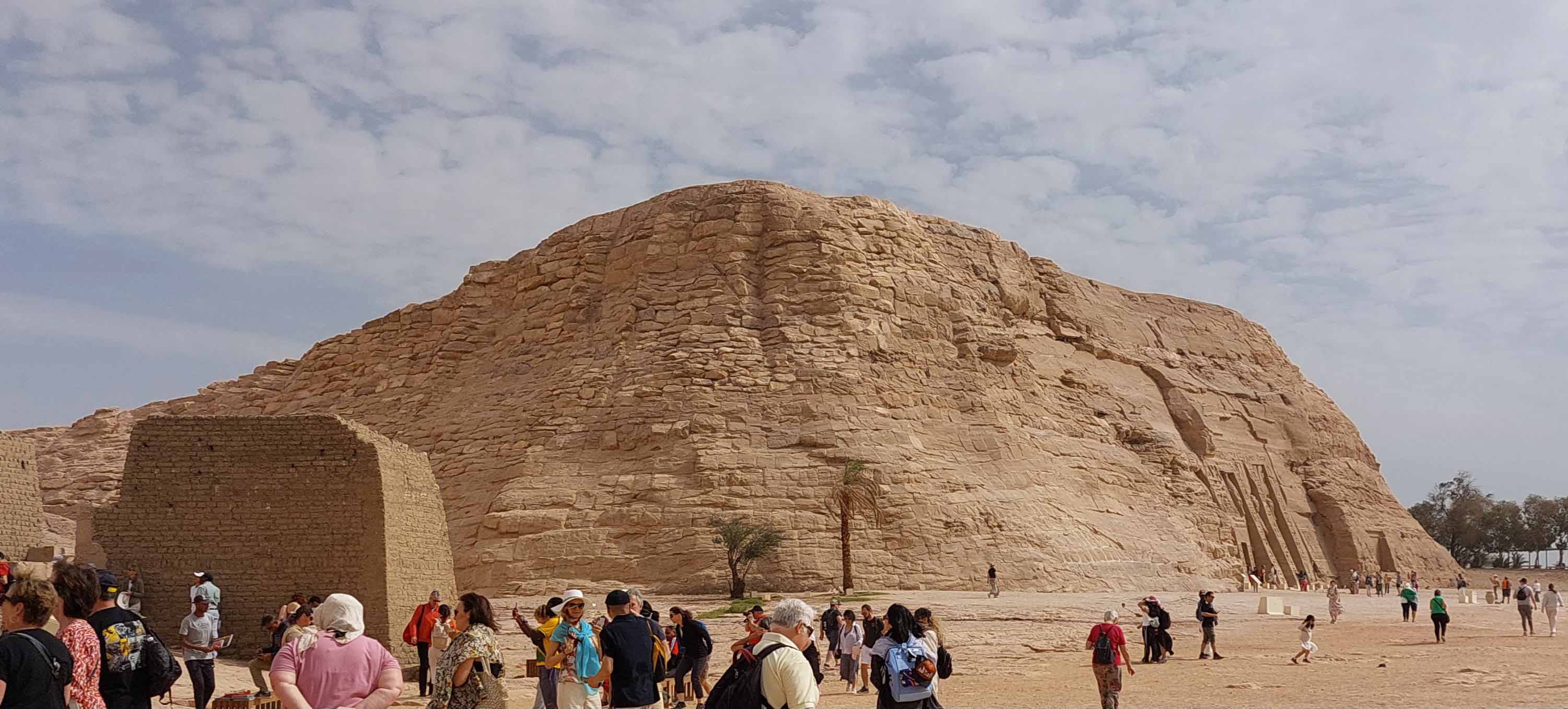
With such a gargantuan task, a multi-country effort spared no expense to move this monument. The entire mountain, with Abu Simbel outside and inside, was carefully mapped out, precision cut, with the location of each piece recorded, moved, and then re-assembled on higher ground. Today, visitors can witness this incredible achievement up close!
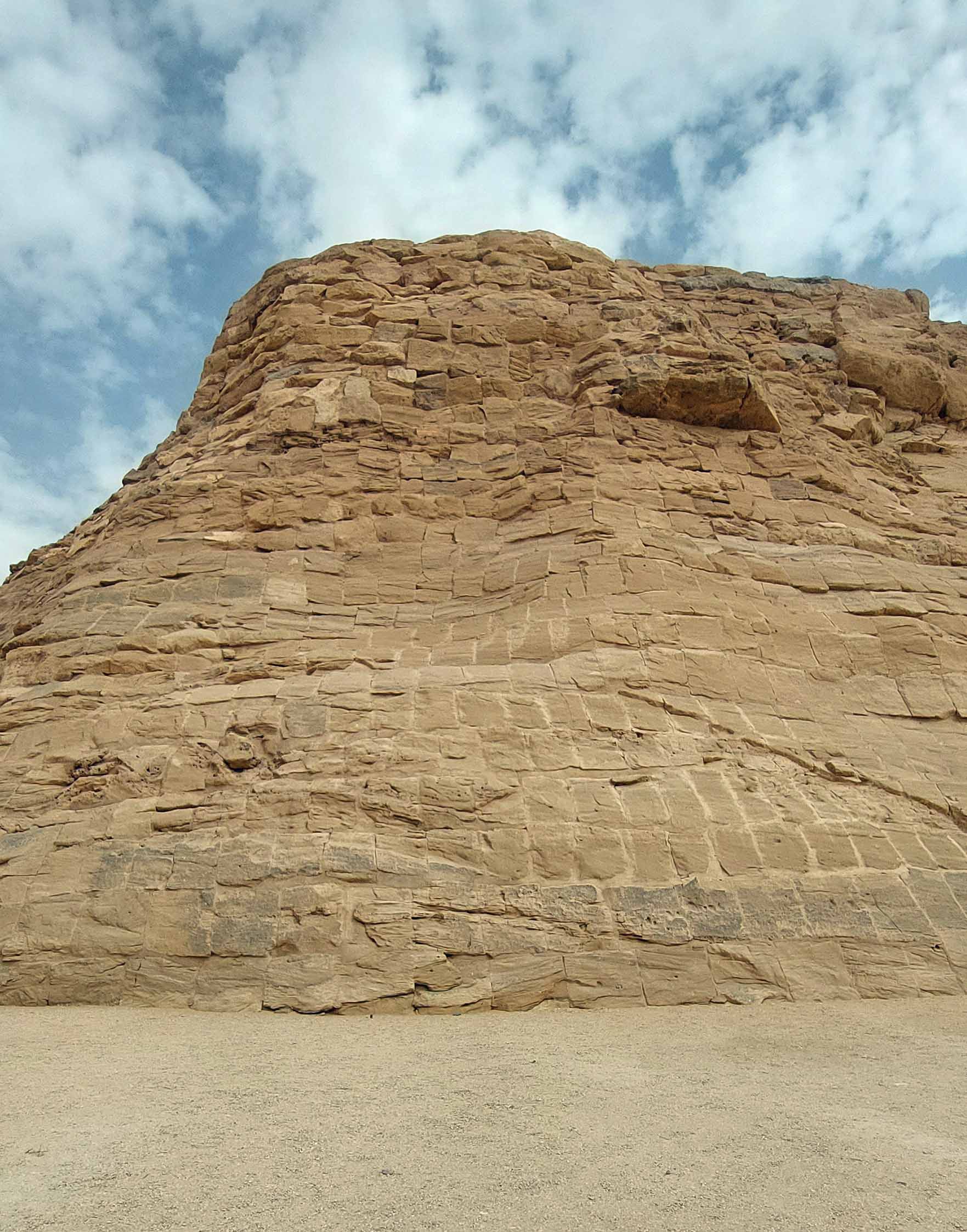
Abu Simbel overwhelms in how it comes into view. Visitors arrive behind the mountain. You can’t see the face. One must walk around the mountain, because it’s on the opposite side. So I got an up close view of the reconstruction.
Then, you view the enormous lake, and then, coming around, these 66-foot high seated likenesses of Ramses II carved into the mountain overwhelm the senses!

And that is only the first image one sees. There are lovely carvings of his lovely wife Nefertari. Her tomb, in the Valley of the Kings, is probably the most magnificent of all.

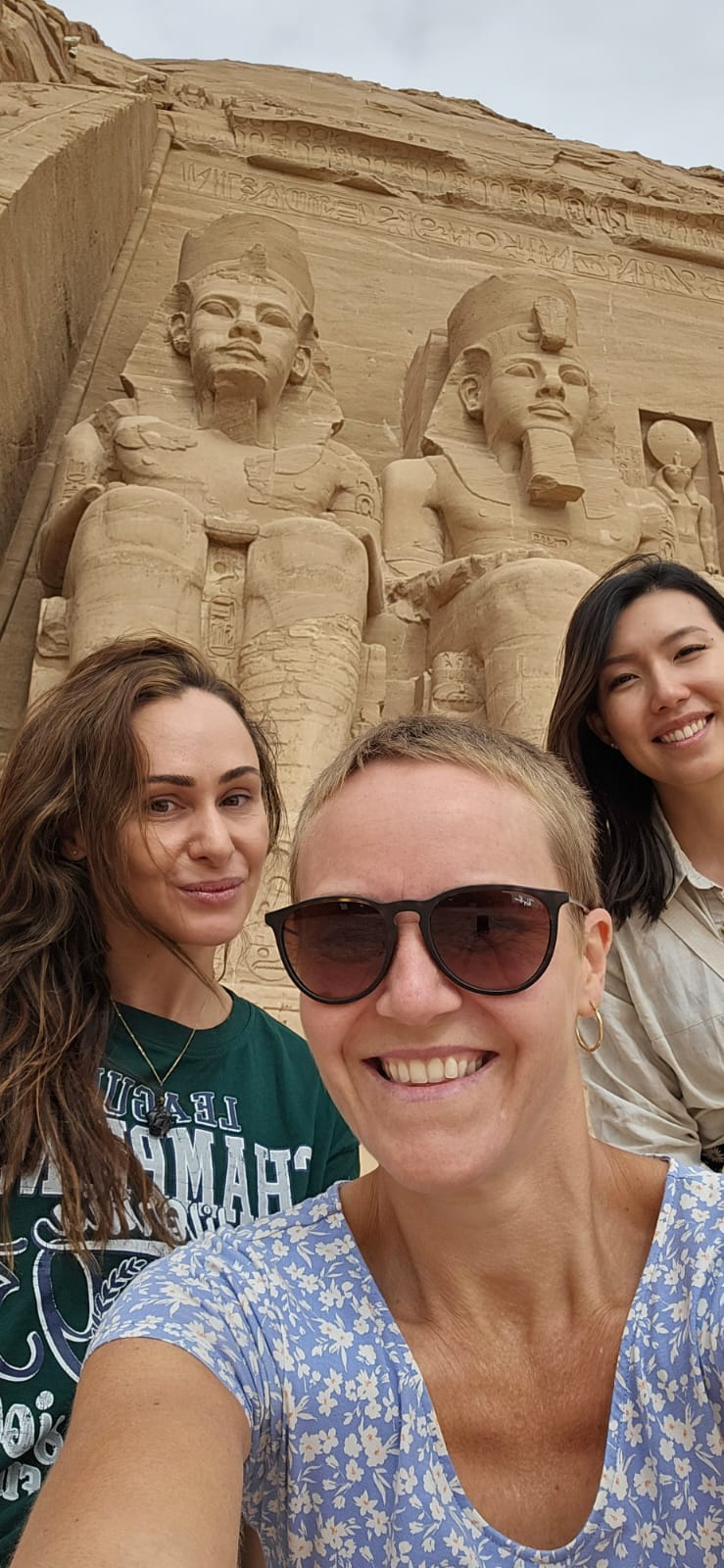
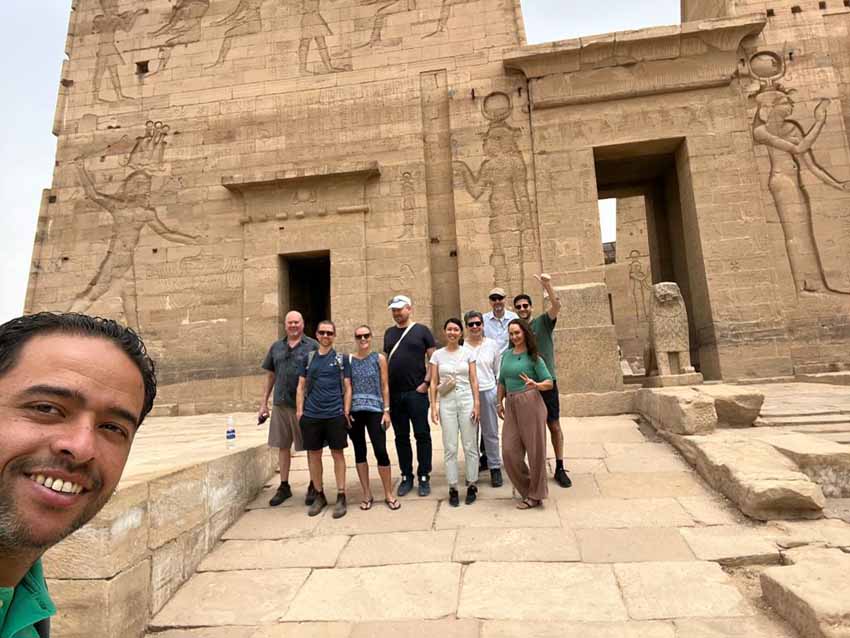
The site is intended as a warning to those coming to Egypt that they are entering a superpower capable of laying waste to armies of enemies. We took images of ourselves at the entrance.

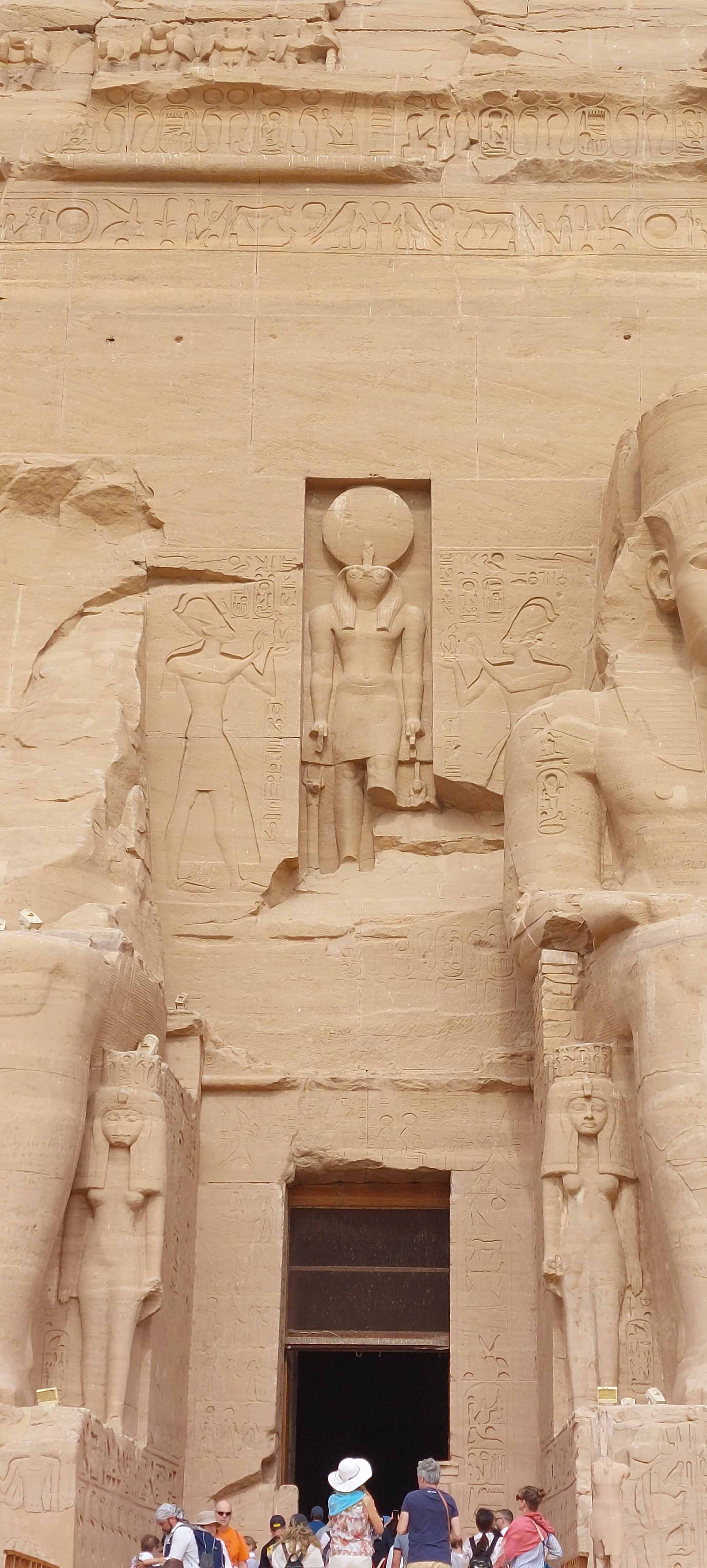
The walkway just preceding the entry door is lined with further reminders of who is dominant here. For 40+ feet prior to entry, on either side, one passes scenes of those Egypt had conquered. Hittites on one side, and Nubians on the other. From what I could see, these Nubians did not look like Egyptians typically depicted on other ruins. And they are tied up and tied together.

Inside, one is immediately in the presence of more of Ramses II. Giant statues line the first hallway.


Every single square inch of wall space inside is covered with images. Scenes of gods, goddesses and the pharaoh.
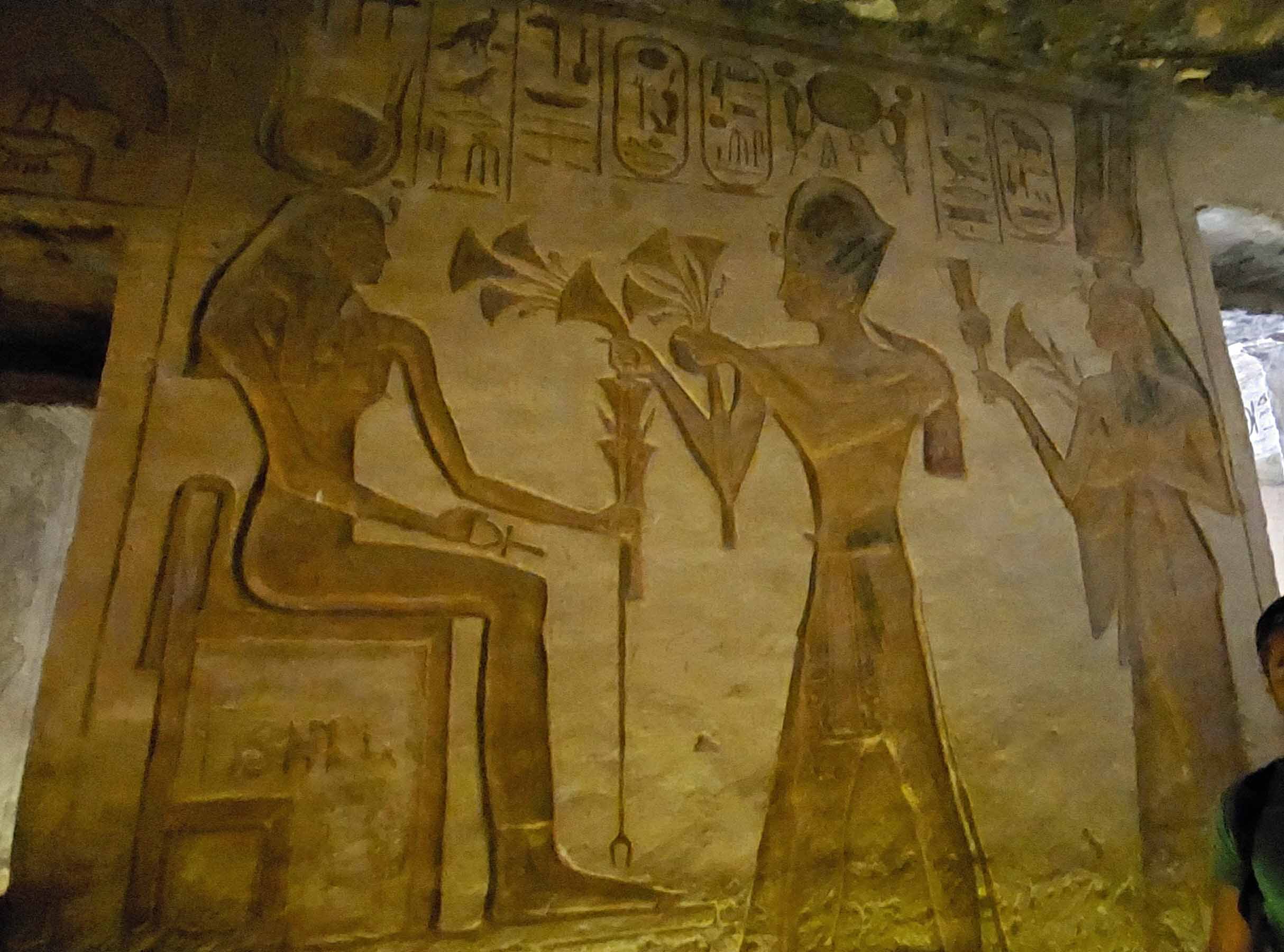

Throughout Egypt, these scenes of the many deities are common, and they’re often associated with after-life rituals. Ancient Egyptians spent their entire lives believing that this life was nothing more than a temporary state on the way to the next world. And to make that transition, they needed to adhere to the lifestyle dictated by Maat. Maat was both a goddess, and a set of principles to live by. This seemed to pervade ancient Egyptian art, which for the most part doesn’t stray out of the bounds of standards set by the priests. However, there are a few times I glimpsed examples of illustrations by artists actually showing emotion, such as terror. Or action – and that was the case at Abu Simbel.
The wall art at Abu Simbel contains more proof of Ancient Egyptian super powers. Not just of the country but of the pharaoh himself. There, I could see the Pharaoh in action slaying a terrorized enemy soldier. Or taking down many enemies with his bow and arrow whilst riding a chariot.


Above, leading a brigade of chariots. Abu Simbel is a must see in Egypt!




 Cabin Fever Chronicles - Getting Outdoors with Rod