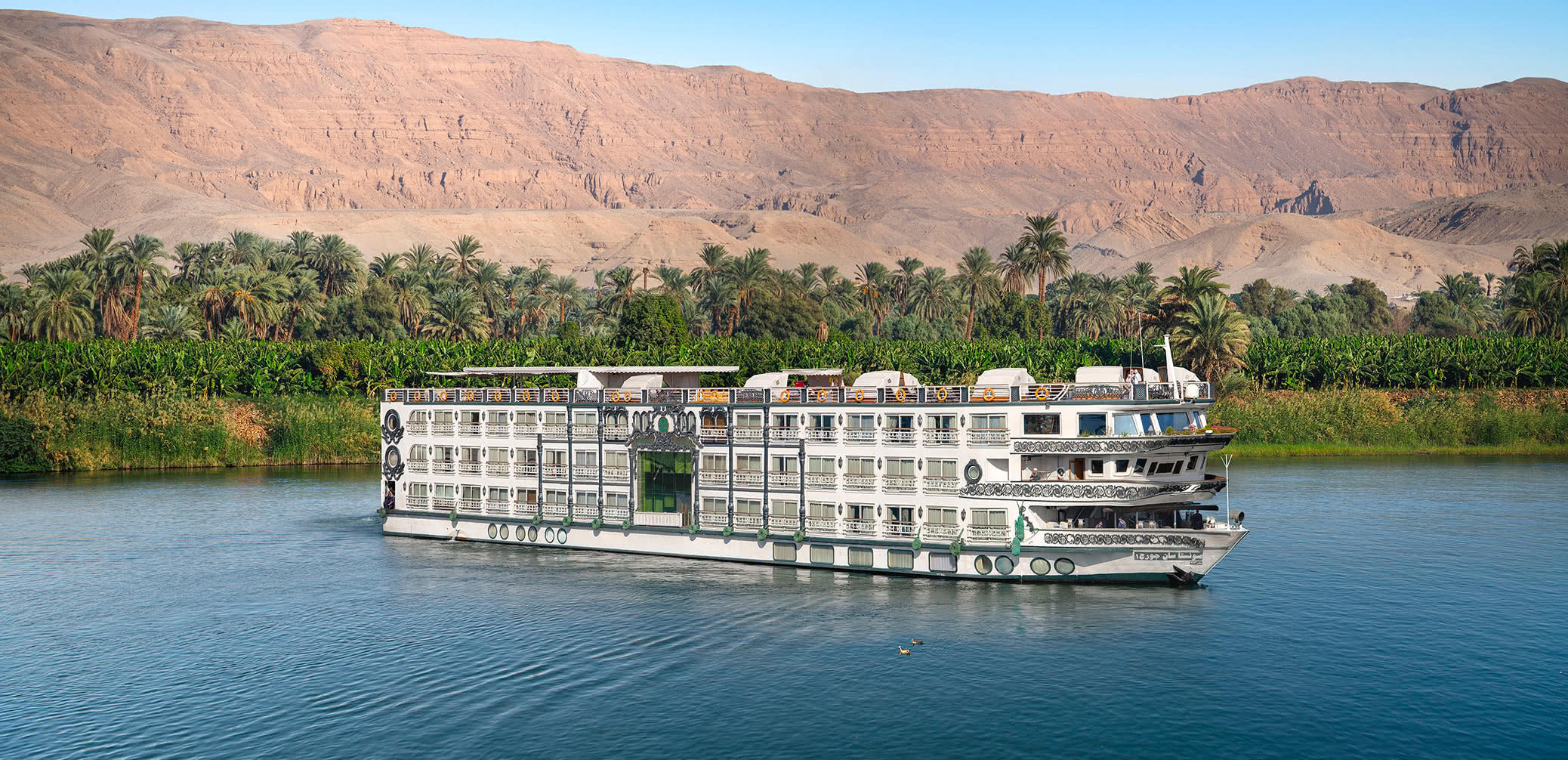
Our ship docked at Luxor, on the east bank of the Nile. We reluctantly left the ship and checked into a riverside hotel for the next two nights. This hotel had a really nice pool area which was perfect for relaxing on hot Egyptian afternoons!
The Luxor region is probably the most archeologically rich in the world. It contains mind blowing temple complexes like Luxor, Hatshepsut and Karnak, plus the Valley of the Kings. Add the palm treed Nile to the mix and you have a recipe for an unforgettable experience!
The city is one of the oldest in the world. In ancient times, it was known as Thebes.
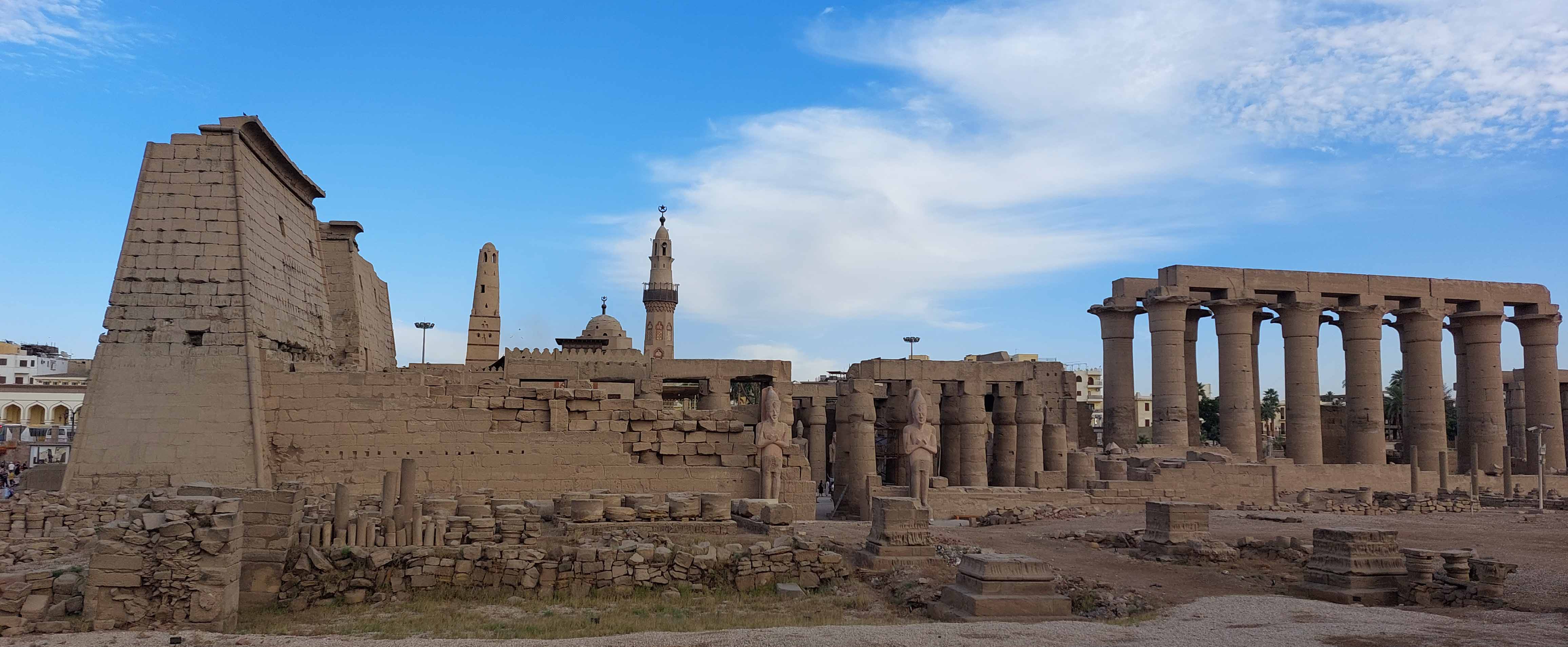
Our guide Ahmed encouraged us to get some pool time in during the hottest part of the day and then head to Luxor temple for the sunset. WOW was this a perfect choice. Luxor is said to be a location where pharaohs were crowned. Alexander the Great said he was crowned here. A number of them contributed to its construction. Amenhotep III, Ramses II, Horemheb, Queen Hatshepsut, and Tutankhamen all are represented.
We were struck with something awesome before we entered the temple. There is a 2.7km long “Avenue of the Sphinxes” with literally hundreds of sphinxes connecting Luxor Temple to Karnak Temple!
We turned around to face the temple. Also, walking along the outside, you can glimpse most of it.
Once inside, there are a number of chapels dedicated to various gods and goddesses.
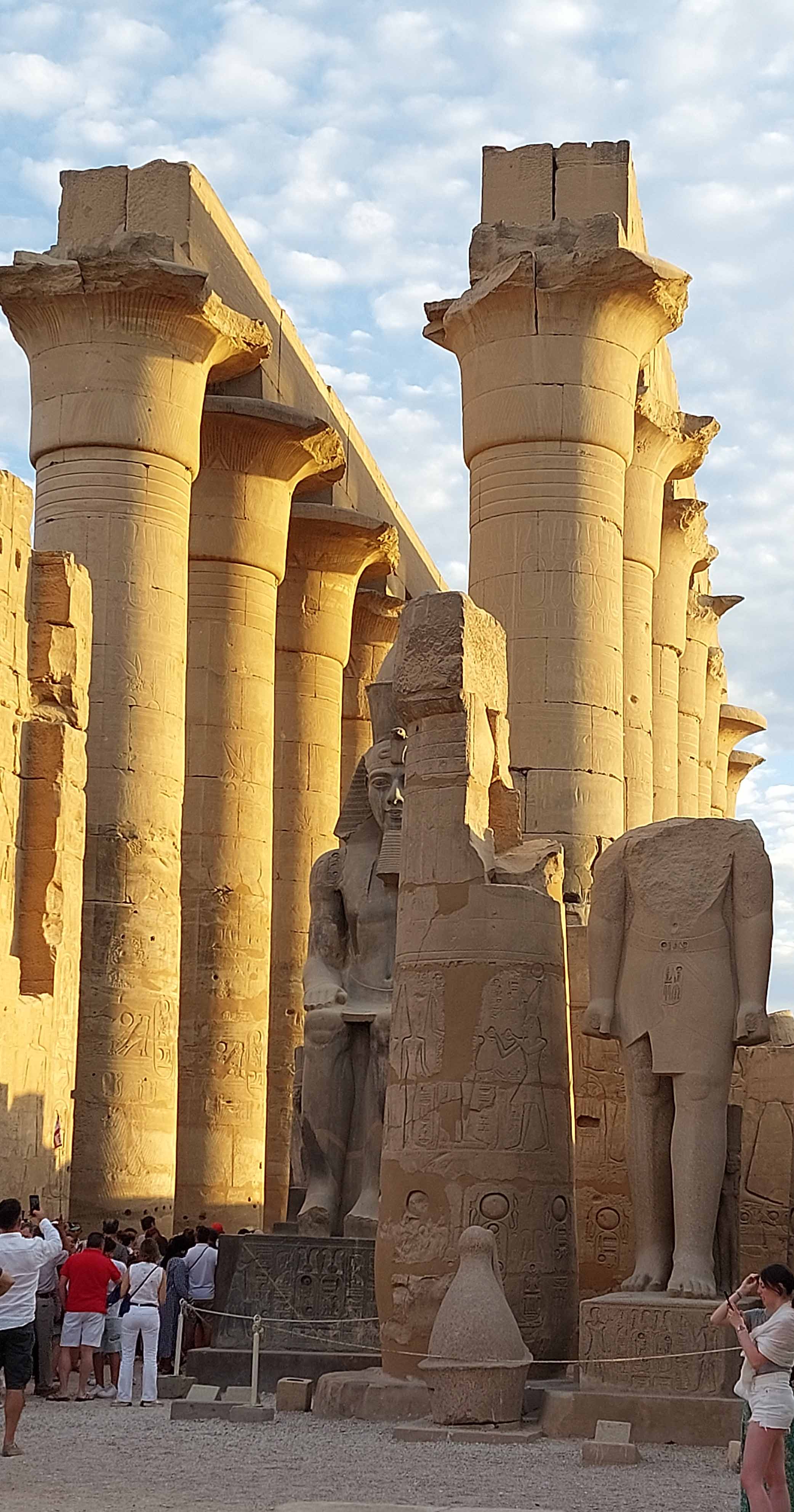
There are beautiful columns, which, in the late afternoon, were eye catching!
The blue Saharan sky, puffy clouds, the amber glow of the sunset. The columns. And these statues of Ramses II were, well. You decide!
The place is SO old. Of course it was used by the Egyptians. But then Romans. Then Christians. And now, Muslims. Here is some evidence of Christianity.
Once the sun set, the most incredible images came out. I just love love love the facade with the lights!
From here we could walk back to the hotel. Next morning, in the cooler temperatures, we’d head to Queen Hatshepsut’s Temple, and the Valley of the Kings.
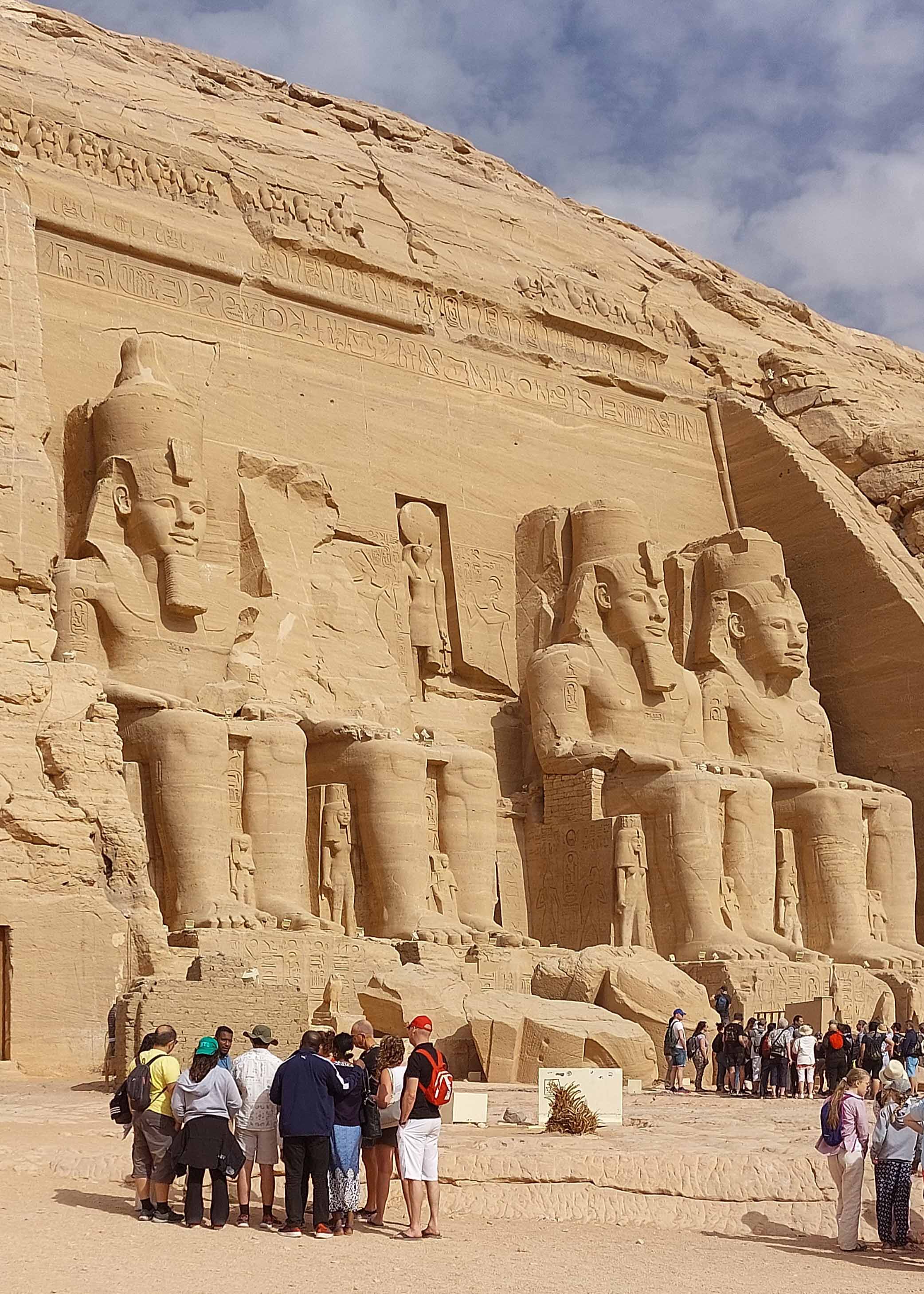
Abu Simbel stands tall as one of the ancient world’s most amazing achievements. Carved into a mountain, for thousands of years it has stood as an emphatic notification to all sailing north on the Nile that this is the border of Egypt, a powerful kingdom. And, during the 66-year rule of Ramses II, 4 giant statues of him informed all comers that this was his country.
It takes a 3+ hours drive south to reach the site from Aswan. It’s close to the border with Sudan. We departed from our hotel at 4:30 a.m., with boxed breakfasts from the hotel. The drive is very flat across Sahara scab land, dusty and rocky – not full of dunes. Little did we know that whilst we were away at Abu Simbel, a dust storm would overwhelm Aswan! But it was gone when we returned. The site sits next to Lake Nasser.
Ramses II cartouche
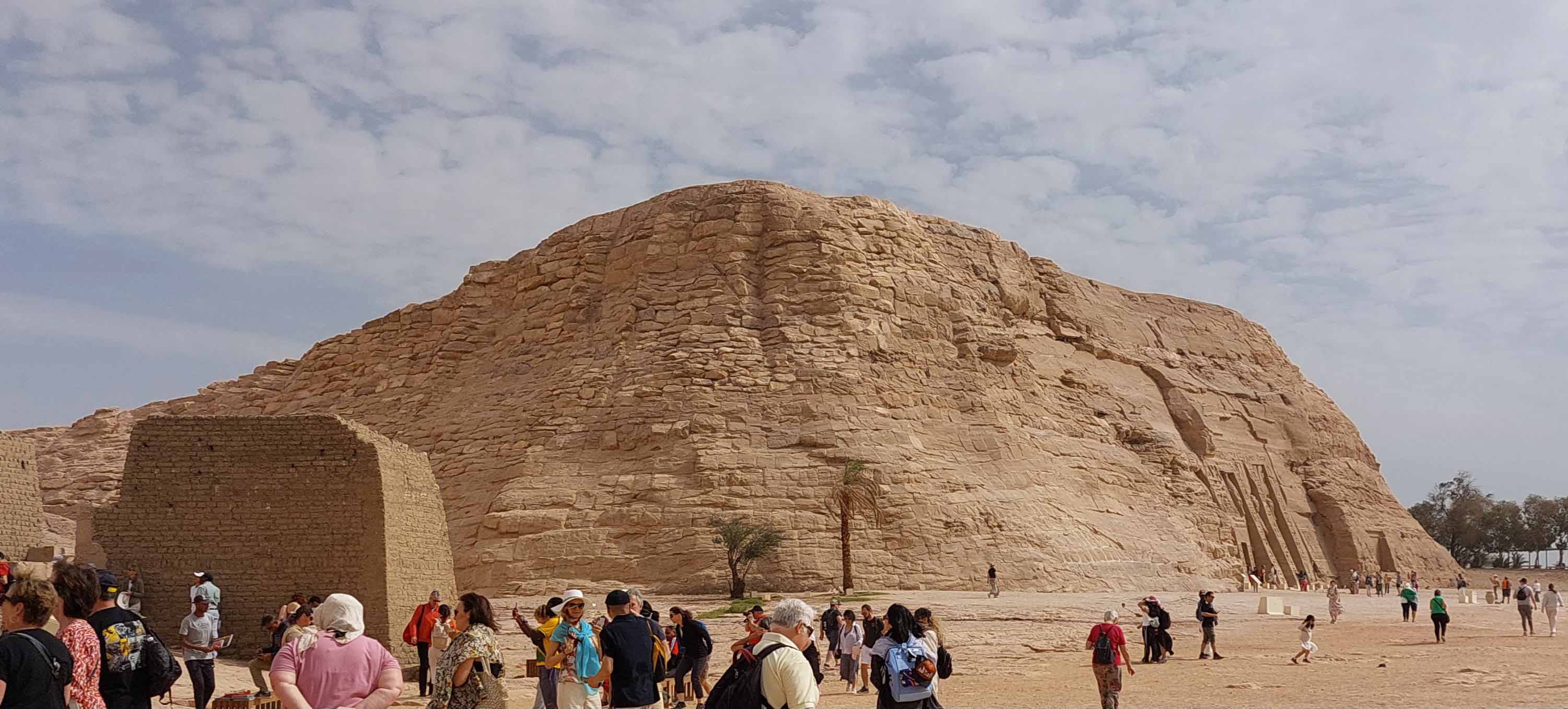
Before I delve into the fascinating ruins themselves, I think it’s important to tell you about the amazing modern-day achievements at Abu Simbel! In the mid 1960’s, impending completion of the Aswan High Dam threatened submersion of many important ruins including Abu Simbel. This site was considered so important to world history that UNESCO orchestrated a campaign to move the entire site away from the rising waters.
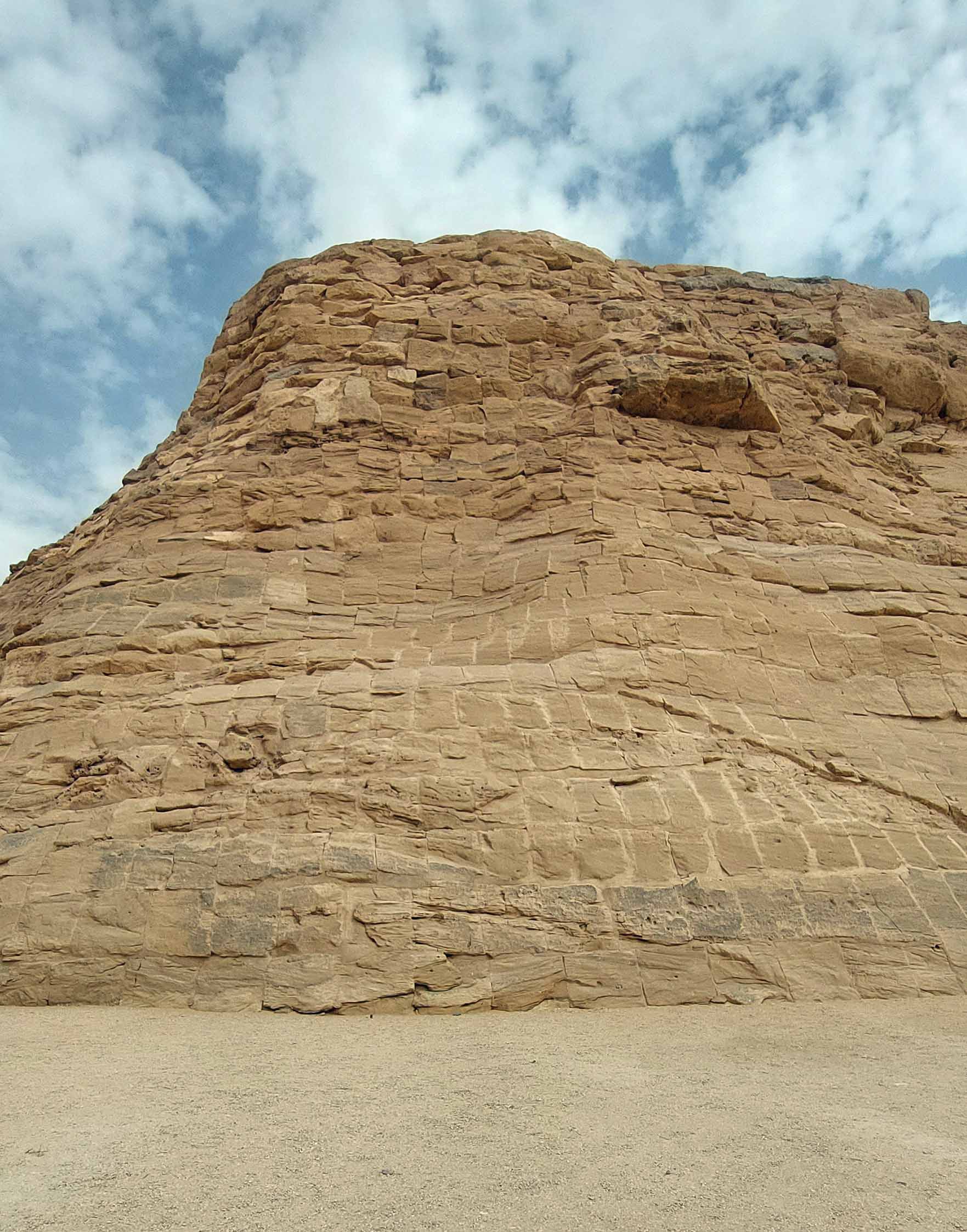
Re-assembled block by block
With such a gargantuan task, a multi-country effort spared no expense to move this monument. The entire mountain, with Abu Simbel outside and inside, was carefully mapped out, precision cut, with the location of each piece recorded, moved, and then re-assembled on higher ground. Today, visitors can witness this incredible achievement up close!
Abu Simbel overwhelms in how it comes into view. Visitors arrive behind the mountain. You can’t see the face. One must walk around the mountain, because it’s on the opposite side. So I got an up close view of the reconstruction.
Then, you view the enormous lake, and then, coming around, these 66-foot high seated likenesses of Ramses II carved into the mountain overwhelm the senses!
And that is only the first image one sees. There are lovely carvings of his lovely wife Nefertari. Her tomb, in the Valley of the Kings, is probably the most magnificent of all.
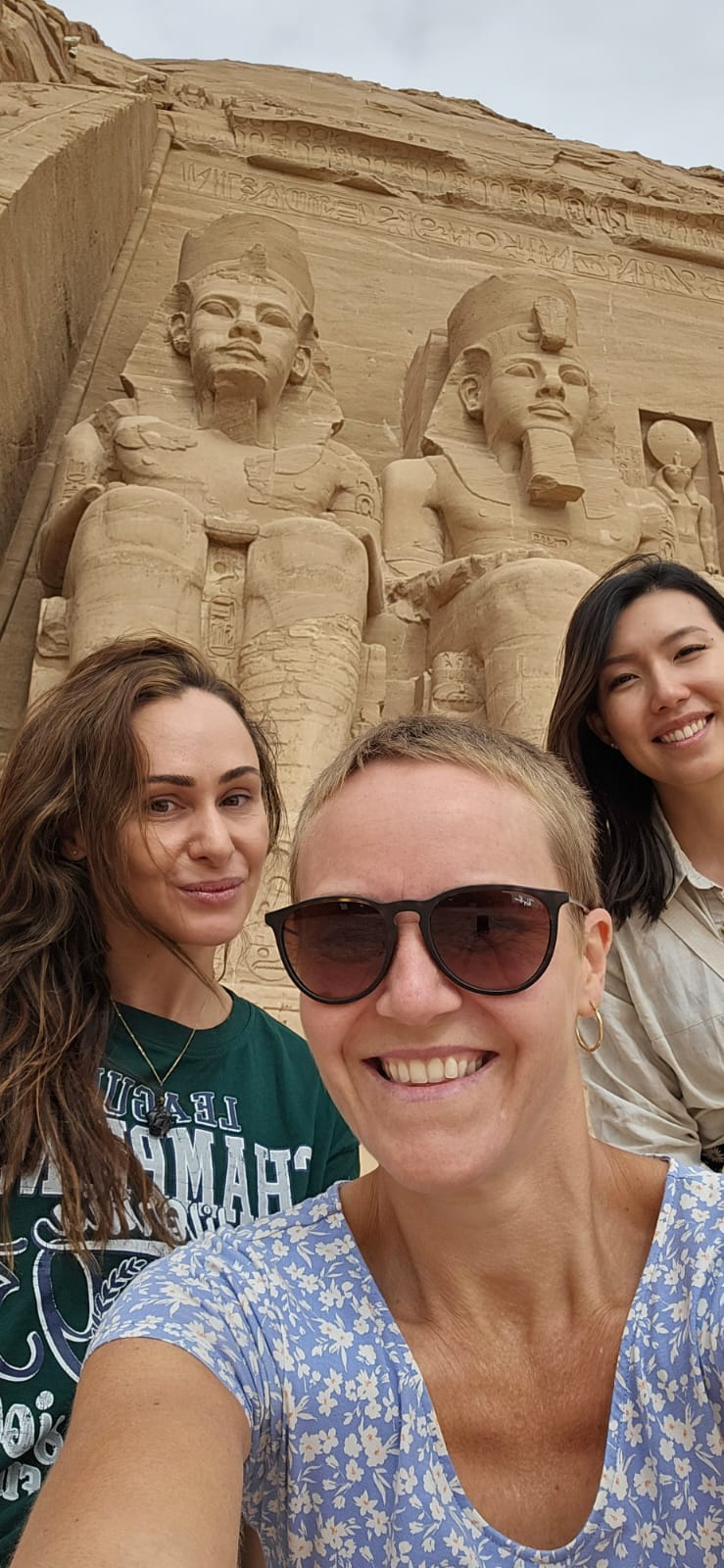
The site is intended as a warning to those coming to Egypt that they are entering a superpower capable of laying waste to armies of enemies. We took images of ourselves at the entrance.
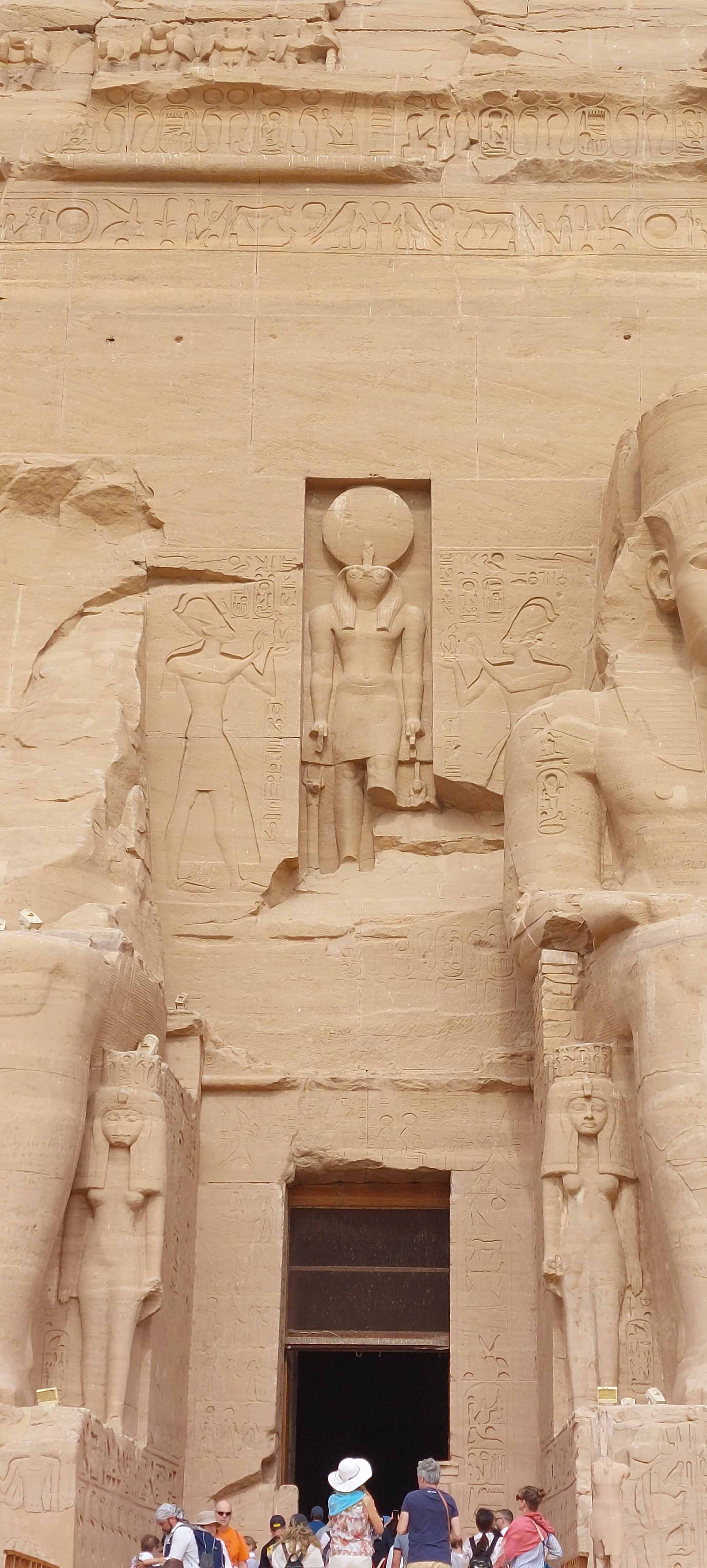
The walkway just preceding the entry door is lined with further reminders of who is dominant here. For 40+ feet prior to entry, on either side, one passes scenes of those Egypt had conquered. Hittites on one side, and Nubians on the other. From what I could see, these Nubians did not look like Egyptians typically depicted on other ruins. And they are tied up and tied together.
Inside, one is immediately in the presence of more of Ramses II. Giant statues line the first hallway.
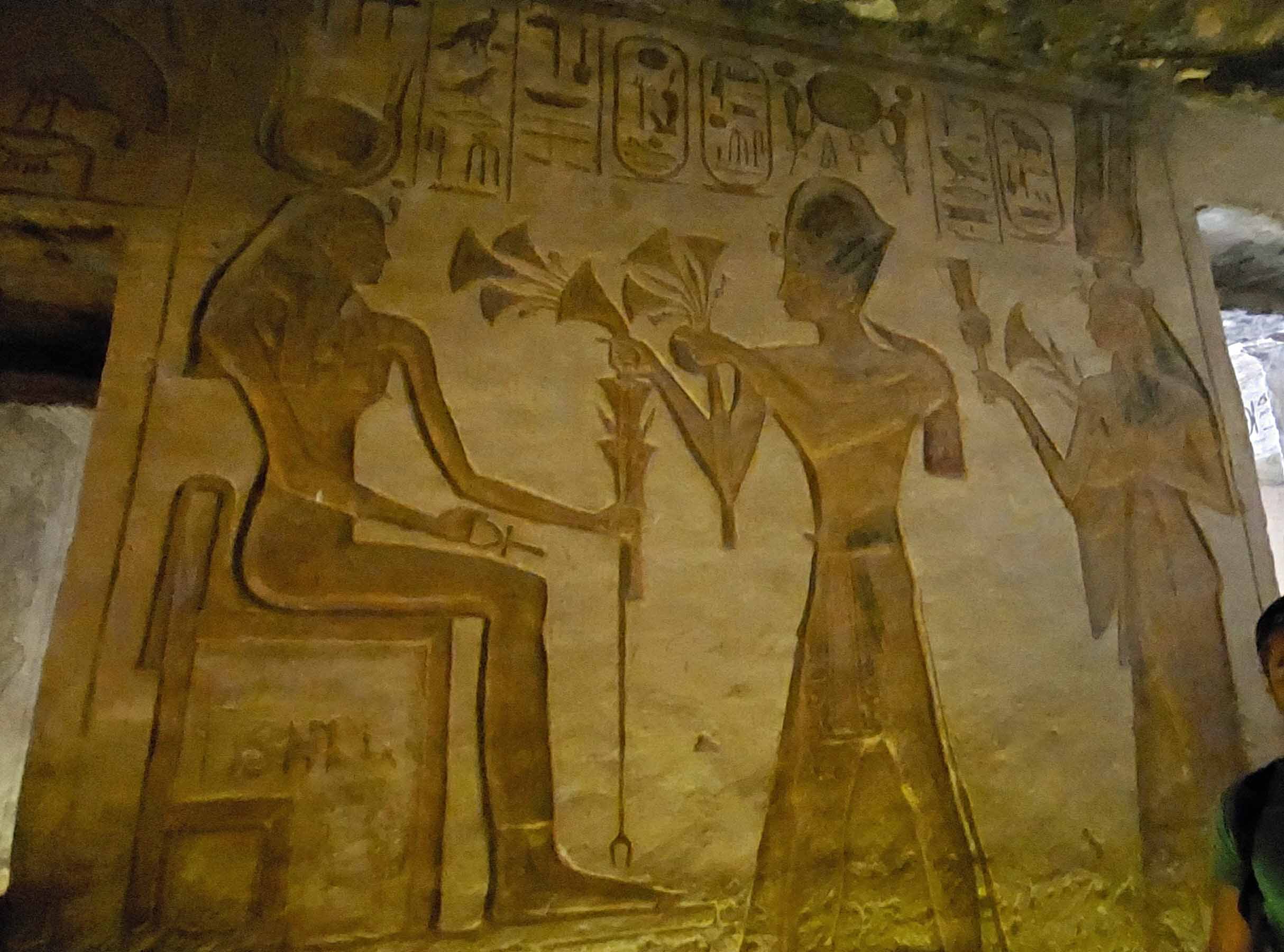
Every single square inch of wall space inside is covered with images. Scenes of gods, goddesses and the pharaoh.
Throughout Egypt, these scenes of the many deities are common, and they’re often associated with after-life rituals. Ancient Egyptians spent their entire lives believing that this life was nothing more than a temporary state on the way to the next world. And to make that transition, they needed to adhere to the lifestyle dictated by Maat. Maat was both a goddess, and a set of principles to live by. This seemed to pervade ancient Egyptian art, which for the most part doesn’t stray out of the bounds of standards set by the priests. However, there are a few times I glimpsed examples of illustrations by artists actually showing emotion, such as terror. Or action – and that was the case at Abu Simbel.
The wall art at Abu Simbel contains more proof of Ancient Egyptian super powers. Not just of the country but of the pharaoh himself. There, I could see the Pharaoh in action slaying a terrorized enemy soldier. Or taking down many enemies with his bow and arrow whilst riding a chariot.
Ramses II stomping on his enemies and slaying an enemy soldier!
Taking down several simultaneously. No mercy!
Above, leading a brigade of chariots. Abu Simbel is a must see in Egypt!
With a 95+ degree forecast for Cairo, we were delighted our next couple of days would be spent right on the Mediterranean coast. There, in Alexandria, a comfortable 75 degrees Fahrenheit would prevail. Founded in 331 BC by the infamous Greek Alexander The Great, Alexandria has been a great city for over two thousand years. It history is best known for the ancient library and the lighthouse. Today, the city we saw was a husk of its former glory.
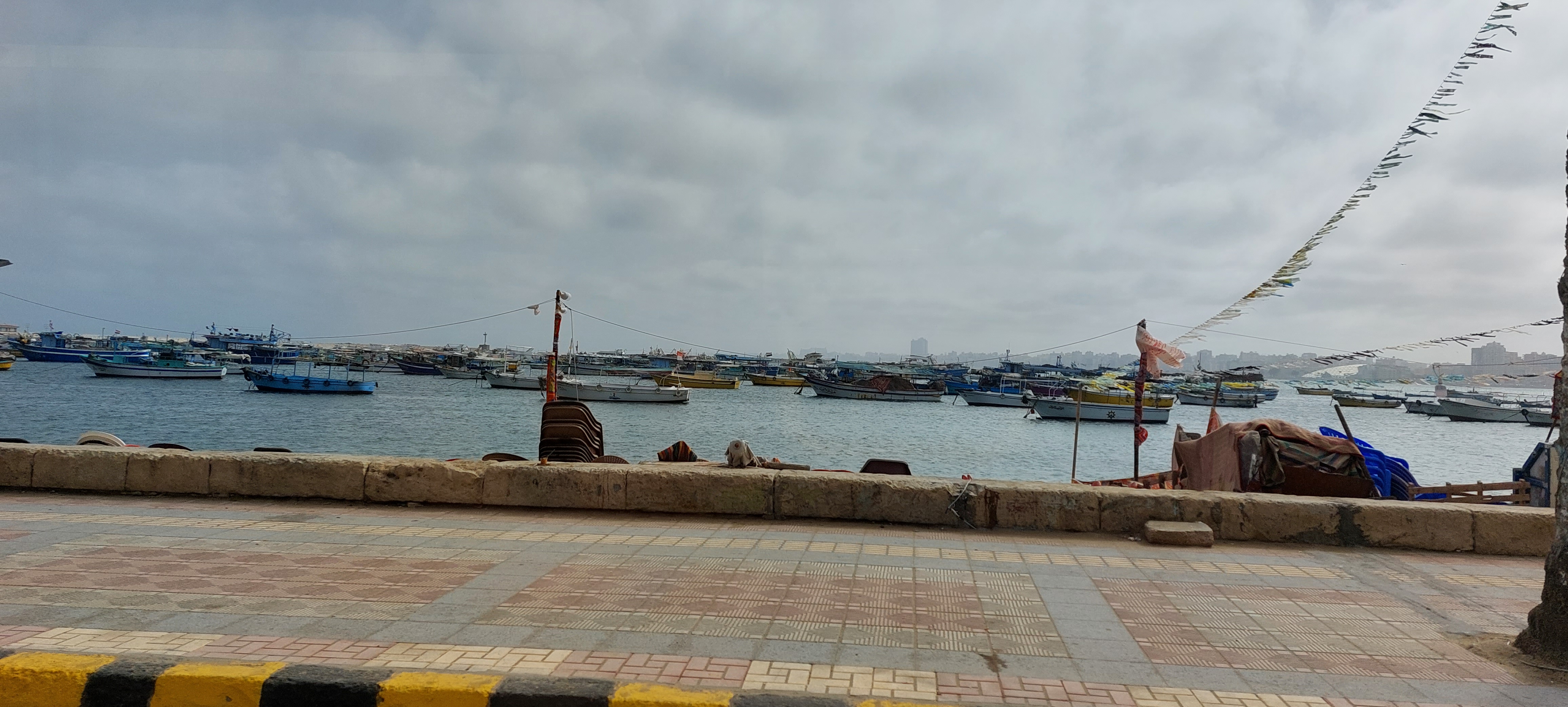
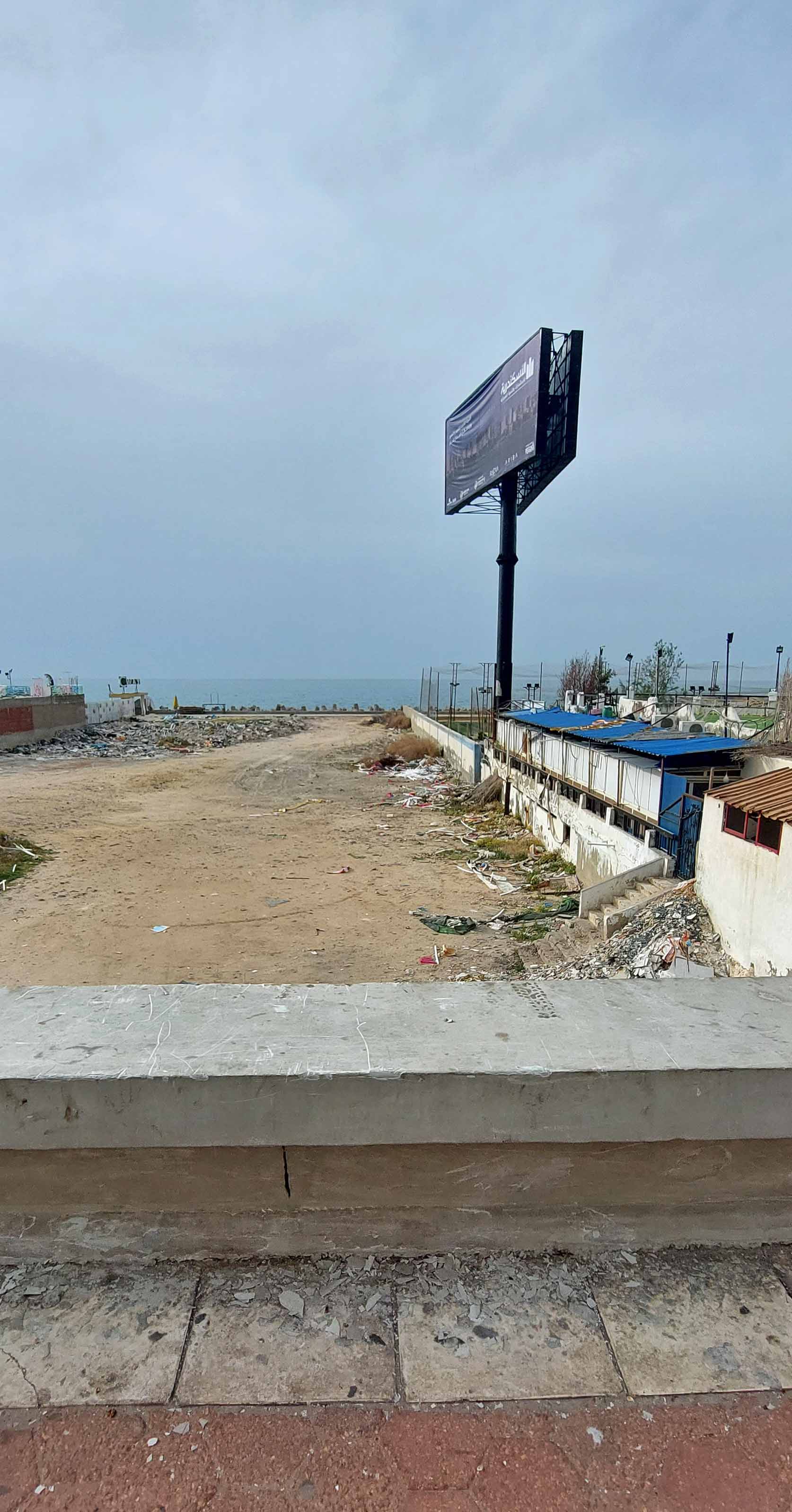
Seaside Alexandria was not what we expected. Rather than lovely shore side paths with pedestrian speed traffic and lovely palm trees, coastal villas, restaurants and hotels, we we were assaulted with dirty beaches, dilapidated apartment buildings, reclamation, unrelenting dusty smog, and incessant traffic so choked that we needed to cross the avenue using subterranean walkways. It was evident that this once was a luxury destination. There is still a Four Seasons resort. But decades of neglect have taken a toll.
Despite our disappointment, we strolled along the waterfront, taking in the sights of locals preparing for an after dusk Ramadan celebration. Some of the beaches were prepared with food carts, tables and chairs. We found a pier with waterside cafes and picked out a spot to sit down and enjoy a cool beverage. Most of us were thirsty for a beer. But, being Ramadan, none was on the menu. We made the most of it.
Adrien, Lorenzo, Michael, myself and Andrea!
The following day, the winds changed direction and significantly improved the weather! A sea breeze cleared away the smog and brought with it refreshment. The agenda called for a visit to the Citadel, a fortress built upon the remains of the ancient Alexandria Lighthouse. And then, a visit to Egypt’s modern Alexandria Library.
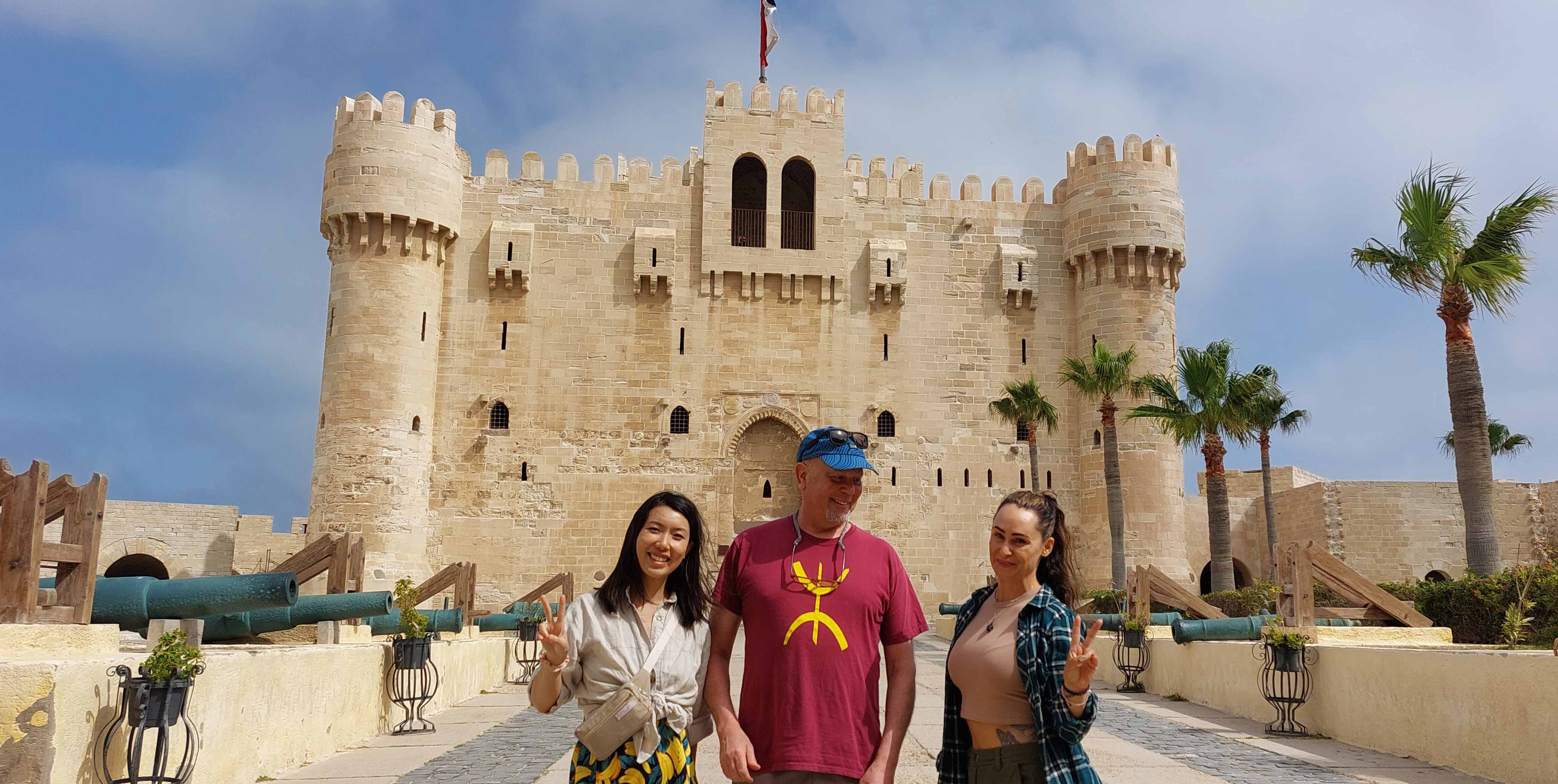
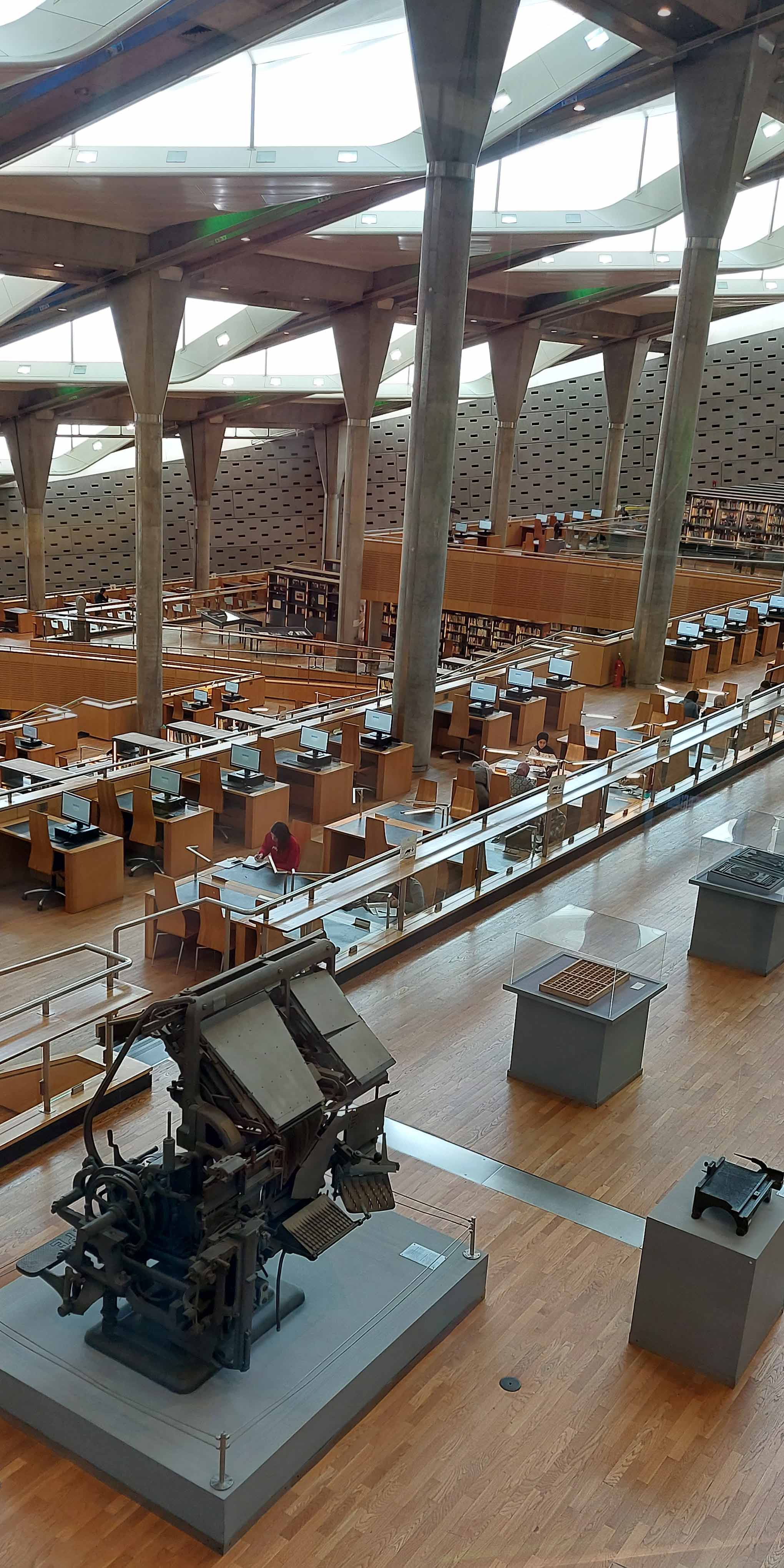
The Citadel of Quaitbay is a defensive fortress. It was completed in 1479. It guarded the harbor for centuries. It stands in good condition. Visitors can walk the grounds, and take in the sea breeze and views of Alexandria Harbor. In ancient times, the Alexandria Lighthouse stood here. It was one of seven wonders of the ancient world. Next, we toured the modern edition of the Alexandria Library. In ancient times, the library housed a collection of most of the works and history of the human race. The collection varied from artistic to scientific. The city was considered a scholarly capital. Over centuries it fell into decline – records show the structure came down in the year 275 AD. Today the rebuilt library is impressive and we spent a few hours there. And had a lunch break nearby.
Allie, Rod, Michael, Lorenzo, Andrea and Allan
Much later that day, we boarded a very old 1950’s era overnight train to Aswan, in southern Egypt. At the railway station, we saw brand new trains. But ours was not one of those!
It all started about 5,225 years ago. It was here before Buddha, before Angkor Wat, before Macchu Pichu, before Stonehenge. As the Ice Age ended, the once fertile Sahara dried up and humans converged on the Nile Valley. There, instead of hunting and gathering, they learned to grow crops. They realized the annual, reliable Nile flood nurtured the soil. And they learned about animal husbandry. No longer needing to roam to find sustenance, they settled down. And for the first time in human history, they had spare time. They had idle time to consider why. They asked questions and came up with explanations. The sun rose every day and set, east to west. The stars moved across the sky, and other bright objects amongst them – planets. Each, like the seasons, had its own rhythms and patterns. They noticed animals and plants occupied certain niches and worked in a kind of symphony – they seemed to have roles. And death. What happens after death? All these things they observed and thought about couldn’t be happening by sheer chance. Gods must have a hand in all this. Gods and goddesses must have their own duties and niches. Humans, too have their own society and roles, niches, and if everyone understood, did their part, everybody could benefit. Thus ancient Egypt came to be. In ancient Egypt, thousands of years before elsewhere on Planet Earth, religion and laws came to be, science began, architecture reached unimaginable proportions, and to the present day, many still live their lives in accordance with evolved versions of ancient Egyptian ways of life.
I’ve held a lifelong fascination with ancient Egypt. Even as a 12-year old, I knew how to write my name in hieroglyphics. I wore an ankh. My favorite deity remains the goddess Maat. I witnessed the Treasures of King Tutankhamen world tour in New York City in 1977. I’d also checked out ancient Egyptian collections in London, Paris, and Washington, DC. But I’d never been to Egypt. Sometimes, it’s not safe to travel there. Then, in 2021, I booked a trip only to postpone due to Covid restrictions on the Delta variant. Once it became safe and restrictions were lifted, I took my opportunity – in April 2023. I enjoyed a tour led by Intrepid Travel. We covered a lot of ground, from Alexandria to Abu Simbel. Our tour guide Ahmed was simply fantastic. He holds a degree in Egyptology and was voted best guide in Egypt, so we were well taken care of! I was the only American in my group – we were Swiss, English, Italian, Australian native, and Irish-become-Australians. The big takeaway for all of us was that there is simply no way to comprehend the enormity and complexity of ancient Egypt without going there in person. Day after day we were blown away! The trip itinerary exposes the guests to one World Heritage site after another, with ever increasing magnificence, finally culminating at the Karnak Temple Complex, which is by far the largest in the world. That region, which also sits on the river Nile, with its palm trees and cooling waters, and includes Luxor Temple and the Valley of the Kings, blows away every other archeological site on Planet Earth.
I learned that the weather on such a trip can be quite pleasant! This is because of the river Nile. We had sailings via felucca sailboats. Our trip included three nights on a Nile River Ship. The multi decked ship had spacious rooms, a dining room, and a shaded roof top deck. Once under way it’s very pleasant, even with the Sahara right next door. So if all this sounds intriguing, stay tuned because the next blog posts cover all this!
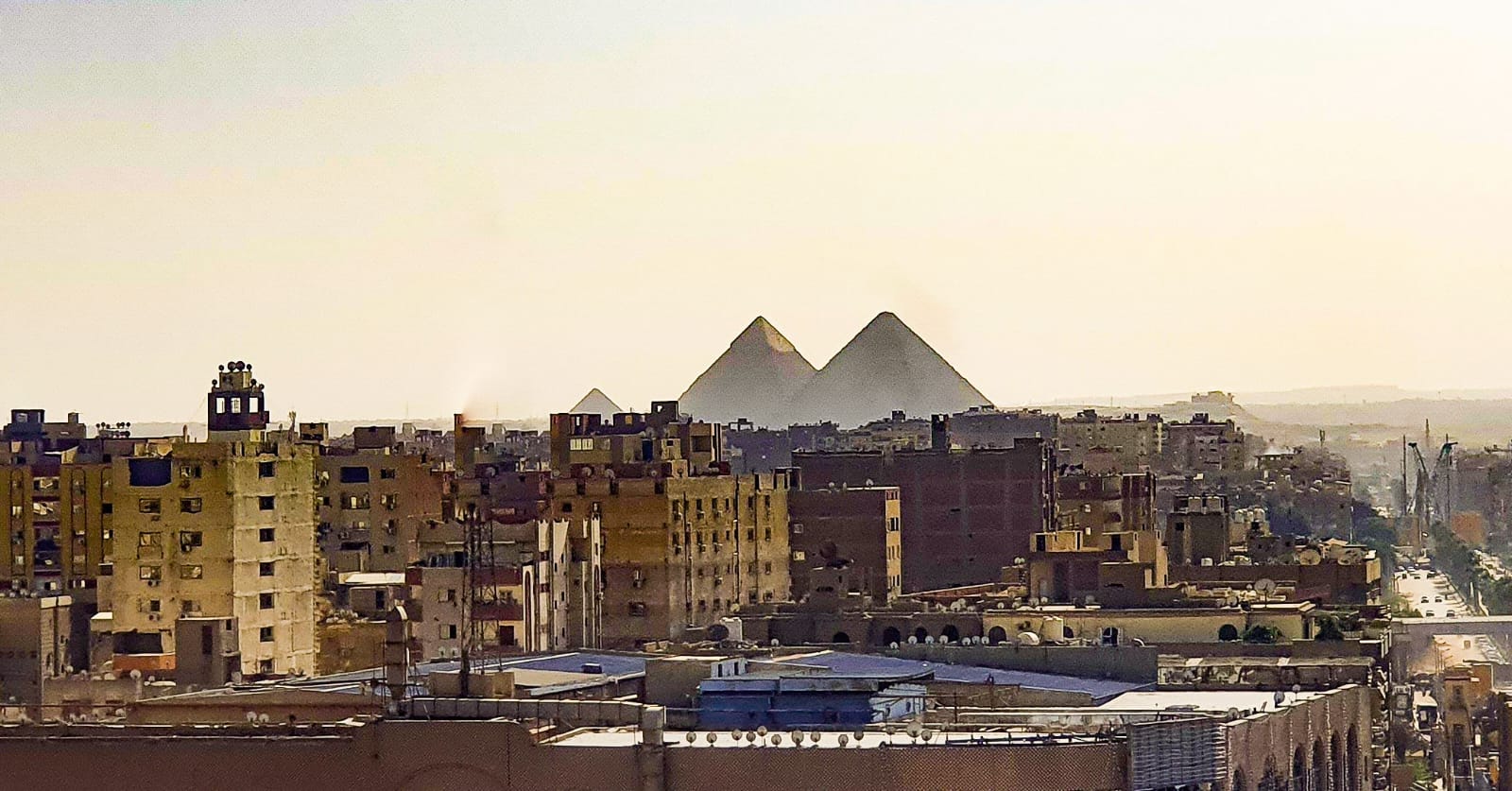
But first, the Pyramids. Almost everyone on Earth knows about the Giza Pyramids. It’s hard to imagine any more iconic sight than these. Like everything else about ancient Egypt one can’t understand the enormity unless you see them with your own eyes. So here they are. Right from the top of our hotel, and thousands of years old, they loom over Cairo.
The Giza Pyramids took about 30 years each to build and were completed between 2,500 BC and 2,600 BC. They were built with two main purposes. First, to house the earthly remains of the pharaohs Khufu, Kaafre, and Menkaure. Secondly, and even more importantly, the structure and shape was to enable the Pharaoh’s entry into the afterlife. Even the Valley of the Kings was selected because its primary mountain was believed to be pyramid shaped. They took the majority of the lives of tens of thousands of workers to build. Rather than slaves, these were paid workers. State budgets included funds for the construction. An entire city, complete with breweries, granaries, tailors, butchers and everything needed to support the effort grew up. Today, I witnessed the many fire pits still visible where the meals were cooked. For me, to glimpse the size of these structures and comprehend the absolute unquestioned belief in the gods and the afterlife and the effort it took is quite a lot to get into your head. Even the Romans who came to govern Egypt often became so overwhelmed that they, too, would often worship Egyptian deities. In fact the worship of the goddess Isis was widespread (even as far as England) and continued until about 400 AD.
The Giza Pyramid Complex consists of the three great pyramids, plus several smaller ones, the Sphinx, and a mix of other discoveries of interest. One is of an ancient barge “dock” where they buried a barge hundreds of feet long. Walking around the pyramids, myself and my roommate Lorenzo discovered giant polished rose-granite stones around the bases which clearly had been chiseled to interlock with one another. A guard told us these were literally mined in Sudan and barged 800 miles up the river to the site! A quick computation resulted in mind blowing realization that this all happened over 4,000 years ago! And all of these polished interlocking blocks, now at the base, covered the sides of each pyramid.
Lest my photos give you the impression there were only a few tourists, HA! This place gets mobbed. Here is a photo of my group on the plateau. But all around us there was probably 1,000 people! There are hawkers with souvenirs. Taunts offering camel rides. And yes, there were Lawrence of Arabianesque scenes of camel trains walking the dunes amongst the pyramids. But instead of ancients, these were tourists. It’s just part of the reality of Egypt. After all it is a tourist magnet. There are plans underway to change things. In the not too distant future, buses will be prohibited and instead some kind of shuttle system set up.
Next we went down to the Sphinx. It’s very interesting. And dedicated to Khafre. Our only access was via a walking system up the side. We weren’t allowed to actually touch it. Later, we went to the Egyptian Museum. It’s vast and for me, quite overwhelming. It has the complete sarcohpaguses of several Pharoahs, some of the most important early relics showing the birth of the Upper / Lower Egyptian kingdoms, a collection of mummified animals, and more.
There were a few items that really grabbed my attention. One is a seated statue of Khafre. His expression is of satisfaction. And then The Scribe. Look closely at his expression. He just seems so content! Then there is another favorite. It is a representation of a member of the royal family with a birth defect (dwarfism), and his wife, and children. The 4,000 year old expression of affection is so palpable! It seems these people were happy! The Scribe is so famous it is on the 200 pound Egyptian note.
Our time in Cairo was complete, but we’d return at the end of our trip for some more time checking out contemporary life in the Medina. Next, we’d head north to the Mediterranean coast – Alexandria.























 Cabin Fever Chronicles - Getting Outdoors with Rod