
Our final visit in the Luxor region was the Karnak Temple Complex. Taken together with its connection to the Luxor Temple, is said to be the largest in the world. It is dedicated to the King of ancient Egyptian gods, Amun. Over several thousand years, it was expanded by pharaohs Thutmoses I, Queen Hatshepsut, Amenhotep III, Ramses II, and the Ptolemys. It is generally thought that it was started during the Middle Kingdom, about 2040 BCE. Its construction continued through the centuries into the Ptolemaic era which ended 30 BCE. It is estimated that during the New Kingdom 80,000 priests worked at Karnak.


The ancient Egyptians referred to this place as “the select place,” “the origin,” etc. They believed this was the place where the world emerged from the chaotic soup that was, in effect, the Big Bang, and the creator god Atum started the work of creation. They also believed this was the place they could communicate with Amun. Egyptian mythology says that Atum and Ra merged to create the supreme Amun.
Each year the ancient Egyptians held the Opet Festival here. They’d carry statues of Amun, Mut and Khonsu in a barque to Luxor Temple, celebrating the god’s guiding the souls of pharaohs to renewed life.

It was believed Amun was a protector of pharaohs. Here, this is specifically spelled out with the ram-headed sphinxes, which can be seen guarding pharaohs under their chins.


Karnak is so iconic that a number of films and film scenes were shot here. Death on the Nile, The Spy Who Loved Me, Valley of the Kings, Poirot, an episode of The Love Boat, and more.
The interior galleries and chapels are full of heiroglyphs. There are 134 columns 65 feet high.


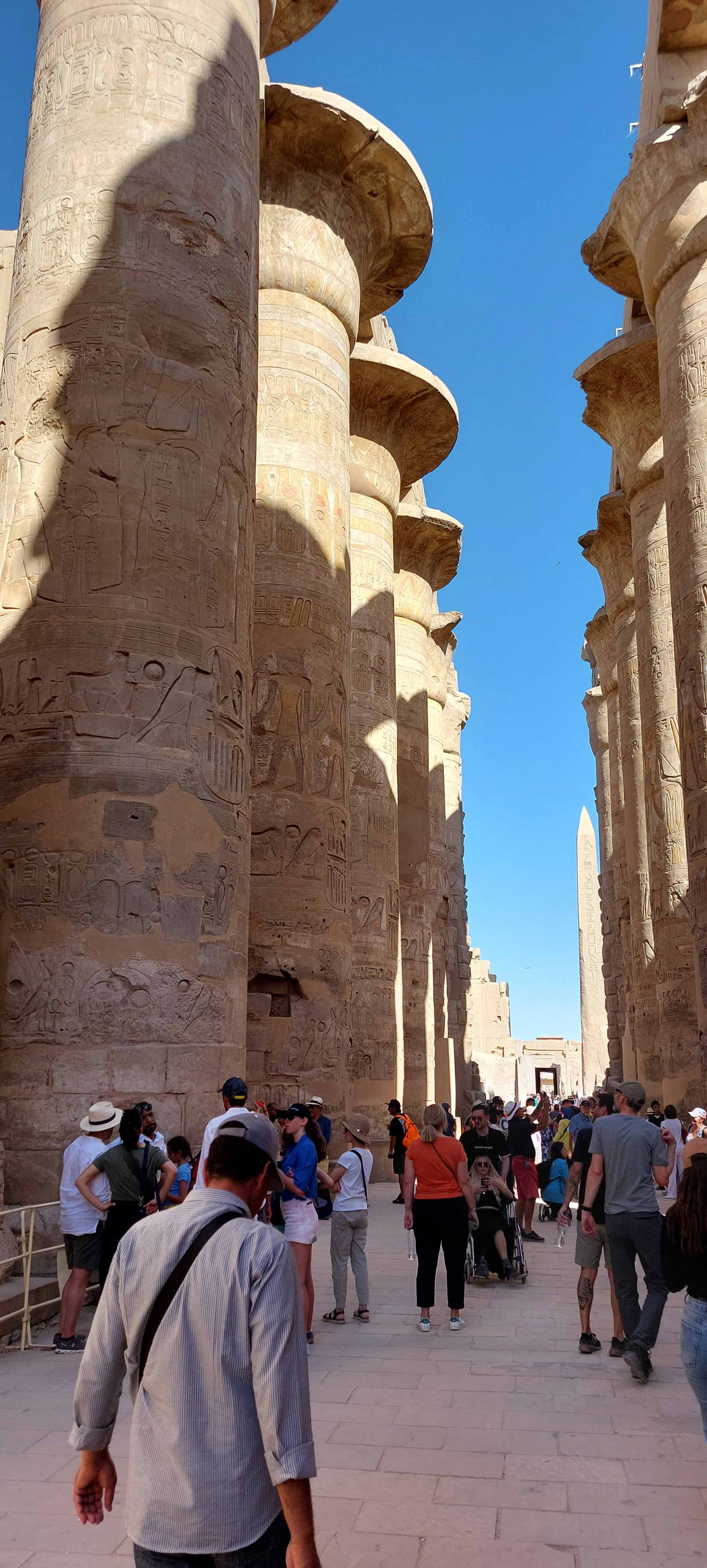

There’s also a number of obelisks. Historically there were hundreds around Egypt but many fell over and many more were taken to places like New York, Paris, Rome, the Vatican, and London. Today there are more obelisks in Rome than Egypt.


Egypt is without question the world’s most archeological rich region. It was one of mankind’s first civilizations, and due to the desert weather, it’s incredibly well preserved. Karnak is a pinnacle of the sites.






 Cabin Fever Chronicles - Getting Outdoors with Rod