Lake Te Anau and the Kepler Track

19 02 2013

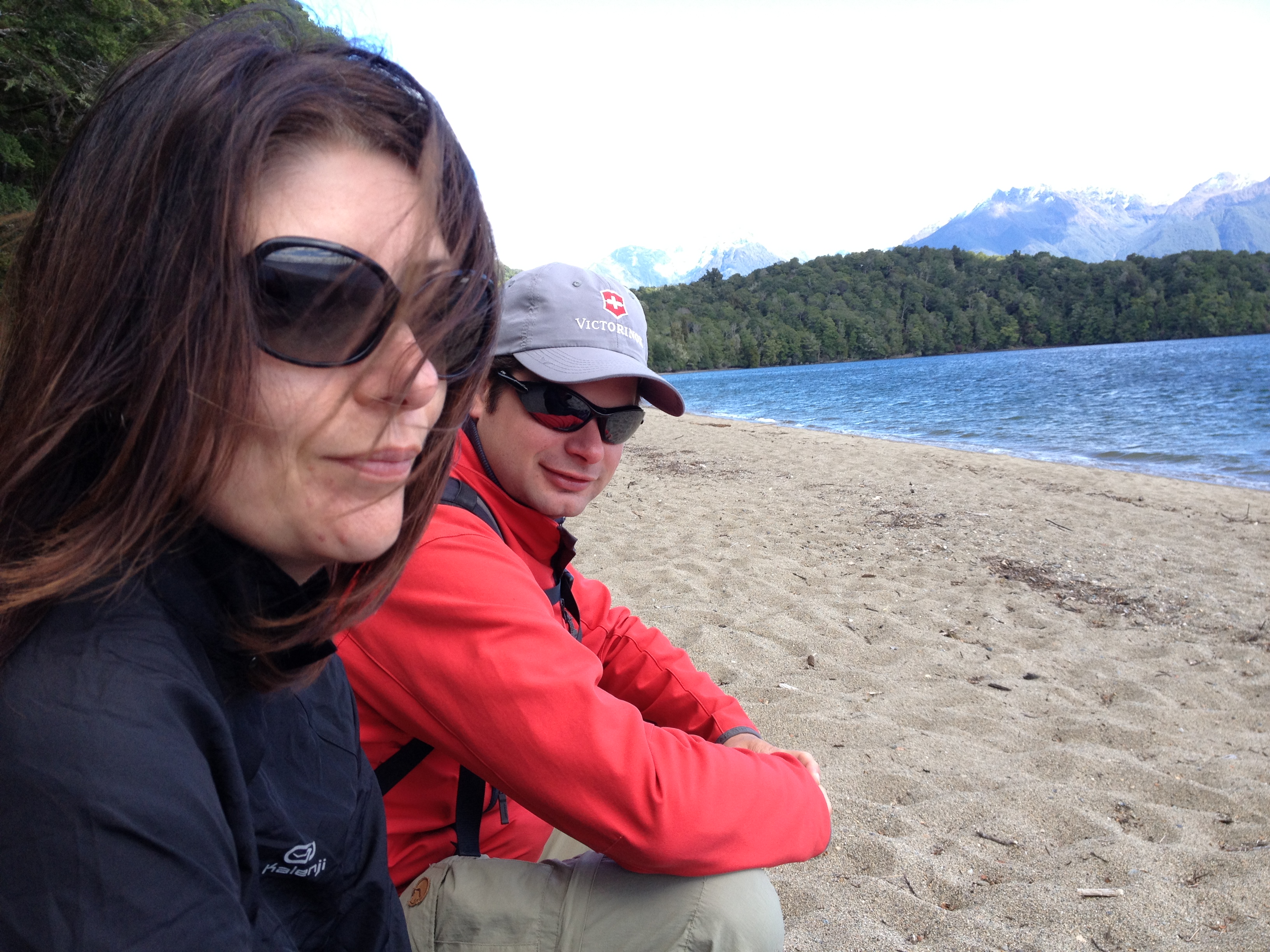
IMG_3423 The next day broke sunny with a little chill in the air. We wanted to get out into it, hike, breathe, check out the sights. Get our bodies moving. Our hotel manager suggested the Kepler Track because it is so close to town.

We were only planning on a three hour hike. That seemed to fit the bill. The Kepler Track is one of the many Great Walks of New Zealand. Most famous of these is the Milford Track. Also in the area is the Routeburn Track.

New Zealand’s “Great Walks” is a developed hiking and camping trail system designed so that the thousands of “trampers,” as they call them, can hike and spend the night on the trail with minimal impact on the environment. This means that many trails are much more maintained and developed that we might be accustomed to in America. And most times hikers or kayakers are required to either camp in designated campgrounds, or spend the night in a “trail hut.” These huts are reservation-based, and contain kitchen facilities. This means your “wildIMG_3425erness experience” will likely include nights shared with gregarious trampers from the world over. It’s just part of the Kiwi experience. The Great Walks, and lesser tracks, are found all over New Zealand and explore everything from glaciated mountains, lush semi tropical forests to warm coastal bays and inlets.

Want to see what this is all about: Get ready and watch this video!

See the Kepler Track in action!


IMG_0131The Kepler Track begins on Lake Te Anau, following a forested path near the water. Birds like the Tui or Bellbird call all during the hike cicadas also hum.

To hear the bell bird, listen to this video:

Another call is the Tui, in this video:

IMG_0133

All along the trail there are southern beeches, and the unique black tree ferns. These tree ferns grow upwards of 25 feet and can also be found in Tasmania. They’re really cool!

When you go for a multi-day hike on New Zealand’s Great Walks system you are engaging in what Kiwis call tramping. Tramping in New Zealand is not the sort of slutty activity we might think of in The States. Rather, tramping is something of a combination of “trekking” and “camping.” You can stay in either designated campsites or huts. Huts have bunks, mattresses, heating, toilets, and cold running water. Even the campsites have toilets, sinks and a water supply. These are not first come-first-served-you need to book a space in advance! Fancy, glossy brochures on these famous hikes are available for free at information centers throughout New Zealand.

We did not make it above the forest on the Kepler Track. That will be another trip! Still a lovely day we had. Next we head for action packed Wanaka and the west coast of the South Island.


New Zealand’s Fiordland National Park and Doubtful Sound

18 02 2013

We spend the better part of a day driving the South Island between Twizel and Te Anau, which is the gateway to Fiordland National Park and Doubtful Sound, and Milford Sound. We will be visiting three of the South Island’s largest lakes, Lake Wakatipu (New Zealand’s longest at 50 miles), Lake Te Anau (New Zealand’s largest lake by volume), and Lake Manapouri. We’re bypassing outdoor tourism hotspot Queenstown.

IMG_0122

Lake Wakapitu

For a good portion of today’s journey we pass along Lake Wakatipu – which twists with the mountains. The area near Queenstown has lots of sailboats plying the waters nearby, and the mountains rise up straight out of the lake.

In mid afternoon we arrive in Te Anau and check in at the Red Tussock Motel. We’ve got an apartment – two bedrooms, kitchen, bath, and living room. It’s quite nice. Once more Angelique gets the queen and Elwin and I get the two twin beds in the other bedroom. On arrival it’s about 80 degrees with fair weather clouds. The Red Tussock Motel is 10 minutes walk from the shore of Lake Te Anau and the downtown area. It’s a very walkable town – and seems pretty much tourism dependent from what we can see. Paul Lepper and other Kiwis we’d met insisted that the best fiord to visit isn’t the famous Milford Sound, but rather the 10 times larger and less busy Doubtful Sound. To see Doubtful Sound, though, one cannot go alone. This is because one must cross Lake Manapouri, then take a lengthy road down to the sound. You can’t just walk or drive to it, like Milford Sound. We were set on seeing Doubtful Sound and booked a trip for the following day. There are two ways to see doubtful sound. You can book a trip with Real Journeys or you can book a sea kayak trip.

These are two entirely different ways of experiencing Doubtful Sound. We were 100% set on kayaking in New Zealand. Either way to see the Sound is expensive, $200-$300 a day. But we could kayak up north, either in Abel Tasman National Park, or/and in the Bay of Islands, where it is W-A-R-M and down here it’s guaranteed to be chilly and rainy part of the time. The Real Journeys trip isn’t private and of course noisier with a motorized craft. The choice was to be moot, because all the kayak tours were booked up. So Real Journeys it was to be. It was an ultra modern multi deck motor catamaran, and as such it could get around and cover most of Doubtful Sound in a few hours. Kayaking would be quiet – but you’d only explore one of the Sound’s fiords in a day.

So, Doubtful Sound Day Dawns. It’s going to be an all-day affair! The weather is sun/rain/cloud/sun all day, and that is exactly what we’ve been told it’s like in the fiords most of the year. It rains 236 inches a year in the fiords!

IMG_0127Since we stayed primarily in kitchen-equipped apartments, a typical day began with coffee or tea and then either muesli and fruit topped with yogurt, or sometimes eggs and toast. And we often made sack lunches which we ate during the day.

We take a boat across Lake Manapouri. Looking across this giant lake from the top deck, I’m reminded of my trip on Argentina’s Lago Nahuel Huapi in Argentina. It is rimmed with gorgeous peaks, many draped in fresh snow.

Once ashore we board a coach which climbs its way through the lush forest to a 700-ft high pass before steeply descending to Doubtful Sound’s Deep Cove, our embarkation point. The forest is super lush with waterfalls urgently relieving the mountainsides of their liquid burden.

View down to Deep Cove

Taking a trip with Real Journeys, I’m reminded of traveling with an airline. It’s a family-run company founded decades ago taking tourists to Doubtful Sound. In those days, guests walked 11 grueling hours all the way from Lake Manapouri to Deep Cove. Today, we ride a coach. The company has grown, and seems to have a near-monopoly on tourism in Fiordland. Uniformed staff sell you tickets at their terminals, and the boats are absolutely 21st century craft. It’s a far cry from some of the 3rd world adventure of on-your-own arranging to see an area. Still, as New Zealand is a magnet for throngs of visitors, I can understand – there is a need to manage the crowds! For example, the famous Milford Track sees 14,000 visitors a year! The Milford Sound itself sees 400,000!

IMG_3412

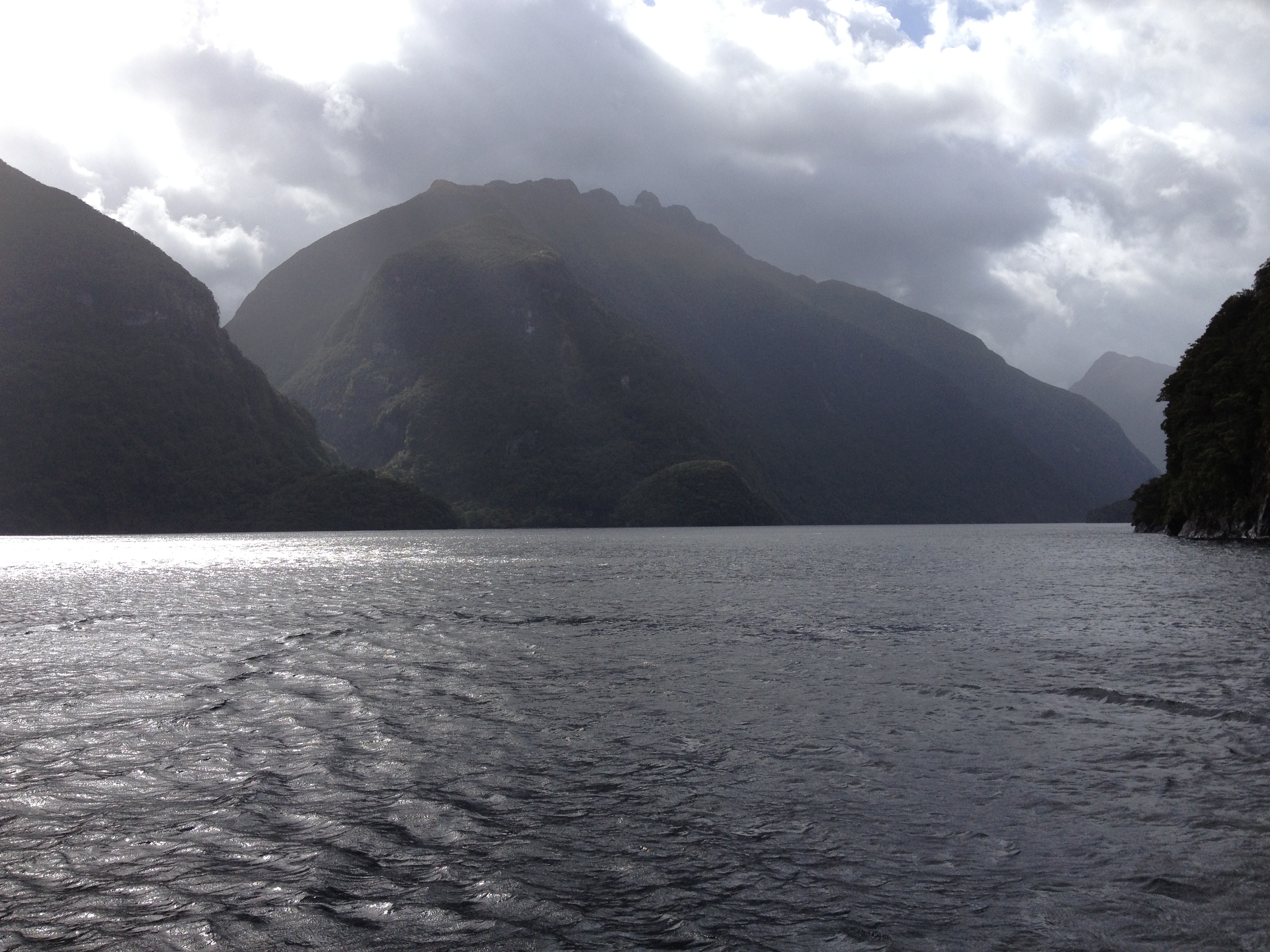
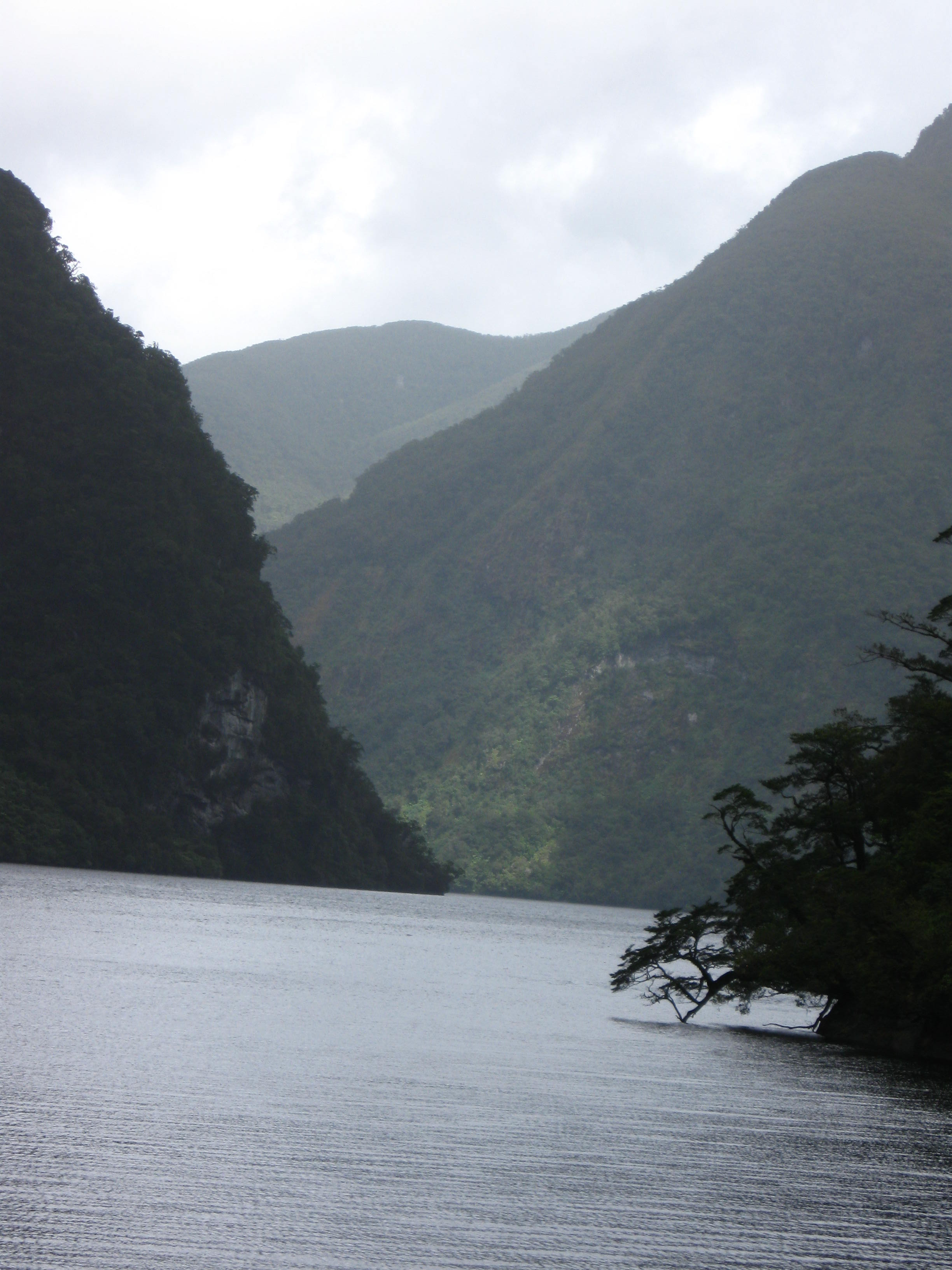
Fiordland National Park’s seven fiords are all drowned glacial valleys. In past ice ages, ice thousands of feet thick moved off the mountains, carving these fiords to the west, and the steeply sloped arms of the lakes to the east. The underlying rock sits not far below the roots of the forests – the soil is not nutrient rich, nor thick. The plants, such as the famous 20-foot high black tree fern, have adapted to make use of the huge amount of rainfall.

IMG_0129Captain Cook, the British Global Explorer, named the place Doubtful Harbor because he did not think it would be possible to sail inside. Later Whalers gave it the present name.

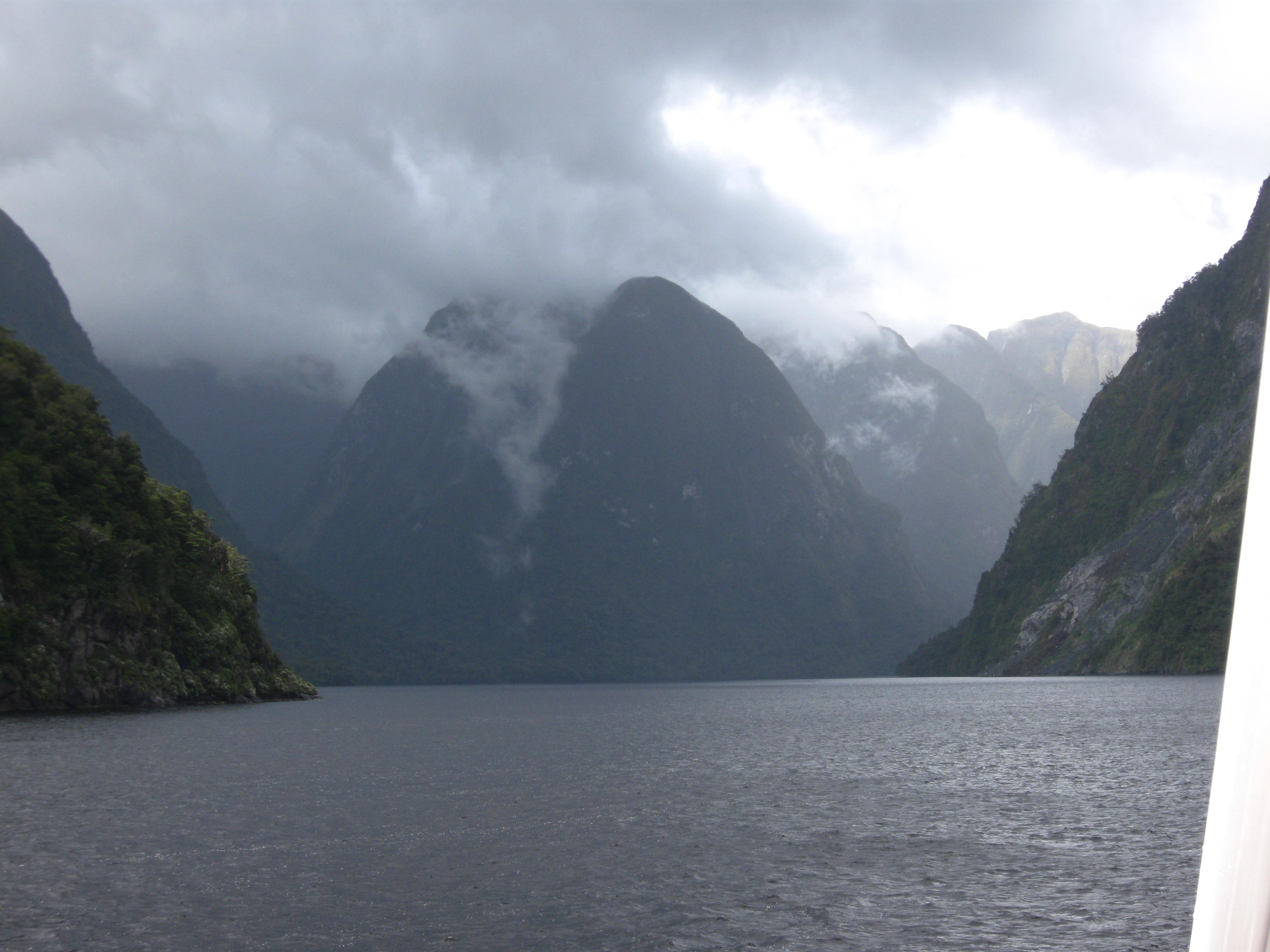
It has a fascinatingly eery feeling with all the mists billowing off the impossibly steep valley walls.IMG_3414

Part of the Real Journeys itinerary was to visit the Manapouri Hydroelectric Power Station. It is frequently cited as New Zealand’s greatest engineering achievement. It is a completely underground power station – they dug giant tunnels connecting Lake Manapouri to Doubtful Sound. Water runs through turning turbines. It is the largest hydroelectric plan in the country.

Ironically, the reason it was built may cease to exist. The project was commenced to provide electricity to an aluminum smelter – but that smelter may be closed due to cheaper aluminum from China. We were told the power station can supply enough power for the entire South Island, if necessary. The other irony is that while the production of electricity from Manapouri does not produce greenhouse gases, the Tiwai Point aluminum smelter at the other end is one of the worst polluters in New Zealand.


Mount Cook and Twizel, New Zealand

14 02 2013
IMG_3385

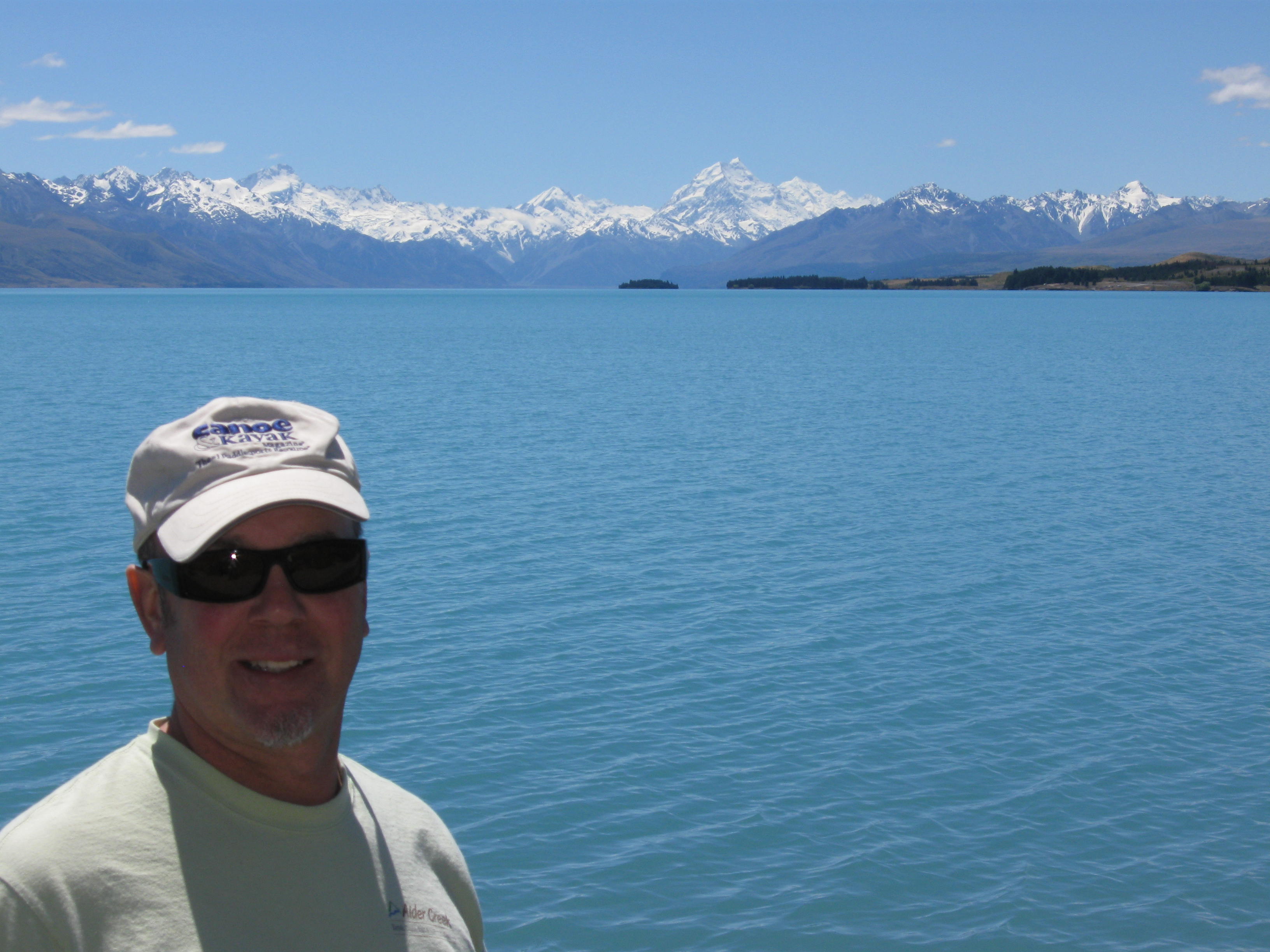
Stupendous view from Lake Pukaki, near Twizel!

Elwin, Angelique and I departed Christchurch for our exploration of New Zealand’s Southern Alps, lakes and fiords. We were looking forward to stunning views, sapphire lakes, hikes, and glaciers. Our first stop would be Twizel, which is the little gateway town for Mount Cook, at 12,316 ft the highest peak in Australasia.

Now, New Zealand is beautiful. You may have heard. But it is the compactness of the country, and variety of climates, that makes it so different than any other in the world. On the road to Twizel we drove through plains, mountain passes, through an infinity of multicolored lupine fields, from the palms of the semi tropical coast to majestic glaciated peaks – in a matter of hours! What you may not know, is that so much of it has been cleared for agriculture. We were surprised that sometimes it seems every scrap of land not part of a reserve seems to be converted to agriculture. Even the forests covering the mountains are often all second generation pines grown for wood production. The Kiwis are acutely aware and have ramped up preservation on land and in coastal marine reserves as well.

We arrive in Twizel. Twizel, population 1,065, is definitely ground zero for Mt. Cook exploration. This town was originally founded entirely as housing for construction workers for the hydroelectric projects on the dams nearby. Today, the remaining houses and “dorms” serve as places for the outdoors crowd. Still small, Twizel has a limited lodging landscape, and I made reservations only a few days ahead. As such I had to make do with a hostel room for all three of us at High Country Lodge & Backpackers, shared unisex bath down the hall. And parking? Outside your window – literally – on the lawn. We did make friends with some other travelers. But, the place was dirty, the beds lumpy, and it was generally noisy both at night and in the morning. If you can imagine beer drinking buddies, showering backpackers, a woman voicing her orgasms behind the wall, and people outside your window unpacking their SUV all at the same time, that describes a night at this place! And at 5:30 a.m.? Cars loading up for a day on Mt Cook, engines running and doors opening and slamming. At least we made do watching “The Lord of the Rings, The Two Towers” during all of this. So, if you plan on staying in Twizel, I recommend reserving your lodgings earlier and don’t stay at the backpackers hostel! You can, however, stay at their “lodge,” and have a real room and small porch / bathroom to yourself – IF you book further ahead.

Aside from our lodgings, Twizel is perfectly fine. It has a few restaurants, it’s quiet, there are two grocery stores, it’s walkable, and generally OK.

Left sided driving to Mt Cook...

Left sided driving to Mt Cook…

The plan is to hike some of the valleys near Mt. Cook. Unfortunately Elwin comes down sick, and decides to sleep it off. So, Angelique and I head up in 100% blue bird perfect weather to hike the Hooker Glacier area near Mt Cook, and hopefully the Tasman Glacier, too.

Like the glaciers in Patagonian Argentina we saw last year, these too create miles long sky blue lakes to the east. What we saw in Patagonia, by comparison, is almost unimaginable. Lake Argentina is 1,466 sq km, and Lake Pukaki is 179 sq km.  Still, these are impressive-and beautiful.

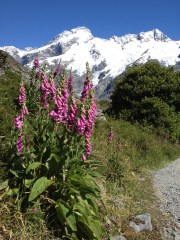
So we head out. The trail to the Hooker Glacier is really close to the tourist center in the valley, including the Hermitage Hotel, so there are lots of folks on the way. But that doesn’t matter. It’s really gorgeous.
IMG_0115

It is so pretty. It’s really HOT, and we seek shelter from the sun in a little hut. There are “rivers” literally spouting from the sides of the mountains. That tells me that the rock is porous, allowing underground streams to form from the melt-water from the glaciers above.

We meet lots of Australians – something that would be repeated over and over during my month in New Zealand. And they’d always tell me that, though Australia is beautiful too, it’s so expensive that they fly to New Zealand for their holidays.

IMG_0117

Across suspension bridges, up and up Angelique and I go, with the Hooker Glacier the goal. The trail has been re-worked a few times, and there’s an old suspension bridge, plus a to-be suspension bridge we pass as we go.

Down under the area closer to The Hermitage, there is a lake with ice bergs melting from the glaciers. It’s nowhere near the size of the Patagonia lakes – but it’s still cool!
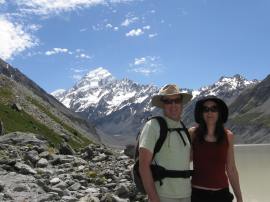
IMG_3394

Rod and Angelique

I wish Elwin were here because it’s really spectacular. He and Angelique spent the last month in Australia, and there’s nothing like this there. Well, he’s going to just have to see the pictures I guess.

The Hooker Glacier, at the terminus, is not spectacular. It is small (relative to the massive glaciers in Patagonia we saw) and covered in an insulating blanket of rocks. But it’s still a glacier!

So Mt Cook did not disappoint. If you head to New Zealand’s South Islands, definitely check it out.

IMG_3388Angelique and I also headed to the Tasman Glacier Terminus. On the way I realized O-M-G we are smack in the middle of The Lord of the Rings Battle for Gondor! There is NO question. I looked it up and verified. I don’t have pictures. But wow! They did film those scenes right there.

IMG_3395

Spectacular Mt. Cook, and the Hooker Glacier (covered in rocks) underneath.

When we reach the trailhead I realize just how much of a magnet Mt. Cook is in January! The parking area is completely filled up and people are competing for spots. I actually got angry and left in a huff. I didn’t go on vacation to engage in an urban combat situation. Perhaps I should have been more patient! But I’d read that the Tasman Glacier’s terminus, like Hooker’s, is also gray and less-than-spectacular…that was my only consolation.

Back in Twizel, Elwin was improving! He’s a super hiker and I knew h0w hard it was for him to miss today’s hike!

Next up – road trip past Queenstown, New Zealand, to Te Anau and Fiordland National Park!


Akaroa New Zealand and the Banks Peninsula

12 02 2013

IMG_0097With the balance of the warm sunny day before us, and with no set schedule, we decided to visit New Zealand’s South Island’s Banks Peninsula and the picturesque seaside harbor of Akaroa! Angelique, Yurira, Elwin, myself, and Oscar piled in to the Camry and headed southeast. Oscar and Yurira, even though this is their third season here, had never been there and wanted to check it out.IMG_0094

Having everyone there was unparalleled for me! I’d met Elwin and Angelique in Patagonia. Yurira and Oscar in Oregon, and here we were in New Zealand!

The road passes through beautiful valleys filled with cow and sheep, before climbing, winding up and over the peninsula. While Christchurch is relatively flat, the peninsula is mountainous. In places you are hundreds of feet above the ocean and one can see forever! I caught a glimpse of a sailboat race outside Akaroa. I would see sailboat races all over New Zealand.

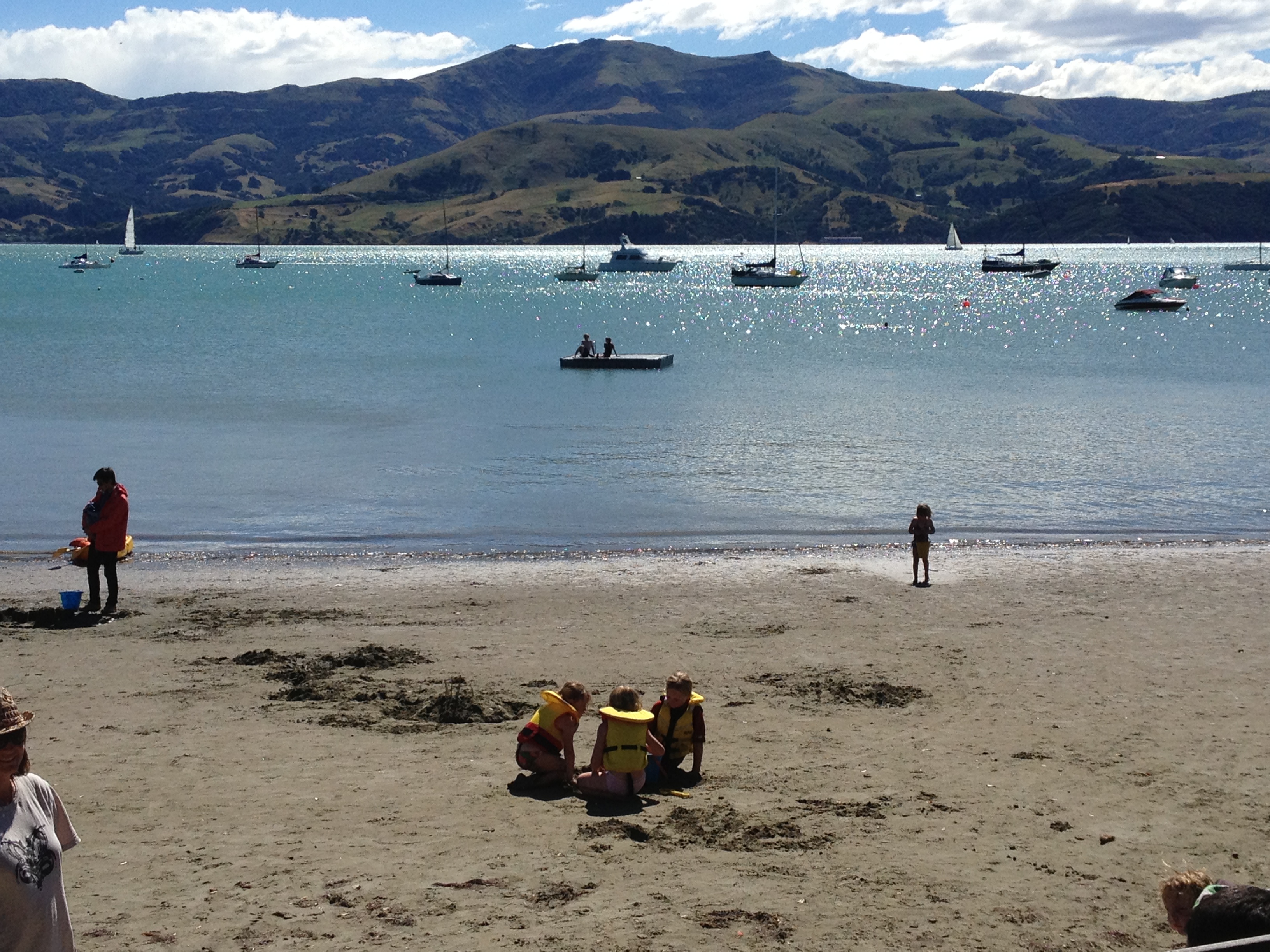
IMG_0096If you are in Christchurch, the Banks Peninsula is definitely worth visiting. It sticks out like a grape southeast of town. It has “spokes” of inlets, flanked by mountains, radiating out from the center – so one can find incredible seclusion there. The drive is ridiculously scenic. It is a 1,150 sq km volcanic feature, formed by two eruptive volcanoes. Waters are sapphire blue, and palms are common.IMG_0095

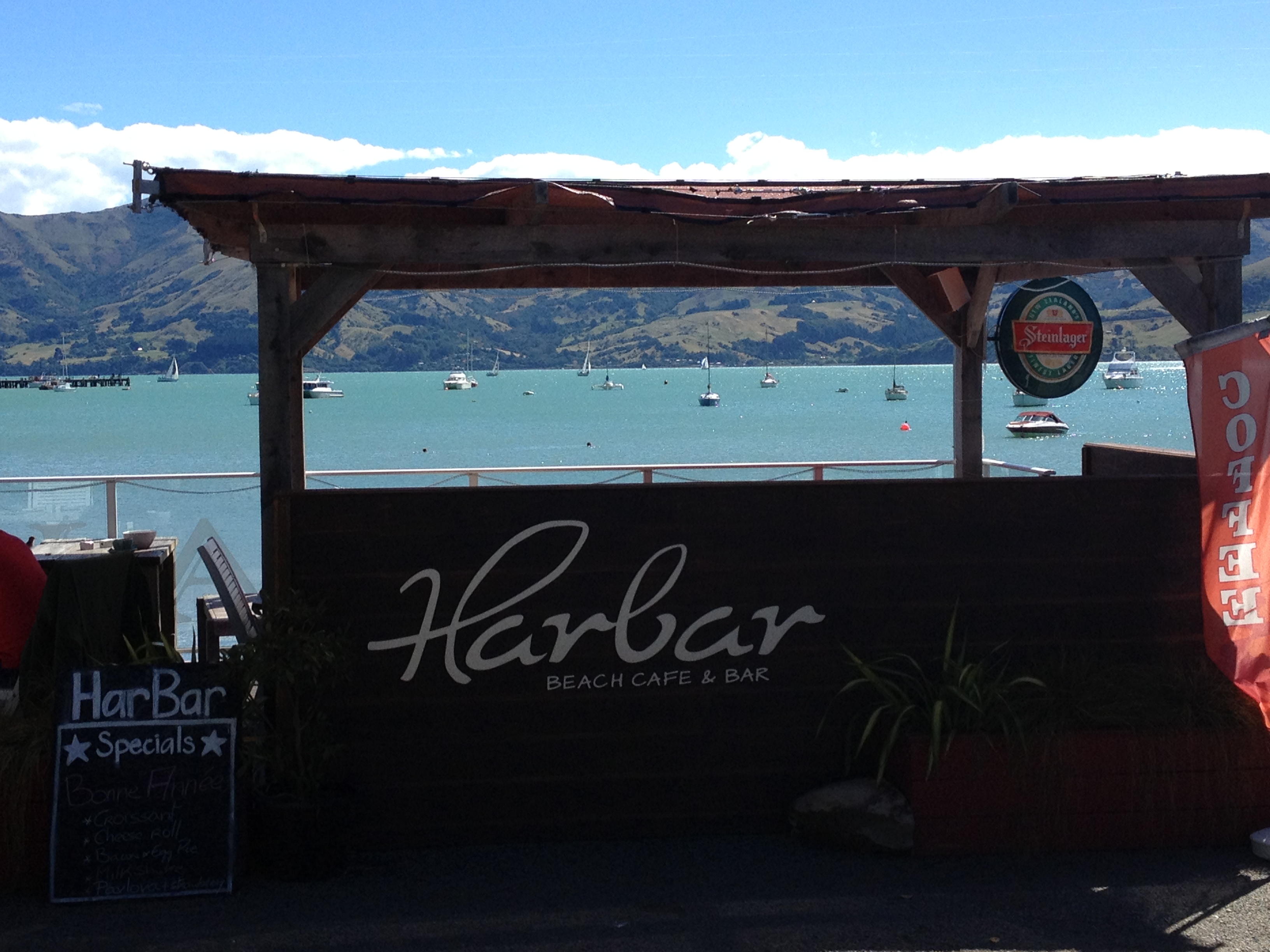
Sun splashed Akaroa was dry, warm, with a gentle breeze blowing through the palms by the harbor. A nice place to window browse, walk the pier, admire the comings and goings of boats, stroll the avenues, and take in a 20-oz British pint of ale under umbrella by the water.

I would be remiss if I glossed over Akaroa’s rich French heritage! Not only is it a beautiful palm studded town on a warm bay, but it is rich in French architecture, heritage and cuisine. The fact is, the South Island narrowly missed becoming a French colony right here. In 1838 French whalers bought the peninsula from the Maori and went to France with the news. They returned with French settlers, but just two days earlier English pounced with their flag, proclaiming it for the English Crown. Nevertheless, nearly 70 French citizens started the settlement, and to this day French heritage is celebrated.

IMG_0099

We had a terrific day with Oscar and Yurira! They had much advice for us on our journey ahead. I’m grateful and hope to maybe join them in Alaska next summer!


Christchurch New Zealand

11 02 2013

IMG_0088Today we were in Christchurch, New Zealand, where we were to meet with Oscar Manguy and Yurira Hernandez, two Mexican kayak guides I had met during the Loco Roundup Kayak Symposium in 2011. I’ve been Facebooking with them ever since. They work with National Outdoor Leadership School (NOLS), guiding in Alaska during the northern summer and New Zealand in the southern summer. Not a bad life! When in New Zealand, they live in Christchurch.

When I decided to head to New Zealand, I contacted Yurira and then, when I had definite dates, we were able to coordinate a visit! It was GREAT to see them on the other side of the world!

I hoped to paddle with them, but it seems the kayak facilities they use are not in Christchurch. So we’d spend time visiting in Christchurch and then figure out what to to. Elwin and I were curious about a city called Akaroa, which is on the Banks Peninsula, south of town. But Elwin, Angelique and myself really didn’t know much about Christchurch itself. So we would spend part of the day in downtown Christchurch.

Christchurch, founded in 1850, with about 345,000 people, is the 2nd largest city in New Zealand, and the biggest on the South Island. You wouldn’t know it by looking out from the central city – because the area is pretty flat and the buildings are not so tall. The fact is, Christchurch spreads out a lot. It’s got a wealth of cultural attractions, fine beaches, ample city parks and gardens, and heartbreakingly beautiful churches, which were devastated by two 2011 earthquakes.  It suffered a devastating 6.9 magnitude earthquake in February 2011 and a major aftershock six months later. I talked with some locals – they said one earthquake caused sideways shifting, while the other seemed to jolt upwards.

We first met for lunch, and then took a stroll around. The central business district was simply devastated. And much remains rubble, as building codes are to be updated before reconstruction can begin in earnest. Much of the old downtown was built on ground that was subject to liquefaction. Worse, many older classic buildings and churches were built of brick or stone. All around Christchurch once lovely churches lie in varying states of rebuilding process.

IMG_0089

Seats still inside this theater!


We checked out a central business district shopping mall made of shipping containers. This was an interesting way to try to drum up some economic activity!

IMG_0091We passed a theater and what must have been a lively restaurant / bar district. Today, these buildings lay in various states of ruin.

Still, the city is vibrant and moving on. There are lovely walkways and gardens everywhere. If only I had pictures of all the lovely parts of Christchurch!

We’d reached about 2:00 in the afternoon…what would we like to do next? Let’s head to the Banks Peninsula and check out Akaroa. We’d heard it’s a beautiful, warm, with a French flair. So we piled into the Camry and headed over there! More next blog post!


Christchurch New Zealand, Left Sided Driving, Meeting Elwin and Angelique

9 02 2013

I flew out of Palmerston North, over the infamous Cook Strait and landed at Christchurch, New Zealand. Cook Strait is one of Earth’s most dangerous crossings. There was a storm approaching from Antarctica that day, and we were taking a slightly diverted route to avoid turbulence. I will never forget what I saw, looking down at the strait. I saw over 30-foot continuously breaking swells – you could see the foam piles behind the swells stretching for hundreds of yards! These swells were just running amok on fire! That would be super un-cool to be out there in any craft.

The flight left at 7:10 a.m. and landed at 8:30 so I was in Christchurch for the better part of the day. Elwin and Angelique were to land from Sydney, Australia about 3:30 p.m. They’d just spent a month in Australia. I rented our car for the month from Apex Rentals, and then set about finding our apartment at Avalon Motel & Suites. Needless to say I was more than a bit nervous about jumping in a car and driving on the left side of the road! The turn signals and windshield wiper activators were on opposite sides than in the USA, and of course the car is right-side drive. So when turning I would activate the wipers DUH. Or when getting into the car to drive come up on the left side, DUH.

Apex Car Rentals is a good deal in New Zealand. I rented a Toyota Camry with unlimited mileage and full collision coverage for a month for $1,450. It is $40/day for the car before insurance. It was not new – a 2006 – but the car was perfectly adequate for the curvy/hill-packed roads and comfortably sized for the three of us. Gasoline was approximately $115/tank. Most of New Zealand highways are only one lane in each direction – so you need to pass if you want to move on. The Camry had adequate power for passing, even with three of us and luggage. How did we work the money? Since I spent so much on the car, Angelique and Elwin would pay for the hotels and gas until their spending caught up with mine.

I got in behind the wheel. Holy bejezus. I hadn’t driven in a left sided country since 1983. There are lots of roundabouts in New Zealand and at first they can be a challenge! I took some time in some side neighborhoods to get used to what I was doing! I checked into our apartment which was pretty sweet. It had two bedrooms (one with twins and another with queen) and a living room equipped with kitchen and even a washing machine. Pretty up to date actually.

I had a few hours to kill so I headed to the waterfront. There are miles of beaches so I watched swimmers, bathers and surfers doing what they do. Here I was. The surf here was fairly challenging but folks just went at it.

It was time to go back to the airport to pick my co-wanderers up! Once they came through customs, it was a bit emotional to see them again! The last time we were together was in Buenos Aires! We had been all over Chilean and Argentinean Patagonia together, and now it was time to see the “other down under” the Kiwi side!

Tomorrow we’d meet up with my friends Yurira and Oscar, kayak guides I know who work here in the New Zealand summer. This was going to be great!