Evening Paddle Organized by April – and My Old Kayak Britney Shows Up

16 07 2010

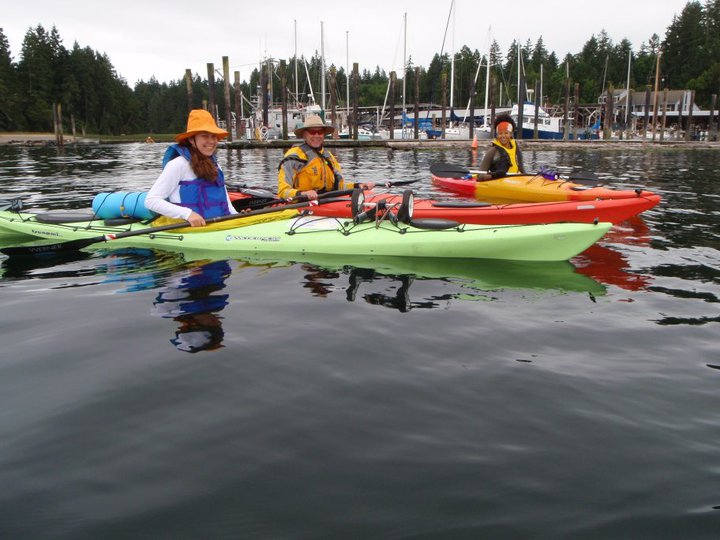
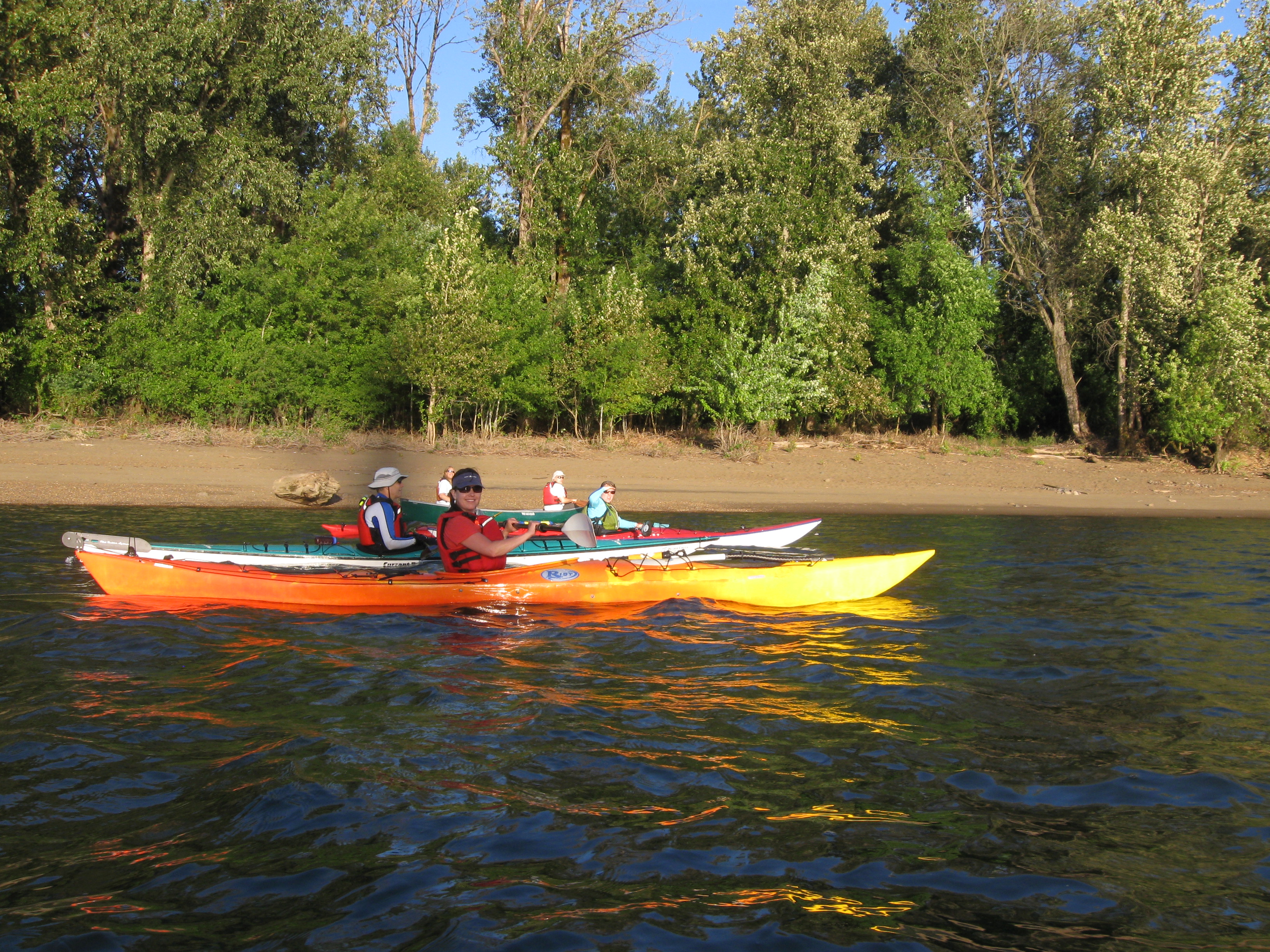
April Obern scheduled an after work paddle for tonight and a number of us showed up. Jessie, Phil Stanton, Jim, and two ladies with the same…Kristi! One of them I sold my Riot Brittany last year…and it was great to see my old boat out there!

I must say my old boat (not really very old!) looks great with Kristi in it! Such a pretty yellow/orange blend. Very pretty shape!

It was a beautiful evening. Temperature 86 degrees – wonderful to be on the river. And, the river was very warm! So several of us were rolling for practice.

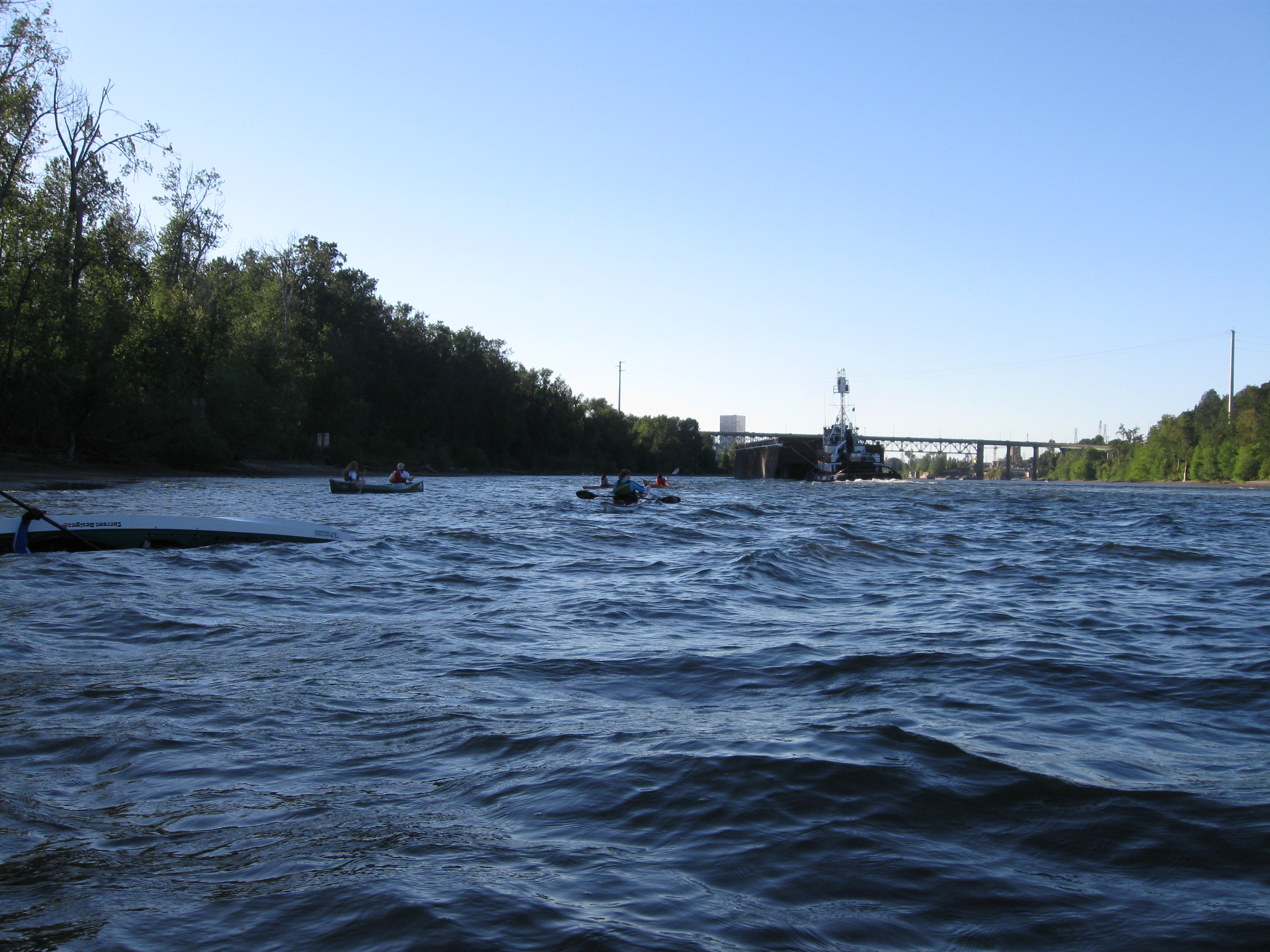
When we passed the Ross Island Lagoon, a tug and barge was pulling out of its dock. We had to pull over to the port side of the passage to allow it to pass.

Kind of looks like the barge sent enough waves to capsize Phil! Not so, in this photo, Phil is just practicing his roll.

What a nice night! We really enjoyed being out there!


Cascadia Marine Trail Day 2: To Anderson Island

9 07 2010

Day Two on the Cascadia Marine Trail!

Woke up amazingly refreshed at Joemma Beach State Park! I didn’t use the rain fly on my REI Quarter Dome T3 tent so all the early light was surrounding me. But as I was prepared with my face mask and ear plugs, I did not arise until about 6:45. And when I did, I couldn’t believe how dark under that mask it was, and how bright once I took it off! Wow! Others told me crows had been crackling keeping them up – I didn’t hear anything!

Heading out from Joemma Beach

I also used this new REI inflatable pillow. I used it to support my still recovering shoulder, and this made my night SO much more comfortable! No more achy shoulder! No more rolling around to get it into a comfortable position.

Sunday was July 4th, so fireworks were a big part of the day’s activities! We decided to do a lazy start, wait for the late morning high tide, and then head down southward toward Anderson Island.

We got a little ambitious and made a last minute plan to head to Eagle Island State Park for “lunch,” not really taking into consideration that it was already well past eleven o’clock. Eagle Island is 7.5 miles from Joemma Beach, and we just got over ambitious. We paddled into Drayton Passage, which lies between Anderson Island and the Key Peninsula. Ahead lay McNeil Island, a Federal Penitentiary we wanted to check out.

Unexpectedly the wind picked up substantially! As we entered Drayton Passage the wind picked up from the south/southwest to maybe 18 knots with whitecaps. Fortunately tide wasn’t much of a factor. It was against us, but it wasn’t strong.

Like a mother hen, I doted over the group and especially Bibi and Michelle. Monte did a great job of sticking with Michelle. The wind and waves grew and a few breakers sent water across my foredeck. My charts were not totally water proof – so I relied on Deborah and Warren’s protected charts. Crossing Drayton Passage, we encountered lots of traffic. Deborah sent out a hail over VHS to alert the power boats we were about to cross.

Checking my watch, I notice the time kept moving on. It was already 1:45 mid way across the passage. Once across, I polled the group about Eagle Island. Michelle was going to head to our campsite with Monte no matter what – she was tiring. We all decided it was not a good idea to try to make Eagle Island and then paddle all the way back to the camp. Too many paddling miles in this 18 knot wind.

We take a breather for lunch

So after lunch we abandoned Eagle Island ambitions and began the trek for our spot on Anderson. Plunging into breaking waves was, for me, lots of fun! My Valley Aquanaut LV loved it. Without skeg deployed, it wanders in calm waters. But in conditions, it tracks true without the skeg and is also rock solid stable. But here, Michelle’s flimsy spray skirt failed her – allowing water from the plunging waves to enter. Fortunately, Warren supplied an extra spray skirt, which solved the problem!

We saw smoke in the distance. Coming closer we realized there was a wildfire on the shore! We put ashore to check it out.  The 8′ x 8′ fire was burning hot, and above it were large driftwood logs – which were catching fire.

Further downwind on the beach there was plenty of fuel. We tried to extinguish it with our water bucket, but we knew it’d probably re-ignite.

So we spent some time calling 911 on the cell phone and managed to put a call out to the marine fire department. They agreed to send out a fire boat. We then put some buckets of water on the fire, and then took off. Maybe 15 minutes later a fire boat appeared, found the fire, and used its cannon to stop it. Kinda cool!

So far, the waves were coming at us mostly from the bow. This wasn’t much of a problem for our novices. We don’t have any images because we were too busy. But as we rounded the western end of Anderson Island, they’d be mostly to our sides. We were concerned for Michelle and Bibi. I figured they’d need to use a brace more than a few times. Once there, however, it became apparent that close to shore, the wind calmed down a lot. The island has one hundred foot high headlands – and a phenomenon was occurring there which reduced the wind. Sometimes when a wind comes directly at a headland, it lifts several hundred yards offshore, leaving the space near the shore much calmer. We could see that far above our heads, the trees were swaying, yet for us, there was not nearly as much wind. We could also see that there were whitecaps further out, but not where we were.

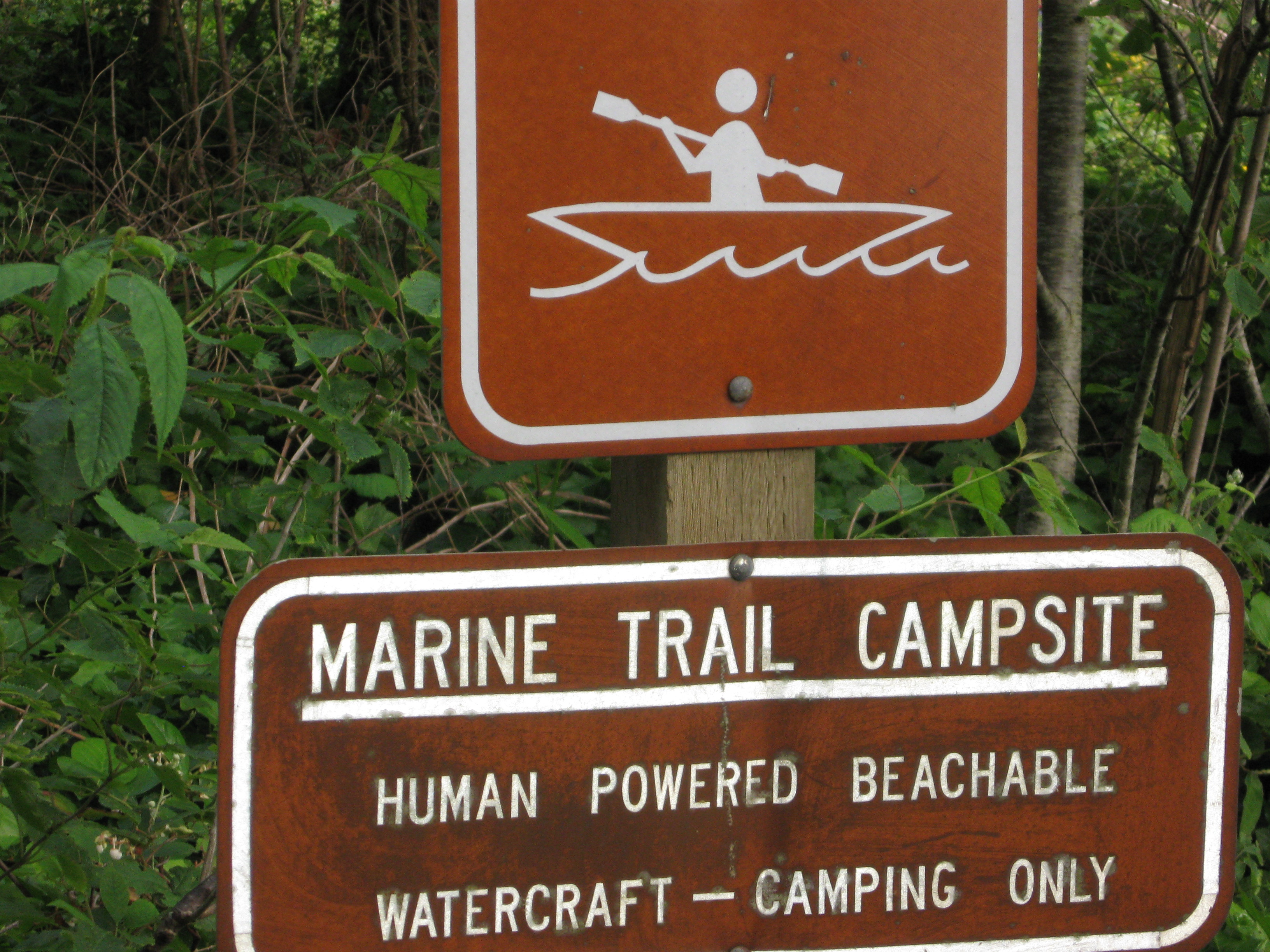
We came to the spot we assumed was the camping site I’d reserved through the Washington Water Trails Association. But a sign said NO OVERNIGHT CAMPING very clearly. Warren and I asked folks on the beach and they told us our site was 1/2 mile down island. Well, once we reached the end of the island with no site, we decided that the original site was in fact our place for the night, regardless. The information in the Marine Trail Guidebook must need updating? After the trip, I learned there is usually a water trails sign on that same post but it was missing.

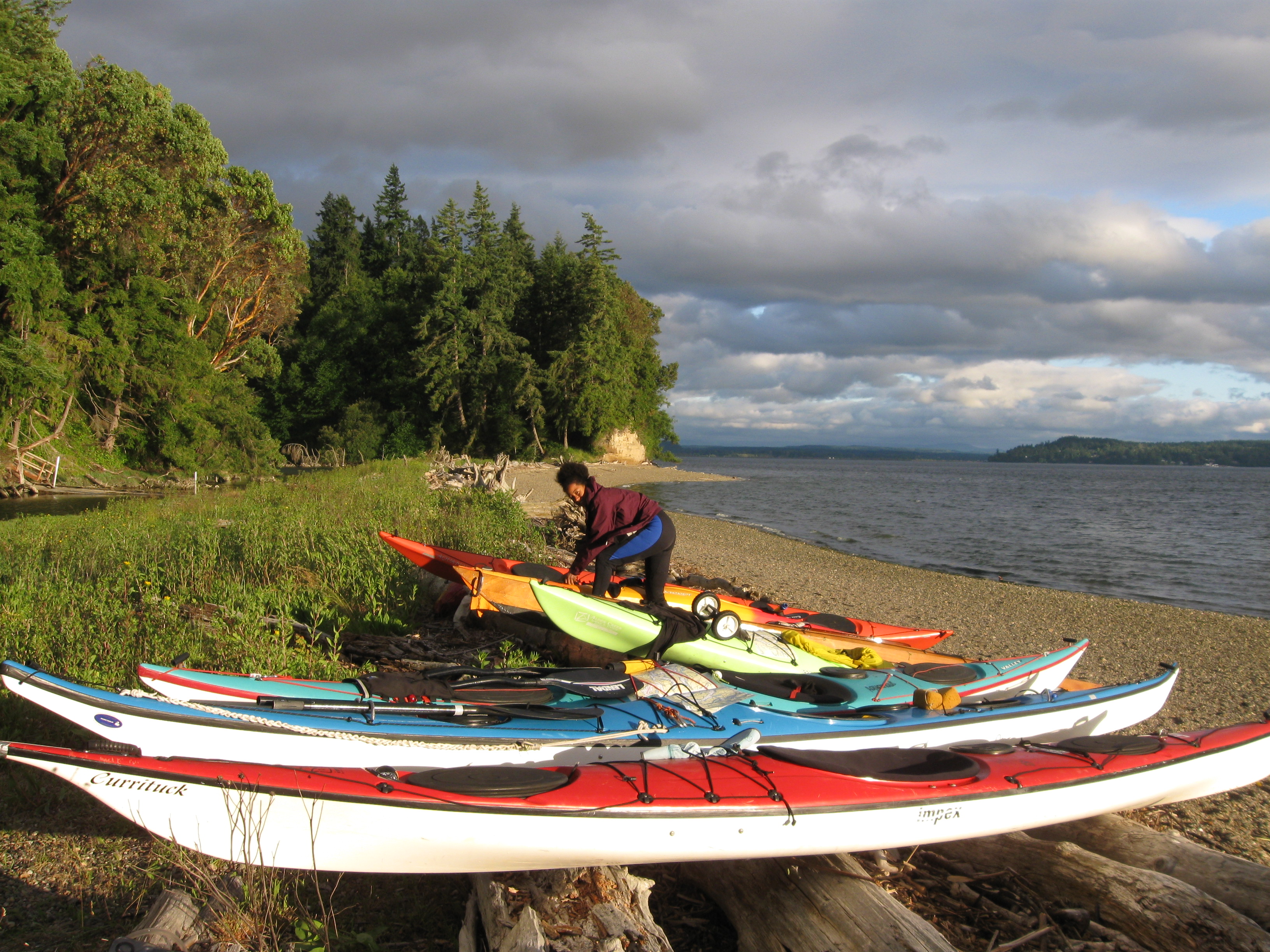
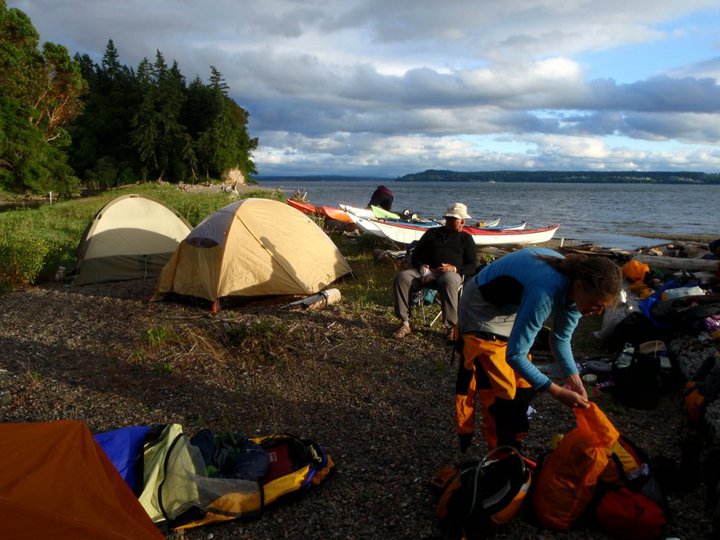
It’s a very pretty site, located on the end of a sand spit with a lagoon behind. It was about low tide, so we were careful to check signs of high tide and pitch tents well above. You can see all up and down the opposite shore from there. It would be great for fireworks viewing!

The grunt work of carrying boats up from low tide took a while, but with team work we got the job done!

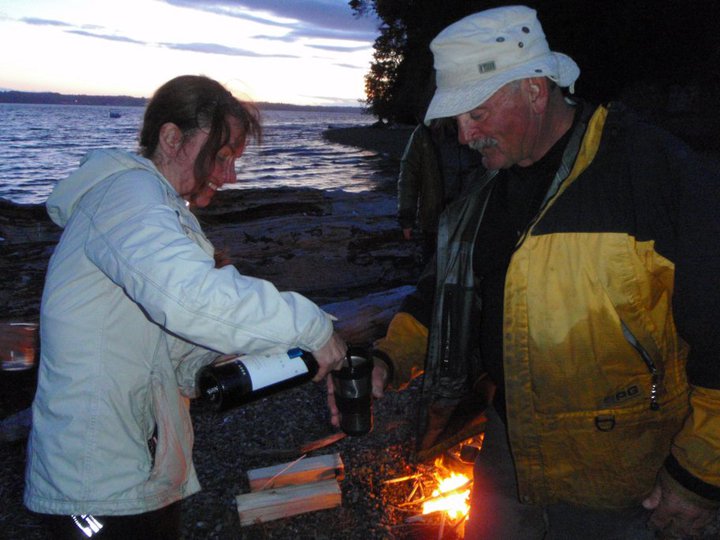
Michelle brought some wine and Warren had a bit of scotch, both welcome after this long day’s paddle!

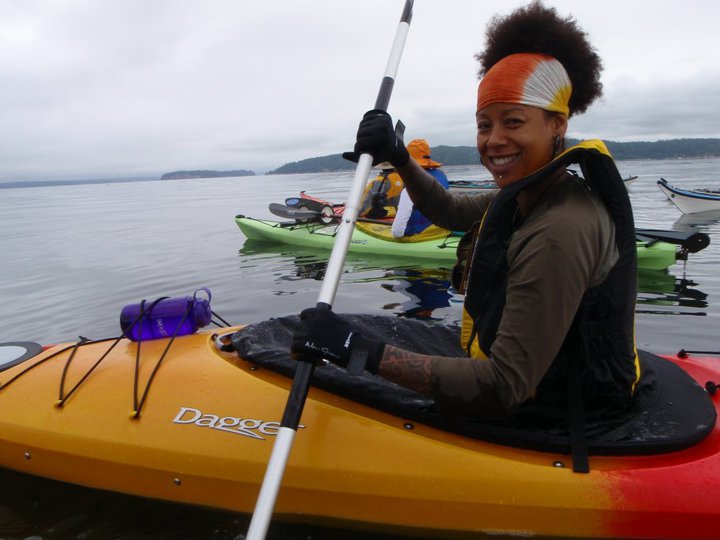
Monte accepts some wine – well deserved!

All forms of backpacking food were brought out and cooked up. Warren and Deborah were the most prepared with dehydrated/vacuum sealed food they’d done at home. I had my usual Lipton pasta mixed with a pack of meat with a side of fresh greens, and Michelle had lamb she’d cooked earlier in the day.

Just past dinner twilight brought desire for a campfire. We gathered some wood and sparked a little beach campfire, and we all agreed we were privileged to have this spot, view, and atmosphere all to ourselves!

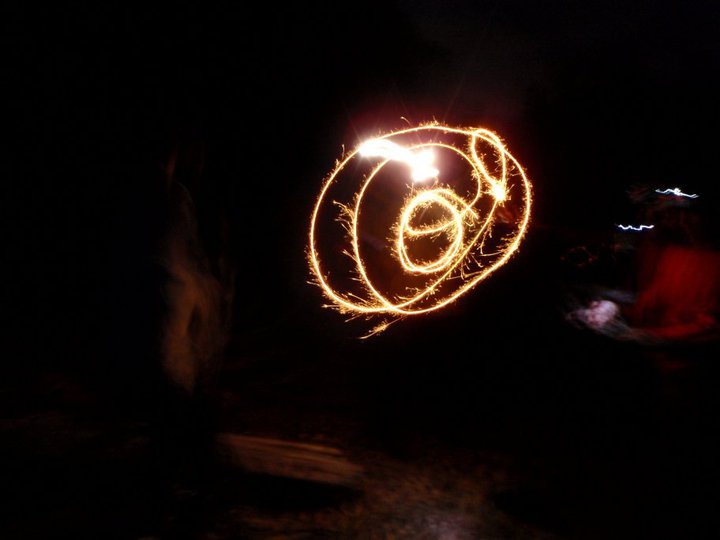
As night set in the opposite shore lit up! Some community fireworks began to really show their stuff by 10:00 and private fireworks displays were going on everywhere. I had my own cache, which we indulged in!

In Washington most fireworks are legal! Hooray!

Fireworks continued to decorate the opposite shoreline all night – some people must have broke the bank to keep going on like that! Pretty cool to watch!


Cascadia Water Trail Day 1: McMicken Island and Joemma Beach

8 07 2010

Summer has finally arrived in the Pacific Northwest! Time for island hopping on the Cascadia Marine Trail!

As a Meetup organizer, I’m always thinking of ways to put quality events on the calendar. My PaddleNW group has a lot of novice paddlers, yet I’m always jonesing for a challenge. Sometimes a challenge is the conditions, other times it’s planning/packing for overnights. And for me, as the guy leading, there are group management responsibilities. Equally challenging is forcing myself to schedule what to me is a boring paddle.

We hadn’t done a multi-day paddle with a different destination each day before. Further, we’ve only done one salt water overnighter. I thought it’s high time for an island hopping trip. Research revealed the Cascadia Marine Trail in Washington’s Puget Sound as an excellent choice for such a trip! There are paddle-only campsites sprinkled all around the Puget Sound.
For the July 4th 2010 holiday, I planned a multi day kayak camping trip for my Paddle NW Meetup group. The planned route would take us from Zittel’s Marina to McMicken Island and then camping at Joemma Beach, followed by a day on Anderson Island and then return to the put in. We’d be using sites along the Cascadia Marine Trail to camp.

Kayaking in the Puget Sound requires more planning than a trip to a lake or along slow moving rivers near Portland. It’s bigger water, and tides are a major consideration. Simply put, you must plan for the tides, or you might get caught facing a strong current. Tides can be 14 feet in the Puget Sound. They accelerate at narrow points between land formations, and sometimes the current is over four knots and squirrely. So I planned our route to be with the tide as much as possible. Gear must be stout enough for strong winds and waves. A VHF radio is strongly recommended. Charts are mandatory.

All arrived at Zittel’s Marina, near the tip of Johnson Peninsula, within ten minutes of each other – about 9:00 a.m. Our group was myself, Warren, Bibi, Deborah, Michelle, Monte and April. Everyone was
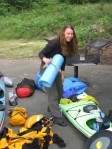
Gotta squeeze this in!

experienced at this type of paddling except Bibi and Michelle. I spent time preparing them for this trip. Two weeks prior, I held a wet exit and rescues class for them. I also spent time educating them on packing for a kayak camping trip. For the 48 hours prior to this trip I e-mailed back and forth trying to ensure they had the right gear. Bibi got extra dry bags and an extra compact camping pad. Michelle did well on food preparation. But my concerns were justified.

Michelle didn’t stage her kayak packing prior.

That morning she was struggling to get everything into her boat.

She brought an over sized sleeping bag without a dry bag. That could have spelled real trouble. And her spray skirt wasn’t really sturdy enough to shield from lots of water coming over the deck.

Luckily Warren carried an extra spray skirt. Michelle had a great time, but she was just unaware of the potential danger! Everyone had appropriate immersion wear.

At the put in, we gathered and began packing kayaks. Deborah’s gear was the standard…dry suit, booties, PFD and the VHF radio all are good to have! The Puget Sound is about 50 degrees. Sometimes wind and waves come up unexpectedly – so well fitting spray skirt, bilge pump, dry bags are totally a must!
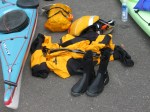
Everybody packed quickly. We got off to McMicken Island, our lunch destination, by about 10:00 a.m.

I was insistent that we get well up beyond the mouth of Dana Passage by 11:00, because that’s

high tide; after that the tide goes against us. Dana Passage can have some strong current. The day began cloudy and it looked like there might be showers. But with calm wind we made good time!

We were escorted by seals and porpoises along the way!

Our friend!

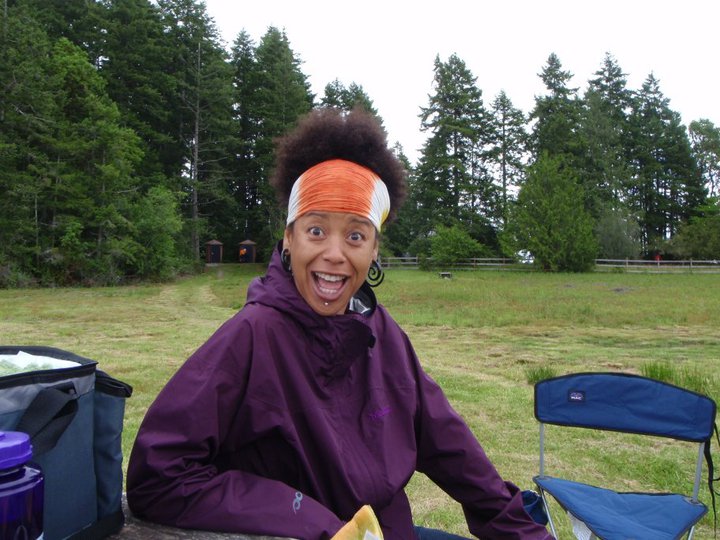
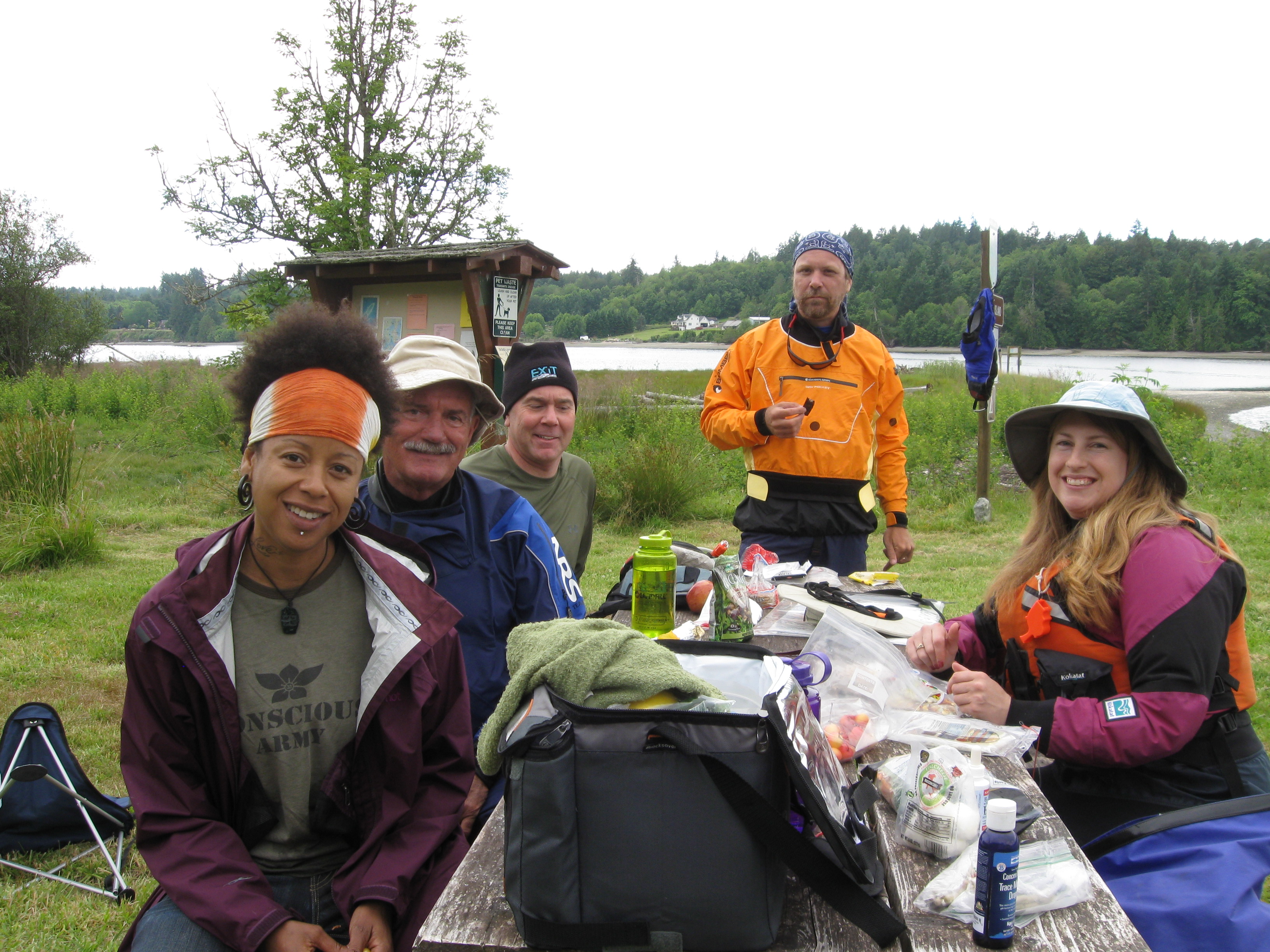
Bibi: Lunch was good!

Up at McMicken we beached on the back side of the island, and made ourselves home at the picnic tables for lunch. McMicken is a state park – it’s a day use island, though. You can’t spend the night.

Lunch was a festive affair, followed by a hike around the north side of the island.

Then we took off southeast, for Joemma Beach State Park – our stop for the night. Paddling was pretty simple. Winds were less than 5 knots and we only encountered power boat waves. The sky opened up revealing a jeweled south sound for us. The Olympics briefly revealed their snowy peaks.

At Joemma, we went about setting up camp. Turned out we had all the marine trail and pedal campsites to ourselves, and even the picnic area! Good thing, because the sites were small. So small only one tent per site was possible…nevertheless we took everything over!

The camping at Joemma Beach is high above the water so you get a great view! The picnic area afforded a generous kitchen, and a parking spot for our kayaks. Warren and Deborah, both using bivvy sacks, slept down there to guard the equipment.

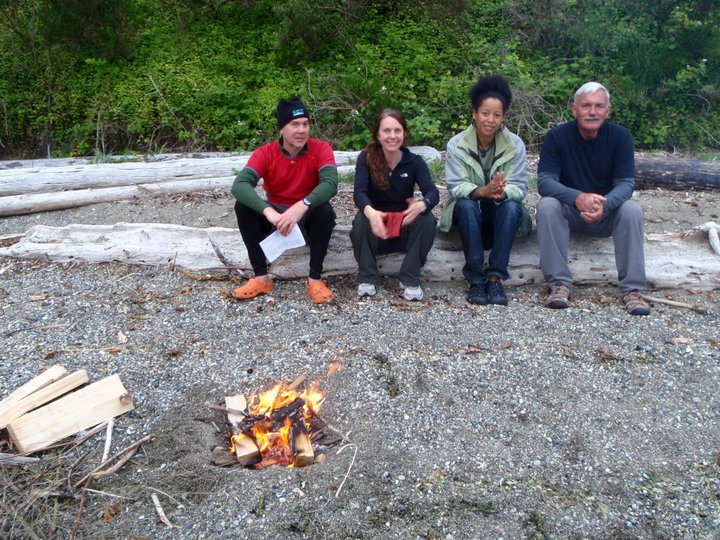
Down on the beach, we risked arrest by starting a little campfire.

By the fire!

Not long after we were enjoying it, a ranger showed up…with a bucket for water to put it out! She was totally cool. She helped us extinguish the fire and then showed us a place where fires are allowed.

This night fireworks began to light up the sky on the shore opposite our campground. We spent time on the pier watching….some people had some serious coin to fire all those fireworks, some went on for hours!
Sunset was very mellow, with reflective views of the sailboats anchored just offshore. Warren relaxed reading a book to the view.

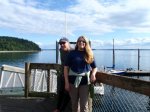
There’s a long pier which affords a great view. April and I made the most of it!
Eventually, the days activities wore us down and it was time to crash for the night. I elected to forgo my tent fly – excellent choice. The stars were brilliant! I brought a face mask and ear plugs, which came in handy as the sky was bright by 5:00 a.m. and I was told crows were a-crowing!


Timothy Lake Primitive Kayak Camping: Day 2

1 07 2010

Morning broke bright and clear! The sunlight bathed the forest opposite in a warm glow – reflecting perfectly on the water in between. Another nice day on Timothy Lake had begun.

Slowly but surely, tents were unzipped and kayak campers emerged, rubbing eyes and hungry for breakfast. The fire was brought back to life and camp stoves revved up for cooking. Seemed everybody had the same idea – oatmeal with assorted accompaniments like nuts, yogurt and fruit. Coffee and tea were consumed heartily!

Nobody was in a hurry; we were content to experience the day’s warm-up and then take our time breaking camp.

Our mellow mood attracted a guest! For about 15 minutes a hungry Pileated Woodpecker pecked the douglas firs in and around our campsite foraging for breakfast. Up and down the trees it went, offering numerous photographic opportunities. This was the first time I’d seen one in Oregon, and I felt privileged in its presence!

The day’s plan called for a relaxed return to our start at Gone Creek Campground, with a lunch along the way.

Towing a threesome!

Wow, the color of the lake was truly spectacular! I could not figure why it was such a bright blue this time around. We nuzzled into a sunny, south facing campsite for lunch.

Next we hugged the rocky east side of the lake on our return. I tested out my new LevelSix tow belt. Very nice gear – and my fellow paddlers provided plenty of resistance!


Primitive Kayak Camping at Timothy Lake: Day 1

29 06 2010

I took the Paddle NW Meetup group up to Timothy Lake for a simple kayak camping overnight. We had the best weather of the year!

Monty and Jerry at the launch

The idea was to leave the cars in a campground and paddle across to one of the primitive campsites on the north side of the lake. Timothy Lake has five developed campgrounds, but there are countless primitive campsites dotting the north side of the lake. Many are accessed only by boat or on foot. To park in the campsite boat launch, you can use a Northwest Forest Pass, or pay the day use fee at the campground.

It was only a one-night event. Five paddlers signed up, including my neighbor Stacy. She got a treat! Perfect, just glorious weather. We loaded up my VW Jetta wagon and met the other kayak campers, Monte, Francis and Jerry up at the Gone Creek Campground boat launch.

Wow! What wonderful water color!

And what a day it was! We were greeted with blue skies, snow capped Mount Hood, and the lake a light blue-green I’ve never witnessed before. We exchanged greetings, and filled out the liability waivers now required as part of the Paddle NW Meetup.

This paddle the kayak population decidedly favored Pygmys! Never seen a lineup like this. We had a majority of wooden kayaks and no fiberglass boats! Three Pygmy kayak models were represented – the 14′ Arctic Tern, a 17′ Arctic Tern, and 17’6″ Coho. Compliments flowed freely wherever we went.

Where to go, they asked? Although I always coveted two perfect spots to the west of Meditation Point, I wanted one with a good sunset view. I remembered a spot tucked behind a peninsula at the entrance to the upper arm of the lake. We paddled over there, and there were campers who said the site would be available for the night.

Unfortunately, they were not going to be vacating the spot until late in the day. We were anxious to get started setting up camp. So, we set out searching for another spot along the shore – a task revealing just how popular Timothy Lake can be on a gorgeous summer weekend. While there are numerous campsites dotting the north side, not all are kayak-accessible. Kayaks need a gently sloping landing area to land and unpack. “No vacancy” signs were everywhere. We checked out all the spots along that side, to just beyond Meditation Point, and all were already taken! OK lesson learned.

At Francis’ suggestion we explored further up the arm of the lake. Rounding a bend we came across the quiet area forming the upper region of the lake. Here, you’d think you weren’t even at Timothy. It’s much more closed in, there are little grassy islands, it’s cozy, and as you explore even further, there’s a beaver lodge sitting in the center of the river.

We saw a very nice site which seemed to be available on the east side. I’ve never seen this site vacant. We landed and determined that it could be ours! Fate had shined kindly on us!

Jerry and Monte in the Pygmys at launch

This site offered plenty of area to set up all our tents, a beach, a central fire pit, and there was even a kitchen counter set up. Much relieved, we set up camp!

Ho ho! Someone left some reading materials for us! A current issue of Playboy Magazine was there for the taking!

Wow! Light reading!

This site faced west, and we took full advantage of the warm sun!

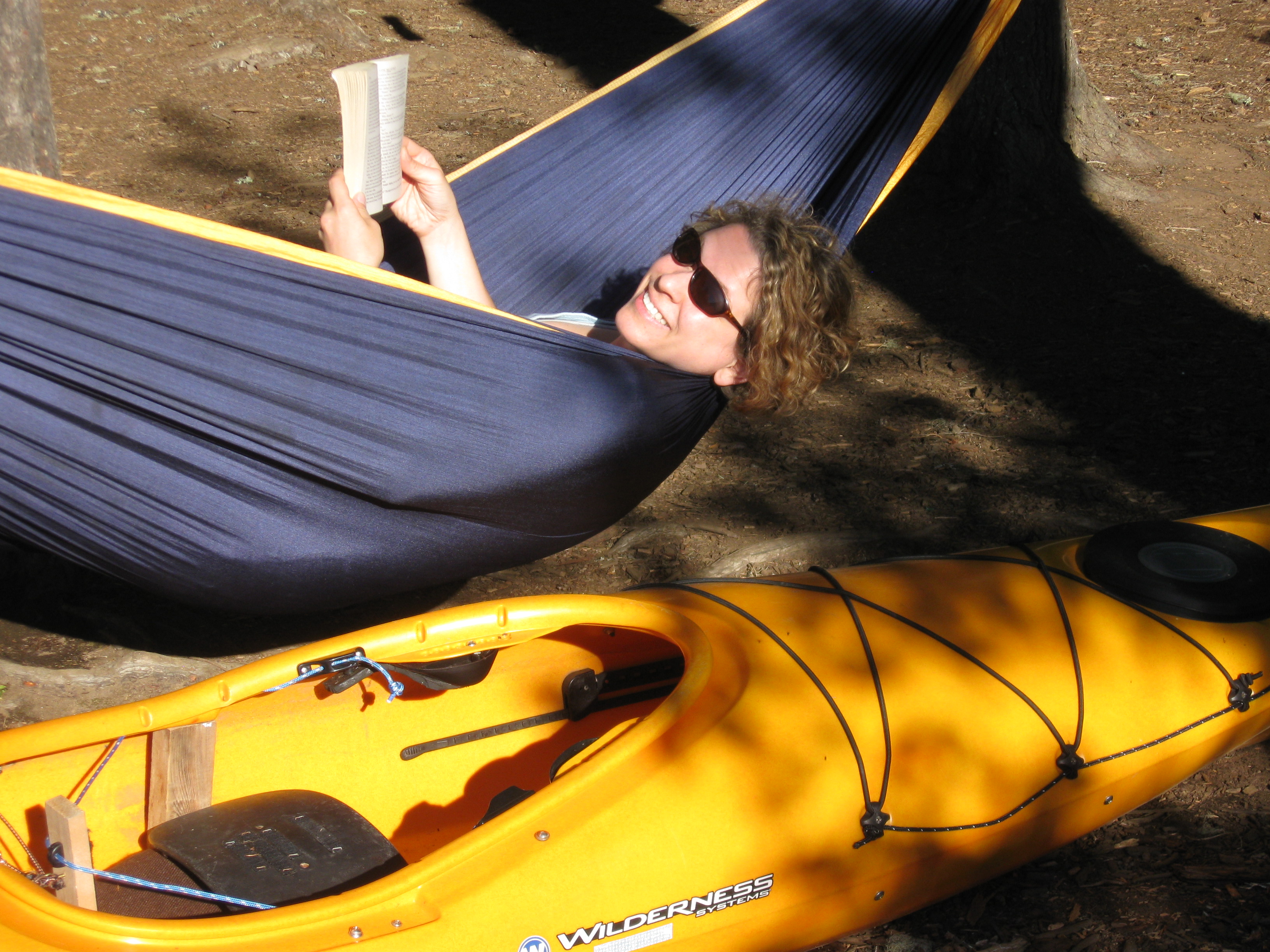
Stacy made herself home in the hammock. I found the lake pleasantly warm and took time to practice kayak rolling.

Jerry, Francis, Monte and took an hour to explore the upper arm of the lake.

Francis emerges…

One glides past interesting grassy islands. Tight paths crisscross the grasses and are worth exploring.

The beaver lodge is pretty impressive, worthy of a portrait!

Up there, the water is crystal clear, because it comes straight from the spring at Little Crater Lake. The water makes hypnotizing patterns as the sun shines on the bottom.

My kayak = not a problem rolling. I even rolled it on my offside using a paddle float. Nice to know my recovering shoulder took that in stride! YAY! But in trying to roll the 14′ Arctic Tern, I just fell out! It had no thigh braces nor hip pads.

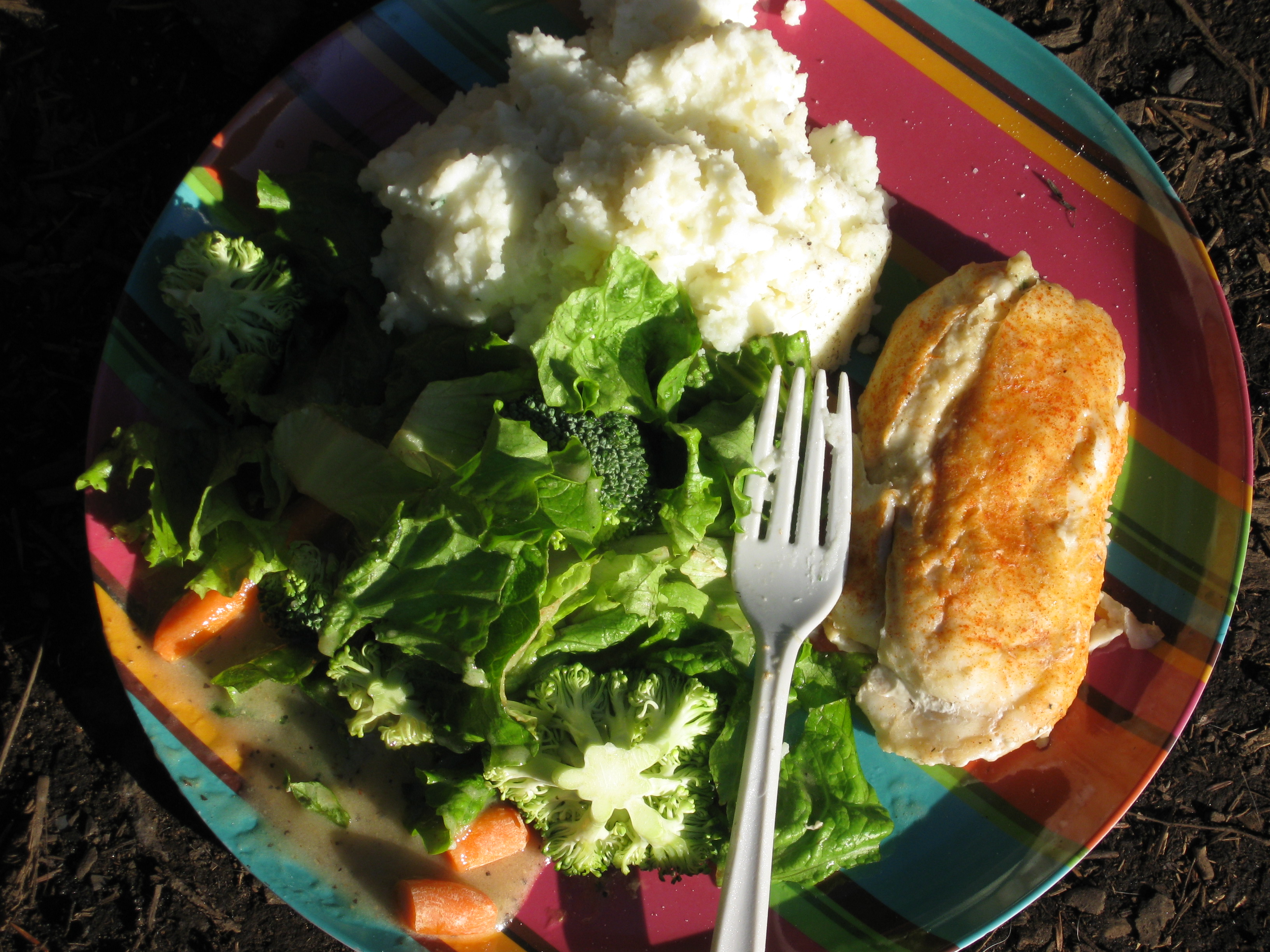
Next, the highlight was to prepare a feast! Since this was only a one night affair, I brought a Trader Joes frozen flounder stuffed crab meal and accompanied it with fresh salad and garlic mashed potatoes! I brought the grill top from my Weber tabletop grill, and cooked it inside aluminum foil. Perfect!

This evening the sleeping was pleasantly quiet. It was a full moon, which rose just after sunset, bathing the forest in a shimmery silver. The only sounds came from hooting owls and snoring campers.


Summer Means Kayak Camping…Let’s Go!

25 06 2010

Kayak camping is great.

Breakfast at Waldo Lake

You don’t have to carry your gear, as in backpacking. You can bring along a few luxuries, such as a folding chair. Still, there are definite limitations. One standout is the hatch size. Some decked kayaks only have 10 inch diameter hatches, limiting the size of what can fit inside. You might be able to fit some items in the cockpit. But don’t over stuff, or you’ll interfere with your ability to wet exit. Either way, unless they’re secured inside, they might be lost. As for the big sit on tops with gear wells, everything must be in dry bags and secured. No matter which way you go, as long as you adequately plan your kayak adventure, you’ll have fun!

Food
You’ll need enough food to cover the number of breakfasts, lunches and dinners on the trip. It’s a good idea to plan on food that doesn’t need refrigeration. Many options are available; you just need to rethink your normal cooking routine. You can usually have a luxurious first meal by freezing meat or seafood and allowing it to defrost during your paddle. After that, consider bringing food that can be rehydrated or food that can be brought without refrigeration. A fun idea is to split up the meals amongst the group. So a threesome prepares one breakfast, then another a dinner, and so on.

Clothing
Obviously you’ll need clothing for wet conditions. Today’s synthetic fabrics work the best when you might sweat and the weather is wet. Wool works well too. These will wick the perspiration away from your body, allowing it to evaporate. A cotton layer will trap the moisture, keeping you wet. Cotton is better suited for camp, when you’re relaxing. River shoes are also important as you’ll be walking in and out of the water. Drybags are essential for all kayaks to carry your gear because sometimes hatches leak. Smaller size bags (15L and under) are preferable because first they’ll fit into the hatches; second they are good for organizing and third they can be stuffed into the nooks and crannies of the kayak. There are also compressible dry bags so you can squeeze even more clothing.

Safety
Safety gear is a requirement. PFDs, carabiners, ropes, maps, flares, and a good first-aid kit are must-haves. Depending on the trip, a map, compass, GPS and emergency locator might also be important. FRS radios are very handy in areas with no cell phone coverage and now some have a 20 mile range.

Packing the Boat
Pack the kayak so that the heaviest items are on the bottom. Your boat will ride much better that way. Also try to pack the boat so that the weight is as evenly distributed bow to stern as possible. If you can’t get it perfect, it’s better to have the stern heavier than the bow. A rudderless, bow-heavy boat is very difficult to steer in challenging conditions. Further, if you need to stash extra gear on deck, start with a small amount on the deck right in front of the cockpit and then go to the stern deck. Try to pack it as low as possible so it won’t catch the wind. On one kayak trip, a paddler over packed the bow so much that his boat constantly veered to port. Having paddled too far to repack, the only way he could correct the problem was cocking his rudder – at least he had a rudder! It makes sense to pack day use items nearest the hatch cover so they’re handy. And remember that some small electronics like GPS, cell phones and iPods are not always waterproof. There are numerous accessories which enable you to carry these protected from the elements. Still, other personal use items like sunglasses, sunscreen and lip balm should be packed outside of the spray skirt so they can be accessed easily. There are PFDs with gear pockets, spray skirts with pockets or zippers, deck bags and over-the-shoulder mini dry bags for today’s necessities.

Conditions – Planning Makes Perfect
Planning for the weather and conditions where you’re going make the difference between a safe, pleasant voyage and an unpleasant, perhaps disastrous experience. Check the weather forecasts for the area you’re paddling. Research specifics such as whether the area normally experiences higher winds later in the day. On a large lake, find out if, for example, the afternoon wind usually blows from the west. If so, you might want to head across the lake to the west in the morning, and take advantage of the wind returning. If your trip is in tidal waters find out the size of the tide and tidal directions and velocities and their timing during your trip. When setting up camp you must set camp above the high tide line and well protected from waves created by any passing ships. You’ll want to plan your paddling to take every advantage of the tide, because in some areas, you cannot paddle against the tide. In many rivers near the ocean the outgoing tide doubles or triples the river current. Find out if commercial traffic will be traversing your route. Ships and barges travel much faster than they appear from a distance and are often constrained by the shipping channel. If you take advantage of general weather conditions, local nuances and tides, they can work in your favor. Otherwise, well, I think you can probably imagine.

Paddling Equipment
Paddles
PFDs
Spray skirt
Headlamp
Flares
Repair kit
Dry bags
Paddling gloves
Permits for your journey or overnight camping (if necessary)
Immersion wear

Camping Equipment
Flashlights
Headlamp
Extra batteries
Lantern
Duct tape
Water
Water filter
Fuel
Lighter and matches
Tent/Ground cloth
Repair kit
Sleeping bag
Sleeping pad
Pillow (optional)
Backpacking Hammock

Safety
First aid kit
Ropes
Carabiners
Map
FRS Radios
Compass
Throw bag
Float bag
VHS Radio

Clothing
Synthetic Long Underwear
Waterproof / breathable pants
Waterproof / breathable shell
Sun hat with brim
Fleece or wool jacket
Swimsuit
Towel
Underwear
Socks
Winter hat
Gloves
Sunglasses

Toiletries
Camp soap
Bug spray
Sunscreen
Toilet paper
Trowel
Lip balm
Shaving kit
Toothpaste and brush
Toilet paper

Kitchen
Eating Utensils
Spatula
Mess kit
Stove and fuel
Garbage bag
Camp soap and scrunge
Cups
Dish towels

Optional Fun Stuff
Mask, flippers, snorkel
Camera
Binoculars
Fishing equipment
Reading material
Foldable camping chair
Beverage of your choice
Musical instruments

Suggested Food
Tuna, salmon, crab or chicken in foil packages
Simple Lipton Pasta quickie meals
Gorditas or soft tortillas for bread. Regular bread is easily crushed.
Powdered butter
Powdered soft drinks
Pasta
Apples
Banana
Green or red peppers
Onion
Carrot
Potato
Pancake mix (add water only type) (repackage), syrup and oil (repackage)
Non-stick spray or oil
Trail mix
Nuts
Instant coffee (if you can stand it)
Instant oatmeal
Couscous
Honey
Power bars
Condiments – you can head to fast food joints for no-refrigeration needed packets of ketchup, relish, Dijon, horseradish, sugar, salt, wasabi, soy sauce, it’s amazing the treasure you can find!