Paris: At The Louvre in Search of an Empress

27 08 2025

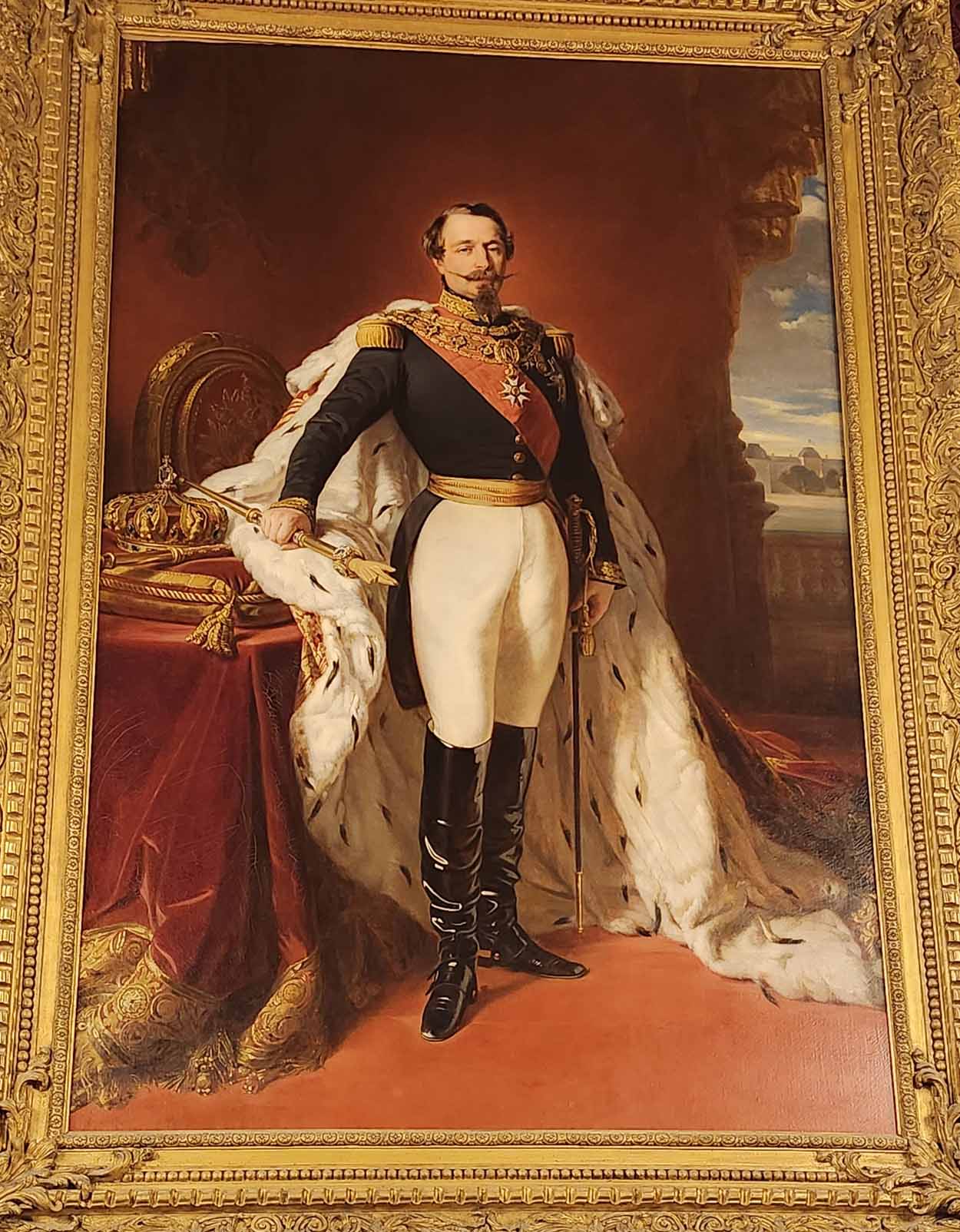
On Day Four of my Rick Steves Heart of France tour, we were to visit The Louvre – the museum housing the largest collection of art and historical artifacts on Earth. I’d been there before, and yes, I’d seen the Mona Lisa, which was underwhelming. This time, unlike the rest of my group, I was on a mission to see one exhibit only – one which I had learned held a painting of a famous distant cousin – a member of my Clan Kirkpatrick – the Famous Empress Eugenie de Montijo – born as María Eugenia Ignacia Agustina de Palafox y Kirkpatrick.

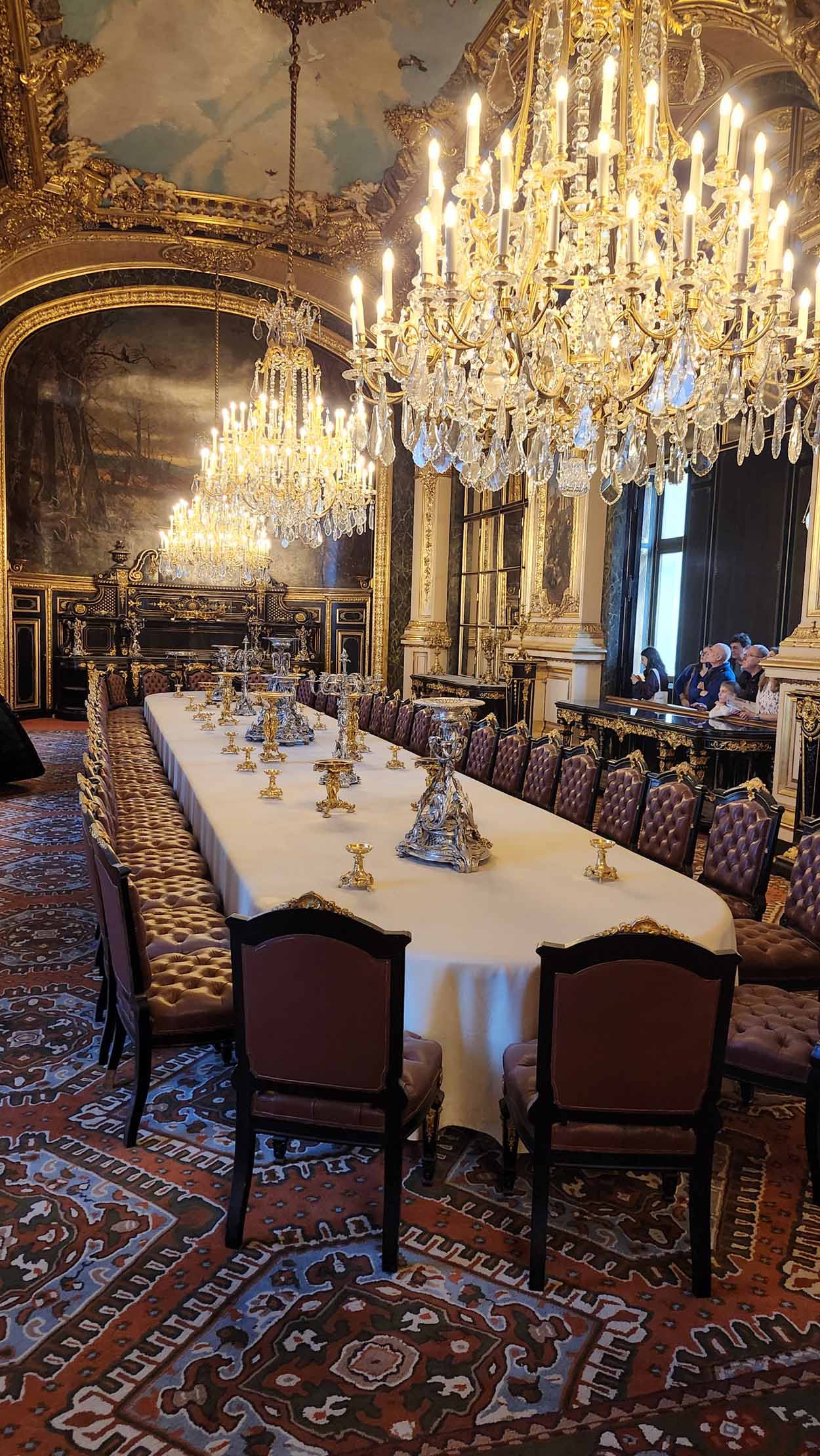
Prior to my visit to France, I’d been in touch with several guides. When I told them I was doing family research on the Kirkpatricks, they all said I must go to the Louvre because there is a painting of a Kirkpatrick clan member there! I couldn’t imagine. But that was when they told me about the Empress. She was wife to Napoleon III in the mid-19th Century, and was instrumental in French politics as well as fashion, art, and the re-shaping of the Paris landscape into what we see today. I had NO idea! They insisted I go to the Louvre and visit the Napoleon III Apartments. These apartments were built to house foreign diplomats when visiting Paris.

We met our local guide, Sylvie, who took us on a walk on the neighborhood near The Louvre, and then we wound up there. When I told her I was a Kirkpatrick she knew exactly what I was looking for. Then, once inside the museum, I asked some staff for directions. When I told them I was a Kirkpatrick I got a reaction I will never forget as long as I live. It was like a combination of respect, awe and wonder. It was as if I was in America and I was a relative of George Washington! They kind of snapped to. Before I could mention Napoleon II Apartments they knew exactly what I wanted to see and took me up there! Who, me? It was from this point on Paris was a different kind of place, for outside, on the streets, I knew the sights I saw were built by her and Napoleon III and their architect Haussmann. Holy cow. OK, these are images from the Napoleon III Apartments!

They even had some of her over-the-top royal gowns!

Here are pictures of the Grand Salon for the diplomats, and the official table at which they ate official meals!

I was pretty overwhelmed. Not just looking at these things, it was the times and the history! After the Louvre mission, I was done for my day. I headed back to my hotel in Montmartre and the nearby cafe. I called it a day!


Paris: The Impressionist Collection at the D’Orsay Museum

16 08 2025

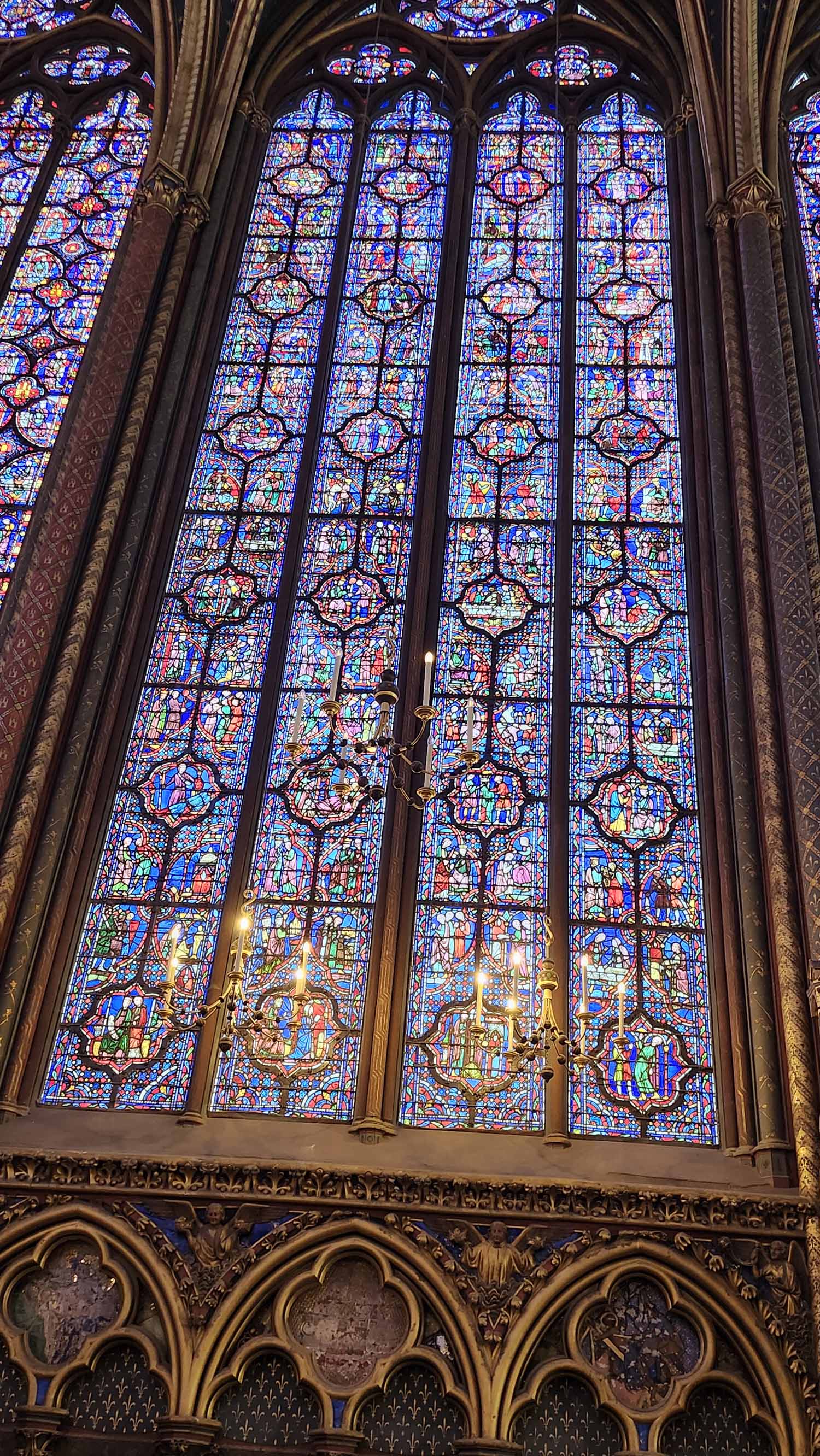
This morning, I joined my Rick Steves Europe group visiting Notre Dame Cathedral and nearby Sainte-Chapelle. Notre Dame has re-opened after its reconstruction following the 2019 fire. We did not go inside, for the crowds were huge. Still, the exterior is very impressive! Then we visited Sainte-Chapelle, with its famous windows. As with most French Catholic cathedrals, there are reliefs of what happens to those who follow the 10 Commandments, and those who don’t.

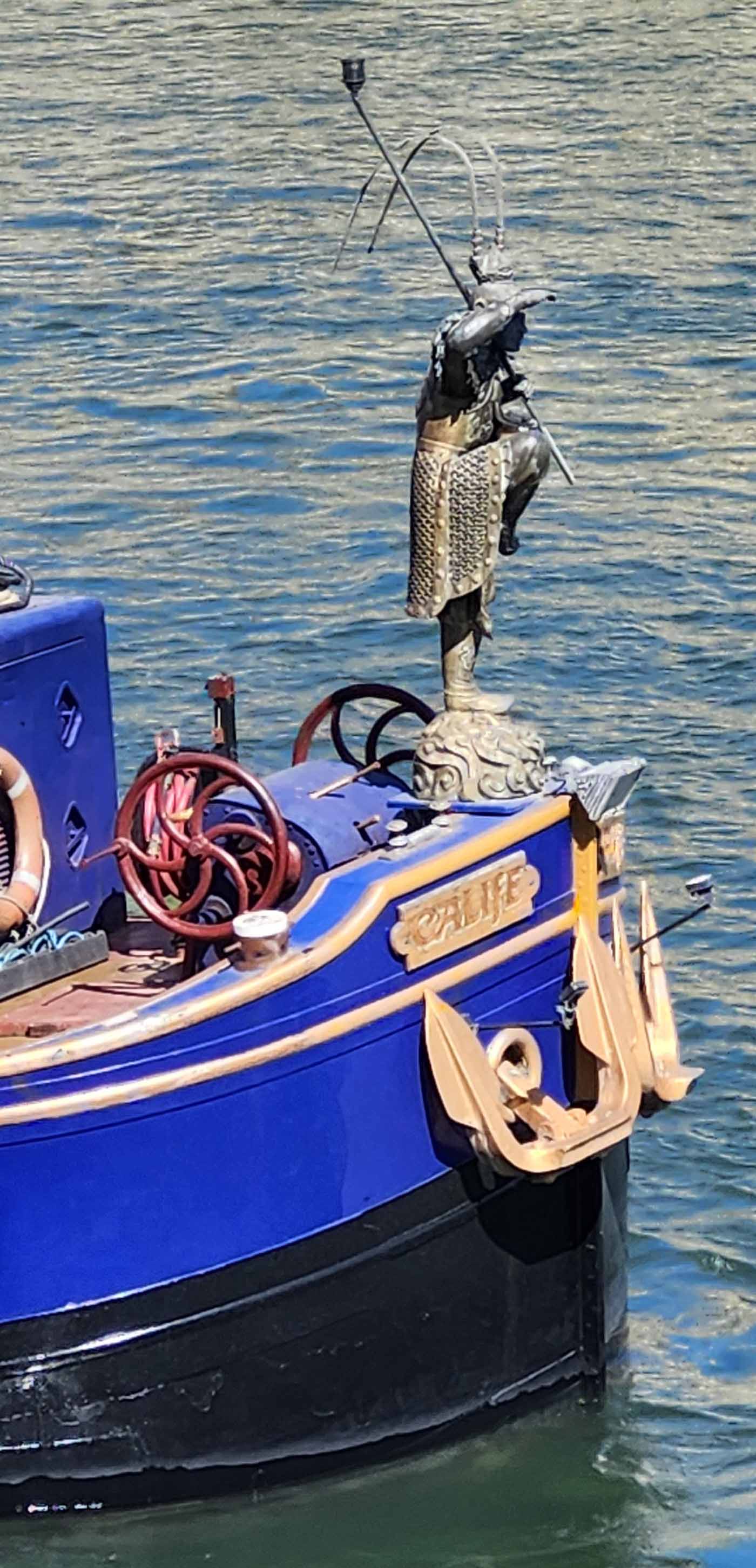
This day I had tickets for the D’Orsay Museum, housing the largest collection of Impressionist paintings. So I departed the group and walked up the Rive Gauche towards the museum. The Rive Gauche is famous for its being a beehive of artistic creativity. Artists such as Pablo Picasso and Henri Matisse held lively conversations with writers like Gertrude Stein, Ernest Hemingway and Jean-Paul Sartre. Once past the Notre Dame throng, this walk became a stroll, allowing for people watching and taking in the scenery. One of the most ornate dinner cruise barges chugged by. Adorned end-to-end with art deco. On its bow, a feather-headed woman stood on one foot peering ahead. Its fancy anchor.

For several blocks, the sidewalk is lined with stalls selling all sorts of things, including questionably “authentic” old magazines and cliche Paris images. All for the fun I say!

Like my previous walks, I glimpsed the relaxed bicycle pace. The live-aboard barges plying the Seine. Cafe after cafe with Parisians at their sidewalk tables enjoying casual conversation. It was getting towards mid-day, and I had just enough time for lunch. So, I picked out a cafe table and ordered a Croque Monsieur. I indicated to the server that instead of a leisurely lunch, I needed it quickly so I could make my 1:00 D’Orsay Museum time. He wondered if I wouldn’t enjoy my meal? I just said no, I had to eat and dash. Typical American, no?

I wasn’t too enamored with my meal, in fact! Just not for me.

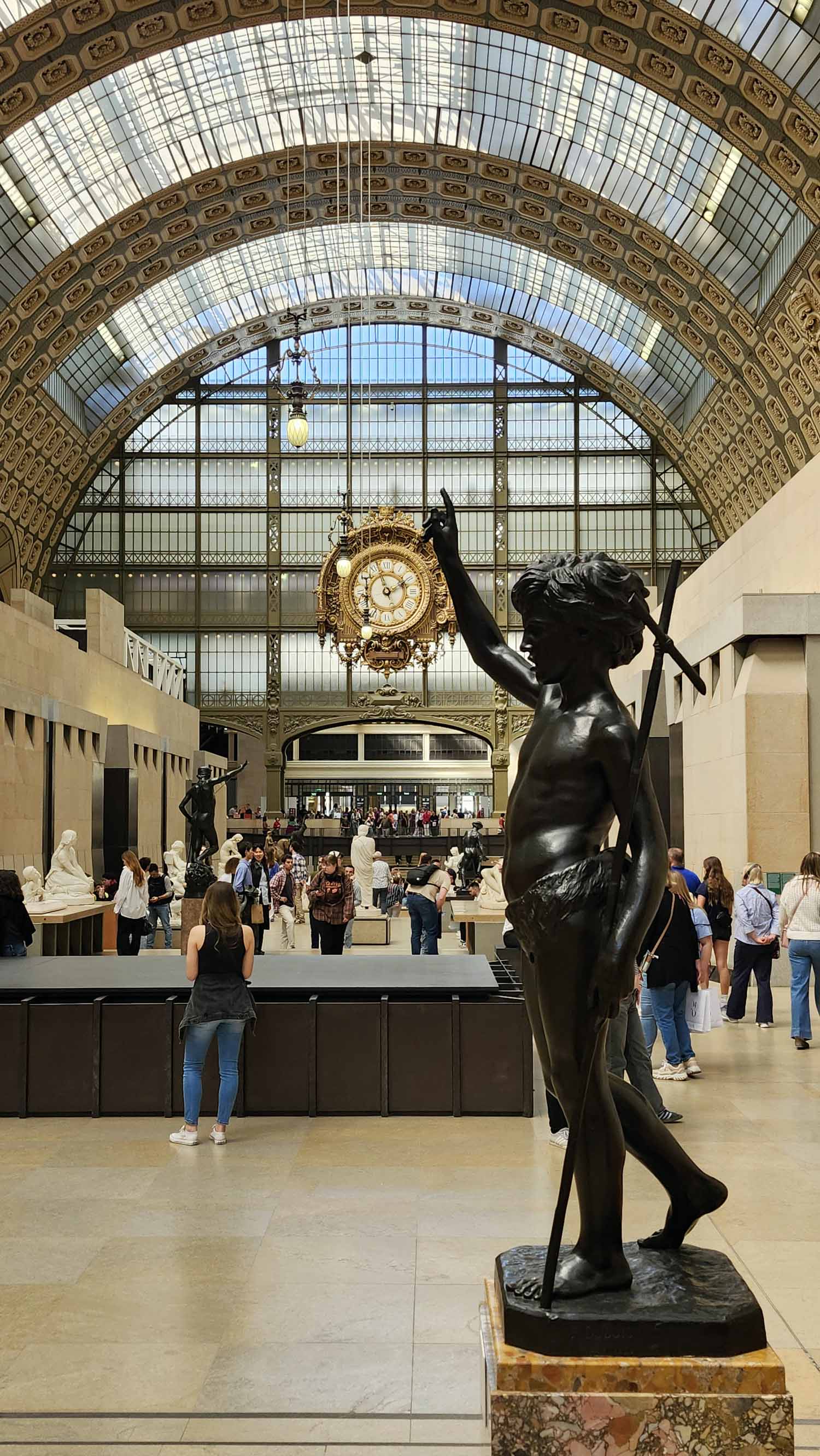
Topped up, I headed up to the museum. The D’Orsay Museum is a repurposed railroad station. So, on the inside, it is very open and airy. I think it is just fabulous. It has collections from various artistic genres. Passing through, I admired some before entering the Impressionist collection at the far end.

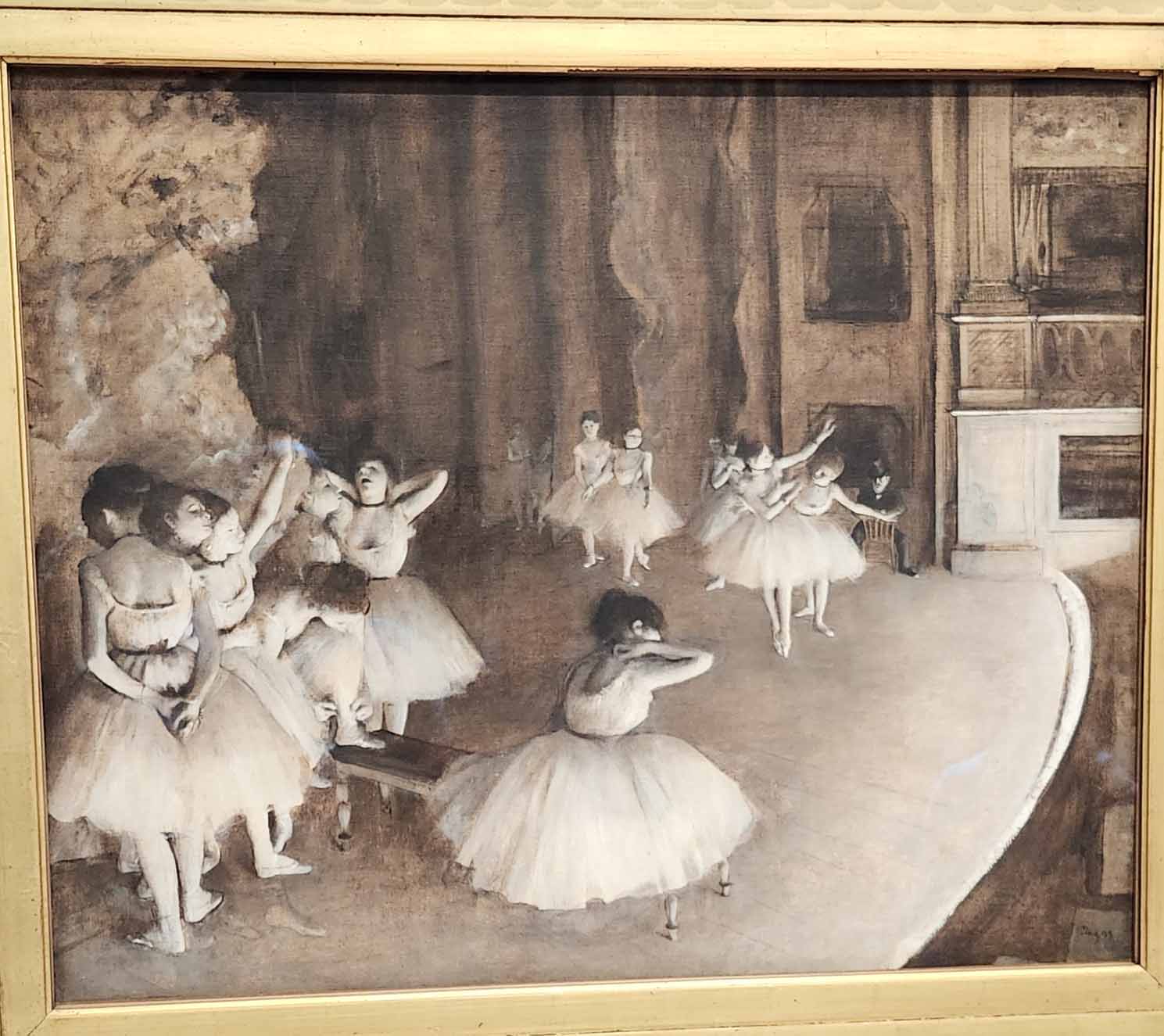
I was introduced to Impressionism by one of my French Language teachers. From there, I checked out some library books on Impressionism. I’d seen a number of original works in New York, Boston, Washington D.C., and London. I have prints of two of Pierre Auguste Renoir’s paintings in my office. So with this, combined with the fact that I’d just been to the Opera Garnier two days prior, held me in rapt anticipation. I did not realize, until I saw some of these paintings, how important it was I’d seen the Opera Garnier first. For some of these very masterpieces depicted events at the Opera!

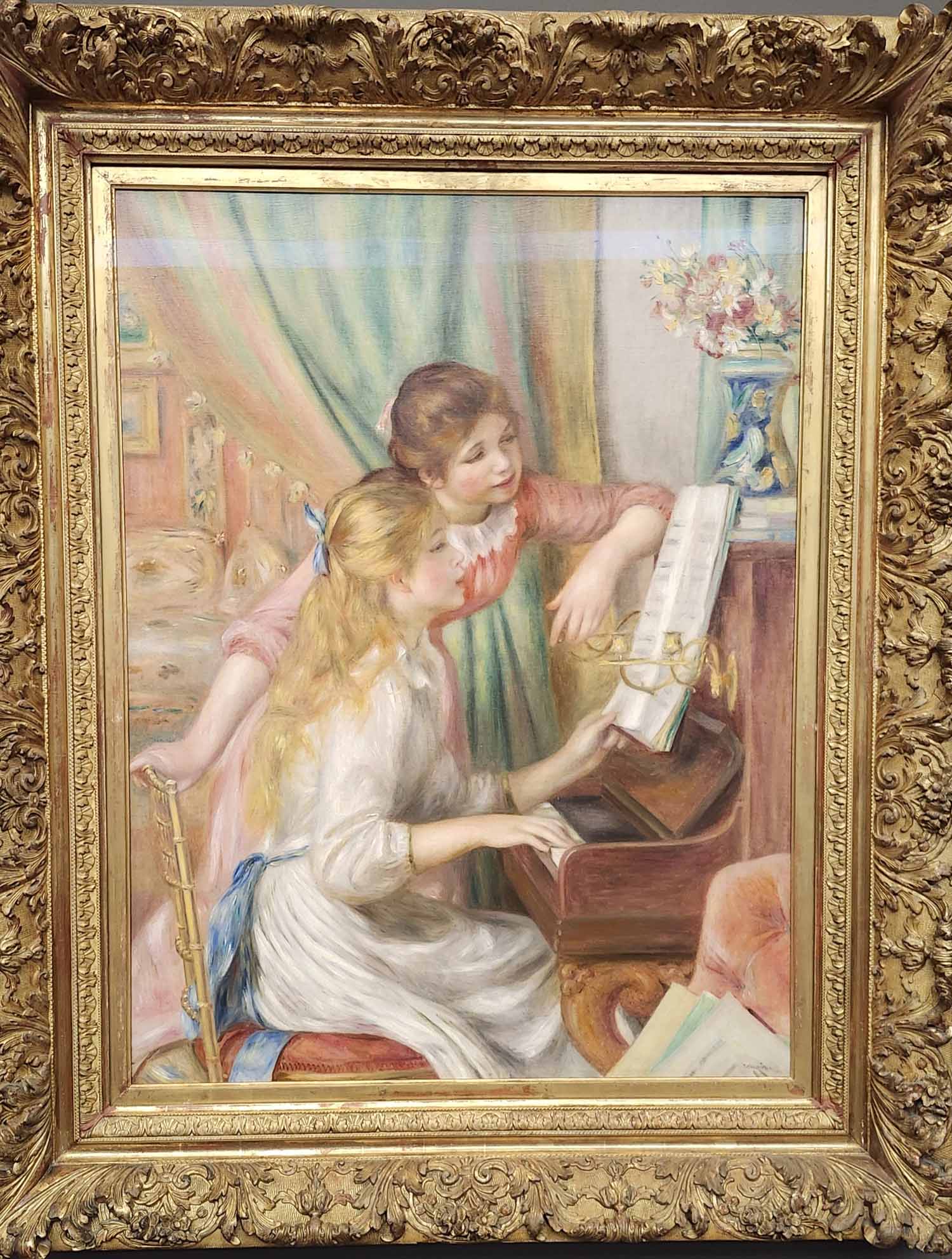
Entering the collection, I immediately recognized paintings I’d studied. What I was unprepared for was that there were SO many! And I could walk right up and examine every brush stroke. I was so overwhelmed I teared up several times, as one masterpiece after the other revealed themselves. The thing about Impressionism that is so meaningful to me is that these are illustrations of ordinary life in a specific time period in a specific country. They capture the style, the joy, the intimate details of the lives of French in the late 19th Century. Everything from picnics, to dancing, to walking a field, to sunset on a cathedral, to collecting flowers in a field. Some of the paintings are so iconic that they could be said to represent the entire genre all by themselves. These three depict life at the Palais Garnier.

Works by Pierre Auguste Renoir were prominently shown. I love Renoir, because his efforts candidly display Parisians enjoying life. Dancing, socializing, or simply learning to play a musical instrument.

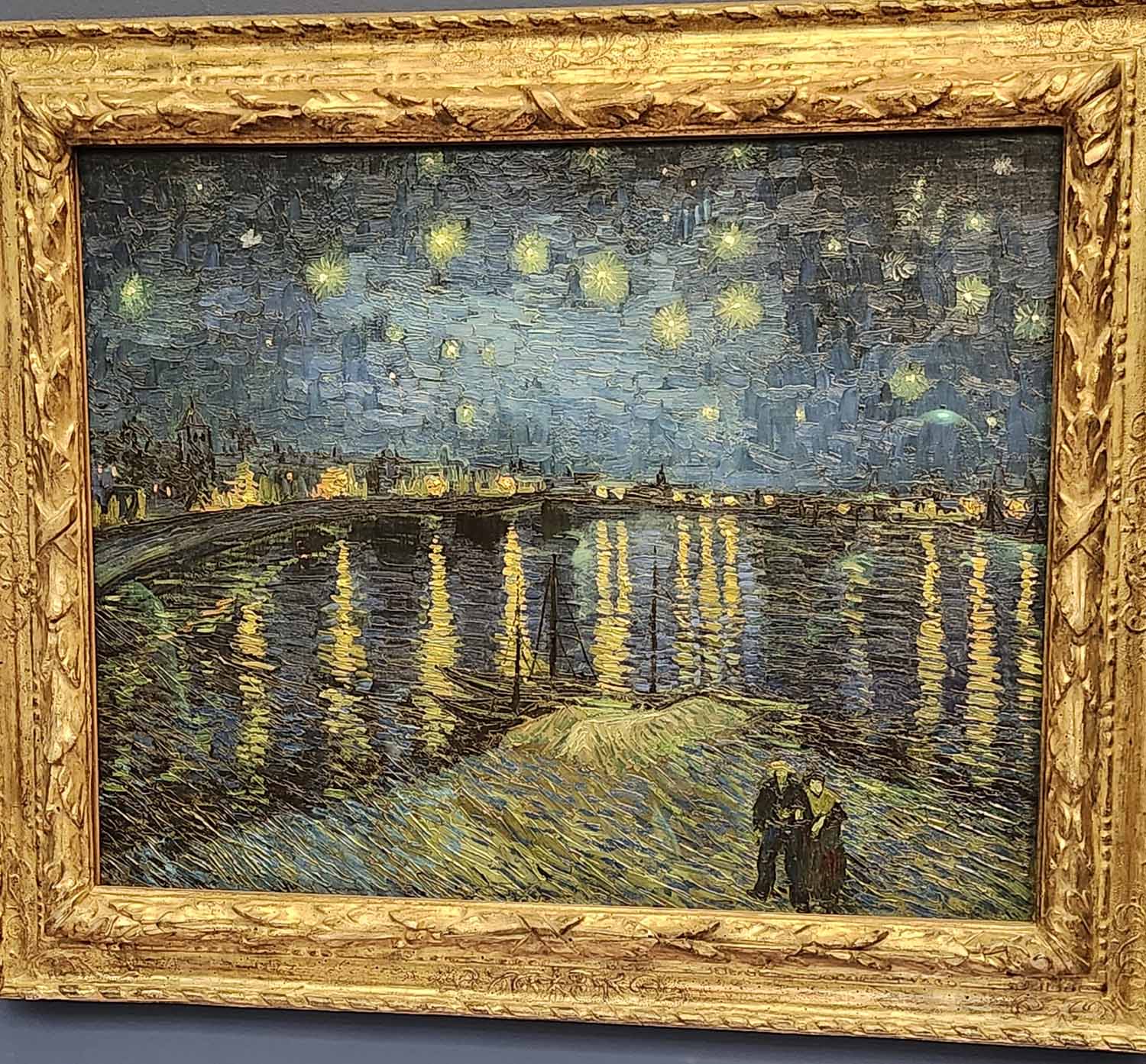
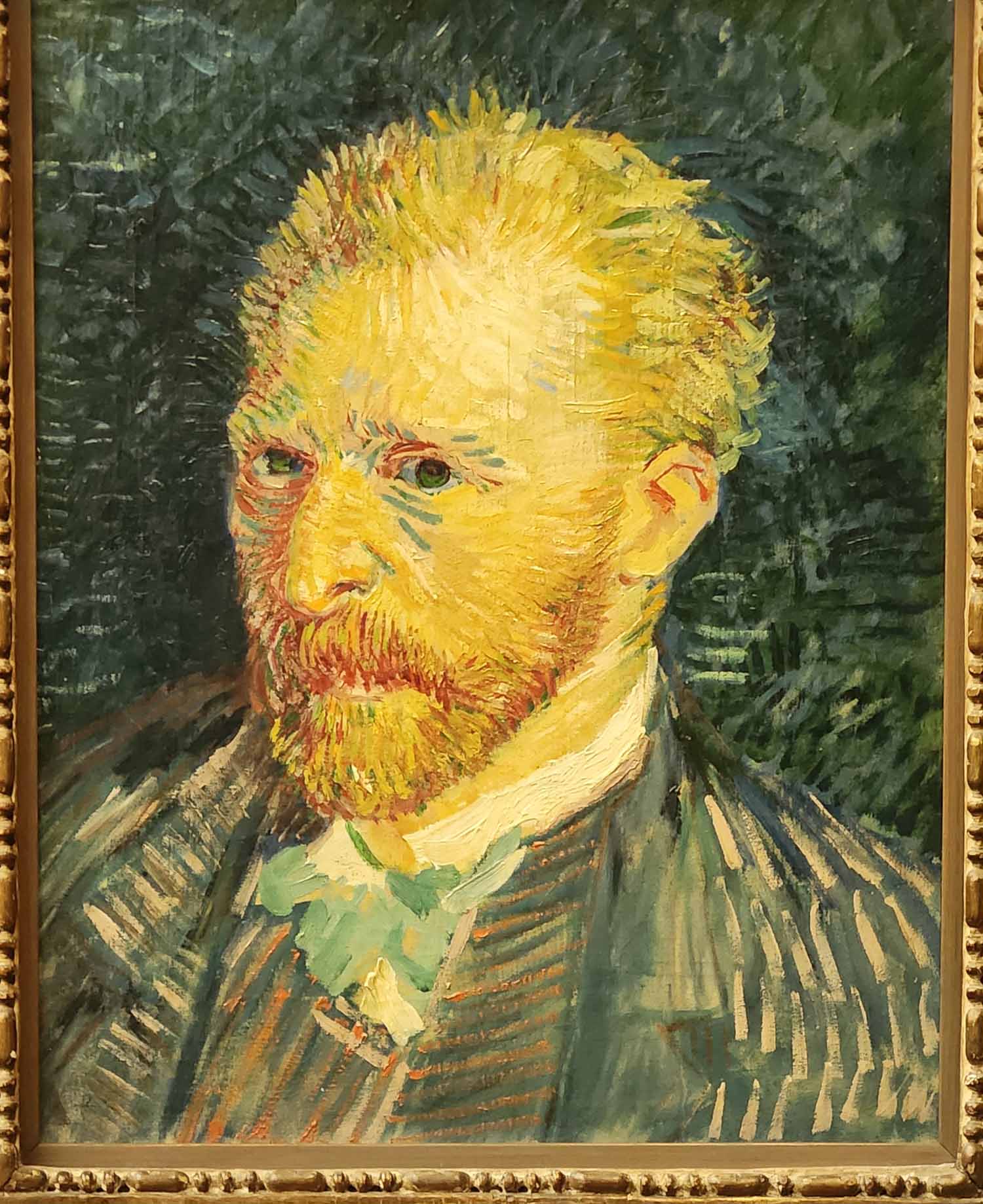
The museum has thoughfully prepared a background for Bal du Moulin de La Galette. And who does not love Vincent Van Gogh! No introduction needed. Just look at these!

More information on “Starry Night” by the Museum. It’s really interesting!

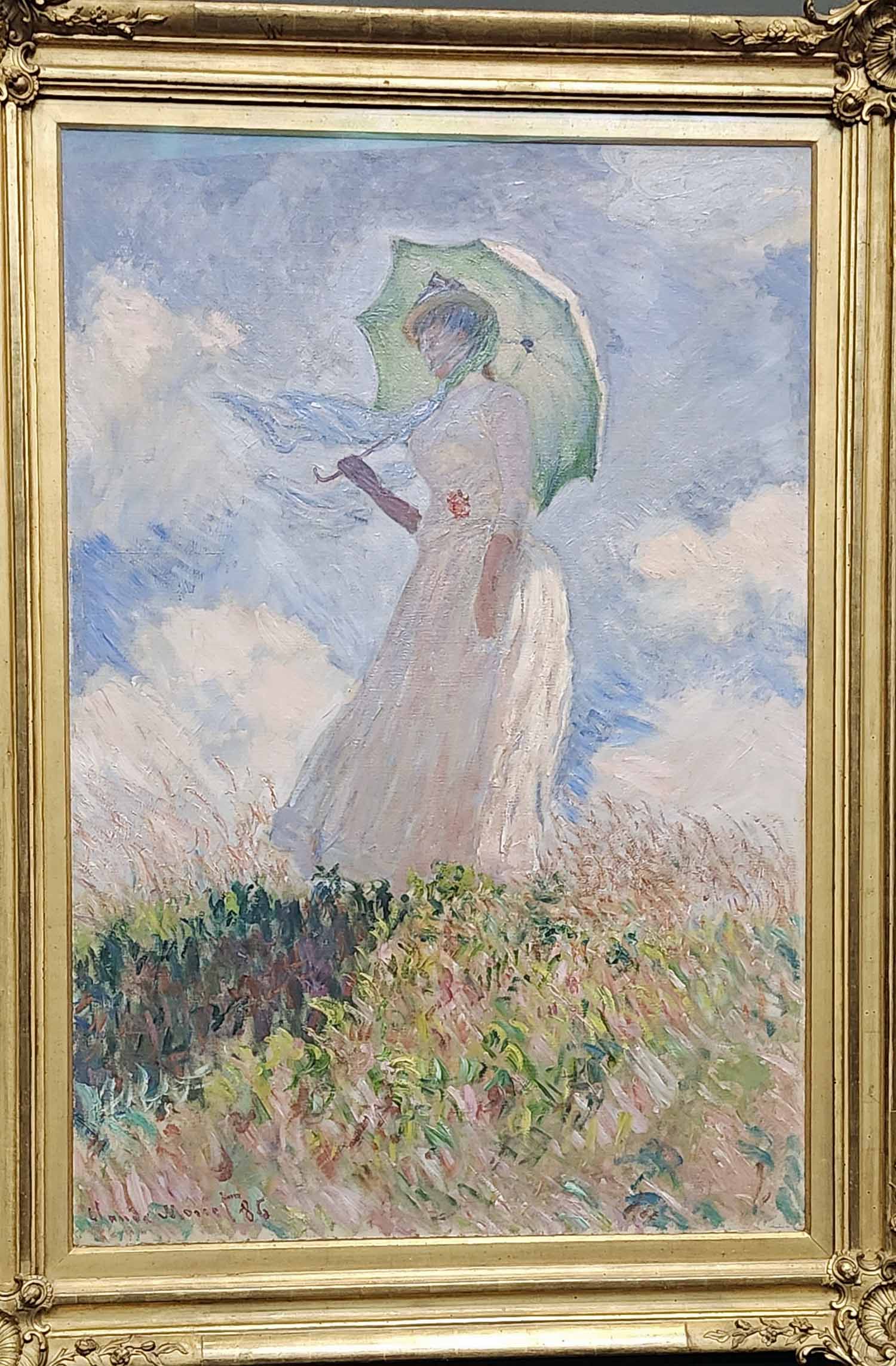
And do you think I’m done here? Oh no. Now here comes Monet. With I think, for me, the absolute most iconic Impressionist paining of all. The humbly titled “Woman with a Parasol Left Side.”

What sets this image apart is not only the beautiful day and the style, but the perspective. It is from the ground up. Making this woman, with the sun shining through her parasol and the breeze blowing her dress and scarf, stand so high in the way it shows off the times in which it was painted.

I had to take a selfie with it!

Lastly one of my favorite painters who was of the “pointilists” wing of the Impressionists.

I’ve always enjoyed the works by Georges Seurat.

In the D’Orsay Museum, they have one of his iconic paintings, “Circus Side Show.” The Pointilists were known for how they rendered images. They used single “points” of paint, thousands of them, like pixels on a video screen, to make an image. Up close you see just dots. Stand back and the image comes to life.

After viewing all this I was pretty taken aback. Wow. I returned to the hotel to take a nap, for my day was far from done. I had dinner with a friend from college, Jeff Russell! We had not seen each other in decades. So much to cover! It could have taken three such dinners! It was great to see him!


Paris: Monet’s Water Lillies at the Orangerie and Strolling the Seine

7 08 2025

The day’s agenda was to see Monet’s city-block-long water lillies paintings at the Orangerie Museum and take in the city the slow way, on foot. I had an 11:00 entrance ticket, so, after breakfast, I set off from the B Montmartre Hotel – it would be a little over 30 minute walk.

Taking my time, I strolled down Rue D’Amsterdam, allowing the city to unfold before me. Along the way, I observed with pleasure the style of Parisian women. They have this knack for dressing a certain way. Never shabby and never too formal. Just so. And, often on bikes, pedaling casually with no helmets. That would never do!

Paris largely consists of a myriad of smaller, walkable streets punctuated with large avenues every so often. This creates an infinity of small neighborhoods with individual personalities. Paris is also known for its grand buildings – and I was now in the 8th Arrondissment, which is chock full of such examples. Before long, I arrived at Place de la Madeline, with its Acropolis-like Madeleine Church.

The Paris I witnessed this 21st Century is a product of redevelopment during the reign of Napoleon III – whose Empress was my distant Kirkpatrick Clan relative, Eugenie de Montijo. The renowned Foreman of this project was the famed Georges-Eugene Haussmann. He was instructed to bring “light and air” to Paris, which had fallen into visual and sanitary disrepair – much of it unimproved since the middle ages. His work was praised and criticized. While he brought beautiful boulevards, dozens of parks, and buildings to the city, he also demolished entire neighborhoods in the process. One such park I was to witness this day, Parc Monceau, was renovated by him. A goal was to have a park within 10 minutes’ walk from anywhere in Paris. The parks project was a success and popular with everyone.

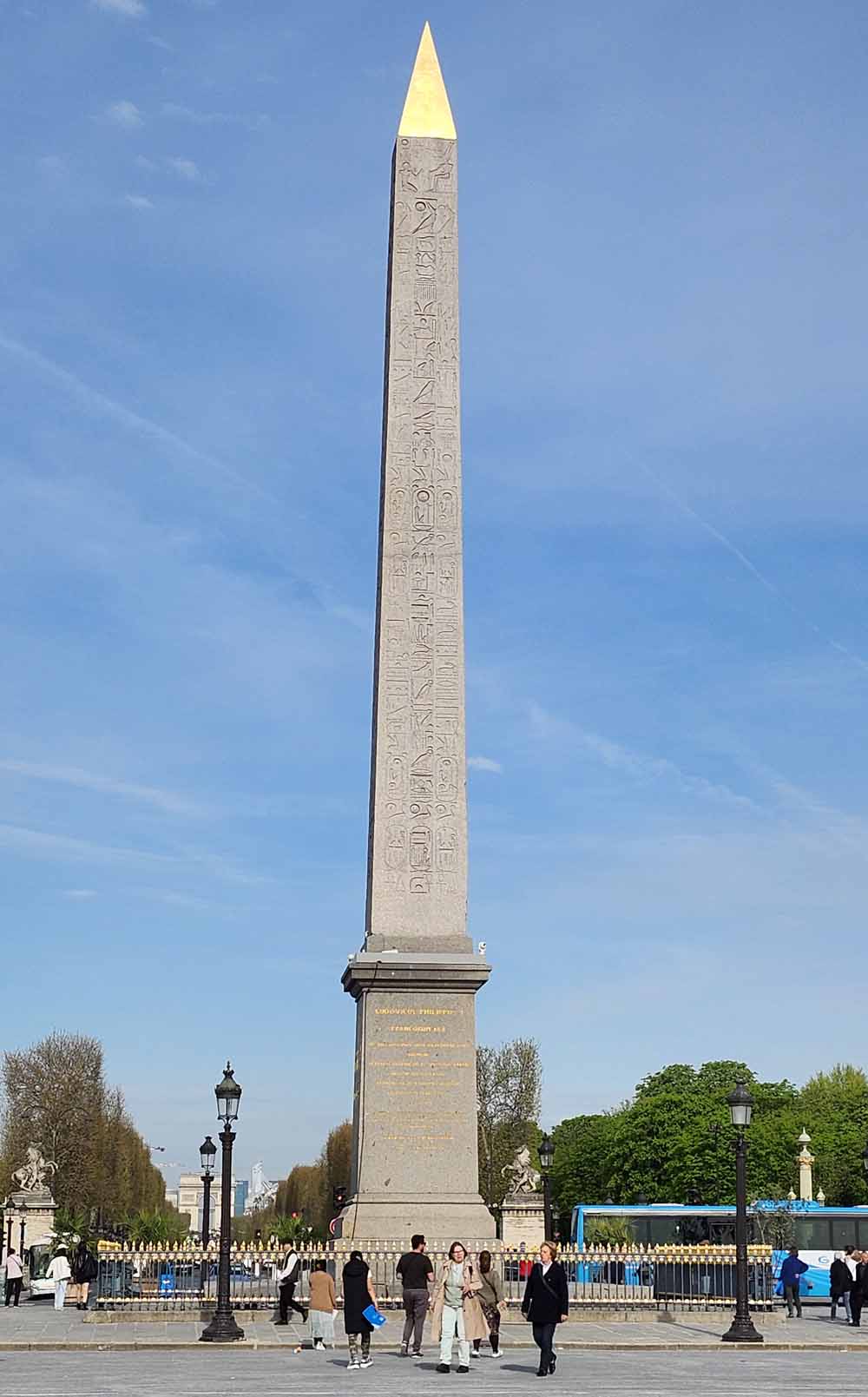
My walk continued. Crossing the street, the world famous Place de La Concorde, with its magnificent gold-topped Egyptian Obelisk, rose front and center a few blocks distant. But that was not all, for now I was on the Rue Royale, which is the epicenter of Paris fashion! Suddenly, Ralph Lauren, Canada Goose, Gucci, Piaget and Rolex, Breitling, all the big names had stores here! And at the far end a famous restaurant – Maxime’s.

Taking the pedestrian mode allows the symphony of Paris’ stunning and subtle experiences to reveal themselves. Narrow, meandering streets with corner cafes open up to busy boulevards dominated by golden angels, marbled arches, elegant parks, magnificent palaces and more. The parks are frequented by Parisians socializing, reading newspapers, people-watching, jogging, or practicing group Qigong.

Paris is laid out like none other. From many of the important plazas, one can see other prominent plazas. For example from the Place de La Concorde, I could see the Arc de Triomphe, the Louvre, Place de la Madeleine, the Grand Palais, and the Palais Bourbon (Paris National Assembly).

Just across from the obelisk is the Tuileries Garden, and on the corner is the Orangerie Museum. I was early, so, I staked out a shaded park bench and set about people watching. There was no shortage. Bikers, joggers, groups doing yoga, and more to glimpse at. And yes, lovers hand in hand enjoying conversation. It was early April, and just fantastic weather – sunny and daily highs in the 70’s F.

The Musee D’Orangerie is best known for its full-length, around-the-room water lilies paintings by Claude Monet. The paintings are images of the water lilies in Monets Giverny Gardens out in Normandy. The “roundhouse” paintings capture the images of the lilies at different times of day – dawn, mid day, mid afternoon, and dusk. They are, in one word, arresting. I could not just pass them by. They require both intimate examination by brush stroke and visually taking them in all in their entirety. To do these images justice, click on each one separately.

After the mind blowing over the top water lilies exhibit, I was in for more stunning images walking along the Seine. From the museum, I walked downstream, crossing the bridges back and forth from time to time. Each bridge has its own theme of sorts. Along the river I checked out the many barges moored as well as moving goods, and some were floating restaurants. All along, people like me strolled. The Eiffel Tower stood in the distance the whole way.

Some bridges were intricately adorned with art. Others seemed to celebrate French victories. One had many padlocks symbolizing love. There was a pedestrian only bridge.

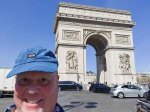
Traffic never seemed hurried. Bicyclists pedaled in a leisurely fashion. Pausing to take in everything, I was filled with some kind of satisfied happiness. Finally, I turned away from the Seine, and headed toward the Arc de Triomphe. My route took me along both main avenues and quiet side street. Finally reaching it, I was surprised at the size. It’s very ornately decorated with sculptures commemorating Napoleon I’s many victories.
Then I began my walk back to Montmartre.

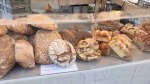
On one of the back streets, I stumbled upon an open air market. There, all sorts of fresh food was on offer. There was fresh butchered meat. There was seafood, including crab, lobster, crayfish, scallops, salmon, and oysters. Lots of freshly baked bread. Cheeses of all varieties. Fruits and vegetables. Everything needed for a meal of fresh ingredients.

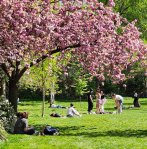
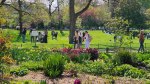
And then I passed by a scene right out of a Renoir or Monet painting. It was the Parc Monceau! There, Parisians were enjoying the park just as they did in 1887. Even in 2025, they were sitting on blankets enjoying a picnic with fresh nibbles and a glass of wine. I thought, nothing has changed! And with that, Paris was alive for me! These people know how to live!

I walked more than 8 miles that day. Near the hotel I passed by my home Cafe, Brasserie Le Moncet, and my new friends were there, and I joined them for a drink. Then a nap it was time to meet my Rick Steves Europe tour group and my guide Arnaud Servignat!